Yes! You can use AI to fill out High-Risk Pregnancy Notification Form

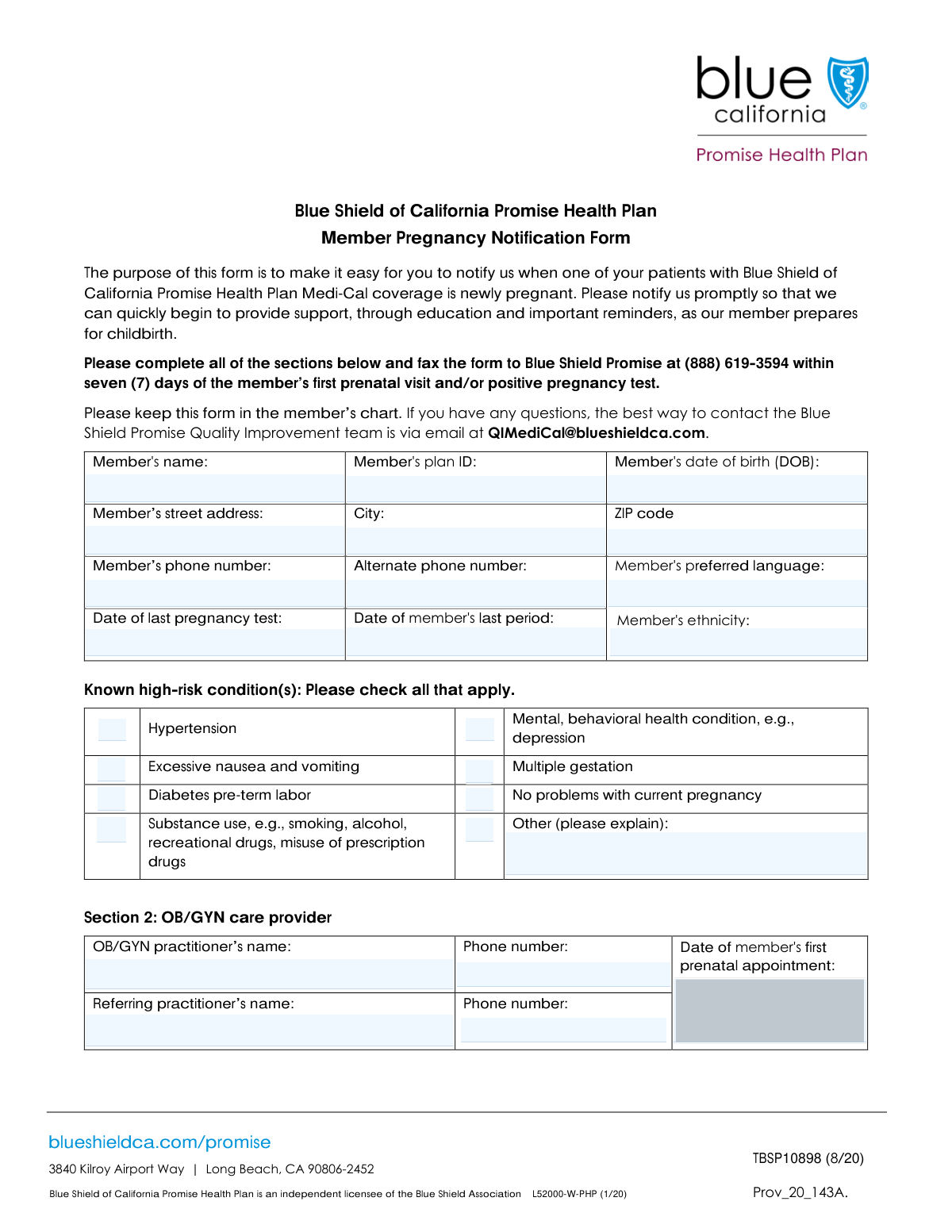
This form is a comprehensive document for collecting a pregnant member's personal, medical, and pregnancy-related information to assess for high-risk factors. It is essential for notifying health insurance plans so they can coordinate appropriate care, resources, and support for the member. Today this form can be filled out quickly and accurately using AI-powered services like Instafill.ai, which can also convert non-fillable PDF versions into interactive fillable forms.
Our AI automatically handles information lookup, data retrieval, formatting, and form filling.
It takes less than a minute to fill out High-Risk Pregnancy Form using our AI form filling.
Securely upload your data. Information is encrypted in transit and deleted immediately after the form is filled out.

Form specifications

Form name: High-Risk Pregnancy Notification Form
Number of fields: 26
Number of pages: 1
Language: English
main-image

Instafill Demo: How to fill out PDF forms in seconds with AI

How to Fill Out High-Risk Pregnancy Form Online for Free in 2026

Are you looking to fill out a HIGH-RISK PREGNANCY FORM form online quickly and accurately? Instafill.ai offers the #1 AI-powered PDF filling software of 2026, allowing you to complete your HIGH-RISK PREGNANCY FORM form in just 37 seconds or less.
Follow these steps to fill out your HIGH-RISK PREGNANCY FORM form online using Instafill.ai:
  1. 1 Navigate to Instafill.ai and upload your High-Risk Pregnancy Notification Form or find it in the template library.
  2. 2 Enter the member's personal information, including their name, plan ID, date of birth, and address.
  3. 3 Provide specific details about the pregnancy, such as the date of the last period and the first prenatal appointment.
  4. 4 Indicate any known high-risk conditions by checking the relevant boxes and providing explanations where necessary.
  5. 5 Fill in the information for the OB/GYN and referring practitioners, including their names and phone numbers.
  6. 6 Use the AI-powered assistant to review the entire form for completeness and accuracy before finalizing.
  7. 7 Securely download, print, or share the completed form with the health plan or healthcare provider.

Our AI-powered system ensures each field is filled out correctly, reducing errors and saving you time.

Why Choose Instafill.ai for Your Fillable High-Risk Pregnancy Form Form?

Speed

Complete your High-Risk Pregnancy Form in as little as 37 seconds.

Up-to-Date

Always use the latest 2026 High-Risk Pregnancy Form form version.

Cost-effective

No need to hire expensive lawyers.

Accuracy

Our AI performs 10 compliance checks to ensure your form is error-free.

Security

Your personal information is protected with bank-level encryption.

Frequently Asked Questions About Form High-Risk Pregnancy Form

This form is used to collect essential health and contact information for a pregnant member. It helps the health plan identify any high-risk conditions to ensure the member receives the appropriate level of care throughout their pregnancy.

This form can be completed by the pregnant member, their referring physician, or their OB/GYN's office. It is used to communicate important health details to the member's health plan.

You will need the member's full name, plan ID number, date of birth, and contact information. You will also need pregnancy-related dates, such as the last menstrual period, and the names and phone numbers of the OB/GYN and referring practitioner.

The Referring Practitioner is the doctor who referred you for pregnancy care, often your primary care physician. The OB/GYN Practitioner is the specialist who will manage your health throughout the pregnancy and delivery.

Provide the most accurate date you can remember. If you are very unsure, your doctor can provide a more accurate estimate after your first ultrasound, which can be updated later.

If there are no known complications with your pregnancy, you should check the box labeled 'No Problems with Current Pregnancy'. This indicates a standard-risk pregnancy at the time of form submission.

This field is for describing any high-risk condition you have that is not already listed as an option on the form. Be specific and provide as much detail as necessary for your care team to understand the condition.

If you have scheduled your first prenatal appointment, enter the future date in the designated field. If you have not yet scheduled it, you may leave it blank and provide the information later.

While it may not be mandatory, providing an alternate phone number is strongly recommended. It ensures your care team has another way to contact you or a trusted person in case of an emergency.

These checkboxes correspond to specific medical conditions that could complicate a pregnancy, such as 'Multiple Gestation' or 'Mental, Behavioral Health Condition'. You or your provider should check all that apply to your situation.

Yes, you can use AI-powered services like Instafill.ai to help complete this form. These tools can accurately auto-fill your personal information, saving you time and helping to prevent errors.

To fill this form online, simply upload the document to the Instafill.ai platform. The AI will make the fields interactive, allowing you to type your answers or auto-fill them from your saved profile.

If you have a non-fillable or 'flat' PDF, you can use a service like Instafill.ai. Upload the file, and it will automatically convert it into an interactive, fillable form that you can complete and sign digitally.

Compliance High-Risk Pregnancy Form
Validation Checks by Instafill.ai

Common Mistakes in Completing High-Risk Pregnancy Form

Incorrect or Incomplete Member Plan ID

Users often mistype their Plan ID number or confuse it with other identification numbers, such as a Social Security Number or a secondary insurance ID. This is a critical error as the Plan ID is the primary key for linking the form to the member's health records and benefits. An incorrect ID will almost certainly lead to processing delays, claim rejections, and the inability to coordinate care until the information is corrected.

Inconsistent or Invalid Date Formatting

The form contains multiple date fields (Date of Birth, Last Period, Appointment Date), and users frequently enter dates in inconsistent formats (e.g., MM-DD-YY vs. YYYY/MM/DD). This can cause data entry systems to reject the form or misinterpret critical dates, potentially affecting medical timelines and eligibility checks. To avoid this, always use the specified MM/DD/YYYY format if one is requested, or be consistent across all fields. AI-powered tools like Instafill.ai can automatically format dates correctly, preventing these errors.

Contradictory Checkbox Selections

A common mistake is selecting conflicting options, such as checking the box for 'No Problems with Current Pregnancy' while also checking a box for a specific high-risk condition like 'Multiple Gestation'. This happens when users quickly scan the form and check all that might apply without re-reading. This contradiction creates confusion for the reviewing medical staff, requiring a follow-up call to clarify the member's actual health status and delaying the assessment.

Missing Explanation for Conditional Fields

The form requires a detailed explanation if 'Other High-Risk Condition' is checked, but users often check the box and forget to provide the mandatory description. This leaves a critical information gap, making it impossible for the care team to understand the specific risk. This oversight renders the selection useless and requires staff to contact the member or referring practitioner for the missing details, delaying proper care planning.

Using Informal or Partial Practitioner Names

When filling out fields like 'OB/GYN Practitioner's Name', people often write an informal name like 'Dr. Smith' instead of the full name, 'Dr. Jane Smith'. This ambiguity makes it difficult and time-consuming to identify and contact the correct provider, especially if they work in a large practice or hospital system. Always provide the practitioner's full first and last name as it appears on their official records to ensure seamless communication between providers.

Incomplete Residential Address

Users frequently omit crucial parts of their address, most commonly the apartment, unit, or suite number. This happens due to haste or assuming the postal service can figure it out. An incomplete address will result in important documents, test results, and other correspondence being returned as undeliverable, causing significant communication delays and potentially impacting care.

Phone Number Formatting Errors or Typos

Simple typos or inconsistent formatting in phone number fields are extremely common. Users may forget an area code, transpose digits, or use varied formats like (555)123-4567 and 5551234567. These errors can prevent automated systems from processing the number and make it impossible for healthcare staff to contact the member for urgent updates or appointment confirmations. Using a form-filling tool like Instafill.ai can help validate and standardize phone number formats.

Using a Nickname Instead of a Full Legal Name

In the 'Member's Name' field, individuals sometimes enter a nickname or a shortened version of their name instead of their full legal name. This creates a mismatch with official insurance and medical records, leading to identity verification failures. Such discrepancies can delay or prevent the processing of the form until the name is corrected to match the one on the member's plan.

Omitting Demographic Information

Fields for 'member's preferred language' and 'member's ethnicity' are often skipped because users may perceive them as optional or irrelevant. However, this information is vital for providing patient-centered and culturally competent care, including arranging for translation services if needed. Leaving these fields blank can result in communication barriers and a lower quality of care.

Recall Error for Medical Dates

For fields like 'Date of Last Period' or 'Date of Last Pregnancy Test', members may not remember the exact date and provide a rough estimate. While sometimes unavoidable, a significantly inaccurate date can impact clinical assessments, such as calculating the estimated due date. It is best to consult a personal calendar or medical records to provide the most accurate date possible before filling out the form.
Saved over 80 hours a year

“I was never sure if my IRS forms like W-9 were filled correctly. Now, I can complete the forms accurately without any external help.”

Kevin Martin Green

Your data stays secure with advanced protection from Instafill and our subprocessors

Robust compliance program

Transparent business model

You’re not the product. You always know where your data is and what it is processed for.

ISO 27001, HIPAA, and GDPR

Our subprocesses adhere to multiple compliance standards, including but not limited to ISO 27001, HIPAA, and GDPR.

Security & privacy by design

We consider security and privacy from the initial design phase of any new service or functionality. It’s not an afterthought, it’s built-in, including support for two-factor authentication (2FA) to further protect your account.

Fill out High-Risk Pregnancy Form with Instafill.ai

Worried about filling PDFs wrong? Instafill securely fills high-risk-pregnancy-notification-form forms, ensuring each field is accurate.