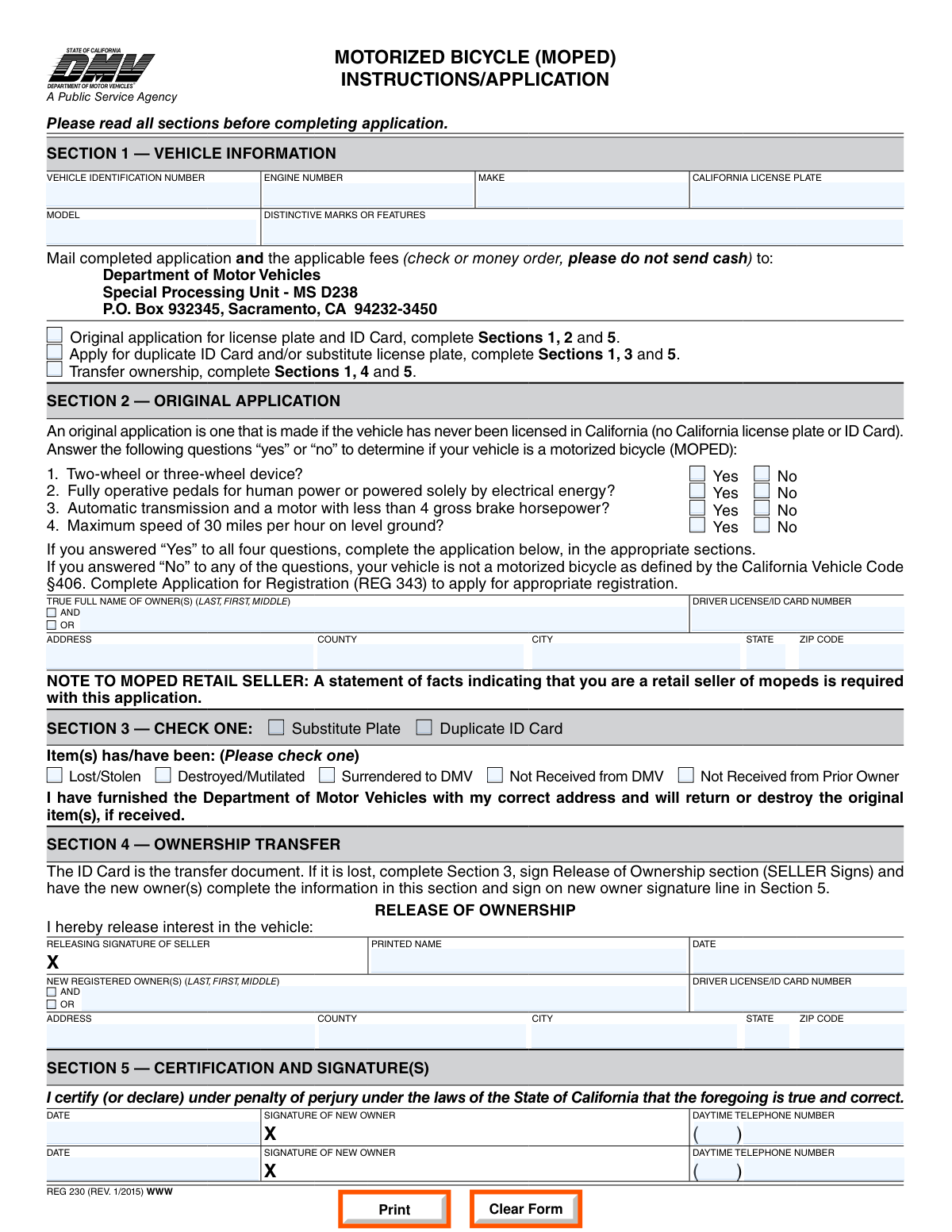
The Vehicle Identification Number (VIN) is a unique code used to identify individual motor vehicles. When filling out the Motorized Bicycle Application, it is crucial to enter the VIN accurately. An incorrect VIN can lead to registration issues and legal complications. To avoid this mistake, double-check the VIN on the vehicle itself, not just on any existing documents, as they may contain errors. Ensure that each character is entered correctly, as a single transposed or incorrect character can invalidate the entire number.
The engine number is a critical piece of information required for the Motorized Bicycle Application. Neglecting to include the engine number can result in processing delays or even the rejection of the application. To prevent this oversight, verify the engine number on the motorized bicycle before filling out the form. Make sure to enter it in the designated field and review it for accuracy. If the engine number is not clearly visible on the bicycle, consult the manufacturer's documentation or contact the manufacturer for assistance.
Identifying the manufacturer of the motorized bicycle is essential for proper registration and identification. Failure to specify the manufacturer can lead to confusion and potential legal issues. To avoid this mistake, locate the manufacturer's name on the bicycle or refer to the purchase documents. Enter the full name of the manufacturer as it appears on official documents, without abbreviations or errors. If you are unsure of the correct manufacturer name, conduct a verification check through the manufacturer's website or customer service.
For applicants in California, providing the license plate number is mandatory if the motorized bicycle has been previously registered in the state. Leaving this field blank can cause the application to be incomplete. To ensure this information is accurately provided, check the current license plate on the bicycle and enter the number exactly as it appears. If the license plate is lost or illegible, contact the California Department of Motor Vehicles (DMV) to obtain the correct information before submitting the application.
The model of the motorized bicycle is another key detail that must be included in the application. Neglecting to indicate the model can hinder the identification and registration process. To avoid this error, confirm the model name or number directly from the bicycle, ensuring it matches any existing registration or purchase documents. Input the model information carefully, and recheck it for accuracy to prevent any discrepancies. If the model is not specified on the bicycle, consult the owner's manual or contact the manufacturer for the correct model designation.
Applicants often overlook the section requiring a description of distinctive marks or features on their motorized bicycle. This information is crucial for identification purposes and can aid in recovery if the bicycle is stolen. To avoid this mistake, thoroughly inspect your motorized bicycle before filling out the application and note any unique characteristics, such as scratches, decals, or custom parts. Ensure that these details are clearly and accurately described in the designated section of the form.
Incorrectly answering the 'yes' or 'no' questions in Section 2 can lead to processing delays or even the rejection of the application. It is essential to read each question carefully and understand what is being asked. Applicants should double-check their responses before submission to ensure they reflect the true circumstances. If there is any confusion about a question, it is advisable to seek clarification from the issuing authority before answering.
Some applicants mistakenly use the Motorized Bicycle Application form for vehicles that do not meet the criteria for a motorized bicycle. To prevent this error, review the specific requirements for motorized bicycles as defined by the relevant motor vehicle authority. These typically include specifications on engine size, maximum speed, and power output. If your vehicle does not conform to these standards, it may require a different form of registration.
Failing to specify 'AND' or 'OR' in the ownership type section can create ambiguity regarding the legal ownership and rights of the parties involved. This distinction is important in determining how the property is shared and what happens if one of the owners passes away. To avoid this mistake, discuss the implications of 'AND' versus 'OR' with all parties involved in the ownership before completing the form. Make sure the chosen option is clearly indicated in the appropriate field.
Submitting an application with an incomplete or incorrect address can result in important documents being sent to the wrong location, leading to delays or loss of correspondence. Before submitting the application, verify that the address provided is complete, including any apartment or suite numbers, and matches the address on your official documents. It is also advisable to double-check the spelling of all street names and the accuracy of the zip code.
Applicants often overlook the necessity to indicate whether they are requesting a 'Substitute Plate' or a 'Duplicate ID Card'. This selection is crucial for processing the application correctly. To avoid this mistake, applicants should carefully review the entire form before submission to ensure that all required fields are completed. Double-checking the form against the provided instructions can help ensure that no selections are missed.
Omitting the reason for requesting a duplicate or substitute can lead to delays in processing the application. It is important to provide a clear and valid reason for the request to facilitate a smooth transaction. Applicants should take the time to read the form's instructions carefully and provide a detailed explanation for the need for a duplicate or substitute. This helps the authorities understand the context of the request and act accordingly.
Applicants sometimes fail to acknowledge their responsibility for the original items when applying for a substitute or duplicate. It is essential to recognize that the applicant is responsible for any misuse of the original plates or ID card. To prevent this oversight, applicants should ensure they read and understand all declarations and responsibilities stated on the form. Acknowledging responsibility for the original items is a legal requirement and must be taken seriously.
The transaction cannot be completed if the seller does not sign the RELEASE OF OWNERSHIP section. This signature is a legal requirement that transfers ownership from the seller to the buyer. Sellers should carefully review the form to ensure that all necessary sections are signed. It is advisable to go through a checklist of required actions and confirm that the RELEASE OF OWNERSHIP section is not overlooked before submitting the form.
When transferring ownership, it is a common error for the new owner to provide incomplete name information. Full legal names must be provided to ensure the ownership transfer is legally binding and accurately recorded. New owners should double-check that they have provided their full legal names as they appear on official identification documents. Providing complete and accurate information helps to avoid complications in the ownership transfer process.
Failing to include the driver license or ID card number for the new owner can lead to processing delays or even rejection of the application. It is crucial to double-check that this information is filled in accurately. The driver license or ID card number is a unique identifier that helps the authorities verify the identity of the new owner. Applicants should ensure they have their driver license or ID card on hand when completing the Motorized Bicycle Application to avoid this oversight.
The certification and signature section of the Motorized Bicycle Application is a legal attestation of the accuracy and truthfulness of the information provided. Neglecting to include the date can invalidate the application. It is important to remember that this date confirms when the applicant signed the document, which may have legal implications. To prevent this mistake, applicants should review the entire form upon completion, paying special attention to the certification and signature section to ensure that no fields, including the date, have been missed.
A daytime telephone number is often required for any follow-up communication that may be necessary during the application process. When a new owner does not provide this information, it can hinder the ability of the authorities to contact them if there are any questions or issues with the application. To avoid this mistake, new owners should ensure they provide a telephone number where they can be readily reached during business hours. It is also advisable to double-check the number for accuracy before submitting the application.
MOPED retail sellers are required to include a statement of facts with their Motorized Bicycle Application. This statement provides essential information that may not be captured elsewhere in the application. Failure to include this statement can result in processing delays or the application being deemed incomplete. Retail sellers should prepare this statement in advance and ensure it is attached to the application. It is also recommended to keep a copy of the statement for their records.
Submitting cash with the Motorized Bicycle Application is not advisable as it poses a security risk and may lead to loss of funds. Authorities typically require payment to be made via check or money order to ensure a secure transaction. To avoid this mistake, applicants should obtain a check or money order for the correct amount and make it payable to the appropriate agency as indicated on the application instructions. Additionally, writing the application or license number on the check or money order can help ensure that the payment is applied to the correct account.
Applicants often send their Motorized Bicycle Application to an incorrect address, which can result in delays or the application not being processed. To avoid this, double-check the address provided in the application instructions before mailing. Ensure that you have the most current address, as it may change periodically. It is also advisable to verify the address with the issuing authority either through their official website or by contacting their customer service.
Illegible handwriting on the Motorized Bicycle Application can lead to misinterpretation of the information, causing processing delays or even rejection of the application. To prevent this, fill out the form using clear and legible handwriting, preferably in black ink. If handwriting is a concern, consider typing the information if the form allows. Always review the written information to ensure it is readable before submitting the application.
Failing to certify the truth and correctness of the information provided on the Motorized Bicycle Application under penalty of perjury is a serious oversight. This certification is a legal requirement and attests to the accuracy of the information provided. To avoid this mistake, carefully read through the entire application before signing and ensure that all information is accurate and complete. Look for the certification section and provide a signature as instructed to acknowledge the statement under penalty of perjury.