How a hemp farm files 95 compliance forms in under 10 minutes instead of 3–4 days
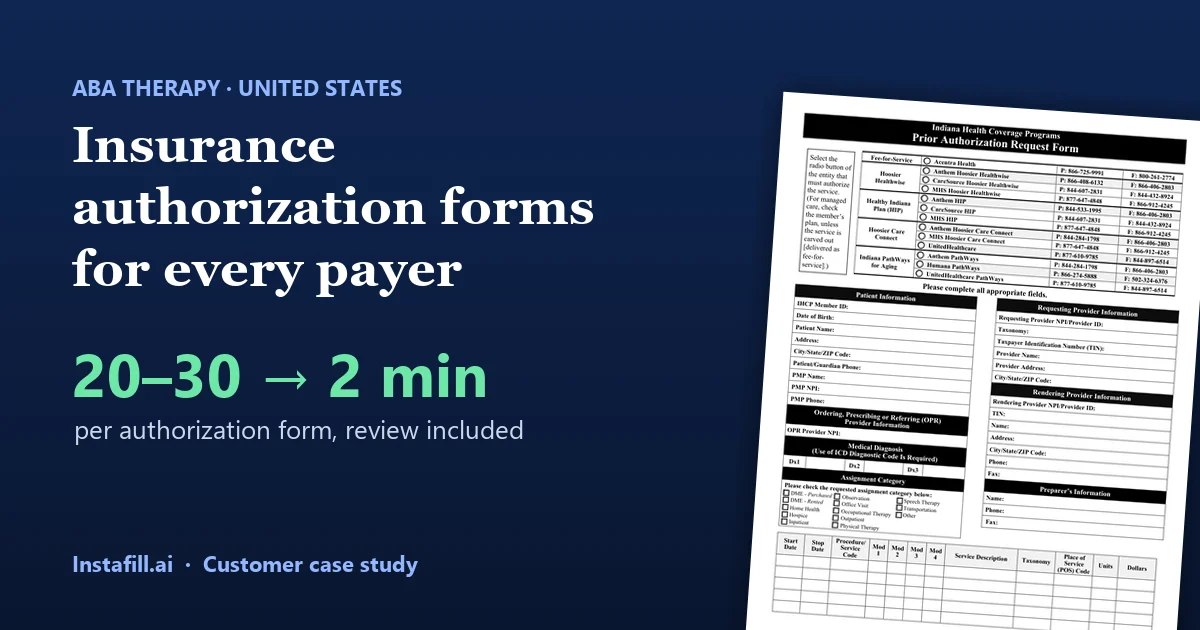
Terpene Belt Farms grows industrial hemp in California across dozens of field lots and several cultivation sites, and every step from planting to harvest and destruction needs a California Department of Food and Agriculture (CDFA) form, some of them within 72 hours. Its compliance manager, Sarah, now fills them with Instafill.ai straight from the farm's Smartsheet data: 95 Sample Analysis Request Forms (SARFs) that took 3–4 days are done in under 10 minutes.
At a glance
- Company Terpene Belt Farms
- Industry Agriculture (industrial hemp)
- Location California, US
- Forms CDFA hemp registration, planting, sample analysis, harvest and destruction forms
-
Results
Under 10 min for 95 SARFs, down from 3–4 days
Under 1 min per SARF, down from 20–30 minutes
90% less staff time on the forms each season - Form categories California state forms, Compliance forms
The challenge
The farm files more than 100 regulated forms a year:
| Form | When it is due | Per year |
|---|---|---|
| Industrial Hemp Registration | March 15 | 3 |
| Planting Report | Mid-May to July, by site | 6–7 |
| Destruction Plan | Right after planting | 2–3 |
| Sample Analysis Request Form (SARF) | As soon as possible after planting, one per lot | 68–95 |
| Destruction Report | Within 72 hours of destruction | 3–5 |
| Harvest Report | Within 72 hours of harvest | 10–20 |
| Final Destruction Report | After harvest, before the rainy season | 1–3 |
Each form asks for site APNs, GPS coordinates, cultivars, lot sizes, planting dates and harvest deadlines, and that data sat in separate Smartsheets, CSV files and internal documents, each laid out differently. Staff opened a blank PDF, copied the data over, reformatted the lot details, exported to PDF and uploaded it to DocuSign, one form at a time.
The forms add work of their own. Most have room for only 4–6 line items a page, so a large planting or harvest batch spills into extra forms or a supplemental attachment that has to agree with the main form. And destruction and harvest reports are due within 72 hours of the event, tracked across several counties and lots.
The solution
The setup was done once. Static details such as APNs, site names and GPS coordinates were mapped, and the data that changes, cultivars and lots, comes straight from the farm's Smartsheet exports through filling from documents and spreadsheets.
Instafill.ai reads each form's field logic and fills every field with AI, with no copying or reformatting by hand. It also picks the right variant of a form from the context, whether Contra Costa or Alameda County, grower or breeder, destruction plan or harvest report.
When the cultivars or lots outrun the rows a form has, table and list filling puts the rest in a supplemental table as a separate PDF and writes the "See Attachment A" reference into the main form. The finished documents come back as signature-ready PDFs, so no DocuSign envelope has to be prepared for each form.
The results
| By hand | With Instafill.ai | |
|---|---|---|
| A SARF | 20–30 minutes | Under 1 minute |
| A Planting Report | 25–40 minutes | 2–3 minutes |
| A destruction form | 15–25 minutes | 1–2 minutes |
| A Harvest Report | 30–45 minutes | 3–5 minutes |
| 95 SARFs | 3–4 days | Under 10 minutes |
| Supplemental attachments | Built in Excel and exported to PDF | Generated from the Smartsheet data |
Staff time on the forms, about 50–70 hours a season before, fell by 90%.
"Instafill.ai turned 95 SARFs from a nightmare into a 10-minute task. The automated tables and 72-hour deadline support keep us compliant, even during rainy seasons."
— Sarah, Compliance Manager, Terpene Belt Farms