Fill out automotive licensing forms
with AI.
Automotive licensing forms are essential for maintaining regulatory compliance within the motor vehicle industry. These documents ensure that brokers, dealers, and individual sellers adhere to state and local laws regarding vehicle transactions. By documenting every sale or facilitation, these forms provide a transparent paper trail that protects both the business and the consumer, ensuring that all automotive commerce is tracked and accounted for by occupational licensing branches.
By continuing, you acknowledge Instafill's Privacy Policy and agree to get occasional product update and promotional emails.
About automotive licensing forms
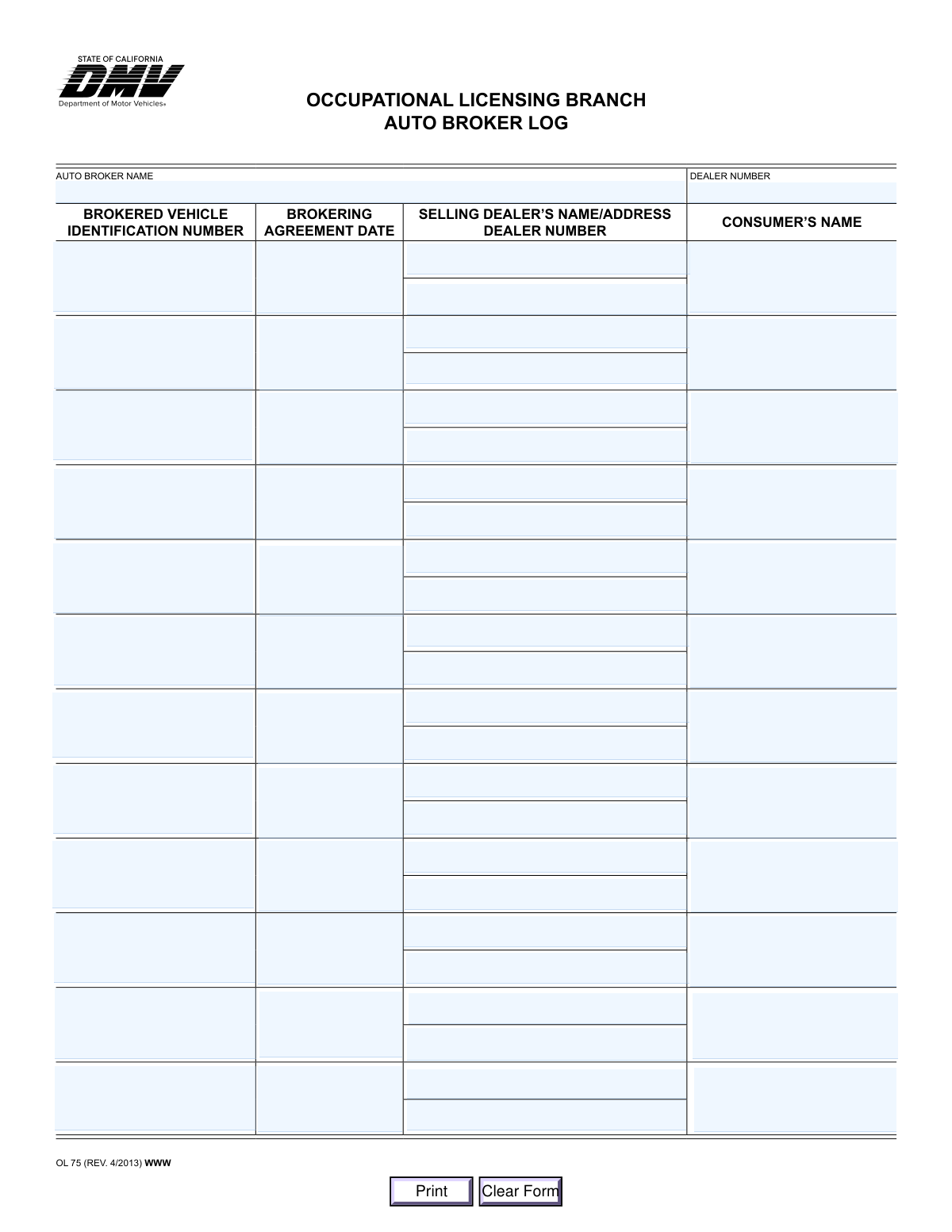
This category primarily serves professionals in the automotive sector, such as auto brokers, dealership administrators, and independent sellers. For example, brokers use specific logs like Form OL 75 to record transaction details, including vehicle information and consumer agreements. These forms are typically required during audits or as part of annual licensing renewals. Managing this paperwork is a critical, albeit time-consuming, part of operating a compliant automotive business.
Dealing with government and regulatory paperwork often involves navigating complex layouts and repetitive data entry. Using AI-powered tools like Instafill.ai allows users to complete these automotive licensing forms in under 30 seconds while ensuring data accuracy and security. This technology streamlines the administrative process by automatically mapping information to the correct fields, allowing professionals to focus more on their clients and less on manual data entry.
Every form on this page can be completed without typing. Instafill is form filling software that reads a PDF and fills it for you — including flat and scanned documents that carry no fillable fields at all.
Forms in This Category
The forms in this category have a median Form Complexity Index of 61/100 (Moderate), measured across 1 forms by field count, input difficulty, length, conditional logic and structure. See how it is calculated.
| Form Name | Pages | FCI | |
|---|---|---|---|
| 1. | Form OL 75, Auto Broker Log | 1 | Moderate 61 |
- Enterprise-grade security & data encryption
- 99%+ accuracy powered by AI
- 1,000+ forms from all industries
- Complete forms in under 60 seconds
How to Choose the Right Form
Understanding the Auto Broker Log
If you are operating as an auto broker, maintaining accurate records is a legal requirement for your occupational license. Currently, the primary document in this category is Form OL 75, Auto Broker Log. This document is essential for compliance with the Occupational Licensing Branch and serves as your official ledger for all facilitated vehicle transactions.
Is Form OL 75 Right for You?
You should select this form if your business model involves acting as an intermediary between a consumer and a selling dealer. You will need Form OL 75 to document specific details for every deal you facilitate, including:
- Vehicle Specifics: Recording the year, make, and Vehicle Identification Number (VIN) for every unit sold.
- Transaction Parties: Identifying the selling dealer and the consumer involved in the deal to establish a clear chain of sale.
- Agreement Dates: Tracking exactly when the brokering agreement was executed to ensure your records align with state regulations.
Why Compliance Matters
For licensed brokers, the Auto Broker Log is more than just a list; it is a regulatory requirement. Failure to maintain a complete and accurate log can lead to complications during audits or when seeking license renewals. Because this form requires precise, repetitive data entry for every transaction, many professionals find that digital management is the safest way to avoid compliance gaps.
Streamlining Your Paperwork with AI
Filling out logs manually is time-consuming and prone to human error. By using Instafill.ai, you can simplify the management of your Form OL 75:
- Automate Entry: Use AI to quickly populate vehicle and dealer information, reducing the time spent on repetitive administrative tasks.
- Ensure Legibility: Produce clean, professional records that are easy for the Occupational Licensing Branch to review.
- Interactive Conversion: If you are working with a static PDF version of the Auto Broker Log, our platform can instantly convert it into a fillable format, allowing you to update your records from any device.
Form Comparison
| Form | Primary Purpose | Required Information | Compliance Usage |
|---|---|---|---|
| Form OL 75, Auto Broker Log | Records every vehicle transaction facilitated by an auto broker for state regulatory compliance. | Includes vehicle details, selling dealer data, consumer information, and specific agreement dates. | Maintained for the Occupational Licensing Branch to facilitate tracking and official auditing. |
Tips for automotive licensing forms
One of the most common errors in automotive licensing is mistyping the 17-digit VIN. Always verify the code against the physical vehicle or official title document to prevent processing delays or compliance issues with the licensing branch.
For forms like the Auto Broker Log, it is essential to record transactions as they occur rather than waiting for a later date. Maintaining a chronological record ensures your logs are always audit-ready and reduces the risk of forgetting critical deal details.
AI-powered tools like Instafill.ai can complete automotive licensing forms in under 30 seconds with high accuracy. Your data stays secure during the entire process, providing a practical time-saving solution for brokers dealing with high volumes of paperwork.
Licensing forms often require backup documentation such as dealership agreements or consumer contracts. Keep digital copies of these files organized in folders labeled by transaction ID to make it easier to pull information when filling out your logs.
Leaving fields blank can lead to regulatory scrutiny or the rejection of your licensing documents. If a specific section does not apply to a transaction, use 'N/A' to show that the field was intentionally reviewed rather than accidentally skipped.
Always cross-reference the names and license numbers for both the selling dealer and the consumer against their official state-issued documents. Inconsistent data is a primary reason for administrative delays in the automotive licensing process.
Frequently Asked Questions
Automotive licensing forms are official documents used by state regulatory agencies to monitor and regulate the sale, brokerage, and registration of vehicles. They help ensure that businesses operate within legal frameworks and maintain transparent records for consumer protection and tax compliance.
These forms are generally required for licensed professionals in the automotive industry, such as auto brokers, dealers, and dismantlers. For example, an auto broker must use specific logs to record every transaction they facilitate between a dealership and a consumer.
You will usually need detailed information regarding the vehicle, including the VIN, make, and model, as well as contact details for both the seller and the buyer. Additionally, dates of agreements and specific transaction amounts are often required for compliance tracking.
Submission requirements depend on the specific form and state regulations, but most are filed with the Department of Motor Vehicles (DMV) or a state's Occupational Licensing Branch. Some logs are intended to be kept on-site at the place of business for inspection by state officials rather than being mailed in.
Yes, AI tools like Instafill.ai can be used to fill out these forms in under 30 seconds. The AI accurately extracts data from your source documents and places it into the correct fields, ensuring the form is completed efficiently and with high precision.
While manual entry can take several minutes per record, using an AI-powered service allows you to complete these forms almost instantly. Most users find they can process a standard licensing document in less than 30 seconds by automating the data entry process.
It is generally recommended to maintain copies of your licensing forms and logs for several years, often between three and five years depending on state law. Keeping digital backups is a reliable way to ensure you are prepared for any future audits or compliance reviews.
Failure to keep accurate and up-to-date logs can result in administrative penalties, including fines or the suspension of your professional license. Regulatory agencies perform periodic audits to ensure that all facilitated transactions are recorded according to state standards.
If you are acting in a professional capacity as a broker or dealer, you are typically required to document every transaction that falls under your license type. Private party sales between individuals usually do not require these specific occupational licensing forms.
Many of these forms are specifically intended for individuals or businesses that hold a valid occupational license from the state. You should verify that you have the appropriate credentials, such as an auto broker or dealer license, before executing these legal documents.
Glossary
- Form Complexity Index
- Instafill’s 0–100 measure of how much effort a form takes to complete, calculated deterministically from the form’s own structure rather than estimated. It combines the number of fillable fields (the largest factor), how difficult those fields are to complete based on their type, the number of pages that contain fields, the amount of conditional “fill-only-if” logic, and how many sections the form is divided into, then adds modifiers for tables and repeating lists, bundled instruction pages, and dense page layouts. A higher score means the form is harder to fill out by hand. The forms in this category have a median Form Complexity Index of 61/100 (Moderate). See exactly how it is calculated.
- Occupational Licensing (OL)
- A specialized division within the Department of Motor Vehicles (DMV) that regulates and issues permits for automotive professionals, including dealers and brokers.
- Auto Broker
- A licensed intermediary who arranges the purchase or lease of a vehicle for a consumer from a third-party dealer for a fee.
- VIN (Vehicle Identification Number)
- A unique 17-character code assigned to every motor vehicle that serves as its official identification on all licensing and transaction forms.
- Dealer Number
- A unique identification number assigned by the state to authorized automotive businesses for tracking professional activities and regulatory compliance.
- Brokering Agreement
- A legally binding contract between a consumer and a broker that outlines the terms of service, including the specific vehicle requested and the broker's compensation.
- Odometer Disclosure
- A mandatory declaration of a vehicle's current mileage used to ensure accuracy in vehicle history and prevent fraudulent mileage reporting.
- Power of Attorney (Automotive)
- A document that grants a broker or dealer the legal authority to sign title and registration paperwork on behalf of the vehicle owner.
- Logbook Compliance
- The legal requirement for brokers to maintain an organized, chronological record of all transactions to be presented upon request during state audits.