Fill out exception processing forms
with AI.
Exception processing forms are essential tools for resolving administrative discrepancies that fall outside of standard operating procedures. Whether you are dealing with a government agency, a financial institution, or a regulatory body, these forms provide a formal channel to request special handling for unique situations. They are typically used when standard documentation is insufficient or when specific errors in official records—such as identification details or driving histories—require manual review and correction by a state or federal official.
By continuing, you acknowledge Instafill's Privacy Policy and agree to get occasional product update and promotional emails.
About exception processing forms
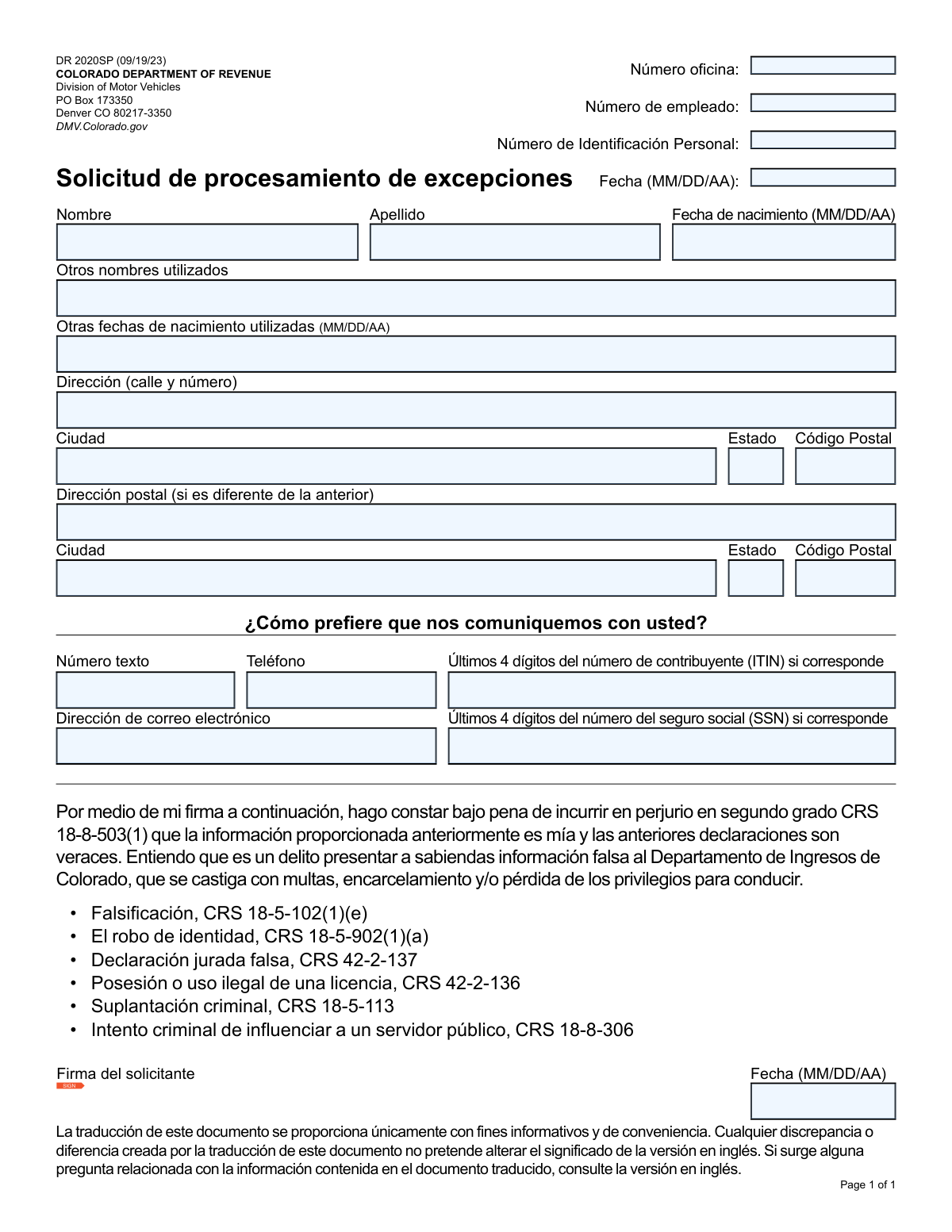
Individuals often encounter these forms during life events that involve complex paperwork, such as updating state-issued identification or resolving tax identification issues. For example, documents like the Exception Processing Application are frequently used by residents to address specific hurdles with the Division of Motor Vehicles or other licensing authorities. Because these documents often require precise personal data and detailed explanations, accuracy is paramount to ensure the request is processed without delay. Tools like Instafill.ai use AI to fill these forms in under 30 seconds, providing a secure and accurate way to manage sensitive data while saving significant time on manual entry.
Every form on this page can be completed without typing. Instafill is form filling software that reads a PDF and fills it for you — including flat and scanned documents that carry no fillable fields at all.
Forms in This Category
The forms in this category have a median Form Complexity Index of 38/100 (Basic), measured across 1 forms by field count, input difficulty, length, conditional logic and structure. See how it is calculated.
| Form Name | Pages | FCI | |
|---|---|---|---|
| 1. | Form DR 2020SP, Exception Processing Application | 1 | Basic 38 |
- Enterprise-grade security & data encryption
- 99%+ accuracy powered by AI
- 1,000+ forms from all industries
- Complete forms in under 60 seconds
How to Choose the Right Form
Navigating Colorado DMV Exception Requests
Exception processing is a specialized pathway for individuals who cannot meet the standard requirements for obtaining a Colorado driver’s license, instruction permit, or identification card. If you find yourself in a situation where traditional documentation is unavailable or contains discrepancies, you likely need to file a specific application to have your case reviewed manually by the Division of Motor Vehicles.
The Primary Form: DR 2020SP
Currently, the central document for this process is Form DR 2020SP, Exception Processing Application. This form serves as a formal request to the Colorado DMV to look beyond standard automated checks and evaluate your unique circumstances.
You should choose Form DR 2020SP if your situation involves:
- Identity Document Discrepancies: Use this form if your birth certificate, passport, or other identity documents have minor name variations or clerical errors that prevent standard electronic verification.
- Missing Documentation: If you are unable to provide the specific proofs of residency or identity required by the standard DMV checklists, this application initiates a manual review of the alternative documents you do possess.
- Driving Record Issues: If there is a unique situation regarding your driving history or license status that requires special handling or clarification by DMV officials, this form provides the necessary framework for that request.
What You Will Need
When preparing to complete Form DR 2020SP, ensure you have the following information ready to avoid delays in processing:
- Personal Identification: Your full legal name, date of birth, and current residential address.
- Taxpayer Information: Your Social Security Number (SSN) or Individual Taxpayer Identification Number (ITIN).
- Supporting Narrative: A clear explanation of the specific exception you are requesting and why standard documentation is not available.
Using Instafill.ai, you can transform the static PDF of Form DR 2020SP into a smart, fillable document. Our AI-powered tools help ensure that your personal details and taxpayer information are placed correctly, reducing the risk of rejection due to formatting errors.
Form Comparison
| Form | Purpose | Who Files It | Key Requirements |
|---|---|---|---|
| Form DR 2020SP, Exception Processing Application | Request special handling for driver's license or identification document discrepancies with the Colorado DMV. | Individuals needing to resolve unique identification issues or driving record errors in Colorado. | Requires personal details, current address, and taxpayer identification numbers to verify the applicant's identity. |
Tips for exception processing forms
Exception processing forms typically require proof of your unique situation, such as legal name change documents or identity verification. Having these digital files ready before you begin will prevent session timeouts and streamline the submission process. Ensure all scans are clear and legible to avoid rejection by the reviewing agency.
When explaining the reason for your exception request, focus on factual details regarding the discrepancy in your records. Avoid emotional language and instead clearly state the specific resolution you are seeking. A well-organized explanation helps the reviewer process your case more efficiently without needing further clarification.
Double-check that your Social Security Number, ITIN, or other identification numbers are entered correctly. These fields are critical for identity verification, and even a single digit error can lead to an immediate denial of your application. Consistency across all identification documents is essential for a successful exception request.
AI-powered tools like Instafill.ai can complete these complex forms in under 30 seconds with high accuracy, significantly reducing manual effort. The platform ensures your data stays secure during the process while turning static PDFs into interactive, easy-to-fill documents. This is a major time-saver for individuals managing multiple administrative requests.
Handwritten forms are prone to data entry errors if the handwriting is difficult for agency staff to interpret. Filling out these forms digitally ensures that every character is clear, professional, and easy to read. This minimizes the risk of your information being recorded incorrectly in official government systems.
Always save a digital copy of your completed form and any attached evidence before hitting submit. Having a record of exactly what you provided allows you to reference your statements if you need to follow up with the DMV or another agency. Storing these in a dedicated folder helps you stay organized throughout the processing period.
One of the most common reasons for processing delays is a missing signature or date at the bottom of the form. Review the entire document for any mandatory checkboxes or signature lines that may have been overlooked. Ensuring the form is 100% complete before submission prevents the frustration of having it returned for corrections.
Frequently Asked Questions
Exception processing forms are designed to handle unique cases or discrepancies that fall outside standard administrative procedures. In the context of motor vehicle services, they are often used to resolve issues with identification documents, residency proof, or driving records that cannot be fixed through regular automated channels.
Individuals who encounter errors in their Colorado driving history or those who have unique circumstances regarding their legal identity or residency documents may need to file this application. It serves as a formal request for the DMV to review and manually adjust records that standard systems cannot process.
Special handling is required when there is a mismatch in personal data, such as a name change not reflected correctly or an incorrect taxpayer identification number. If you are unable to renew a license or obtain a state ID due to data discrepancies, this form is often the required first step for resolution.
While specific requirements vary, you generally need to provide supporting evidence that justifies the exception, such as birth certificates, social security cards, or legal name change documents. The form itself requires your full legal name, current address, and specific details about the record issue you are trying to resolve.
Generally, if a DMV technician or an automated system informs you that your record has a 'stop' or a discrepancy that cannot be cleared over the counter, you likely need to file an exception application. It is intended for situations where standard documentation is either unavailable or does not match existing state records.
Yes, you can use AI tools like Instafill.ai to complete exception processing forms quickly and accurately. These tools can extract data from your supporting documents and place it directly into the form fields, ensuring that complex details like identification numbers are entered correctly.
Completed forms are typically submitted directly to the Colorado Division of Motor Vehicles, either by mail or through a designated online portal. It is important to check the current instructions on the form or the DMV website to ensure you are sending it to the correct department for review.
Using traditional manual methods, these forms can take a significant amount of time to ensure every detail is correct. However, with AI-powered services like Instafill.ai, these forms can be filled in under 30 seconds by automatically pulling information from your source documents.
Filing the application itself may not always carry a specific fee, but there are often costs associated with the underlying services, such as license renewal or record correction. You should verify with the specific state agency whether a processing fee is required at the time of submission.
Once submitted, the application undergoes a manual review by a state official to verify the provided information against existing records. If the exception is granted, the record will be updated, and the applicant is usually notified of the outcome or any further steps needed to complete their transaction.
Glossary
- Form Complexity Index
- Instafill’s 0–100 measure of how much effort a form takes to complete, calculated deterministically from the form’s own structure rather than estimated. It combines the number of fillable fields (the largest factor), how difficult those fields are to complete based on their type, the number of pages that contain fields, the amount of conditional “fill-only-if” logic, and how many sections the form is divided into, then adds modifiers for tables and repeating lists, bundled instruction pages, and dense page layouts. A higher score means the form is harder to fill out by hand. The forms in this category have a median Form Complexity Index of 38/100 (Basic). See exactly how it is calculated.
- Exception Processing
- A specialized review procedure for individuals who cannot meet standard documentation requirements for a driver's license or ID card due to unique circumstances.
- Legal Presence
- The status of being a U.S. citizen or a non-citizen who is legally authorized to be in the United States, which must be proven during the application process.
- Discrepancy
- An inconsistency or mismatch in personal data, such as a name or birthdate, between different official records that requires clarification via the exception process.
- ITIN (Individual Taxpayer Identification Number)
- A tax processing number issued by the IRS for individuals who are not eligible for a Social Security Number but are required to provide a taxpayer ID on state forms.
- Secondary Identification
- Alternative documents used to verify identity when primary documents, like a birth certificate or passport, are unavailable or expired.
- Proof of Residency
- Official documents, such as utility bills or lease agreements, that verify an applicant currently lives in the state where they are applying for credentials.
- Certified Copy
- A duplicate of an original document that has been verified as an accurate copy by the issuing government agency, typically featuring an official seal or stamp.
- Affidavit
- A formal, written statement of facts that is signed by the applicant under oath to explain missing information or unique identity situations.