Fill out legislative forms
with AI.
Legislative forms are essential documents used to record, track, and formalize the lawmaking process. They serve as the official paper trail for government proceedings, ranging from the documentation of floor debates to the submission of petitions and the introduction of new bills. These records are vital for maintaining transparency in governance, providing a historical account of legislative intent, and ensuring that the public can stay informed about the actions of their elected representatives.
By continuing, you acknowledge Instafill's Privacy Policy and agree to get occasional product update and promotional emails.
About legislative forms
These documents are primarily utilized by legal researchers, historians, government officials, and policy analysts who need to verify specific legislative actions or study the evolution of law. Whether you are searching for historical records like the Congressional Record or preparing contemporary documentation for government submission, accuracy is paramount. In many cases, these forms require navigating complex terminology and specific formatting standards to ensure they are legally compliant and properly filed within the appropriate legislative body.
Managing these detailed documents can be time-consuming, but tools like Instafill.ai use AI to fill these forms in under 30 seconds while ensuring data is handled accurately and securely. By automating the data entry process, users can quickly transform static PDF versions into completed, professional documents, allowing them to focus on the substance of their legislative work rather than the administrative burden of manual form filling.
Every form on this page can be completed without typing. Instafill is form filling software that reads a PDF and fills it for you — including flat and scanned documents that carry no fillable fields at all.
Forms in This Category
The forms in this category have a median Form Complexity Index of 24/100 (Simple), measured across 1 forms by field count, input difficulty, length, conditional logic and structure. See how it is calculated.
| Form Name | Pages | FCI | |
|---|---|---|---|
| 1. | Congressional Record - Proceedings and Debates of the Sixty-sixth Congress, First Session | 1 | Simple 24 |
- Enterprise-grade security & data encryption
- 99%+ accuracy powered by AI
- 1,000+ forms from all industries
- Complete forms in under 60 seconds
How to Choose the Right Form
Legislative forms and records are essential for understanding the legal landscape and the history of American lawmaking. While this category currently features a specific historical document, understanding its purpose can help you determine if it meets your research or filing needs.
Historical Research and Legal Precedent
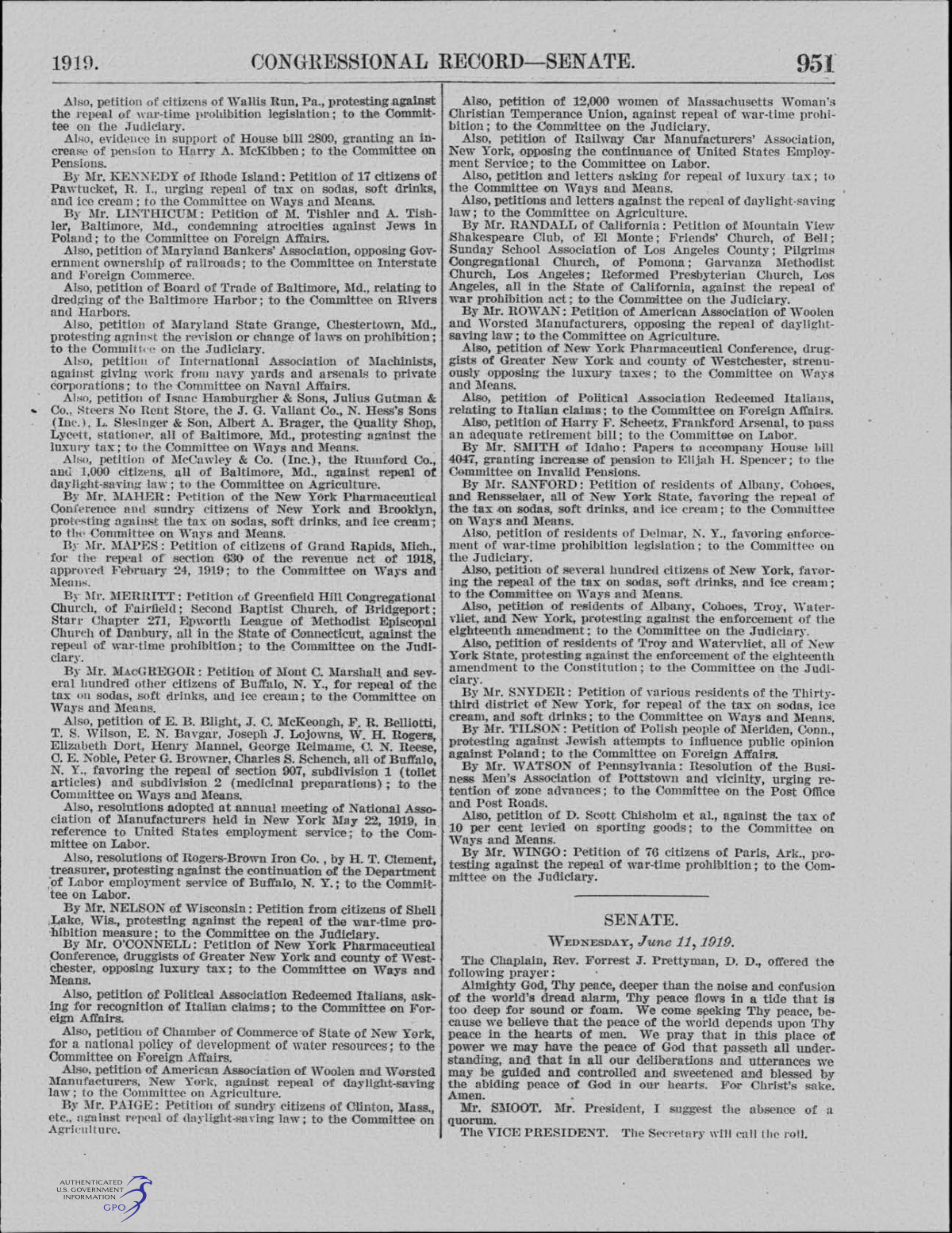
The primary document available here is the Congressional Record - Proceedings and Debates of the Sixty-sixth Congress, First Session. This is not a standard "fill-in-the-blank" form, but rather a comprehensive transcript of legislative activity from 1919. You should choose this document if:
- You are researching legislative intent: It is vital for understanding the context behind laws passed during the post-WWI era.
- You need official citations: Use this to reference specific speeches, petitions, or floor debates from the 66th Congress for legal or academic papers.
- You are conducting historical analysis: It is an excellent resource for genealogical or historical research involving federal petitions or testimonies from that period.
Documenting Legislative Action
Legal professionals often look to the Congressional Record to understand why a specific statute was written the way it was. By reviewing the proceedings and debates, you can gain insights into the arguments made by lawmakers at the time, which is crucial for interpreting older statutes that may still impact modern law.
Modernizing Legislative Workflows
While the record of the 66th Congress is a static historical document, modern legislative work often requires filling out contemporary government forms, applications for public hearings, or lobbyist disclosure reports.
If you have a more recent legislative PDF—such as a constituent service request or a committee submission—that is not currently interactive, you can use Instafill.ai to:
- Convert non-fillable legislative PDFs into smart, fillable forms.
- Use AI to extract data from historical records for research summaries.
- Quickly complete standard government paperwork with automated data entry.
Whether you are looking back at the Proceedings and Debates of the Sixty-sixth Congress for historical context or looking forward to modernizing your current legislative filings, choosing the right tool for the job ensures accuracy and transparency in the lawmaking process.
Form Comparison
| Form | Primary Purpose | Key Contents | Research Value |
|---|---|---|---|
| Congressional Record - Proceedings and Debates of the Sixty-sixth Congress, First Session | Documents the official daily proceedings and debates of the U.S. Congress. | Includes transcripts of speeches, floor debates, petitions, and submitted materials. | Crucial for analyzing legislative history and understanding the lawmaking process. |
Tips for legislative forms
When filling out legislative documents or petitions, double-check that all bill numbers and congressional session dates are exact. Even a minor typo in a legislative reference can cause your submission to be misfiled or overlooked during the official record-keeping process.
Most legislative forms, including public testimony and petitions, become part of the permanent public record. Avoid including sensitive personal data like private home addresses or personal cell numbers unless they are explicitly required by the filing instructions.
Legislative staff process massive volumes of paperwork daily, so clarity is essential. When submitting materials for the record, use bullet points and clear summaries to ensure your key points are easily understood and accurately documented.
Managing complex legislative paperwork is much faster when you automate the data entry. AI-powered tools like Instafill.ai can complete these forms in under 30 seconds with high accuracy, and your data stays secure throughout the entire process, making it a reliable choice for frequent filers.
Always keep a digital copy of every form and petition you submit to a legislative body. Organizing these files by session and bill number helps you track the history of an issue and provides a necessary reference if you need to resubmit materials in the future.
Different legislative offices have varying rules regarding digital signatures versus traditional signatures. Before submitting your PDF, verify if the specific committee or office accepts electronic signatures to avoid having your document rejected on technical grounds.
Frequently Asked Questions
Legislative forms are used to document official proceedings, submit public testimony, or register as a lobbyist. These documents ensure that interactions between the public and governing bodies are recorded accurately and transparently for the public record.
Filing responsibilities vary depending on the document type, but typically include lawmakers, government clerks, lobbyists, and citizens submitting formal petitions. These forms help maintain the legal and historical record of government activities at the local, state, or federal level.
Official records like the Congressional Record are maintained by the Government Publishing Office (GPO) and are often available through federal archives or official government websites. These documents provide a verbatim account of debates and actions taken during legislative sessions.
The correct form depends on your specific goal, such as submitting a formal comment on a bill or registering for a hearing. You should consult the specific committee's website or the legislative body's clerk to identify the required documentation for your situation.
Yes, modern AI tools like Instafill.ai can process legislative forms by accurately extracting data from your source documents and placing it into the correct fields. This technology simplifies the process of completing complex government paperwork without manual typing.
While manual entry can be time-consuming, AI-powered platforms can complete these forms in under 30 seconds. This efficiency allows users to focus on the content of their submission rather than the mechanics of the PDF.
Many legislative forms, such as those related to lobbying disclosure or official testimony, carry legal weight and must be filled out truthfully. Ensuring accuracy is critical, as these documents often become part of the permanent public record.
The Congressional Record serves as the primary source for researchers and legal professionals to understand the intent behind specific laws. It captures the speeches, petitions, and debates that occurred prior to a bill becoming law.
If you encounter a non-fillable PDF of a legislative document, AI services can often convert it into an interactive format. This allows users to type directly into the document using a browser rather than printing and filling it by hand.
Many modern legislative submissions accept electronic signatures to streamline the filing process. You should verify the specific requirements of the receiving body, as some specific filings may still require a physical signature or notarization.
Glossary
- Form Complexity Index
- Instafill’s 0–100 measure of how much effort a form takes to complete, calculated deterministically from the form’s own structure rather than estimated. It combines the number of fillable fields (the largest factor), how difficult those fields are to complete based on their type, the number of pages that contain fields, the amount of conditional “fill-only-if” logic, and how many sections the form is divided into, then adds modifiers for tables and repeating lists, bundled instruction pages, and dense page layouts. A higher score means the form is harder to fill out by hand. The forms in this category have a median Form Complexity Index of 24/100 (Simple). See exactly how it is calculated.
- Congressional Record
- The official transcript of the proceedings and debates of the United States Congress, published daily when Congress is in session.
- Daily Digest
- A summary section of the Congressional Record that highlights the key legislative activities and committee meetings held in both the House and Senate.
- Extension of Remarks
- A portion of the Congressional Record where members can insert additional statements or documents that were not read aloud during floor proceedings.
- Legislative History
- The chronological record of the documents and debates created during the enactment of a law, used to understand the intent of the legislators.
- Proceedings
- The formal actions and discussions that take place on the floor of the House or Senate, which are documented for public and legal record.
- Memorial
- A formal communication or petition sent to Congress, typically from a state legislature, expressing a position on a matter of public policy.
- Floor Debate
- The official discussion of a bill or resolution by members of a legislative body during a formal session.
- Session
- The period of time during which Congress assembles and conducts business; each Congress generally consists of two annual sessions.