Fill out teaching forms
with AI.
Teaching forms encompass a wide range of academic and administrative documentation essential for maintaining standards and documenting professional growth within educational institutions. These education forms serve as the backbone for classroom evaluations, teacher certification, and internal reviews, providing a structured way to record performance metrics and educational milestones. In a field where documentation is critical for both compliance and career advancement, having clear and organized paperwork ensures that the efforts of educators are properly recognized and recorded.
By continuing, you acknowledge Instafill's Privacy Policy and agree to get occasional product update and promotional emails.
About teaching forms
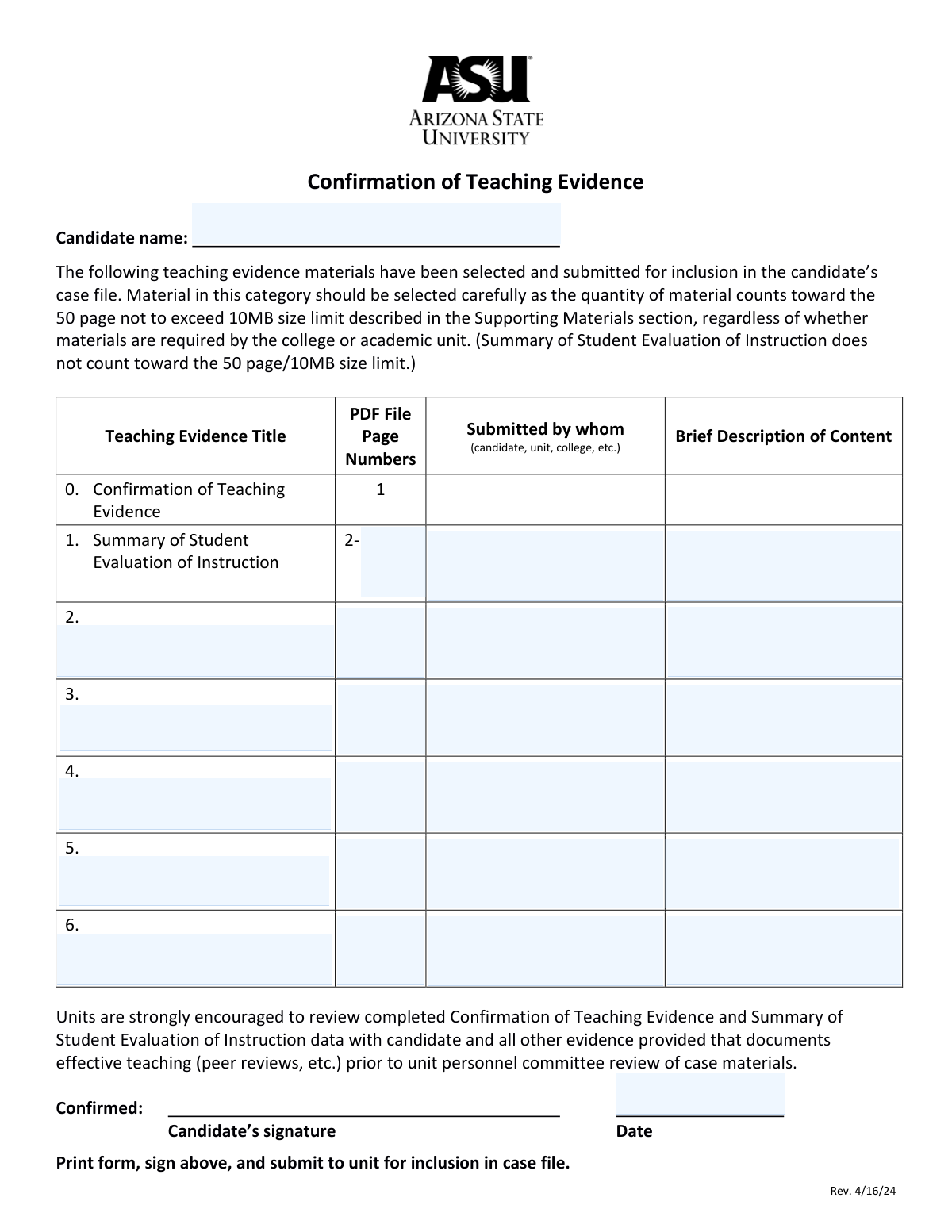
Teachers, school administrators, and faculty members typically encounter these academic forms during significant professional transitions, such as annual performance reviews or applications for tenure and promotion. For example, a Confirmation of Teaching Evidence form is vital for candidates to inventory their student evaluations and peer reviews for a review committee. These documents act as an official record, ensuring that both the educator and the institution have a mutual understanding of the evidence provided. Navigating these requirements accurately is essential for any professional working within a structured school system or university setting.
Managing this volume of paperwork can be a significant administrative burden, but tools like Instafill.ai use AI to fill these forms in under 30 seconds while handling the data accurately and securely. This technology allows educators to spend less time on manual data entry and more time focusing on student success and instructional quality.
Every form on this page can be completed without typing. Instafill is form filling software that reads a PDF and fills it for you — including flat and scanned documents that carry no fillable fields at all.
Forms in This Category
The forms in this category have a median Form Complexity Index of 38/100 (Basic), measured across 1 forms by field count, input difficulty, length, conditional logic and structure. See how it is calculated.
| Form Name | Pages | FCI | |
|---|---|---|---|
| 1. | Confirmation of Teaching Evidence | 1 | Basic 38 |
- Enterprise-grade security & data encryption
- 99%+ accuracy powered by AI
- 1,000+ forms from all industries
- Complete forms in under 60 seconds
How to Choose the Right Form
Navigating academic documentation can be complex, especially when preparing for significant career milestones like tenure or promotion reviews. While our collection focuses on high-stakes administrative verification, understanding the specific purpose of the available documentation will help you streamline your submission process.
For Tenure and Promotion Reviews
If you are a faculty member or an administrative coordinator preparing a case file for academic review, the Confirmation of Teaching Evidence is your primary tool. This form is specifically designed to:
- Inventory Evidence: It acts as a comprehensive checklist for all teaching-related materials, including student evaluations, course syllabi, and peer review reports.
- Ensure Mutual Agreement: It serves as a formal record that both the candidate and the reviewing unit (such as a department chair or dean) agree on the exact contents of the case file.
- Organize Case Files: Use this form to ensure no critical teaching evidence is missing before the file moves to the review committee, preventing delays in the promotion process.
When to Use This Form
You should select the Confirmation of Teaching Evidence if your current goal is to provide an official record of submitted materials for:
- Annual academic performance reviews
- Tenure track evaluations
- Applications for promotion to Associate or Full Professor
Streamlining Academic Paperwork with AI
Academic forms are often provided as static PDFs that can be cumbersome to complete manually. By using Instafill.ai, you can quickly convert the Confirmation of Teaching Evidence into an interactive, fillable format. Our AI tools help ensure that every checkbox and text field is accurately addressed, allowing you to focus on the quality of your teaching evidence and professional narrative rather than the logistics of the paperwork.
Form Comparison
| Form | Primary Purpose | Who Files It | Key Components |
|---|---|---|---|
| Confirmation of Teaching Evidence | Official inventory and checklist of teaching materials for academic review processes. | Faculty members or candidates undergoing tenure or promotion review. | Checklist of student evaluations, peer reviews, and academic case file documentation. |
Tips for teaching forms
Double-check that every item listed on your teaching evidence form corresponds exactly to a file in your submission folder. Discrepancies between the checklist and the digital files can delay the review process or lead to questions about missing documentation during tenure or promotion cycles.
AI-powered tools like Instafill.ai can complete these teaching forms in under 30 seconds with high accuracy, ensuring your case file is professional and error-free. Your data stays secure during the process, providing a practical and time-saving solution for busy educators managing multiple administrative requirements.
When listing student evaluations or peer reviews, use the same naming format for all entries on the form. This consistency makes it much easier for review committees to navigate your file and verify that all required evidence is present and accounted for.
Avoid the last-minute rush by updating your evidence forms as you collect new evaluations or peer reviews throughout the semester. This proactive approach ensures you don't overlook critical documents or lose track of specific materials during the high-pressure period of an academic review.
Many academic forms require signatures from both the candidate and a department head or unit representative to be considered valid. Check that all signature and date fields are completed before final submission to avoid your file being returned for administrative corrections.
Always save a final, completed copy of your confirmation forms for your personal records. These documents serve as a valuable reference for future promotion applications, allowing you to quickly see what evidence was previously submitted and how it was categorized.
Frequently Asked Questions
Academic teaching forms are primarily used to document an educator's performance, qualifications, and professional development. They are essential for processes such as annual reviews, tenure applications, and contract renewals within educational institutions.
These forms are usually initiated by the teacher or faculty member who is undergoing a review or seeking certification. However, they often require verification or additional input from department heads, peer reviewers, or administrative staff to ensure the evidence provided is accurate.
It is best to collect teaching evidence throughout the academic year rather than waiting for a deadline. Keeping an ongoing record of student evaluations, peer observations, and course materials ensures you have all the necessary data ready when it is time to fill out formal documentation.
Common requirements include student feedback surveys, syllabi, sample assignments, peer observation reports, and evidence of professional development. These documents help provide a comprehensive view of an educator's impact and effectiveness in the classroom.
Yes, AI tools like Instafill.ai can streamline the process by extracting data from your source documents and populating the forms automatically. These tools can often complete a complex form in under 30 seconds, ensuring that data is placed accurately and saving significant manual effort.
While manual entry can take hours depending on the volume of evidence, using AI-powered services can reduce this time to less than a minute. AI identifies the required fields and maps your existing professional data directly into the PDF, allowing for a much faster submission process.
Many older or institutional forms are provided as static PDFs that do not have interactive fields. Modern AI services can convert these non-fillable documents into interactive forms, making it possible to type directly into them or use automation to fill them out.
No, teaching certification forms are generally submitted to state or regional licensing boards to authorize a person to teach in public schools. Academic review forms, such as the Confirmation of Teaching Evidence, are typically internal documents used by colleges or universities for career advancement.
Submission locations vary by the purpose of the form. Internal academic forms are usually submitted to a department chair or a tenure and promotion committee, while certification forms are sent to the relevant Department of Education or licensing agency.
A checklist or confirmation form ensures that both the candidate and the reviewing body agree on what has been submitted. This prevents missing documentation from delaying the review process and provides a clear audit trail for the candidate’s case file.
While the specific requirements differ, both K-12 and higher education sectors use teaching forms for evaluation and professional growth. Higher education forms tend to focus more on peer review and research, while K-12 forms often emphasize state standards and classroom management.
Glossary
- Form Complexity Index
- Instafill’s 0–100 measure of how much effort a form takes to complete, calculated deterministically from the form’s own structure rather than estimated. It combines the number of fillable fields (the largest factor), how difficult those fields are to complete based on their type, the number of pages that contain fields, the amount of conditional “fill-only-if” logic, and how many sections the form is divided into, then adds modifiers for tables and repeating lists, bundled instruction pages, and dense page layouts. A higher score means the form is harder to fill out by hand. The forms in this category have a median Form Complexity Index of 38/100 (Basic). See exactly how it is calculated.
- Tenure
- A permanent job contract for academic staff that protects academic freedom and provides long-term employment security after a successful probationary period.
- Dossier
- A comprehensive collection of documents, including teaching evaluations and research papers, submitted as evidence for professional review or promotion.
- Academic Review
- A formal evaluation process where an educator's performance, research, and service are assessed to determine eligibility for rank advancement or tenure.
- Student Evaluations of Teaching (SET)
- Standardized feedback forms collected from students to measure an instructor's classroom effectiveness and course quality.
- Peer Observation
- A process where a colleague attends an educator's class to evaluate their teaching methods and provide a formal report for their professional file.
- Case File
- The official set of records and evidence organized by a candidate to support their application for a change in academic status.
- Credentialing
- The process of verifying an educator's qualifications, certifications, and professional background to ensure they meet institutional or state standards.
- Pedagogical Statement
- A reflective essay where an educator describes their teaching philosophy, instructional methods, and specific goals for student learning.