Fill out vehicle dealer forms
with AI.
Vehicle dealer forms represent a critical component of regulatory compliance for automotive professionals. These documents are designed to track the movement of inventory, document sales transactions, and ensure that all parties involved in a vehicle transfer are legally protected. Whether you are managing an independent car lot, a large franchise, or working as a specialized broker, maintaining accurate and up-to-date records is essential for satisfying state licensing requirements and passing periodic audits by the Department of Motor Vehicles or relevant occupational licensing branches.
By continuing, you acknowledge Instafill's Privacy Policy and agree to get occasional product update and promotional emails.
About vehicle dealer forms
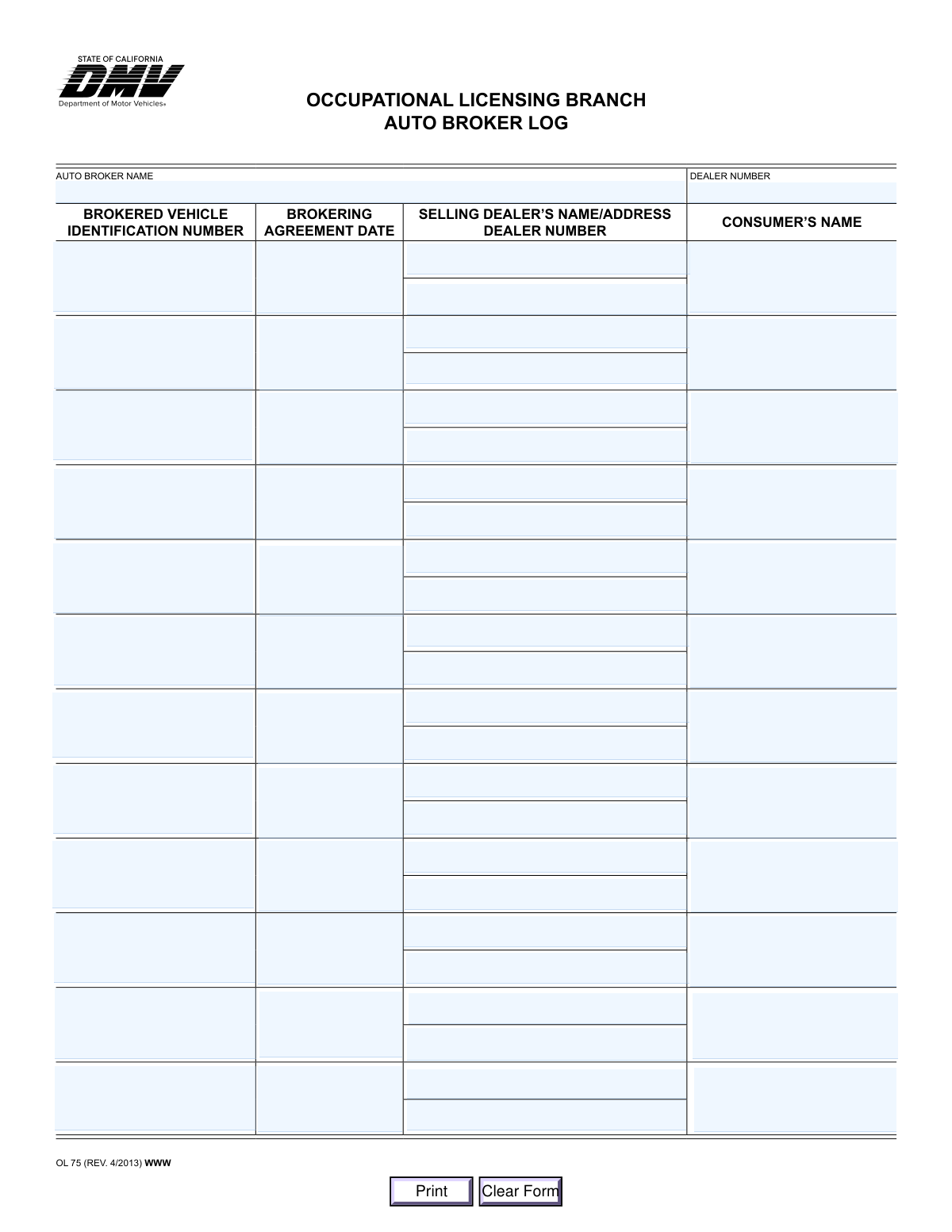
Professionals such as auto brokers and dealership administrators typically use these forms during the daily course of business to log specific transaction details. For instance, maintaining an Auto Broker Log (Form OL 75) is a mandatory practice for brokers to record every vehicle they help facilitate, detailing the relationship between the selling dealer and the consumer. Given the legal weight these documents carry, accuracy is paramount; even minor errors in vehicle identification numbers or consumer data can lead to processing delays or regulatory scrutiny.
To help manage this administrative workload more efficiently, tools like Instafill.ai use AI to fill these forms in under 30 seconds while maintaining high standards for data accuracy and security. This automated approach allows dealers and brokers to spend less time on manual paperwork and more time focusing on their clients and inventory management.
Every form on this page can be completed without typing. Instafill is form filling software that reads a PDF and fills it for you — including flat and scanned documents that carry no fillable fields at all.
Forms in This Category
The forms in this category have a median Form Complexity Index of 61/100 (Moderate), measured across 1 forms by field count, input difficulty, length, conditional logic and structure. See how it is calculated.
| Form Name | Pages | FCI | |
|---|---|---|---|
| 1. | Form OL 75, Auto Broker Log | 1 | Moderate 61 |
- Enterprise-grade security & data encryption
- 99%+ accuracy powered by AI
- 1,000+ forms from all industries
- Complete forms in under 60 seconds
How to Choose the Right Form
Navigating the regulatory requirements for vehicle dealerships and brokerages requires precise record-keeping. While documentation needs can vary depending on your specific license type, the forms in this category are designed to meet the strict standards of the Occupational Licensing Branch.
Identifying the Correct Document
Currently, the primary document for professionals in this niche is Form OL 75, Auto Broker Log. Choosing this form is necessary if your business model focuses on facilitating sales between third parties rather than maintaining your own inventory.
Who Should Use Form OL 75?
You should utilize this form if your operations involve:
- Brokerage Services: If you act as an intermediary, the Auto Broker Log is your mandatory ledger for every transaction you facilitate.
- Regulatory Compliance: This form is required to stay in good standing with licensing authorities. It tracks the agreement date, consumer information, and the selling dealer involved in the deal.
- Official Record Keeping: Use this form to create a centralized, chronological history of all facilitated vehicle sales for tracking and audit purposes.
Why Digital Filing Matters
Because the Auto Broker Log (Form OL 75) requires frequent updates for every new transaction, using a digital, AI-powered tool like Instafill.ai is highly recommended.
Instead of handwriting logs—which can lead to errors, illegibility, or physical loss—you can use our platform to fill out the form accurately online. If you have a non-fillable version of a state-issued PDF, our AI can convert it into an interactive format, ensuring your records are professional, organized, and ready for any official inspection.
Form Comparison
| Form | Purpose | Who Files It | Key Information Required |
|---|---|---|---|
| Form OL 75, Auto Broker Log | Records all vehicle transactions facilitated by an auto broker for compliance tracking. | Licensed auto brokers registered with the Occupational Licensing Branch. | Vehicle details, selling dealer information, consumer data, and transaction agreement dates. |
Tips for vehicle dealer forms
Accuracy is critical when logging vehicle dealer forms, as a single digit error in a VIN can lead to compliance issues. Always verify the VIN directly from the vehicle’s dashboard or door jamb before entering it into your official logs.
To ensure your dealership remains audit-ready, record every transaction in the order it occurs without leaving gaps. Keeping a chronological log prevents documentation inconsistencies and makes it easier for regulatory bodies to review your business activities.
Ensure that every entry includes the full legal name and current contact details for both the buyer and the selling dealer. Missing or incomplete information can delay the processing of broker agreements and may result in administrative penalties during inspections.
AI-powered tools like Instafill.ai can complete these forms in under 30 seconds with high accuracy, providing a real time-saver for busy dealerships. Your data stays secure during the process, ensuring that your sensitive transaction records are handled safely and efficiently.
The date entered on your broker log or dealer form should perfectly align with the date on the sales contract or purchase agreement. Discrepancies between these documents can trigger red flags during a routine occupational licensing audit.
While physical logs are common, maintaining digital copies of your dealer forms ensures you won't lose data due to physical damage or misplacement. Store these files in a secure, organized folder structure categorized by year or transaction type for quick retrieval.
Set aside time each week to review your recent entries for any blanks or formatting errors. Catching small mistakes early prevents them from becoming systemic issues that could affect your dealership's licensing status.
Frequently Asked Questions
Vehicle dealer forms are essential regulatory documents used by automotive professionals to document sales, transfers, and brokerage agreements. These forms ensure that all transactions are recorded transparently for both consumer protection and state compliance audits.
Any individual or business licensed as an auto broker is typically required to maintain a detailed log of every vehicle transaction they facilitate. This record-keeping requirement helps the Occupational Licensing Branch track the relationship between consumers, brokers, and the selling dealerships.
Yes, AI tools like Instafill.ai can fill out vehicle dealer forms in under 30 seconds by accurately extracting data from your source documents. This technology places the information directly into the required fields, reducing manual entry errors and saving significant administrative time.
Most dealer forms require specific data points including the Vehicle Identification Number (VIN), the date of the agreement, and the contact information for all parties involved. You will also generally need to provide the business license number of the broker or dealership handling the transaction.
When using AI-powered automation, these forms can be completed in less than 30 seconds. The software identifies the relevant data from your existing files and populates the PDF instantly, making it much faster than traditional handwriting or manual typing.
Completed forms are often kept on file at the place of business for inspection by regulatory agencies like the DMV or the Occupational Licensing Branch. Some specific forms may need to be mailed or uploaded to a state portal depending on your local jurisdiction's requirements.
Yes, most states require a separate entry or form for every individual vehicle transaction facilitated by a broker or dealer. Maintaining a chronological and complete record is a standard requirement for maintaining a valid occupational license.
If you encounter a flat or non-interactive PDF, AI-powered services can convert these documents into fillable formats. This allows you to type directly into the form and save your records digitally rather than relying on paper copies.
While requirements vary by state, many jurisdictions require vehicle dealers and brokers to maintain their transaction logs for several years. It is important to keep these records organized and accessible in case of a regulatory audit or a dispute regarding a specific sale.
Inaccurate or missing information on official logs can lead to administrative penalties, fines, or issues with license renewal. Ensuring that every VIN and date is recorded correctly protects the broker by proving they have followed all legal protocols during the sales process.
Glossary
- Form Complexity Index
- Instafill’s 0–100 measure of how much effort a form takes to complete, calculated deterministically from the form’s own structure rather than estimated. It combines the number of fillable fields (the largest factor), how difficult those fields are to complete based on their type, the number of pages that contain fields, the amount of conditional “fill-only-if” logic, and how many sections the form is divided into, then adds modifiers for tables and repeating lists, bundled instruction pages, and dense page layouts. A higher score means the form is harder to fill out by hand. The forms in this category have a median Form Complexity Index of 61/100 (Moderate). See exactly how it is calculated.
- VIN (Vehicle Identification Number)
- A unique 17-character code assigned to every motor vehicle that serves as its official identifier for registration and tracking purposes.
- Auto Broker
- A licensed professional who acts as an intermediary to help a consumer find and purchase a vehicle from a dealership for a fee.
- Occupational Licensing (OL) Branch
- A division within the DMV or state regulatory agency that issues permits and monitors the business activities of vehicle dealers and brokers.
- Brokerage Agreement
- A legally required contract between a consumer and an auto broker that outlines the specific services to be provided and the fees involved.
- Dealer Number
- A unique identification number issued by the state to a licensed automotive business, used on all official transaction documents.
- Compliance Log
- An official record-keeping document, such as the OL 75, used to track every transaction a business facilitates to ensure it meets state regulatory requirements.