Fill out Texas health forms
with AI.
Texas health forms encompass a wide range of documentation required by state agencies like the Texas Health and Human Services Commission and the Texas Department of Insurance. These documents are vital for managing healthcare delivery, ensuring regulatory compliance, and facilitating access to state-funded medical programs. Whether you are applying for specialized care or coordinating benefits between providers and insurers, these forms serve as the official record for establishing eligibility and medical necessity within the state's healthcare infrastructure.
By continuing, you acknowledge Instafill's Privacy Policy and agree to get occasional product update and promotional emails.
About Texas health forms
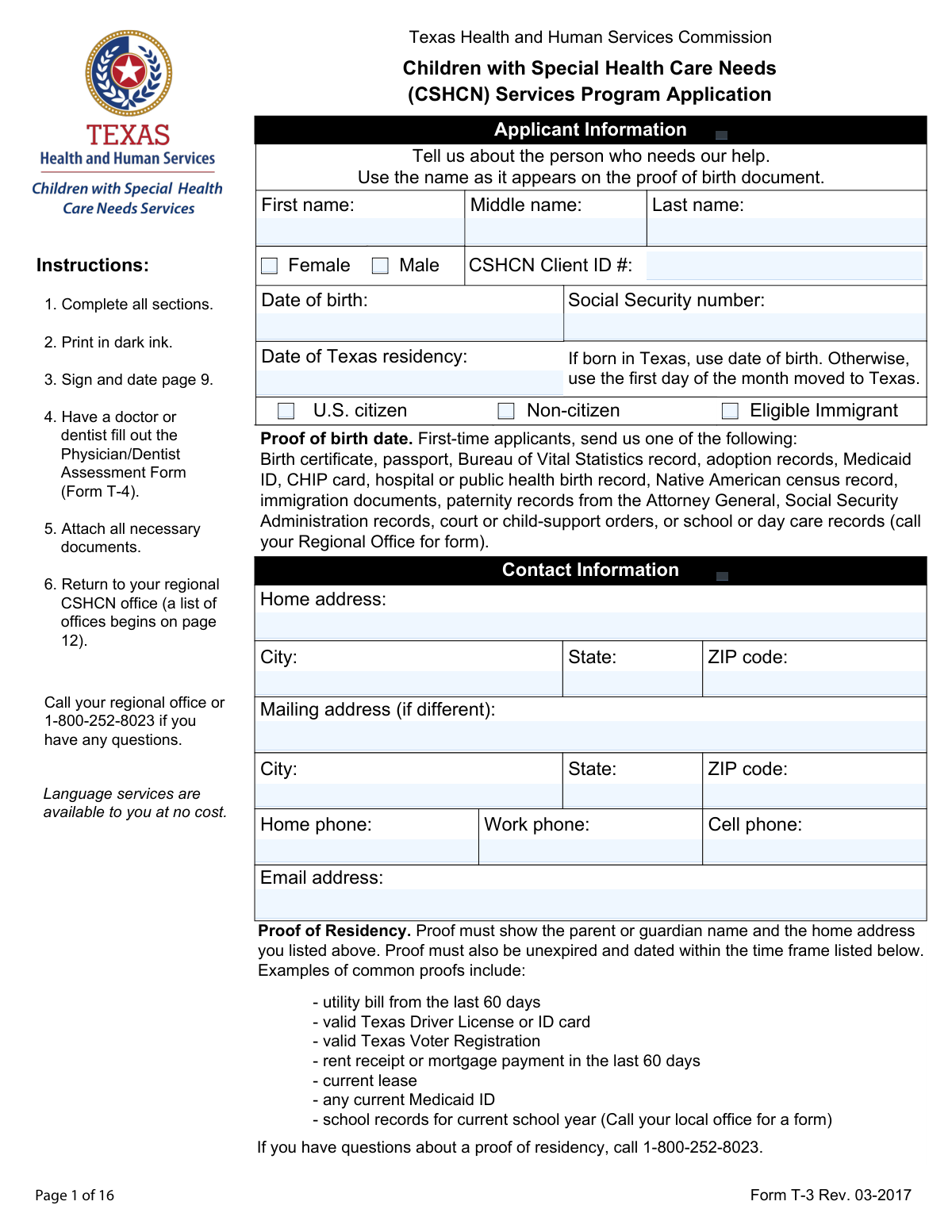
This category is essential for families, healthcare providers, and insurance administrators throughout the state. For instance, parents of children with chronic conditions may need to complete the CSHCN Services Program Application (Form T-3) to secure necessary medical support. Meanwhile, medical offices frequently utilize the Texas Standard Prior Authorization Request Form to ensure that planned treatments are covered by a patient’s health plan before services are rendered. Navigating these requirements is a standard part of managing long-term care, securing specialized treatments, or simply maintaining routine health coverage within the Texas healthcare system.
Completing these detailed documents can be a time-consuming administrative burden, often involving complex data entry across multiple pages. Tools like Instafill.ai use AI to fill these Texas health forms in under 30 seconds, handling sensitive data accurately and securely to streamline the process. This allows patients and providers to focus more on care and less on the paperwork required to facilitate it.
Every form on this page can be completed without typing. Instafill is form filling software that reads a PDF and fills it for you — including flat and scanned documents that carry no fillable fields at all.
Forms in This Category
The forms in this category have a median Form Complexity Index of 74/100 (Complex), measured across 2 forms by field count, input difficulty, length, conditional logic and structure. See how it is calculated.
| Form Name | Pages | FCI | |
|---|---|---|---|
| 1. | Form T-3, Children with Special Health Care Needs (CSHCN) Services Program Application | 9 | Complex 74 |
| 2. | Texas Standard Prior Authorization Request Form for Health Care Services | 2 | Moderate 60 |
- Enterprise-grade security & data encryption
- 99%+ accuracy powered by AI
- 1,000+ forms from all industries
- Complete forms in under 60 seconds
How to Choose the Right Form
Navigating the Texas healthcare system often requires specific documentation to ensure coverage and access to care. Depending on whether you are a family seeking assistance for a child or a medical professional coordinating treatment, your choice will depend on whether you are applying for a program or requesting insurance approval for a specific procedure.
For Families and Caregivers
If you are a parent or legal guardian seeking state-funded health services for a child with chronic physical or developmental conditions, you should use Form T-3, Children with Special Health Care Needs (CSHCN) Services Program Application. This form is the primary gateway to enrolling in the CSHCN program managed by the Texas Health and Human Services Commission.
You will need to complete this form to:
- Provide household and income information for eligibility assessment.
- Detail current insurance coverage and medical history.
- Apply for comprehensive health benefits and support services tailored to special needs.
For Healthcare Providers and Medical Offices
If you are a medical professional or administrative staff member needing to confirm coverage for a specific treatment, surgery, or diagnostic test, use the Texas Standard Prior Authorization Request Form for Health Care Services. This standardized document is mandated by the Texas Department of Insurance to ensure consistency across various health plans, including Medicaid, CHIP, and commercial insurance.
Use this form to:
- Request approval for medical services before they are rendered to ensure they are covered.
- Submit evidence of medical necessity to the patient's health benefit plan issuer.
- Streamline the authorization process using the official state-recognized format.
Summary of Selection
- Choose Form T-3 if you are an individual or family applying for ongoing state assistance and benefits for a child with special needs.
- Choose the Texas Standard Prior Authorization Request Form if you are a healthcare provider seeking insurance clearance for a specific patient's upcoming medical service.
Form Comparison
| Form | Purpose | Who Files It | When to Use |
|---|---|---|---|
| Form T-3, Children with Special Health Care Needs (CSHCN) Services Program Application | Apply for enrollment in the CSHCN Services Program for state-funded health assistance. | Parents, legal guardians, or adult applicants with special health care needs. | When seeking state-funded medical and support services for children with special needs. |
| Texas Standard Prior Authorization Request Form for Health Care Services | Request authorization for medical services from a health benefit plan issuer. | Healthcare providers or physicians on behalf of their insured patients. | Before medical services are rendered to ensure insurance coverage and medical necessity. |
Tips for Texas health forms
Texas health forms often require specific details like household income, insurance policy numbers, and medical diagnoses. Having these documents ready beforehand prevents the need to stop and search for information mid-form, ensuring a smoother filing process for programs like CSHCN.
For prior authorization forms, ensuring the National Provider Identifier (NPI) and contact information for the requesting physician are accurate is critical. Errors in these fields are a leading cause of processing delays or initial claim rejections by Texas health plans.
Filling out complex medical paperwork can be time-consuming, but AI-powered tools like Instafill.ai can complete these forms in under 30 seconds with high accuracy. Your data stays secure during the process, making it a real time-saver for families or providers dealing with multiple health forms.
When applying for state-funded programs, accuracy in reporting household size and gross income is vital for eligibility assessment. Inconsistencies between your application and supporting financial documents can trigger a manual review or lead to a denial of services.
The Texas Standard Prior Authorization form is designed to work across various insurance types, including Medicaid and CHIP. Using this specific state-mandated document ensures that your request meets the uniform requirements of health benefit plan issuers across Texas.
Always save a completed copy of your health forms for your personal records before submitting them to the state or an insurance provider. Having a digital backup allows you to quickly reference what was submitted if you need to provide clarification or appeal a decision later.
For prior authorizations, simply filling out the form may not be enough; you should include relevant clinical notes or lab results that prove medical necessity. Including these attachments the first time avoids the back-and-forth of additional information requests from the insurer.
Frequently Asked Questions
This category includes essential documents for accessing state-funded healthcare services and managing medical insurance requirements in Texas. Common forms include applications for children with special health needs and standardized requests for medical service authorizations.
Form T-3 is designed for families of children with special health care needs who are seeking assistance from the Texas Health and Human Services Commission. It is used to evaluate eligibility based on the child's medical condition, household income, and existing insurance coverage.
This form should be used whenever a medical service requires pre-approval from a health benefit plan issuer to ensure coverage. It is a standardized document accepted by various plans in Texas, including commercial insurance, Medicaid, and CHIP.
Yes, AI tools like Instafill.ai can process Texas health forms by accurately extracting data from your source documents and placing it into the correct fields. This technology simplifies the process of completing complex healthcare applications and authorization requests.
Using AI-powered services, you can typically complete these forms in under 30 seconds. The system automates the data entry process, which significantly reduces the time spent on manual typing and helps prevent common clerical errors.
Submission instructions vary depending on the specific form; for example, Form T-3 is usually submitted to the Texas Health and Human Services Commission, while prior authorization forms are sent to the patient's insurance provider. Always check the instructions on the form or the official agency website for the correct mailing address or digital portal.
You will generally need personal identification, detailed medical history related to the request, household income information, and current health insurance details. Having these documents ready allows AI tools to more effectively pull the necessary data for your form.
While it is the official standardized form for the Texas Department of Insurance, requirements can vary between different health benefit plan issuers. Most commercial plans, Medicaid, and CHIP providers in Texas accept this form to streamline the medical necessity review process.
Many Texas health forms, particularly prior authorization requests, must be completed or signed by a licensed healthcare provider. It is important to review the specific requirements for each form to ensure all necessary professional certifications are included before submission.
It depends on the specific form; for instance, Form T-3 is specifically for the Children with Special Health Care Needs program, whereas the Prior Authorization form is used for patients of all ages. Always verify the intended audience for the form before beginning the application process.
Glossary
- Form Complexity Index
- Instafill’s 0–100 measure of how much effort a form takes to complete, calculated deterministically from the form’s own structure rather than estimated. It combines the number of fillable fields (the largest factor), how difficult those fields are to complete based on their type, the number of pages that contain fields, the amount of conditional “fill-only-if” logic, and how many sections the form is divided into, then adds modifiers for tables and repeating lists, bundled instruction pages, and dense page layouts. A higher score means the form is harder to fill out by hand. The forms in this category have a median Form Complexity Index of 74/100 (Complex). See exactly how it is calculated.
- Prior Authorization
- A requirement by a health plan for a provider to obtain approval before a medical service is provided to ensure the treatment is covered under the patient's plan.
- CSHCN Services Program
- The Children with Special Health Care Needs program, a Texas initiative that provides health benefits and support for children with chronic physical or developmental conditions.
- Medical Necessity
- A standard used by health plans to determine if a specific medical service, supply, or treatment is essential and appropriate for a patient's health condition.
- HHSC (Texas Health and Human Services Commission)
- The state agency that manages various public health programs in Texas, including Medicaid and the CSHCN Services Program.
- TDI (Texas Department of Insurance)
- The state regulatory body that oversees insurance companies in Texas and standardizes health care request forms.
- Health Benefit Plan Issuer
- The insurance company or entity responsible for providing health coverage and making decisions regarding the approval of medical services.
- CHIP (Children's Health Insurance Program)
- A state-funded health insurance program for children in families who earn too much to qualify for Medicaid but cannot afford private insurance.
- Utilization Review
- The process health plans use to evaluate the appropriateness and necessity of medical services before they are performed.