Fill out special needs forms
with AI.
Special needs forms, particularly those for Children with Special Health Care Needs (CSHCN), are essential documents for families managing complex medical conditions. These forms serve as the primary gateway to state-funded health services, financial assistance, and specialized care programs. They ensure that vulnerable children receive the necessary medical equipment, therapy, and clinical services required to improve their daily quality of life. Because these applications determine eligibility based on detailed household and medical data, ensuring every field is completed accurately is vital for securing timely support.
By continuing, you acknowledge Instafill's Privacy Policy and agree to get occasional product update and promotional emails.
About special needs forms
These documents are typically utilized by parents, legal guardians, and healthcare advocates navigating the administrative requirements of state health commissions. Whether applying for the first time or renewing existing benefits, families often find themselves managing multi-page applications that require precise information regarding income, insurance coverage, and specific health requirements. For instance, the Form T-3 application is a common requirement for enrolling children into state-funded service programs. Navigating these bureaucratic requirements can be an overwhelming task during what is already a stressful time for a family.
To simplify this administrative burden, tools like Instafill.ai use AI to fill these forms in under 30 seconds while ensuring all data is handled accurately and securely. This practical solution allows caregivers to spend less time on repetitive paperwork and more time focusing on the health and well-being of their children.
Every form on this page can be completed without typing. Instafill is form filling software that reads a PDF and fills it for you — including flat and scanned documents that carry no fillable fields at all.
Forms in This Category
The forms in this category have a median Form Complexity Index of 74/100 (Complex), measured across 2 forms by field count, input difficulty, length, conditional logic and structure. See how it is calculated.
| Form Name | Pages | FCI | |
|---|---|---|---|
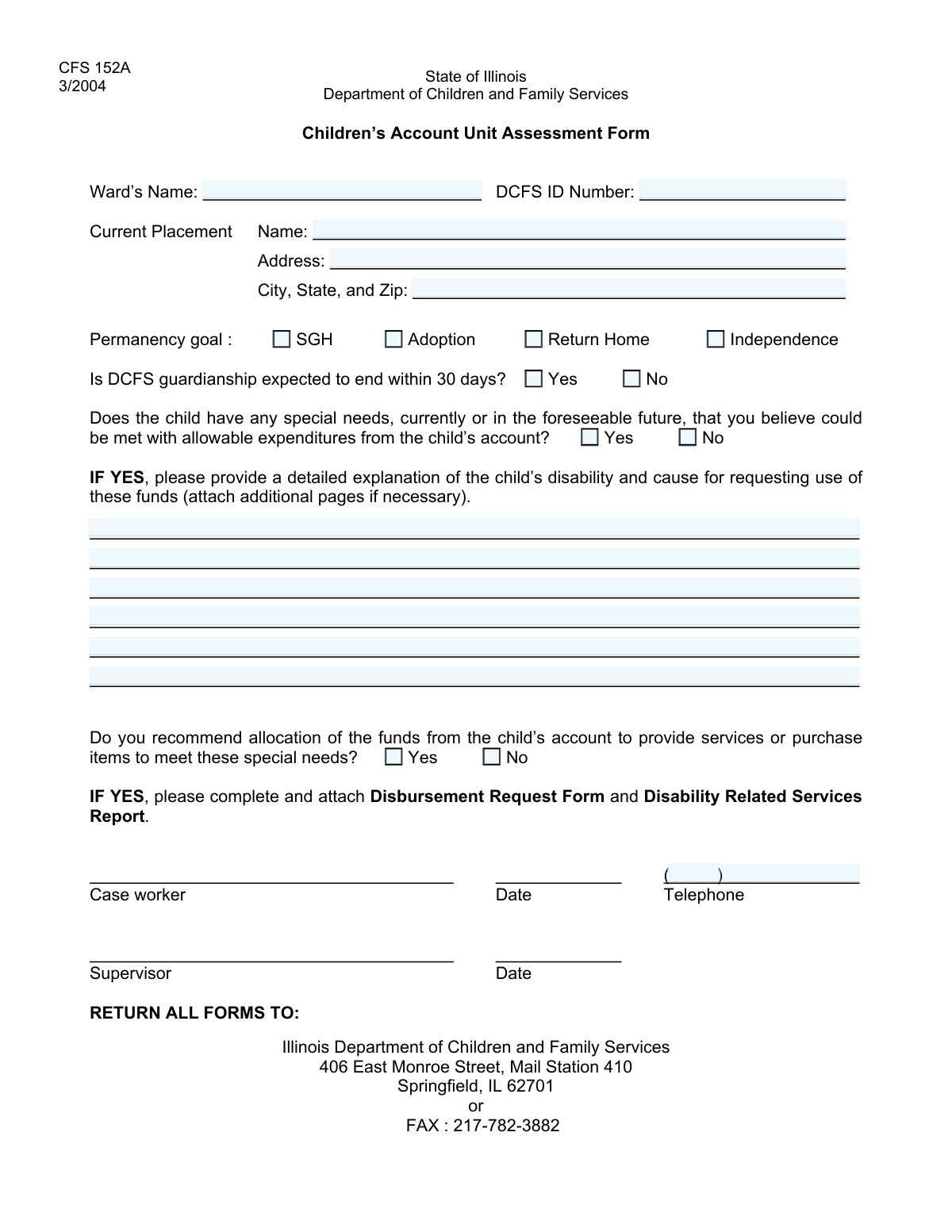
| 1. | DCFS Caseworker Recommendation for Use of Child's Funds for Special Needs | 1 | Basic 31 |
| 2. | Form T-3, Children with Special Health Care Needs (CSHCN) Services Program Application | 9 | Complex 74 |
- Enterprise-grade security & data encryption
- 99%+ accuracy powered by AI
- 1,000+ forms from all industries
- Complete forms in under 60 seconds
How to Choose the Right Form
Navigating CSHCN Enrollment
The Children with Special Health Care Needs (CSHCN) Services Program is a vital resource for Texas families managing physical disabilities, chronic illnesses, and complex health-related needs. The primary document in this category is Form T-3, Children with Special Health Care Needs (CSHCN) Services Program Application, which serves as the formal entry point for state-funded health services.
When to Use Form T-3
You should choose Form T-3 if you are a parent or legal guardian seeking to enroll a child in the CSHCN program. This application is required to assess eligibility for medical benefits, specialized treatments, and support services that go beyond what is typically covered by private insurance or other state programs.
What You Will Need to Complete the Form
Because Form T-3 is a comprehensive multi-page document, having your documentation ready will help you navigate the process more efficiently. The form specifically gathers data on:
- Household and Applicant Information: Basic identifying details for the child and their primary caregivers.
- Financial Eligibility: Detailed income information for all household members to determine if you meet the program's financial criteria.
- Insurance and Coverage: Current status of health insurance, Medicaid, or CHIP to ensure the program acts as a secondary payer where applicable.
How AI Simplifies the Application
Completing the Form T-3, Children with Special Health Care Needs (CSHCN) Services Program Application manually can be time-consuming and prone to errors. Using Instafill.ai allows you to:
- Interactive Filling: Convert static PDF versions of the application into interactive, fillable forms.
- AI Assistance: Use AI-powered tools to ensure every section—from household income to insurance details—is completed accurately, reducing the likelihood of your application being returned for corrections.
- Digital Convenience: Save your progress and handle the multi-page application digitally rather than dealing with physical paperwork, ensuring a smoother path to securing the health services your child needs.
Form Comparison
| Form | Purpose | Target Audience | Key Information Required |
|---|---|---|---|
| Form T-3, Children with Special Health Care Needs (CSHCN) Services Program Application | Enrolls children into the Texas CSHCN program for state-funded health services. | Families or guardians of children with special health care needs. | Requires household income, insurance coverage details, and applicant medical information. |
| Form T-3, Children with Special Health Care Needs (CSHCN) Services Program Application | Used to assess eligibility for program benefits and specialized medical support. | Texas residents seeking assistance for children with chronic health conditions. | Includes personal identification, financial status, and health insurance documentation. |
Tips for special needs forms
AI-powered tools like Instafill.ai can complete complex special needs forms in under 30 seconds with high accuracy. Your sensitive data stays secure during the process, making it a reliable and efficient time-saver for families managing multiple medical documents.
These forms require detailed household income and insurance information to determine program eligibility. Having your pay stubs, tax returns, and medical diagnosis documents ready will prevent you from having to pause mid-way through the application.
Ensure that everyone living in your household is accurately accounted for according to the program’s specific definitions. Incorrectly reporting income or household size is a common mistake that can lead to significant processing delays or eligibility denials.
CSHCN programs often act as a secondary payer, so it is vital to list all existing private or public health insurance. Failing to disclose other coverage can complicate the claims process later and may require you to resubmit the entire application.
Most special needs assistance programs require periodic re-certification or annual updates. Saving a digital copy of your completed Form T-3 allows you to quickly reference previous answers and easily track changes in your child’s health status.
Small errors in Social Security numbers or mailing addresses can significantly stall the enrollment process. Review these critical fields twice to ensure the Health and Human Services Commission can reach you regarding your child's benefits without delay.
If a section does not apply to your situation, it is best to write 'N/A' rather than leaving it empty. Blank fields are often flagged as missing information, which may prompt the agency to return the form to you for completion.
Frequently Asked Questions
These forms are used to enroll children with chronic physical or developmental conditions into state-funded programs that provide specialized medical care and support services. They help health departments determine if a family qualifies for financial assistance for medical bills, specialized equipment, and therapy.
Generally, these forms are for residents of specific states, such as Texas, who have children under the age of 21 with qualifying health conditions. Eligibility often depends on the child's specific medical diagnosis, the family's total household income, and current insurance coverage status.
You will usually need the child's medical records, proof of residency, and detailed household income information, such as recent pay stubs or tax returns. It is also important to have information regarding any existing private insurance or Medicaid coverage to ensure the application is processed correctly.
Yes, AI technology can now be used to streamline the process of completing complex medical and state application forms. AI tools like Instafill.ai analyze your supporting documents and automatically populate the required fields, ensuring that information like income and household details are entered precisely.
Manually completing multi-page applications like Form T-3 can take several hours due to the level of detail required for medical and financial history. However, using AI tools like Instafill.ai can reduce this time to under 30 seconds by accurately extracting data from your source documents and placing it directly into the form fields.
Completed applications are typically submitted to the state's Health and Human Services Commission or the specific program office listed on the form's instructions. Many programs allow for submission via mail, fax, or through a secure online portal provided by the state agency.
While primarily focused on medical care, these forms can also facilitate access to specialized dental care, medical equipment, and travel assistance for health-related appointments. The program aims to provide a comprehensive support system for families managing long-term health challenges.
It is important to notify the program administrators as soon as possible if there are significant changes to your household income or the child's medical needs. You may be required to submit an updated form or additional documentation to maintain your eligibility for services.
There is generally no fee to submit an application for state-funded special needs programs. However, depending on your income level, there may be some cost-sharing or participation fees required once your child is enrolled in the program.
Yes, children with private insurance can still apply for CSHCN services, as the program often acts as a secondary payer for services not covered by your primary insurance. You must provide full details of your existing insurance policy on the application so the state can coordinate benefits effectively.
Glossary
- Form Complexity Index
- Instafill’s 0–100 measure of how much effort a form takes to complete, calculated deterministically from the form’s own structure rather than estimated. It combines the number of fillable fields (the largest factor), how difficult those fields are to complete based on their type, the number of pages that contain fields, the amount of conditional “fill-only-if” logic, and how many sections the form is divided into, then adds modifiers for tables and repeating lists, bundled instruction pages, and dense page layouts. A higher score means the form is harder to fill out by hand. The forms in this category have a median Form Complexity Index of 74/100 (Complex). See exactly how it is calculated.
- CSHCN Services Program
- A program that provides health benefits to children with physical or developmental conditions and cystic fibrosis patients of any age.
- HHSC
- The Texas Health and Human Services Commission, the state agency responsible for administering and overseeing public health programs like CSHCN.
- Third-Party Resource (TPR)
- Other insurance or entities, such as private health insurance or Medicaid, that are responsible for paying medical claims before the CSHCN program.
- Modified Adjusted Gross Income (MAGI)
- A specific calculation of household income used to determine if an applicant meets the financial requirements for program eligibility.
- Legal Guardian
- An individual with the court-ordered authority to make legal and medical decisions for a child or dependent adult.
- Attending Physician
- The primary doctor responsible for the child's care who must often provide medical documentation or certifications for the application.
- Proof of Residency
- Documents like utility bills or lease agreements required to verify that the applicant currently lives in the state where they are applying for benefits.
- Cost-sharing
- The portion of healthcare costs that a family may be required to pay, which can include premiums, co-payments, or deductibles based on income.