Fill out body art forms
with AI.
Body art forms are essential administrative documents used to regulate the tattooing, body piercing, branding, and permanent cosmetic industries. These forms, often managed by local environmental health departments, ensure that practitioners comply with state safety standards, such as the California Safe Body Art Act. By documenting professional training, bloodborne pathogen certification, and vaccination records, these forms help maintain a safe and sterile environment for both the artist and the client, ultimately preventing the spread of infectious diseases and ensuring public safety.
By continuing, you acknowledge Instafill's Privacy Policy and agree to get occasional product update and promotional emails.
About body art forms
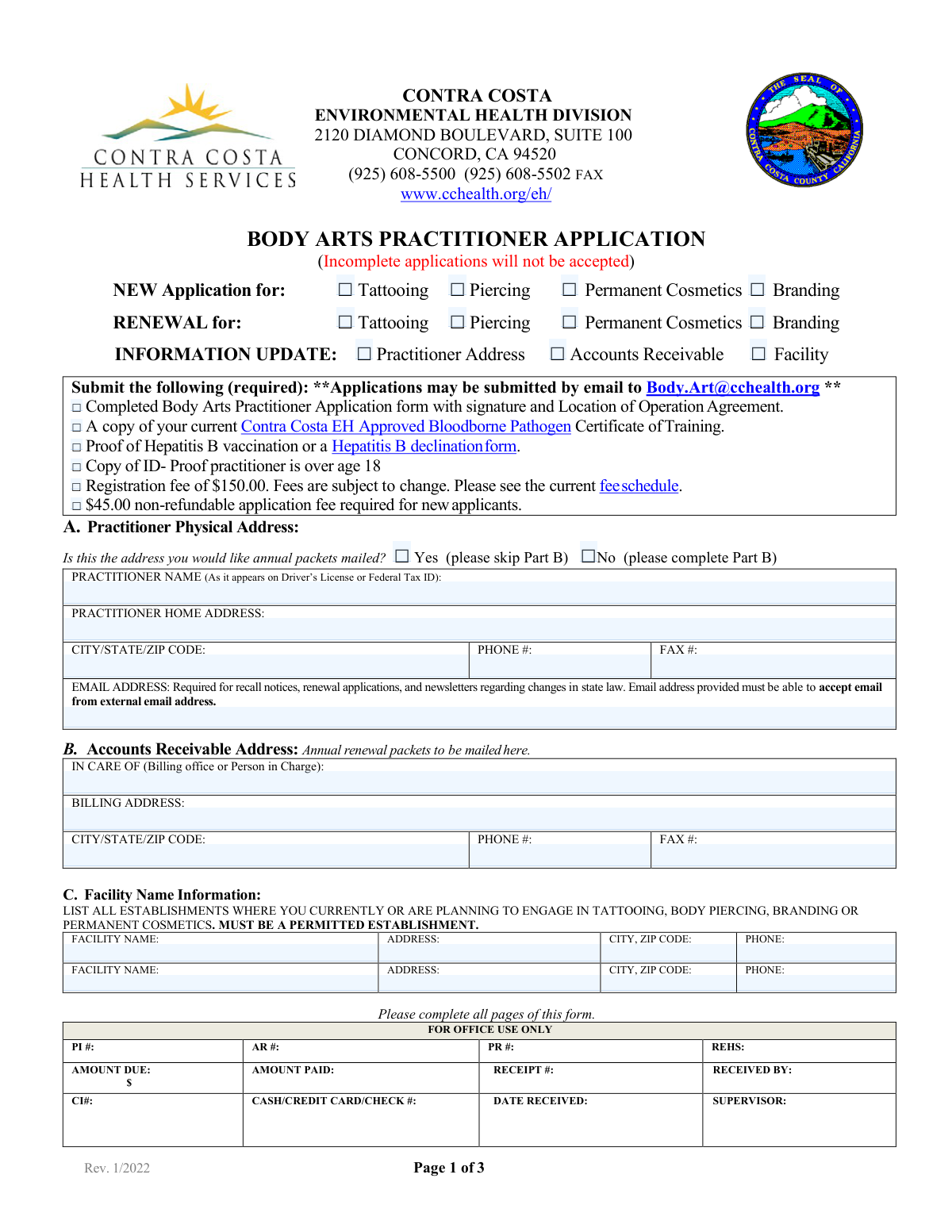
Professional artists and studio owners typically encounter these forms when applying for new practitioner registrations or renewing existing permits within their jurisdiction. Whether you are a tattoo artist, body piercer, or a permanent makeup specialist, submitting accurate documentation to your local health division is a mandatory step in operating a legal and compliant business. For example, practitioners in regions like Contra Costa County must provide detailed proof of experience and health compliance to the Environmental Health Division before they can legally offer services to the public. Tools like Instafill.ai use AI to complete these forms in under 30 seconds while ensuring data is handled accurately and securely, providing a practical way to manage regulatory paperwork.
Every form on this page can be completed without typing. Instafill is form filling software that reads a PDF and fills it for you — including flat and scanned documents that carry no fillable fields at all.
Forms in This Category
The forms in this category have a median Form Complexity Index of 45/100 (Basic), measured across 1 forms by field count, input difficulty, length, conditional logic and structure. See how it is calculated.
| Form Name | Pages | FCI | |
|---|---|---|---|
| 1. | Contra Costa Environmental Health Division Body Arts Practitioner Application | 3 | Basic 45 |
- Enterprise-grade security & data encryption
- 99%+ accuracy powered by AI
- 1,000+ forms from all industries
- Complete forms in under 60 seconds
How to Choose the Right Form
Identifying the Correct Body Art Application
If you are looking to provide professional body art services in Contra Costa County, California, you are required to register with the Environmental Health Division. This registration process is vital for ensuring compliance with the California Safe Body Art Act, which sets the health and safety standards for practitioners and facilities to protect both the artist and the client.
Who Needs to File This Form?
The Contra Costa Environmental Health Division Body Arts Practitioner Application is the primary document for individuals entering the industry. You should select this form if you intend to perform any of the following services within the county jurisdiction:
- Tattooing: Traditional ink application and artistic body modifications.
- Body Piercing: Including all specialized piercings (excluding simple earlobe piercings performed with a mechanized stud and clasp device).
- Permanent Cosmetics: Specialized services such as microblading, permanent eyeliner, and lip shading.
- Branding: The process of creating a permanent mark on the skin using thermal or chemical means.
Key Requirements for Applicants
To successfully complete the Contra Costa Environmental Health Division Body Arts Practitioner Application, you will need to provide specific evidence of your qualifications and health status. Ensure you have the following ready before you begin:
- Proof of Age: Practitioners must be at least 18 years old.
- Hepatitis B Vaccination Records: You must provide proof of vaccination, evidence of immunity, or a signed declination form.
- Bloodborne Pathogens (BBP) Training: A certificate of completion from a training program approved by the local health department.
- Facility Information: You must identify the permitted body art facility where you will be operating.
Completing Your Form Online
Filling out environmental health forms can be tedious, but using the Contra Costa Environmental Health Division Body Arts Practitioner Application on Instafill.ai simplifies the process. Our AI-powered tools help you navigate the requirements quickly, ensuring that your application is accurate and professional. If you are working from a non-fillable PDF, our platform can convert it into an interactive format to help you get your permit faster.
Form Comparison
| Form | Purpose | Key Requirements | Scope of Practice |
|---|---|---|---|
| Contra Costa Environmental Health Division Body Arts Practitioner Application | Registers individuals to legally perform tattooing, piercing, branding, or permanent cosmetics in the county. | Requires valid identification, Bloodborne Pathogen training certificate, and Hepatitis B vaccination records. | Mandatory for all body art professionals operating specifically within Contra Costa County jurisdiction. |
Tips for body art forms
Before starting the application, ensure you have digital copies of your Bloodborne Pathogen training certificate and Hepatitis B vaccination records ready. Having these documents on hand prevents delays when the form asks for proof of compliance with environmental health standards.
Most body art practitioner applications require you to list the permitted facility where you will be practicing. Ensure the shop name and permit number match official records exactly to avoid administrative processing errors or application rejection.
You can complete complex environmental health registration forms in under 30 seconds with high accuracy using AI-powered tools like Instafill.ai. These tools securely handle your sensitive data while transforming static PDFs into interactive, easy-to-complete documents.
If you provide multiple services such as tattooing, piercing, or permanent cosmetics, make sure all relevant boxes are checked. Omitting a service type might require a secondary filing later, which can delay your legal ability to practice that specific craft.
Environmental health divisions require proof that practitioners meet the minimum age requirement, typically 18 years old. Keep a scanned copy of your government-issued ID ready to ensure your application information perfectly matches your legal identification.
Many practitioners forget to sign the final declaration or miss the date field, leading to an immediate return of the application. Carefully scan the document for any required digital signature fields before finalizing your submission packet.
Frequently Asked Questions
Body art forms are official documents used by local health departments to regulate and monitor individuals and businesses providing services like tattooing, body piercing, and permanent makeup. These forms ensure that practitioners comply with state and local safety standards, such as the California Safe Body Art Act, to protect public health.
Any individual intending to perform tattooing, body piercing, branding, or the application of permanent cosmetics must usually register with their local environmental health division. This registration is mandatory to ensure the practitioner has received proper training in infection control and safety protocols.
Regulated activities typically include traditional tattooing, body piercing, branding, and permanent cosmetics such as microblading. Some jurisdictions may also include specialized services like scarification or subdermal implants under the same regulatory umbrella.
Most applications require proof of age, a valid government-issued ID, and evidence of current Hepatitis B vaccination or a signed declination form. Additionally, practitioners must often provide a certificate of completion for an approved Bloodborne Pathogens Exposure Control Training course.
Completed applications are generally submitted to the local Environmental Health Division or Department of Public Health in the county where the practitioner will be working. Many departments allow for submission via mail, in-person drop-off, or through their own online portals.
Body art registrations and permits are typically valid for one year and must be renewed annually to remain active. Practitioners should check with their specific local health department for renewal deadlines and any updated training requirements needed for the new period.
Yes, you can use AI-powered tools to complete body art forms efficiently. AI tools like Instafill.ai can fill these forms in under 30 seconds by accurately extracting necessary data from your source documents and placing it into the correct fields.
While manual entry can be time-consuming, using an AI-powered service like Instafill.ai allows you to complete these forms in under 30 seconds. This technology ensures high accuracy and significantly reduces the risk of manual entry errors on complex health applications.
Environmental health forms are designed to protect both the practitioner and the public by enforcing strict hygiene and sterilization standards. These forms help health officials track compliance with laws intended to prevent the spread of infectious diseases.
In many regions, body art registration is specific to the county where it was issued. While some jurisdictions may have reciprocity agreements, practitioners often need to register or notify the health department in each specific county where they intend to provide services.
Yes, completing a Bloodborne Pathogens (BBP) training course is a standard requirement for most body art applications. This training must usually meet specific local standards and be updated annually to ensure the practitioner is aware of the latest safety techniques.
Practicing body art without the required registration or permit is generally considered a violation of local health codes and may result in fines or legal action. It also prevents practitioners from legally working in professional studios that require valid documentation for insurance compliance.
Glossary
- Form Complexity Index
- Instafill’s 0–100 measure of how much effort a form takes to complete, calculated deterministically from the form’s own structure rather than estimated. It combines the number of fillable fields (the largest factor), how difficult those fields are to complete based on their type, the number of pages that contain fields, the amount of conditional “fill-only-if” logic, and how many sections the form is divided into, then adds modifiers for tables and repeating lists, bundled instruction pages, and dense page layouts. A higher score means the form is harder to fill out by hand. The forms in this category have a median Form Complexity Index of 45/100 (Basic). See exactly how it is calculated.
- Safe Body Art Act
- The California state law that regulates tattooing, body piercing, branding, and permanent cosmetics to protect public health and safety.
- Bloodborne Pathogens (BBP) Training
- A mandatory annual safety course that teaches practitioners how to prevent the spread of infectious diseases like HIV and Hepatitis when working with blood.
- Body Art Practitioner
- An individual who is registered to perform tattooing, body piercing, branding, or the application of permanent cosmetics on another person.
- Permanent Cosmetics
- A type of body art that involves tattooing pigments into the skin for aesthetic purposes, such as microblading or permanent eyeliner.
- Hepatitis B (HBV) Vaccination
- A required immunization for practitioners, or a signed declination form, to address the risk of contracting the Hepatitis B virus through occupational exposure.
- Infection Prevention and Control Plan (IPCP)
- A written document required for facilities that outlines the specific cleaning, sterilization, and safety protocols used to prevent the transmission of infections.
- Sharps Container
- A specialized, puncture-resistant container used for the safe disposal of needles and other sharp instruments used during body art procedures.
- Branding
- The process of creating a permanent mark on the skin by burning it with a hot instrument or other thermal device.