Fill out contractor licensing forms
with AI.
Contractor licensing forms are essential regulatory documents used by state and local boards to ensure that construction professionals meet the required standards for safety, experience, and financial responsibility. These forms cover a wide range of administrative needs, from initial certification and business qualification to renewals and status changes. Navigating the licensing process is a critical step for anyone looking to operate legally within the construction industry, as it protects both the contractor and the public by verifying that the business is properly insured, bonded, and managed by qualified individuals.
By continuing, you acknowledge Instafill's Privacy Policy and agree to get occasional product update and promotional emails.
About contractor licensing forms
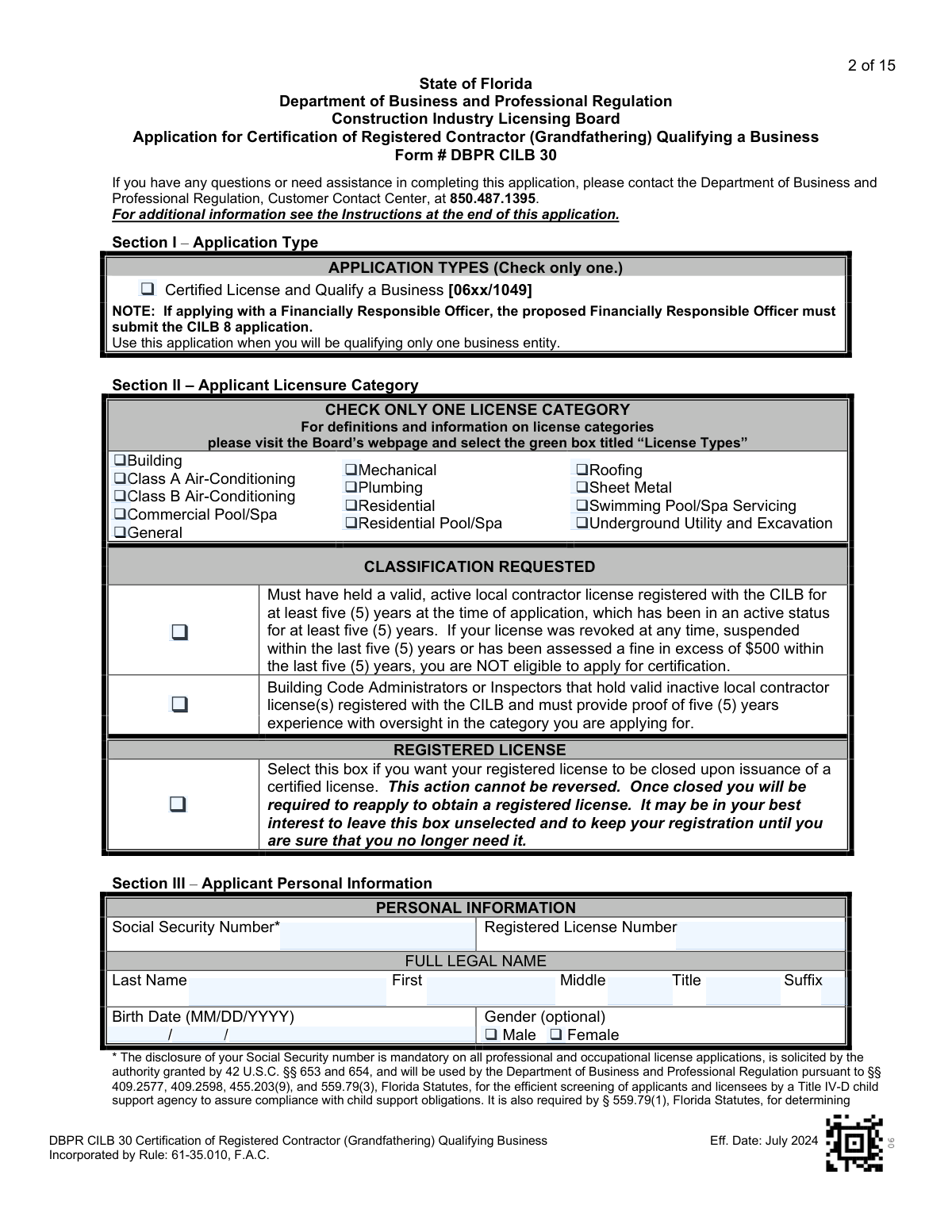
Typically, these forms are required by individual contractors, business owners, and qualifying agents who are establishing a new construction company or expanding an existing one. For example, in Florida, applicants might use forms like the DBPR CILB 6-B to certify as a building contractor while simultaneously qualifying a business entity. This process involves documenting years of field experience, educational background, and financial stability, including credit reports and proof of insurance. Whether you are upgrading an existing license or transitioning from an employee to a business owner, completing these applications accurately is vital to avoid delays or denials from the licensing board.
Filling out these lengthy applications manually can be time-consuming and prone to errors, which often leads to frustrating back-and-forth with regulatory agencies. Tools like Instafill.ai use AI to fill these forms in under 30 seconds, handling complex data accurately and securely to ensure your submission is professional and complete. By streamlining the paperwork, contractors can focus more on their projects and less on the administrative hurdles of maintaining their professional standing.
Every form on this page can be completed without typing. Instafill is form filling software that reads a PDF and fills it for you — including flat and scanned documents that carry no fillable fields at all.
Forms in This Category
The forms in this category have a median Form Complexity Index of 79/100 (Complex), measured across 1 forms by field count, input difficulty, length, conditional logic and structure. See how it is calculated.
- Enterprise-grade security & data encryption
- 99%+ accuracy powered by AI
- 1,000+ forms from all industries
- Complete forms in under 60 seconds
How to Choose the Right Form
Navigating the Florida Department of Business and Professional Regulation (DBPR) requirements can be complex. If you are looking to become a licensed contractor in Florida, choosing the right paperwork is the first step toward a successful application. Currently, this category focuses on the primary application for building contractors who intend to operate through a business entity.
For Initial Certification and Business Qualification
If your goal is to obtain your initial state certification and you are acting as the qualifying agent for a company, you will need to use:
- DBPR CILB 6-B (Application for Certified Building Contractor Who is Qualifying a Business): This is the definitive form for individuals seeking to become a Certified Building Contractor. Unlike "Registered" contractors who are limited to specific local jurisdictions, "Certified" contractors can work anywhere in the state of Florida. Use this specific form if you are qualifying a business entity (such as an LLC, Corporation, or Partnership) rather than applying as a sole proprietor.
Key Eligibility Pathways
When completing the DBPR CILB 6-B, you must identify your pathway to licensure. This form is designed for those who meet the requirements through:
- Education and Experience: A combination of a relevant degree and practical field work.
- Military Pathway: Utilizing experience gained during military service.
- Upgrades: Transitioning from a different license level.
Essential Compliance Checklist
Before you begin filling out your form on Instafill.ai, ensure you have the following documentation ready, as the DBPR CILB 6-B requires verification of several critical items:
- Financial Responsibility: You must provide credit reports (including FICO scores) and disclose any outstanding liens or judgments.
- Background Checks: Evidence of completed electronic fingerprinting is a prerequisite for a valid submission.
- Insurance Coverage: Proof of required workers' compensation and general liability insurance.
- Project Experience: Detailed records of your employment history to prove you meet the technical standards of a building contractor.
Choosing the correct form ensures that the Construction Industry Licensing Board can process your application without the delays associated with "deficiency" notices or administrative denials.
Form Comparison
| Form | Purpose | Who Files It | Key Requirements | Eligibility Pathways |
|---|---|---|---|---|
| DBPR CILB 6-B, Application for Certified Building Contractor Who is Qualifying a Business | Initial Florida building contractor certification and business entity qualification. | Individuals seeking to qualify a construction business in Florida. | Fingerprints, insurance coverage, financial responsibility, and background disclosures. | Education and experience, license upgrade, or military veteran pathways. |
Tips for contractor licensing forms
Before starting your application, compile all project logs, employment history, and educational transcripts. Having these documents ready ensures that your experience descriptions match your supporting evidence exactly, preventing delays during the licensing board's review process.
Licensing boards typically require specific minimums for general liability and workers' compensation insurance. Ensure your certificates of insurance are active and list the correct business entity name to avoid your application being returned for insufficient coverage.
Many states require background checks via electronic fingerprinting through an approved vendor. Completing this step a few days before submitting your paperwork ensures that your results are already in the system when your application is processed by the state.
AI-powered tools like Instafill.ai can complete these complex licensing forms in under 30 seconds with high accuracy. Your data stays secure during the process, making it a practical time-saver for contractors who need to manage multiple regulatory filings simultaneously.
Licensing boards often require a personal or business credit report to prove financial stability. If your credit score falls below the required threshold, check if your state allows for a financial responsibility bond to satisfy the licensing criteria.
Ensure the business name and Federal Employer Identification Number (FEID) on your application exactly match the records on file with the Secretary of State. Even minor spelling discrepancies can cause administrative rejections and require you to refile.
Transparency is critical when reporting past legal or disciplinary issues. Providing detailed explanations and supporting court documents upfront is significantly better than having the licensing board discover undisclosed information during their independent background check.
Frequently Asked Questions
Contractor licensing forms are official documents required by state or local regulatory boards to authorize individuals or businesses to perform construction work. These forms collect essential data regarding an applicant's professional experience, financial stability, and legal history to ensure they meet industry standards. Completing these forms is a mandatory step for anyone seeking to legally operate as a certified or registered contractor within a specific jurisdiction.
Any individual intending to act as a qualifying agent for a construction business or seeking personal certification must complete these applications. This includes general contractors, building contractors, and residential contractors who oversee projects and ensure compliance with building codes. In many states, both the individual’s qualifications and the business entity’s details must be documented to receive a license.
Most licensing boards require supporting documentation such as proof of workers' compensation insurance, general liability insurance, and personal or business credit reports. Additionally, applicants often need to provide fingerprints for background checks and verified records of past project experience or educational transcripts. Having these documents ready before starting the application helps prevent processing delays.
Yes, modern AI tools like Instafill.ai allow you to automate the process of filling out complex licensing forms by extracting data from your source documents. These systems can accurately map your personal information, business details, and experience history directly into the required PDF fields. This reduces the risk of manual entry errors and ensures that all sections of the form are addressed consistently.
While manual completion of a multi-page licensing application can take several hours, using an AI-powered tool can reduce that time to under 30 seconds. The AI quickly identifies the relevant data points from your uploaded documents and places them into the correct sections of the form. This allows you to focus on reviewing the accuracy of the information rather than repetitive data entry.
A qualifying agent is a licensed individual who takes responsibility for the construction activities and financial integrity of a business entity. The licensing forms often require the qualifier to demonstrate that they have the authority to supervise the business's field work and financial transactions. This ensures that every licensed construction company is overseen by a person who meets the state's professional standards.
Completed forms are typically submitted to the state's specific regulatory agency, such as the Department of Business and Professional Regulation (DBPR) in Florida. Most agencies now offer online submission portals, though some may still require physical mailing of original documents or fee payments. It is important to check the specific instructions provided on the form or the agency's website to ensure the application reaches the correct board.
Errors or omissions on a contractor licensing form can lead to a 'deficiency' notice, which pauses the review process until the information is corrected. In some cases, providing inaccurate information regarding financial history or past disciplinary actions can result in a denial of the license or future legal complications. Using automated tools can help minimize these risks by ensuring data is transferred exactly as it appears in your supporting records.
Yes, most licensing boards require applicants to prove financial responsibility to protect consumers and the public. This usually involves submitting credit reports with a minimum FICO score and disclosing any past bankruptcies, liens, or judgments. If a score does not meet the state's threshold, you may be required to obtain a financial integrity bond to proceed with the application.
Most professional contractor licenses require a documented history of work experience, often ranging from four years of field experience to a combination of education and experience. The forms typically include sections where you must detail specific projects, your role in them, and provide contact information for supervisors who can verify your work. Some states offer alternative pathways for military veterans or those with advanced degrees in construction-related fields.
Glossary
- Form Complexity Index
- Instafill’s 0–100 measure of how much effort a form takes to complete, calculated deterministically from the form’s own structure rather than estimated. It combines the number of fillable fields (the largest factor), how difficult those fields are to complete based on their type, the number of pages that contain fields, the amount of conditional “fill-only-if” logic, and how many sections the form is divided into, then adds modifiers for tables and repeating lists, bundled instruction pages, and dense page layouts. A higher score means the form is harder to fill out by hand. The forms in this category have a median Form Complexity Index of 79/100 (Complex). See exactly how it is calculated.
- Qualifier
- The individual who holds the professional license and provides the technical knowledge for a business entity, assuming legal responsibility for all construction activities performed by that company.
- DBPR
- The Department of Business and Professional Regulation, which is the state agency responsible for licensing and regulating various professions and businesses, including construction contractors.
- CILB
- The Construction Industry Licensing Board, the specific regulatory body within the DBPR that reviews applications, issues licenses, and handles disciplinary actions for contractors.
- FEID
- Federal Employer Identification Number, a unique nine-digit number assigned by the IRS to identify a business entity for tax and licensing purposes.
- Financial Responsibility
- A licensing requirement that proves an applicant's fiscal stability, usually verified through a minimum credit score and a background check for outstanding liens or judgments.
- Certified Contractor
- A contractor who has passed a state-level examination and is authorized to work anywhere within the state, rather than being restricted to a specific local jurisdiction.
- LiveScan
- A digital fingerprinting technology used to perform background checks by electronically transmitting an applicant's fingerprints to state and federal law enforcement agencies.
- Deficiency
- A formal notice that an application is incomplete or contains errors, requiring the applicant to provide additional information before the license can be approved.