Fill out Florida construction forms
with AI.
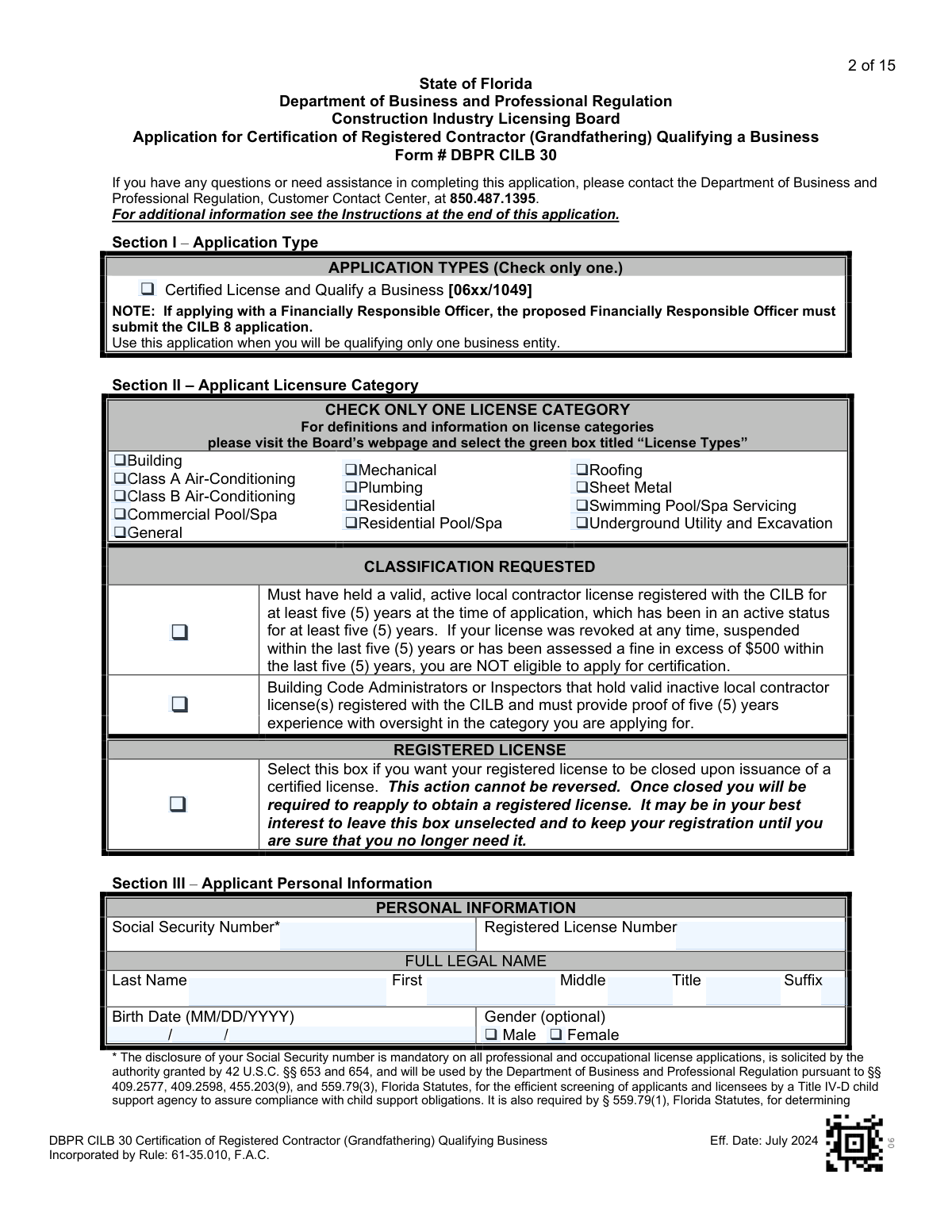
Florida's construction industry is governed by strict regulatory standards designed to ensure safety, professionalism, and legal compliance across all building projects. This category of Florida construction forms, primarily issued by the Department of Business and Professional Regulation (DBPR), serves as the essential documentation for licensing and business qualification. These forms are the backbone of the state's oversight, ensuring that every contractor and business entity meets the rigorous education, experience, and financial responsibility requirements necessary to operate legally within the state.
By continuing, you acknowledge Instafill's Privacy Policy and agree to get occasional product update and promotional emails.
About Florida construction forms
These documents are typically required by individual contractors, licensing coordinators, and business owners who are seeking to establish or expand their professional operations. Whether you are an individual applying for initial certification or a professional qualifying a specific business entity, these DBPR forms are used to document critical information such as employment history, project experience, and insurance coverage. For instance, applications like the DBPR CILB 6-B are vital for those navigating the pathways of education, experience, or military service to become a Certified Building Contractor. Navigating these requirements accurately is crucial to avoiding application deficiencies or project delays.
Completing these dense, multi-page applications manually can be a time-consuming process that prone to human error. Tools like Instafill.ai use AI to accurately and securely populate these Florida construction forms in under 30 seconds, providing a practical way to manage complex paperwork while ensuring data integrity. By automating the data entry process, professionals can focus more on their construction projects and less on the administrative burden of licensing compliance.
Every form on this page can be completed without typing. Instafill is form filling software that reads a PDF and fills it for you — including flat and scanned documents that carry no fillable fields at all.
Forms in This Category
The forms in this category have a median Form Complexity Index of 79/100 (Complex), measured across 1 forms by field count, input difficulty, length, conditional logic and structure. See how it is calculated.
- Enterprise-grade security & data encryption
- 99%+ accuracy powered by AI
- 1,000+ forms from all industries
- Complete forms in under 60 seconds
How to Choose the Right Form
Navigating Florida’s Department of Business and Professional Regulation (DBPR) requirements can be complex. To ensure your application is processed without delays, it is essential to confirm that you are using the correct document for your specific licensing goals.
When to Use DBPR CILB 6-B
The DBPR CILB 6-B (Application for Certified Building Contractor Who is Qualifying a Business) is the primary form for contractors who meet these specific criteria:
- State-Wide Certification: You are seeking to become a "Certified" contractor. Unlike "Registered" contractors who are limited to specific local jurisdictions, this certification allows you to operate throughout the entire state of Florida.
- Qualifying a Business Entity: This form is specifically for individuals who intend to act as the qualifying agent for a business (such as an LLC, Corporation, or Partnership) rather than practicing as a sole proprietor in their own name.
- Building Contractor Scope: This is for the "Building Contractor" designation, which generally covers the construction of commercial or residential buildings that do not exceed three stories in height.
Essential Information Required
Filling out the DBPR CILB 6-B requires significant preparation. Before starting, ensure you have the following information ready to input into the PDF:
- Eligibility Pathway: You must document your path to licensure, whether through a combination of education and experience, four years of field experience, or military service pathways.
- Financial Integrity: The form includes sections for your FICO credit score and disclosures regarding any past liens, bankruptcies, or judgments.
- Business Credentials: You will need the business's Federal Employer Identification Number (FEID), entity type, and proof of ownership or officer status.
- Background and Insurance: You must verify that you have completed electronic fingerprinting and that the business carries the mandatory workers' compensation and general liability insurance.
Choosing Between Construction Forms
If you are a General Contractor (unlimited stories) or a Residential Contractor (one- or two-family dwellings only), you should look for the CILB 5 or CILB 7 series respectively. However, if your work falls under the three-story commercial/residential limit and you are representing a company, the DBPR CILB 6-B is the correct choice for your application package.
Form Comparison
| Form | Primary Purpose | Who Files It | Key Requirements | License Scope |
|---|---|---|---|---|
| DBPR CILB 6-B, Application for Certified Building Contractor Who is Qualifying a Business | Apply for initial building contractor certification while simultaneously qualifying a specific business entity. | Individuals seeking state certification as a building contractor to represent and lead a business. | Proof of construction experience, financial responsibility documentation, background check, and insurance verification. | Commercial and residential construction of buildings that do not exceed three stories in height. |
Tips for Florida construction forms
Florida DBPR applications require electronic fingerprinting through an approved vendor prior to submission. Ensure you use the correct Originating Agency Identifier (ORI) number for the Construction Industry Licensing Board to ensure your background check is correctly linked to your file.
The business name and entity type listed on your DBPR forms must match the Florida Department of State (Sunbiz) records exactly. Any discrepancy between your application and your official corporate filings can result in the state returning your application for correction.
AI-powered tools like Instafill.ai can complete these complex Florida construction forms in under 30 seconds with high accuracy. Your professional and personal data stays secure during the process, providing a massive time-saving advantage for contractors managing multiple licensing requirements.
Applicants must demonstrate financial responsibility by providing credit reports that include a FICO score. If there are any outstanding liens or judgments, resolve them or prepare a detailed written explanation to include with your submission to avoid an automatic deficiency notice.
When filling out employment history, clearly define your role and the specific types of construction projects you supervised. The Board looks for evidence of specific trade experience, so vague descriptions often lead to requests for additional information and longer approval times.
Ensure your public liability and property damage insurance meet the minimum limits required for your specific contractor classification. You must be prepared to provide proof of coverage or attest to your ability to obtain it upon licensure to satisfy state compliance.
Frequently Asked Questions
Florida requires licensing for most construction work that involves structural changes or specialized trades such as plumbing, electrical, and HVAC. Building contractors must be certified or registered through the Department of Business and Professional Regulation (DBPR) to legally operate, pull permits, and enter into contracts.
The Florida Department of Business and Professional Regulation (DBPR), specifically the Construction Industry Licensing Board (CILB), oversees the licensing and regulation of construction professionals. They provide the official forms required for initial certification, business qualification, and license renewals.
These forms are necessary when applying for a new contractor's license, upgrading an existing license, or when a licensed individual seeks to qualify a specific business entity. They are also used for reporting changes in business ownership, updating insurance information, or changing a license status.
A Certified contractor is licensed by the state and can work anywhere in Florida. A Registered contractor is licensed at the local level, such as a county or city, and has registered that local license with the state to work specifically within that jurisdiction.
To qualify a business, an applicant must demonstrate they have the authority to supervise construction activities for that entity. Requirements usually include providing business details like the FEID number and ownership structure, along with evidence of financial stability for both the individual and the business.
Yes, you can fill out complex Florida construction forms using AI tools. Platforms like Instafill.ai can complete these forms in under 30 seconds by accurately extracting data from your source documents and placing it directly into the official PDF fields.
While manual entry for these detailed applications can take hours, using an AI-powered tool can reduce the process to less than a minute. These tools ensure that data like employment history and business details are transferred accurately from your records to the application.
Yes, most Florida construction licensing applications require electronic fingerprinting for a background check through the Florida Department of Law Enforcement (FDLE). Applicants must also disclose their disciplinary history and any past criminal records as part of the vetting process.
Applicants typically need to provide personal and business credit reports, which must include a FICO score. If the credit score does not meet the state's minimum requirements, the applicant may be required to obtain a surety bond or complete a financial responsibility course.
Completed applications and required fees are generally submitted to the DBPR’s central office in Tallahassee. While some forms can be mailed physically, the department also provides online portals for electronic submission of many construction-related applications.
To prevent delays, ensure that all sections of the form are completed and that all required attachments, such as insurance certificates and credit reports, are included. It is also important to verify that the business name on the application exactly matches the name registered with the Florida Department of State.
Glossary
- Form Complexity Index
- Instafill’s 0–100 measure of how much effort a form takes to complete, calculated deterministically from the form’s own structure rather than estimated. It combines the number of fillable fields (the largest factor), how difficult those fields are to complete based on their type, the number of pages that contain fields, the amount of conditional “fill-only-if” logic, and how many sections the form is divided into, then adds modifiers for tables and repeating lists, bundled instruction pages, and dense page layouts. A higher score means the form is harder to fill out by hand. The forms in this category have a median Form Complexity Index of 79/100 (Complex). See exactly how it is calculated.
- DBPR (Department of Business and Professional Regulation)
- The Florida state agency responsible for licensing and regulating businesses and professionals, including the construction industry.
- CILB (Construction Industry Licensing Board)
- The specific board within the DBPR that oversees the licensing process, rules, and disciplinary actions for Florida construction contractors.
- Qualifying a Business
- The legal process where a licensed individual acts as the primary professional responsible for a construction company's activities and compliance.
- Certified Contractor
- A contractor who has passed the state examination and is authorized to work anywhere in the state of Florida, rather than being limited to a specific local jurisdiction.
- Financial Responsibility
- A licensing requirement where applicants must demonstrate creditworthiness through a minimum FICO score, credit reports, and the absence of unsatisfied liens or judgments.
- FEID (Federal Employer Identification Number)
- A unique nine-digit number assigned by the IRS to identify a business entity for tax and licensing purposes.
- Electronic Fingerprinting
- A digital background check process required for applicants, which must be completed through an approved Livescan vendor to check for criminal history.
- Deficiency
- An official notice from the DBPR indicating that an application is incomplete or missing required documentation, which pauses the approval process.