Fill out Nazarene church forms
with AI.
The Church of the Nazarene maintains a variety of administrative and financial documents to support its clergy, staff, and lay members. These forms are essential for managing the organizational health of the church and ensuring that individuals receive the benefits and protections they are entitled to. Whether it pertains to personnel records, financial planning, or church administration, having access to the correct documentation ensures that the mission of the church continues smoothly and that legal requirements are met across all districts.
By continuing, you acknowledge Instafill's Privacy Policy and agree to get occasional product update and promotional emails.
About Nazarene church forms
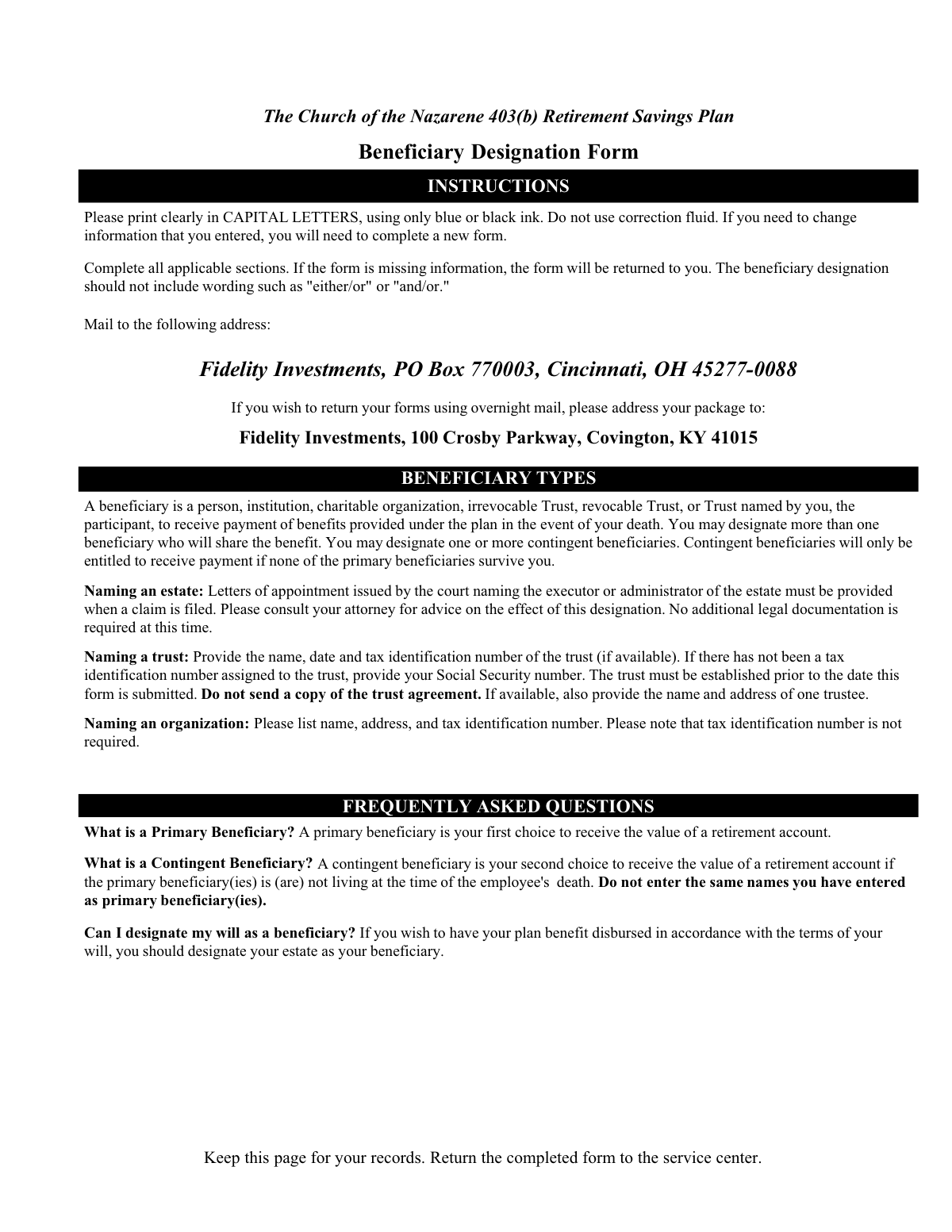
Typically, these forms are utilized by pastors, church employees, and volunteers who are navigating life milestones or professional transitions. For example, individuals participating in the denominational retirement programs often need to manage their accounts through specific documents like the 403(b) Retirement Savings Plan Beneficiary Designation Form. Keeping these records updated is crucial for effective estate planning and ensuring that financial assets are handled according to the participant's specific wishes. Properly completed documentation provides peace of mind for both the individual and the church leadership.
Managing church paperwork can often feel like a distraction from more pressing ministry tasks, but modern technology simplifies the process. Tools like Instafill.ai use AI to fill these forms in under 30 seconds, handling data accurately and securely to save you time. This allows church members to focus on their community work while ensuring their administrative obligations are handled with precision.
Every form on this page can be completed without typing. Instafill is form filling software that reads a PDF and fills it for you — including flat and scanned documents that carry no fillable fields at all.
Forms in This Category
| Form Name | Pages | FCI | |
|---|---|---|---|
| 1. | The Church of the Nazarene 403(b) Retirement Savings Plan Beneficiary Designation Form | 1 | – |
- Enterprise-grade security & data encryption
- 99%+ accuracy powered by AI
- 1,000+ forms from all industries
- Complete forms in under 60 seconds
How to Choose the Right Form
Navigating the administrative and financial requirements of the Church of the Nazarene involves managing both local church operations and personal professional benefits. Whether you are a pastor, a staff member, or a lay employee, selecting the correct documentation ensures your records are accurate and your future is protected.
Managing Your Retirement Benefits
Currently, the primary document available in this category is the The Church of the Nazarene 403(b) Retirement Savings Plan Beneficiary Designation Form. This is a specialized financial document specifically for individuals employed by or serving within the Church of the Nazarene denomination who participate in the denominational retirement plan.
You should choose this form if you need to:
- Establish a New Account: Set up your primary and contingent beneficiaries when first enrolling in the 403(b) plan.
- Update Life Changes: Revise your designations following major life events such as marriage, divorce, the birth of a child, or the passing of a previously named beneficiary.
- Refine Estate Planning: Ensure your retirement assets are distributed according to your current wishes, as this form typically supersedes instructions left in a standard will.
Why Accuracy is Essential
Because the The Church of the Nazarene 403(b) Retirement Savings Plan Beneficiary Designation Form is a legally binding document, it is critical that the information is clear and the fields are completed correctly. Using AI-powered tools like Instafill.ai can help you convert non-fillable PDF versions of these church forms into interactive documents, ensuring that your designations are legible and professionally formatted before submission to the benefits office.
If you are looking for general church membership forms or local ministry expense reports, please check back as we expand our library, but for retirement and legacy planning, the 403(b) designation form is the standard requirement.
Form Comparison
| Form | Purpose | Who Files It | Frequency | Key Sections |
|---|---|---|---|---|
| The Church of the Nazarene 403(b) Retirement Savings Plan Beneficiary Designation Form | Designates individuals or entities to inherit retirement assets upon the participant's death. | Active or retired participants in the Nazarene 403(b) Retirement Savings Plan. | At enrollment or whenever updating estate planning and beneficiary details. | Primary and contingent beneficiary identification and distribution percentage allocations. |
Tips for Nazarene church forms
Major life events like marriage, divorce, or the birth of a child can render old beneficiary choices obsolete. Periodically reviewing your Church of the Nazarene 403(b) forms ensures your retirement assets are always directed to the right individuals according to your current wishes.
Always name a contingent beneficiary in case your primary beneficiary passes away before you. This provides a clear secondary path for your funds and prevents the assets from defaulting to your estate, which can complicate the probate process for your heirs.
AI-powered tools like Instafill.ai can complete these retirement forms in under 30 seconds with high accuracy. Your sensitive financial data stays secure during the process, making it a fast and safe way to handle complex church paperwork without manual data entry.
If you are married and wish to name someone other than your spouse as a primary beneficiary, you may need their formal consent. Ensure you check for specific signature blocks or notary requirements to avoid the form being rejected by the plan administrator.
Inaccurate Social Security numbers or misspelled names can lead to significant delays during the claims process. Double-check all identifying information for your beneficiaries to ensure the plan providers can locate and verify them easily when the time comes.
After submitting your beneficiary form, keep a copy with your other important estate planning documents like your will or trust. Having a dedicated folder for Nazarene church-related financial forms helps your family navigate your assets more efficiently during difficult times.
If naming multiple primary beneficiaries, ensure the total allocation percentages add up to exactly 100%. Using clear, whole numbers instead of vague descriptions prevents ambiguity and potential legal disputes among your loved ones later on.
Frequently Asked Questions
These forms are essential for managing participation in the Church of the Nazarene 403(b) Retirement Savings Plan. They allow employees and clergy to designate who will receive their retirement assets in the event of their passing, ensuring that funds are distributed according to their specific wishes rather than state law or plan defaults.
You should review and update your beneficiary forms whenever you experience a major life event, such as marriage, divorce, the birth of a child, or the death of a previously named beneficiary. It is also a good practice to review these documents annually during your regular financial check-up to ensure they still reflect your current intentions.
Generally, no. Beneficiary designations on retirement accounts like the Nazarene 403(b) plan are legally binding and typically supersede instructions left in a last will and testament. Because these assets pass outside of probate, it is critical that the form itself is accurate and up to date.
You will typically need the full legal names, dates of birth, and Social Security numbers for all individuals you wish to name as beneficiaries. If you are designating a trust or a non-profit organization, you will need their legal name and tax identification number to ensure the funds are correctly allocated.
Yes, in many cases, if you are married and wish to name someone other than your spouse as the primary beneficiary, federal law and plan rules may require your spouse to sign a waiver. This section often requires notarization or the signature of a plan representative to be considered valid.
Once the form is filled out and signed, it should be submitted to the Church of the Nazarene Pensions and Benefits office or the specific plan administrator listed on the document. Always keep a copy for your personal records to ensure you have proof of your designations.
Yes, modern AI tools like Instafill.ai can assist in filling out these forms by accurately extracting data from your existing documents and placing it into the required fields. This technology simplifies the process, especially for complex forms that require high precision to avoid administrative delays.
Using AI-powered services like Instafill.ai, you can often complete these retirement forms in under 30 seconds. The software automates the data entry process, which significantly reduces the time spent on manual typing and helps prevent common errors.
A primary beneficiary is the first person or entity in line to receive your retirement assets. A contingent (or secondary) beneficiary only receives the funds if the primary beneficiary is no longer living at the time of your death, providing an important backup layer for your estate plan.
Yes, you can typically name multiple primary or contingent beneficiaries. When doing so, you must specify the percentage of the account that each person should receive, ensuring that the total for each category adds up to exactly 100 percent.
Glossary
- 403(b) Plan
- A tax-advantaged retirement savings plan available for employees of public schools and certain tax-exempt organizations, including ministers and staff within the Church of the Nazarene.
- Primary Beneficiary
- The first person, trust, or organization designated to receive the balance of a retirement account upon the death of the account holder.
- Contingent Beneficiary
- A secondary beneficiary who receives the retirement funds only if the primary beneficiary is deceased or unable to accept the assets at the time of the account holder's death.
- Spousal Consent
- A legal requirement where a spouse must sign a waiver, often in the presence of a notary, if the participant names someone other than the spouse as the primary beneficiary.
- Plan Administrator
- The office or individual responsible for managing the retirement plan's operations, typically the Church of the Nazarene Pensions and Benefits USA department.
- Per Stirpes
- A legal term used in beneficiary designations meaning that if a beneficiary dies before the participant, their share of the assets will pass to their own legal heirs.
- Qualified Domestic Relations Order (QDRO)
- A legal judgment or decree that recognizes the right of an alternate payee, such as a former spouse, to receive a portion of a participant's retirement benefits.
- Vesting
- The process by which an employee earns non-forfeitable ownership of employer-contributed funds in their retirement account based on years of service.