
Instafill.ai
7 days free

Yes! You can use AI to fill out Form I-192, Application for Advance Permission to Enter as a Nonimmigrant

Don't type this form by hand. Tell our AI about yourself, or upload a document you already have, and it fills every field in seconds. You check it, then download, print or sign.
7 days free, then $19.99/month · Cancel anytime
AI fills it, no typingEncrypted, never used to train AICancel in two clicks
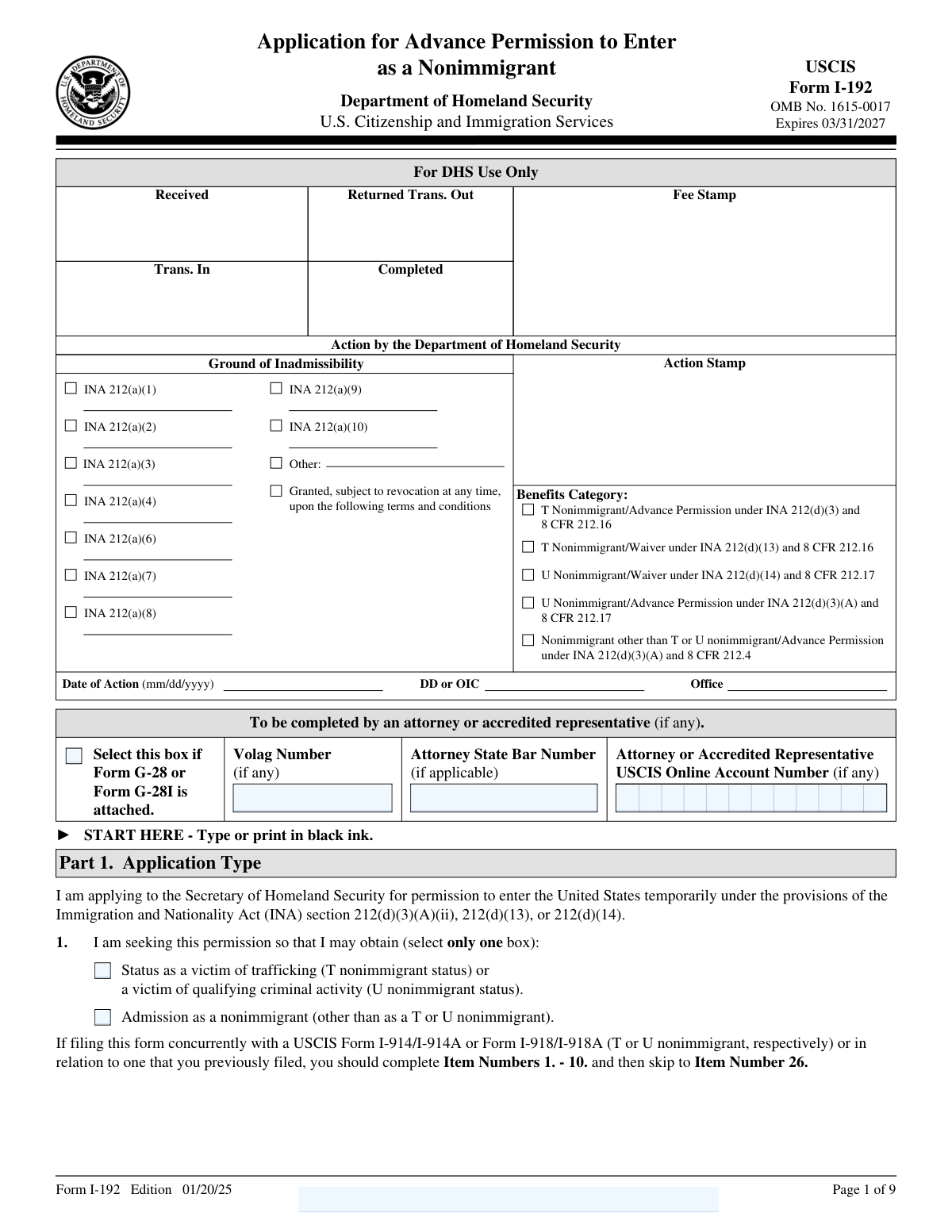
Form I-192, Application for Advance Permission to Enter as a Nonimmigrant, page 1

The AI does the filling. You just check it.

No typing into boxes, nothing to install.

Tell the AI about youAnswer a few questions in plain words, or upload a document you already have. That is all the typing there is.
AI fills every field in secondsIt puts each answer in the right box on every page, checkboxes included.
Check it and downloadReview every field, change anything, then download, print or sign the PDF.

What this form asks for

The AI fills all of it, from your answers or your documents.

Form I-192, Application for Advance Permission to Enter as a Nonimmigrant, is used by individuals who are inadmissible to the U.S. under certain sections of the Immigration and Nationality Act. It allows them to apply for a waiver to enter the U.S. temporarily. This form is crucial for those seeking nonimmigrant status despite inadmissibility issues.

The AI checks your answers before you download

15 checks built for this form, so a wrong date or a missing answer is caught before anyone else sees it.

Verifies that the form is completed using black ink

This validation check ensures that the form is filled out using black ink, which is crucial for maintaining clarity and legibility of all responses. It confirms that the information provided can be easily read and processed by the reviewing authorities. By enforcing this requirement, it helps to prevent any misinterpretation of the applicant's details. This step is vital for the overall accuracy of the application.

Confirms that all information provided is accurate and complete

This check verifies that all information submitted on the form is both accurate and complete, which is essential to prevent any processing delays. It ensures that the applicant has not omitted any critical details that could hinder the evaluation of their application. By confirming the completeness of the information, it helps to streamline the review process. This validation is key to ensuring that the application is processed in a timely manner.

Ensures that the attorney or accredited representative's details are filled in if applicable

This validation check ensures that if an attorney or accredited representative is involved, their details are accurately filled in, including their State Bar Number and USCIS Online Account Number. It confirms that the necessary representation information is provided, which is important for communication and processing purposes. By validating this information, it helps to establish a clear line of representation for the applicant. This step is crucial for maintaining the integrity of the application process.

Checks that only one application type is selected in Part 1

This validation check verifies that the applicant has selected only one application type in Part 1, ensuring compliance with the application requirements. It confirms that the applicant has not inadvertently chosen multiple options, which could lead to confusion or processing errors. By enforcing this requirement, it helps to clarify the applicant's intentions and streamline the review process. This step is essential for maintaining the accuracy of the application.

Validates that the applicant's full legal name is provided

This check ensures that the applicant's full legal name is provided without any nicknames, along with their date of birth and place of birth. It verifies that the information is consistent with official documents, which is critical for identity verification. By confirming the accuracy of this personal information, it helps to prevent any potential issues during the application review. This validation is a fundamental aspect of the application process.

Ensures that all other names ever used by the applicant, including aliases and maiden names, are included.

This validation check ensures that the applicant has provided a comprehensive list of all names they have ever used, which includes any aliases and maiden names. It verifies that no names are omitted, as this information is crucial for accurately processing the application. By confirming the inclusion of all names, the software helps to prevent any discrepancies that could arise during background checks. This thoroughness is essential for maintaining the integrity of the application process.

And 9 more checks
  • Confirms that a safe mailing address is provided for correspondence, including an 'In Care Of' name if applicable.
  • Verifies that the current physical address and any previous addresses for the last five years are accurately listed.
  • Checks that the applicant's current marital status is indicated, along with details about the current spouse and any prior marriages.
  • Ensures that all questions regarding immigration and criminal history are answered honestly and thoroughly.
  • Validates that the employment history for the last five years is accurately listed, including occupation and employer addresses.
  • Confirms that travel information, including port of entry and travel method, is provided if applicable.
  • Ensures that the applicant's contact information, including phone numbers and email address, is included in Part 3.
  • Verifies that the application is signed and dated by the applicant, certifying the truthfulness of all information.
  • Checks that the interpreter and preparer information is completed if assistance was provided during the application process.

Let AI fill out your Form I-192

No typing. Every field filled in seconds, checked, ready to sign.

7 days free, then $19.99/month · Cancel anytime

Common Mistakes in Completing Form I-192

The ones the AI is built to catch.

Using ink colors other than black for responses
Responses should be completed using black ink only, as other colors can lead to scanning errors or misinterpretation of the information provided. To avoid this mistake, ensure that you have a reliable black pen or marker before starting to fill out the form. Additionally, double-check your completed form to confirm that all entries are in black ink. This will help ensure that your application is processed smoothly and without unnecessary delays.
Failing to provide full legal name without nicknames
It is crucial to provide your full legal name as it appears on official documents, without any nicknames or abbreviations. Omitting parts of your name can lead to confusion and may result in delays or denials of your application. To prevent this error, refer to your passport or other legal identification when filling out the form. Always ensure that the name you provide matches exactly with your official documents to facilitate a seamless processing experience.
Not selecting an application type in Part 1
Selecting the appropriate application type in Part 1 is essential for the correct processing of your request. Failing to do so can lead to your application being misrouted or rejected. To avoid this mistake, carefully read the instructions for Part 1 and ensure that you check the box corresponding to your specific situation. Taking the time to accurately complete this section will help ensure that your application is directed to the right processing channel.
Omitting previous names or aliases in personal info
Providing a complete history of your names, including any previous names or aliases, is vital for the integrity of your application. Omitting this information can lead to complications in verifying your identity and may result in delays. To avoid this mistake, review all your legal documents and include any names you have used in the past. This thoroughness will help ensure that your application is processed without issues related to identity verification.
Providing an unsafe mailing address for correspondence
It is important to provide a secure and reliable mailing address for any correspondence regarding your application. Using an unsafe address can result in lost documents or missed communications, which could jeopardize your application status. To prevent this mistake, consider using a permanent address where you can reliably receive mail, or a trusted friend or family member's address if necessary. Always verify that the address you provide is current and secure to ensure that you receive all important notifications promptly.
Not including 'In Care Of' name when applicable
Failing to include an 'In Care Of' name can lead to delays in processing your application or misdelivery of important correspondence. It is essential to provide this information if your mailing address is different from your physical address. To avoid this mistake, carefully review your address details and include any necessary 'In Care Of' names to ensure that your application is directed to the correct recipient.
Failing to indicate current marital status accurately
Inaccurately reporting your current marital status can result in complications or denials of your application. It is crucial to provide truthful and complete information regarding your marital status, as this can affect your eligibility for certain immigration benefits. To prevent this error, double-check your marital status and ensure that it aligns with official documentation before submitting your application.
Not disclosing prior marriages or their details
Omitting information about prior marriages can lead to questions about your honesty and may jeopardize your application. It is important to disclose all previous marriages, including dates and details, as this information is relevant to your immigration history. To avoid this mistake, gather all necessary documentation regarding your prior marriages and ensure that you provide complete and accurate details in your application.
Inaccurate or incomplete immigration history responses
Providing inaccurate or incomplete information about your immigration history can result in significant delays or denials of your application. It is vital to be thorough and precise when detailing your immigration history, including any previous applications, statuses, or violations. To mitigate this risk, take the time to review your immigration history and ensure that all responses are accurate and comprehensive.
Omitting employment history for the last five years
Failing to include your employment history for the past five years can raise red flags during the application review process. This information is crucial for assessing your stability and ties to your home country. To avoid this oversight, compile a complete list of your employment history, including job titles, employers, and dates of employment, and ensure that it is accurately reflected in your application.
Not providing travel details if applicable
Omitting travel details can lead to delays or denials of your application. It is essential to provide accurate and complete travel information to help the reviewing officer understand your intentions. To avoid this mistake, ensure that you include all relevant travel dates, destinations, and purposes. Double-check that this section is filled out thoroughly before submitting your application.
Failing to sign and date the application
Neglecting to sign and date your application can result in it being rejected outright. A signature is a legal affirmation of the information provided, and without it, the application is considered incomplete. To prevent this issue, make it a habit to review the application for a signature and date before submission. Consider placing a reminder note on your application checklist to ensure this critical step is not overlooked.
Not including interpreter or preparer information when needed
Failing to provide interpreter or preparer information can create confusion regarding who assisted you with the application. This information is crucial for transparency and may be required for processing your application. To avoid this mistake, if you used an interpreter or preparer, ensure their details are included in the appropriate section. Review the instructions carefully to determine if this information is necessary for your specific situation.
Neglecting to use Part 6 for additional information
Not utilizing Part 6 for additional information can lead to incomplete applications, especially if there are unique circumstances that need clarification. This section is designed to provide space for any extra details that may support your application. To avoid this oversight, take the time to think about any relevant information that may not fit in the standard sections and include it in Part 6. Always ensure that this part is filled out if you have anything additional to convey.
Not reviewing the application for completeness before submission
Submitting an incomplete application can result in processing delays or outright rejection. It is vital to review your application thoroughly to ensure all sections are filled out correctly and all required documents are attached. To mitigate this risk, create a checklist of all required fields and documents, and go through each item before submission. Taking the time to review can save you from potential setbacks in your application process.
Failing to attach required supporting documents
Omitting necessary supporting documents can lead to delays or denials of your application. It is crucial to carefully review the instructions for Form I-192 to ensure that all required documents are included. To avoid this mistake, create a checklist of the required documents and verify that each one is attached before submitting your application. Additionally, consider making copies of all documents for your records.
Not including name and A-Number on additional sheets
When additional sheets are used to provide information, failing to include your name and A-Number can result in confusion and processing delays. Always ensure that any extra pages are clearly labeled with your identifying information. To prevent this issue, write your name and A-Number at the top of each additional sheet, and double-check that all pages are accounted for before submission. This practice will help maintain clarity and organization in your application.

Frequently Asked Questions About Form I-192


Is it really free for 7 days?
Yes. You pay $0 today. Cancel before Nov 2 and you are never charged. Keep it, and it is $19.99 a month for 5 fills of your Form I-192.
Can I fill other forms too?
This plan is for your Form I-192: your own AI agent fills it as often as 5 times a month. To fill other forms and upload your own, choose a Professional plan from your account.
How do I cancel?
From your account, in two clicks, any time. No email, no call.
How does the AI fill out Form I-192?
You answer a few questions in plain words, or upload a document you already have. The AI reads what you give it and puts each answer into the right field of Form I-192, on every page, in seconds. It checks the answers against the form's own rules, and you review and change anything before you download, print or sign.
What happens to my information?
It is encrypted in transit and at rest, and it is never used to train AI.
What is Form I-192 and what is its purpose?
Form I-192, Application for Advance Permission to Enter as a Nonimmigrant, is a form used by individuals who are seeking permission to enter the United States as nonimmigrants despite being inadmissible due to certain grounds. The purpose of this form is to request a waiver of inadmissibility, allowing individuals to enter the U.S. for specific reasons, such as family visits, business, or other temporary purposes.
Who is eligible to apply for Form I-192?
Individuals who are inadmissible to the United States but wish to enter as nonimmigrants may apply for Form I-192. Eligibility typically includes those who have been denied entry due to criminal convictions, immigration violations, or other grounds of inadmissibility. However, applicants must demonstrate that their entry would not be contrary to the national interest and that they warrant a favorable exercise of discretion.
What are the grounds for inadmissibility that Form I-192 addresses?
Form I-192 addresses various grounds for inadmissibility, including but not limited to criminal convictions, immigration violations, health-related issues, and security concerns. It allows individuals to request a waiver for these grounds, enabling them to enter the U.S. as nonimmigrants despite their inadmissibility.
How do I complete Form I-192?
To complete Form I-192, applicants must fill out the form accurately and completely, providing all required information and documentation. This includes personal details, the reason for inadmissibility, and any supporting evidence that demonstrates eligibility for a waiver. It is important to follow the instructions provided with the form and to ensure that all information is truthful and verifiable.
What information is required in Part 2 of Form I-192?
Part 2 of Form I-192 requires applicants to provide specific information regarding their inadmissibility. This includes details about the grounds for inadmissibility, any prior immigration history, and the reasons for requesting a waiver. Applicants must also explain how their entry would not be contrary to the national interest and provide any supporting documentation that may strengthen their case.
What should I do if I have previously filed an application for advance permission?
If you have previously filed an application for advance permission, you should indicate this on your new Form I-192 application. It is important to provide details about the prior application, including the date it was filed and the outcome, as this information may be relevant to your current request.
What is the significance of the Attorney or Accredited Representative section in Form I-192?
The Attorney or Accredited Representative section in Form I-192 is significant because it allows you to designate a legal representative who can assist you with your application. This representative can communicate with U.S. Citizenship and Immigration Services (USCIS) on your behalf, receive notifications, and help ensure that your application is completed accurately.
How do I provide my employment history on Form I-192?
To provide your employment history on Form I-192, you should list all relevant employment positions you have held, including the name of the employer, your job title, the dates of employment, and a brief description of your duties. Be sure to include any gaps in employment and explain them if necessary.
What should I include in the Additional Information section of Form I-192?
In the Additional Information section of Form I-192, you should include any information that is pertinent to your application but was not covered in other sections. This may include explanations of any criminal history, details about your immigration history, or any other relevant circumstances that may affect your eligibility for advance permission.
What is the difference between T and U nonimmigrant status as referenced in Form I-192?
T nonimmigrant status is designated for victims of human trafficking who assist law enforcement in the investigation or prosecution of human trafficking cases. U nonimmigrant status, on the other hand, is for victims of certain crimes who have suffered substantial mental or physical abuse and are willing to assist law enforcement in the investigation or prosecution of criminal activity. Both statuses provide a pathway to lawful permanent residency under specific conditions.
How do I know if I need to file Form I-192 concurrently with other forms?
You may need to file Form I-192 concurrently with other forms if you are applying for a nonimmigrant visa and have a prior immigration violation or inadmissibility issue. It is advisable to consult the specific instructions for Form I-192 and consider your individual circumstances or seek legal advice to determine if concurrent filing is necessary.
What happens after I submit Form I-192?
After you submit Form I-192, U.S. Citizenship and Immigration Services (USCIS) will process your application. You will receive a receipt notice confirming that your application has been received. USCIS may request additional information or documentation if needed. Once a decision is made, you will be notified of the outcome.
How long does it take to process Form I-192?
The processing time for Form I-192 can vary based on several factors, including the volume of applications received and the complexity of your case. Generally, it can take several months to process. You can check the USCIS website for current processing times or contact them for more specific information regarding your application.
What should I do if my application for advance permission is denied?
If your application for advance permission using Form I-192 is denied, you will receive a notice explaining the reasons for the denial. You may consider reapplying if you can address the issues that led to the denial. It is also advisable to consult with an immigration attorney to explore your options and understand the implications of the denial.
Can I appeal a decision made on my Form I-192 application?
No, decisions made on Form I-192 applications are generally not subject to appeal. However, you may have the option to file a motion to reopen or reconsider the decision if you believe there was an error in the decision-making process. It is recommended to seek legal advice to understand the best course of action in your specific situation.
What is the fee associated with filing Form I-192?
The fee for filing Form I-192, Application for Advance Permission to Enter as a Nonimmigrant, is subject to change. It is important to check the official USCIS website or the form instructions for the most current fee information. As of the latest update, the fee is typically around $930, but please verify this before submitting your application.
How can I check the status of my Form I-192 application?
You can check the status of your Form I-192 application online through the USCIS website by entering your receipt number. Alternatively, you can contact USCIS customer service for assistance. It is advisable to have your receipt number handy when inquiring about your application status.
What should I do if I need to change my address after filing Form I-192?
If you need to change your address after filing Form I-192, you must notify USCIS of your new address. You can do this by submitting Form AR-11, Alien's Change of Address Card, either online or by mail. It is important to update your address to ensure you receive all correspondence regarding your application.
Is there a specific format for providing my contact information on Form I-192?
Yes, when providing your contact information on Form I-192, you should follow the instructions outlined in the form. Typically, you will need to include your full name, mailing address, phone number, and email address in the designated fields. Ensure that all information is accurate and clearly written to avoid processing delays.
What are the consequences of providing false information on Form I-192?
Providing false information on Form I-192 can have serious consequences, including denial of your application, potential removal from the United States, and future ineligibility for immigration benefits. It is crucial to provide truthful and accurate information to avoid legal repercussions and ensure the integrity of your application.
Encrypted in transit and at restNever used to train AIDelete your forms any time

Get your Form I-192 filled out by AI

$0 today. Cancel before Nov 2 and you pay nothing.

Other forms like this one

grant application forms: Form I-102, Application for Replacement/Initial Nonimmigrant Arrival-Departure Document, Form I-539, Application to Extend/Change Nonimmigrant Status, Application for the Grant of Permanent Residence in the Cayman Islands, Form DS-156E, Nonimmigrant Treaty Trader / Investor Application, EDAWN Investor Application

ERM forms: REQUEST FOR OWNERSHIP INFORMATION—ERM-14 FORM, Form I-90, Application to Replace Permanent Resident Card, Form I-485, Application to Register Permanent Residence, Form SS-8, Determination of Worker Status, Form CMS-1763, Request for Termination of Medicare Coverage, Form I-212, Application for Permission to Reapply, Form W-8IMY (Rev. October 2021), Certificate of Foreign Intermediary, Foreign Flow-Through Entity, or Certain U.S. Branches for United States Tax Withholding and Reporting, County of Louisa Department of Community Development – New Non-Residential Building Permit Package, Application Schedule 1: Designer Information (City of Toronto Building Permit Application), HR-Pol-Rec&Res-04 Employment Application Form (Recruitment of Permanent Employees), Fauquier County Department of Community Development – Building Trades Permit or Amendment to Existing Permit Application (Residential or Commercial), Belastingdienst VPB 075 – Verzoek fiscale eenheid Vennootschapsbelasting (Deel A – Gegevens moedermaatschappij), ROTC Cadet Academic Plan / Degree and Credit Hour Worksheet (Student Identification, Term-by-Term Courses, GPA Summary, and Completion Certification), Health Assessment – Ontario Health atHome (Fixing Long-Term Care Act, 2021) (Form 4768-69E), Health Assessment - Ontario Health atHome (Fixing Long-Term Care Act, 2021) — Form 4768-69E, Washington Single-Family Property Term Lease & Security Deposit Receipt (WA Single-Family Lease) | Revised 10/08/2025, Application for Mechanical Permit, Pennsylvania Department of State — Certificate of Termination (Domestic Limited Liability Company) (15 Pa.C.S. § 8872(f)) (DSCB:15-8872(f)), Document Checklist for a Study Permit (IMM 5483), City of Raleigh Residential Permit Application (Revision 08-20-2025)

7 days free, then $19.99/month · Cancel anytime