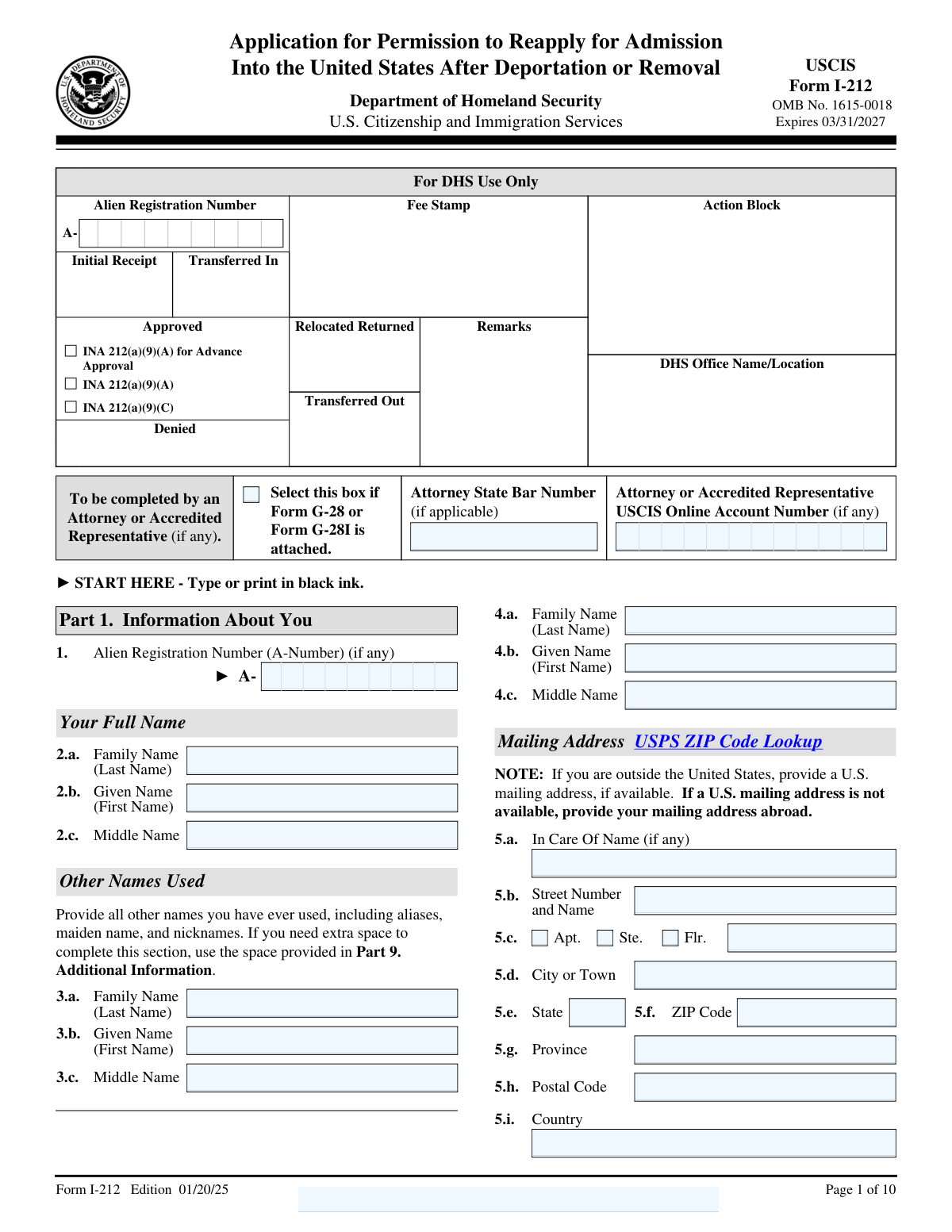
Fill out Form I-212, Application for Permission to Reapply with Instafill.ai
Worried about filling PDFs wrong? Instafill securely fills I-212 forms, ensuring each field is accurate.
Form I-212 is part of the
ERM forms category on Instafill.
#1 AI PDF Filling Software of 2026
3 out of 4 customers say they prepare their Form I-212 forms in 37 seconds or less
Secure platform for your PDF forms and personal information
| Form name: | Form I-212, Application for Permission to Reapply |
| Number of fields: | 299 |
| Number of pages: | 10 |
| FCI: | Moderate (61/100) |
Form Complexity Index
Moderate
61 / 100
| Fillable fields | 299 |
| Pages | 10 |
| Fields per page | 30 |
| Sections | — |
| Conditional rules | — |
| Tables & lists | — |
| Instruction pages | — |
| OMB Control No. | 1615-0018 |
| Instafill Form ID | IF-I-212 |
Form I-212 has a moderate Form Complexity Index of 61/100. Instafill’s AI completes it accurately in under a minute.
Instafill Demo: How to fill out PDF forms in seconds with AI
Compliance Form I-212
Validation Checks by Instafill.ai
1
Verifies that the form is completed using black ink, ensuring clarity in responses.
This validation check ensures that the form is filled out using black ink, which is crucial for maintaining clarity and legibility in the responses. It confirms that all entries are easily readable, preventing any misinterpretation of the information provided. By enforcing this requirement, the software helps to avoid potential delays in processing due to unclear submissions. Additionally, it verifies that the ink used does not smudge or fade, further enhancing the quality of the application.
2
Confirms that Form G-28 or G-28I is attached if the applicant is represented by an attorney or accredited representative.
This validation check verifies that if the applicant is represented by an attorney or an accredited representative, the appropriate Form G-28 or G-28I is included with the application. It ensures that the representation is officially documented, which is essential for the processing of the application. By confirming the attachment of these forms, the software helps to streamline communication between the applicant and the authorities. This check also prevents any complications that may arise from missing representation documentation.
3
Ensures that all required personal information, including Alien Registration Number, full name, and all other names used, is accurately provided.
This validation check ensures that all necessary personal information is accurately filled out, including the Alien Registration Number, full name, and any other names the applicant has used. It verifies that the information matches official records, which is critical for the identification and processing of the application. By confirming the accuracy of this data, the software helps to prevent issues related to identity verification. This check also aids in maintaining the integrity of the application process by ensuring that all required details are present.
4
Checks that the mailing address includes the ZIP code and verifies if a U.S. mailing address is provided if the applicant is outside the U.S.
This validation check verifies that the mailing address provided includes a ZIP code, which is essential for accurate mail delivery. It also ensures that if the applicant is located outside the U.S., a valid U.S. mailing address is included, facilitating communication with the relevant authorities. By confirming these details, the software helps to prevent delays in correspondence and ensures that all notifications reach the applicant promptly. This check is vital for maintaining effective communication throughout the application process.
5
Validates that the applicant has indicated whether the mailing address is the same as the physical address and has provided the current physical address if different.
This validation check ensures that the applicant has clearly indicated whether their mailing address is the same as their physical address. If the addresses differ, it verifies that the current physical address is accurately provided. This is important for ensuring that all communications are sent to the correct location, preventing any potential miscommunication. By confirming this information, the software helps to maintain accurate records and facilitates efficient processing of the application.
6
Ensures that the applicant has included their U.S. Social Security Number and Online Account Number if applicable.
This validation check ensures that the applicant has provided their U.S. Social Security Number, which is crucial for identification and processing. It also confirms that if the applicant has an Online Account Number, it is included in the form. This information is essential for verifying the applicant's identity and linking their application to any existing records. By checking for these numbers, the software helps prevent delays in processing the application.
7
Confirms that the date of birth, place of birth, and country of citizenship are accurately filled out.
This validation check verifies that the applicant has accurately filled out their date of birth, place of birth, and country of citizenship. It ensures that these critical pieces of information are correct, as they are vital for determining eligibility and processing the application. By confirming the accuracy of this data, the software helps to avoid potential issues that could arise from discrepancies. This check is essential for maintaining the integrity of the application process.
8
Verifies that the reasons for inadmissibility are indicated and the appropriate boxes are checked.
This validation check ensures that the applicant has indicated the reasons for any inadmissibility and that the appropriate boxes are checked. It confirms that the applicant has provided all necessary information regarding their immigration history and any factors that may affect their application. By verifying this information, the software helps to streamline the review process and ensures that all relevant details are considered. This check is crucial for assessing the applicant's eligibility for reapplication.
9
Checks that details about removal history, including dates and locations, are provided accurately.
This validation check verifies that the applicant has accurately provided details about their removal history, including specific dates and locations. It ensures that all relevant information is included, which is essential for assessing the applicant's immigration status and history. By checking for this accuracy, the software helps to prevent any misunderstandings or errors that could impact the application. This check is important for maintaining a comprehensive record of the applicant's immigration journey.
10
Ensures that any periods of unlawful presence in the U.S. are listed and evidence of time outside the U.S. since the last departure is included.
This validation check ensures that the applicant has listed any periods of unlawful presence in the U.S., which is critical for evaluating their eligibility for reapplication. It also confirms that the applicant has provided evidence of their time spent outside the U.S. since their last departure. By verifying this information, the software helps to ensure that all relevant factors are considered in the application process. This check is vital for understanding the applicant's current status and compliance with immigration laws.
11
Validates that the immigration status sought upon reentry is specified along with reasons for wanting to reenter the U.S.
This validation check ensures that the applicant clearly specifies the immigration status they are seeking upon reentry to the United States. It confirms that the reasons for wanting to reenter are adequately detailed, providing context for the application. By requiring this information, the check verifies that the application is complete and that the applicant has a legitimate basis for their request. This is crucial for the processing of the application and helps to avoid delays.
12
Confirms that information about U.S. citizen or lawful permanent resident family members is provided.
This validation check verifies that the applicant has included relevant information regarding any U.S. citizen or lawful permanent resident family members. It ensures that the relationships are clearly defined, which can be important for the evaluation of the application. By confirming this information, the check helps to establish the applicant's ties to the U.S., which may influence the decision on their reentry request. This thoroughness aids in the overall assessment of the application.
13
Ensures that biographic information, including ethnicity, race, height, weight, eye color, and hair color, is accurately filled out.
This validation check ensures that all biographic information provided by the applicant is accurate and complete. It verifies that details such as ethnicity, race, height, weight, eye color, and hair color are filled out correctly, which is essential for identification purposes. By checking this information, the validation process helps to prevent any discrepancies that could arise during the review of the application. Accurate biographic data is vital for maintaining the integrity of the immigration process.
14
Checks that the applicant's contact information, including daytime and mobile telephone numbers and email address, is provided.
This validation check confirms that the applicant has provided complete and accurate contact information. It ensures that both daytime and mobile telephone numbers, as well as an email address, are included for effective communication. By verifying this information, the check helps to facilitate any necessary follow-up or clarification during the application process. Having reliable contact details is crucial for timely updates and responses regarding the application status.
15
Verifies that the application is signed and dated by the applicant, certifying that all information is true and correct.
This validation check ensures that the application has been properly signed and dated by the applicant. It confirms that the applicant certifies all information provided is true and correct, which is a legal requirement for the application process. By verifying the signature and date, the check helps to uphold the integrity of the application and ensures accountability from the applicant. This step is essential for the processing of the application and for maintaining compliance with immigration regulations.
Common Mistakes in Completing Form I-212
Responses on Form I-212 must be completed in black ink to ensure clarity and legibility. Using other colors can lead to processing delays or rejection of the application due to unreadable information. To avoid this mistake, always use a black pen when filling out the form and double-check that all entries are clear and distinct. Additionally, consider printing the form if allowed, as this can also enhance readability.
If you are represented by an attorney, it is essential to attach Form G-28, Notice of Entry of Appearance as Attorney, to your application. Failing to do so can result in communication issues and delays in processing your application. To prevent this oversight, ensure that you have the completed Form G-28 ready and attached before submitting your application. Always confirm that your attorney has signed the form and that it is included in your submission package.
Applicants residing outside the U.S. must provide a valid U.S. mailing address on Form I-212. Omitting this information can lead to complications in receiving important correspondence regarding your application. To avoid this mistake, ensure you have a reliable U.S. address where you can receive mail, whether it be a friend’s, family member’s, or a legal representative’s address. Always verify that the address is current and accurate before submission.
The Alien Registration Number (A-Number) is a critical identifier for your application and must be included if you have one. Omitting this number can lead to delays in processing or even denial of your application. To avoid this mistake, check any previous immigration documents you may have for your A-Number and ensure it is accurately entered on the form. If you do not have an A-Number, clearly indicate that on the form to prevent confusion.
It is crucial to provide your full legal name, including any middle names, as it appears on official documents. Incorrectly filling in your name or omitting your middle name can lead to discrepancies that may affect the processing of your application. To avoid this mistake, carefully review your identification documents and ensure that your name is entered exactly as it appears. Double-check for any spelling errors and confirm that all parts of your name are included before submitting the form.
Failing to provide all names, including aliases, can lead to delays or denials in processing your application. It is crucial to ensure that all variations of your name are included to avoid discrepancies in your records. To prevent this mistake, take the time to review any legal documents or identification that may contain different names. Keeping a comprehensive list of all names used throughout your life will help ensure accuracy.
Neglecting to include your Social Security Number or Online Account Number can result in processing delays or complications with your application. These identifiers are essential for verifying your identity and tracking your application status. To avoid this mistake, double-check that you have entered these numbers correctly and ensure they are current. If you do not have a Social Security Number, be sure to indicate that clearly on the form.
Not specifying whether your mailing address is the same as your physical address can create confusion and lead to miscommunication regarding your application. It is important to clarify this information to ensure that all correspondence is directed to the correct location. To avoid this mistake, take a moment to clearly indicate your mailing address and confirm its accuracy. If the addresses differ, provide both to facilitate proper communication.
Omitting details about your removal history can significantly impact the evaluation of your application. Complete and accurate information is necessary for the authorities to assess your eligibility for reapplication. To prevent this mistake, gather all relevant documentation regarding your removal history and ensure that you provide a thorough account. Being transparent about your past will help build trust and credibility in your application.
Not checking the appropriate boxes regarding reasons for inadmissibility can lead to misunderstandings and potential denial of your application. It is essential to accurately represent your situation to ensure that your application is processed correctly. To avoid this mistake, carefully read the instructions and consider consulting with an immigration professional if you are unsure about your status. Taking the time to review this section thoroughly can save you from future complications.
Failing to provide adequate evidence of the time spent outside the U.S. since the last departure can lead to delays or denials of the application. It is crucial to include documentation such as travel itineraries, passport stamps, or other official records that clearly indicate the duration of your absence. To avoid this mistake, gather all relevant documents before submitting your application and ensure they are clearly labeled and organized. This will help demonstrate your compliance with immigration regulations and support your request for reentry.
Not clearly stating the immigration status you are seeking upon reentry can create confusion and may result in your application being rejected. It is essential to specify whether you are applying for a visa, adjustment of status, or any other immigration benefit. To prevent this issue, carefully review the application instructions and ensure that you provide a clear and concise statement of your desired immigration status. This clarity will assist immigration officials in processing your application more efficiently.
Omitting information about U.S. citizen or lawful permanent resident family members can negatively impact your application, as this information is often relevant to your case. It is important to include details about your family members, such as their names, relationships to you, and their immigration status. To avoid this mistake, take the time to compile a complete list of your family members and their statuses before filling out the form. This will provide a fuller picture of your ties to the U.S. and may strengthen your application.
Incomplete biographic information can lead to processing delays or denials, as immigration officials require a full understanding of your background. Ensure that you provide all requested details, including your full name, date of birth, and any other relevant personal information. To avoid this mistake, double-check the application for any missing fields and verify that all information is accurate and up-to-date. Providing comprehensive biographic information will facilitate a smoother review process.
Neglecting to include your address and employment history can hinder the evaluation of your application, as this information is often necessary for establishing your ties to the community. It is important to provide a complete history of your addresses and employment, including dates and locations. To prevent this oversight, maintain a detailed record of your residential and employment history prior to completing the application. This thoroughness will help demonstrate your stability and commitment to complying with U.S. immigration laws.
Failing to include parents' and marital history can lead to delays or denials in processing the application. It is essential to provide complete and accurate information as requested in the form. To avoid this mistake, carefully review the instructions to determine if this information is necessary for your specific situation. Ensure that you gather all relevant details before submitting the application.
Inaccurate contact information can hinder communication regarding your application status and may result in missed deadlines or requests for additional information. Always double-check the contact details you provide, including phone numbers and addresses, to ensure they are current and correct. Consider using a reliable method to verify your contact information before submission. This will help facilitate a smoother application process.
Neglecting to sign and date the application is a critical error that can render the form invalid. A signature is necessary to confirm that the information provided is true and complete. To prevent this mistake, make it a habit to review the entire application for required signatures and dates before submission. This simple step can save you time and prevent unnecessary complications.
If an interpreter was used during the application process, failing to provide their information can lead to questions about the accuracy of the application. It is important to disclose this information to ensure transparency and clarity in communication. To avoid this oversight, consider whether an interpreter was involved and include their details if applicable. This will help ensure that your application is processed without unnecessary delays.
If the form was prepared by someone other than the applicant, omitting the preparer's information can create confusion and may lead to processing issues. It is crucial to provide the preparer's name, contact information, and signature if applicable. To avoid this mistake, always check if someone else assisted you in completing the form and include their details as required. This will help maintain clarity and accountability in the application process.
Failing to utilize Part 9 of Form I-212 can lead to misunderstandings or incomplete information being presented to the reviewing authority. This section is specifically designed for applicants to provide any necessary clarifications or additional details that may support their application. To avoid this mistake, carefully assess whether any part of your application could benefit from further explanation. Always take the time to elaborate on complex situations or provide context that may not be immediately clear from the standard sections of the form.
Submitting an incomplete application can result in delays or outright denials, as the reviewing body may require additional information to process your request. It is crucial to thoroughly review the entire application to ensure that all required fields are filled out and that all necessary documentation is included. To prevent this oversight, consider creating a checklist of all required items and reviewing your application against it before submission. Additionally, having a second pair of eyes review your application can help catch any errors or omissions you may have missed.
Saved over 80 hours a year
“I was never sure if my IRS forms like W-9 were filled correctly. Now, I can complete the forms accurately without any external help.”
Kevin Martin Green
Your data stays secure with advanced protection from Instafill and our subprocessors




Robust compliance program
Transparent business model
You’re not the product. You always know where your data is and what it is processed for.
ISO 27001, HIPAA, and GDPR
Our subprocesses adhere to multiple compliance standards, including but not limited to ISO 27001, HIPAA, and GDPR.
Security & privacy by design
We consider security and privacy from the initial design phase of any new service or functionality. It’s not an afterthought, it’s built-in, including support for two-factor authentication (2FA) to further protect your account.
Fill out Form I-212 with Instafill.ai
Worried about filling PDFs wrong? Instafill securely fills i-212 forms, ensuring each field is accurate.
