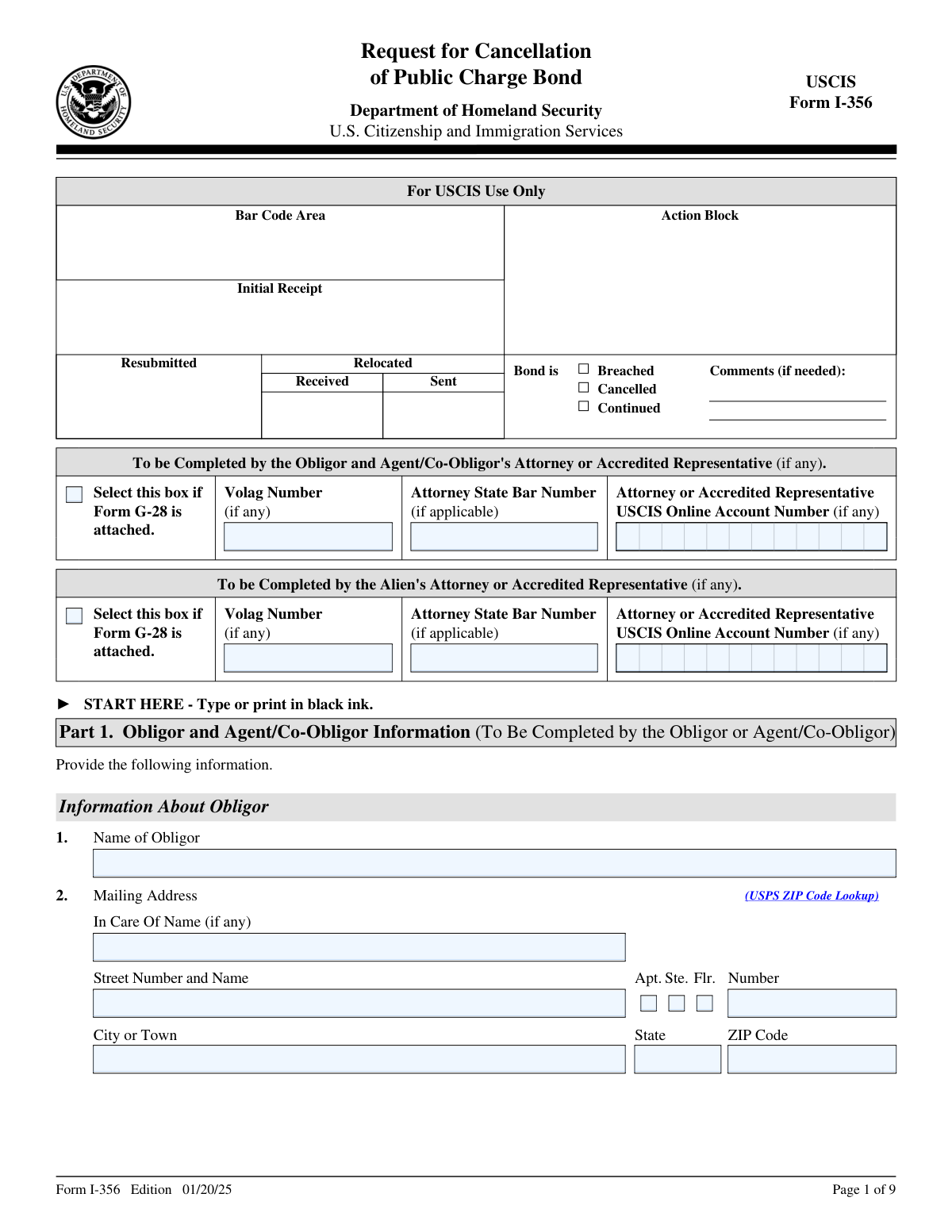
Fill out Form I-356, Request for Cancellation of Public Charge Bond with Instafill.ai

Worried about filling PDFs wrong? Instafill securely fills I-356 forms, ensuring each field is accurate.
#1 AI PDF Filling Software of 2025
3 out of 4 customers say they prepare their Form I-356 forms in 37 seconds or less
Secure platform for your PDF forms and personal information
Form name: Form I-356, Request for Cancellation of Public Charge Bond
Number of pages: 9
Download form: https://www.uscis.gov/sites/default/files/document/forms/i-356.pdf
main-image

Instafill Demo: filling out a legal form in seconds

Compliance Form I-356
Validation Checks by Instafill.ai

1
Verifies that the form is completed using black ink for clarity.
This validation check ensures that the form is filled out using black ink, which is essential for clarity and legibility. It confirms that all entries are easily readable, preventing any misinterpretation of the information provided. By enforcing this requirement, the software helps to maintain a standard that facilitates efficient processing of the form. This check is crucial in avoiding delays that may arise from unclear submissions.
2
Ensures that all information provided is accurate and complete to prevent processing delays.
This validation check verifies that every section of the form is filled out accurately and completely. It confirms that missing or incorrect information is flagged, which helps to prevent any potential processing delays. By ensuring that all required fields are properly completed, the software enhances the likelihood of a smooth review process. This check is vital for maintaining the integrity of the application and expediting its handling.
3
Confirms that the Obligor's name and Taxpayer Identification Number (TIN) are correctly filled in.
This validation check ensures that the Obligor's name and Taxpayer Identification Number (TIN) are accurately entered on the form. It verifies that these critical identifiers match official records, which is essential for the processing of the bond cancellation request. By confirming the accuracy of this information, the software helps to prevent any issues that could arise from mismatched data. This check is important for maintaining compliance with regulatory requirements.
4
Checks that the mailing and physical addresses of the Obligor are provided and accurate.
This validation check verifies that both the mailing and physical addresses of the Obligor are included and correctly filled out. It ensures that the addresses are complete and formatted properly, which is crucial for any correspondence related to the bond cancellation. By confirming the accuracy of these addresses, the software helps to prevent any misdelivery of important documents. This check is essential for ensuring effective communication throughout the processing of the request.
5
Validates that the Bond Receipt Number and Bond Amount are entered correctly.
This validation check ensures that the Bond Receipt Number and Bond Amount are accurately entered on the form. It verifies that these details correspond to the official records associated with the bond, which is critical for the cancellation process. By validating this information, the software helps to prevent any discrepancies that could lead to complications or delays. This check is important for ensuring that the request is processed efficiently and correctly.
6
Ensures that the date of bond approval by the Department of Homeland Security is specified.
This validation check ensures that the date of bond approval is clearly specified on the form. It verifies that the date format is correct and that it falls within a reasonable range. By confirming this information, the software helps to prevent any potential delays in processing the request. Accurate date entry is crucial for maintaining the integrity of the bond cancellation process.
7
Confirms that the Alien Registration Number (A-Number) is included if available.
This check confirms that the Alien Registration Number, commonly referred to as the A-Number, is included on the form if it is available. It verifies that the number is formatted correctly and matches the expected length. By ensuring this information is present, the software aids in the identification and tracking of the alien's case. This step is essential for maintaining accurate records within the immigration system.
8
Verifies that the U.S. Social Security Number is provided if applicable.
This validation check verifies that the U.S. Social Security Number is provided on the form when applicable. It ensures that the number is formatted correctly and is a valid Social Security Number. By confirming this information, the software helps to streamline the processing of the request and ensures compliance with federal regulations. This step is important for linking the alien's identity with their financial and legal records.
9
Checks that the current legal name of the alien is accurately filled in, including any other names used since birth.
This check ensures that the current legal name of the alien is accurately filled in on the form. It verifies that all variations of the name, including any other names used since birth, are included as required. By confirming the accuracy of this information, the software helps to prevent any discrepancies that could lead to processing delays. Accurate name entry is vital for the identification and verification of the alien's identity.
10
Ensures that the alien's date of birth, place of birth, and country of citizenship are correctly entered.
This validation check ensures that the alien's date of birth, place of birth, and country of citizenship are accurately entered on the form. It verifies that the information is consistent and formatted correctly according to the required standards. By confirming these details, the software helps to establish the identity and eligibility of the alien for bond cancellation. This step is crucial for maintaining the integrity of the immigration process.
11
Validates that both mailing and physical addresses for the alien are provided and accurate.
This validation check ensures that both the mailing and physical addresses for the alien are present and correctly filled out. It verifies that the addresses conform to standard formatting and are complete, which is crucial for effective communication. By confirming the accuracy of these addresses, the check helps prevent delays in processing the request. Additionally, it cross-references the addresses to ensure they are not only valid but also correspond to the alien's current residency.
12
Confirms that the reason for cancellation of the bond is indicated and supported by required documentation.
This validation check verifies that a clear reason for the cancellation of the bond is provided in the form. It ensures that the reason is not only stated but also substantiated with the necessary supporting documentation. By doing so, it helps to maintain the integrity of the cancellation process and ensures that all claims are backed by appropriate evidence. This check is essential for compliance with regulatory requirements and aids in the swift processing of the request.
13
Ensures that the alien or their executor's contact information is provided.
This validation check confirms that the contact information for the alien or their executor is included in the form. It ensures that the provided contact details are complete and accurate, facilitating any necessary follow-up communication. By verifying this information, the check helps to streamline the process and ensures that the relevant parties can be reached if further information is needed. This is particularly important for maintaining open lines of communication throughout the cancellation process.
14
Verifies that the form is signed and dated where indicated by the Obligor and the alien or their executor.
This validation check ensures that the form has been properly signed and dated by both the Obligor and the alien or their executor. It verifies that all required signatures are present, which is critical for the legal validity of the request. By confirming the presence of these signatures, the check helps to prevent any potential disputes regarding the authenticity of the submission. This step is vital for ensuring that the form meets all legal requirements before it is processed.
15
Checks that any interpreter's information is included if applicable, along with their certification.
This validation check ensures that if an interpreter was used, their information is included in the form along with any required certification. It verifies that the interpreter's details are accurately recorded, which is important for transparency and accountability. By confirming the inclusion of this information, the check helps to uphold the integrity of the process and ensures that all parties involved are properly represented. This step is essential for compliance with language assistance requirements.

Common Mistakes in Completing Form I-356

Responses on Form I-356 should be completed using black ink only. Using other colors can lead to issues with legibility and processing delays. To avoid this mistake, ensure that you have a black pen available when filling out the form. Additionally, double-check your completed form to confirm that all entries are made in black ink before submission.

Providing an incorrect Taxpayer Identification Number (TIN) can result in processing delays or rejection of your request. It is crucial to verify that the TIN you provide matches the one issued by the IRS. To prevent this error, cross-check your TIN against official documents before entering it on the form. If you are unsure of your TIN, consult your tax records or contact the IRS for assistance.

Leaving out the Bond Receipt Number or Bond Amount can lead to confusion and may delay the processing of your request. These details are essential for identifying your bond and ensuring that your request is handled correctly. To avoid this mistake, carefully review your bond documentation to ensure that you have included all necessary information. It is advisable to keep a copy of your bond receipt handy while filling out the form.

Failing to include the date of bond approval can result in incomplete information, which may hinder the processing of your request. This date is critical for establishing the timeline of your bond. To prevent this oversight, refer to your bond approval notice and ensure that you accurately record the date on the form. Double-check this information before submitting to ensure completeness.

Omitting the alien's current legal name can lead to significant processing issues, as the form must accurately reflect the individual's identity. It is essential to provide the full legal name as it appears on official documents. To avoid this mistake, verify the spelling and format of the name against legal identification documents. Always ensure that the name is entered correctly and completely before submission.

Omitting the Alien Registration Number can lead to delays or rejection of the bond cancellation request. It is crucial to ensure that this number is accurately filled in, as it uniquely identifies the alien in the immigration system. To avoid this mistake, double-check the alien's documentation to locate the A-Number and ensure it is entered correctly on the form.

Excluding the date and place of birth can result in processing issues or a request for additional information. This information is essential for verifying the identity of the alien and ensuring that the request is associated with the correct individual. To prevent this error, carefully review the alien's identification documents and ensure that both the date and place of birth are clearly stated on the form.

Failing to provide complete mailing and physical addresses can hinder communication and the processing of the bond cancellation request. Accurate addresses are necessary for the authorities to send notifications or additional requests. To avoid this mistake, verify that both addresses are current and complete, including any apartment numbers or specific details that may be required.

Neglecting to specify the reason for bond cancellation can lead to confusion and delays in processing the request. It is important to clearly articulate the reason to ensure that the request is understood and processed appropriately. To avoid this issue, refer to the instructions provided with the form and select the most applicable reason, providing any necessary details to support your request.

Not including the necessary documentation to support the reason for cancellation can result in the rejection of the request. Each reason for cancellation typically requires specific evidence or documentation to substantiate the claim. To prevent this mistake, review the requirements for documentation carefully and ensure that all relevant documents are attached to the request before submission.

Failure to sign and date the form can lead to delays or rejection of the request. It is crucial to ensure that all required signatures are provided in the appropriate sections. To avoid this mistake, carefully review the form before submission to confirm that all necessary signatures are included. Additionally, consider using a checklist to ensure that all required fields, including signatures and dates, are completed.

Leaving out contact information can hinder communication and processing of the request. It is essential to provide complete and accurate contact details for the alien or executor to facilitate any necessary follow-up. To prevent this error, double-check that all contact information fields are filled out completely and accurately. Keeping a copy of the form with the contact details noted can also serve as a reminder.

Neglecting to authorize the Social Security Administration (SSA) to verify the alien's Social Security number can result in processing delays. This authorization is a critical step in confirming the identity and eligibility of the alien. To avoid this mistake, ensure that the authorization section is completed and that you understand the implications of granting this permission. Reviewing the instructions regarding SSA verification can also provide clarity on this requirement.

Not including the interpreter's information when applicable can lead to misunderstandings or complications in processing the request. If an interpreter was used, their details must be provided to ensure accurate communication. To avoid this oversight, assess whether an interpreter was involved in the process and include their information if so. Familiarizing yourself with the form's requirements regarding interpreter information can help ensure compliance.

Omitting the preparer's information can create confusion about who completed the form and may lead to processing issues. If someone else prepared the form on behalf of the applicant, their information must be included. To prevent this mistake, always check if a preparer was involved and ensure their details are accurately filled out. Keeping a record of who prepared the form can also assist in this process.

Failing to thoroughly review the Form I-356 for accuracy can lead to significant delays or rejections. It is essential to ensure that all information is complete and correct, as any discrepancies may result in complications with your request. To avoid this mistake, take the time to double-check each section of the form against your supporting documents. Additionally, consider having a trusted individual review the form to catch any errors you might have overlooked.

Sending the Form I-356 to an incorrect USCIS address can result in your application being delayed or lost entirely. Each form has a specific submission address that must be adhered to, and using the wrong one can cause unnecessary complications. To prevent this mistake, always verify the correct address on the official USCIS website or the form instructions before mailing your application. Keeping a checklist of submission requirements can also help ensure that you follow all necessary steps correctly.
Saved over 80 hours a year

“I was never sure if my IRS forms like W-9 were filled correctly. Now, I can complete the forms accurately without any external help.”

Kevin Martin Green

Your data stays secure with advanced protection from Instafill and our subprocessors

Robust compliance program

Transparent business model

You’re not the product. You always know where your data is and what it is processed for.

ISO 27001, HIPAA, and GDPR

Our subprocesses adhere to multiple compliance standards, including but not limited to ISO 27001, HIPAA, and GDPR.

Security & privacy by design

We consider security and privacy from the initial design phase of any new service or functionality. It’s not an afterthought, it’s built-in, including support for two-factor authentication (2FA) to further protect your account.

Fill out Form I-356 with Instafill.ai

Worried about filling PDFs wrong? Instafill securely fills i-356 forms, ensuring each field is accurate.