Fill out account access forms
with AI.
Account access forms are essential legal documents designed to manage who can view or manage sensitive financial and personal information. These forms establish a clear line of authorization, ensuring that institutions only share data with verified third parties. Whether you are coordinating with a professional financial advisor or assisting a family member with their retirement planning, these documents provide the necessary security framework to protect account privacy while enabling necessary collaboration between all involved parties.
By continuing, you acknowledge Instafill's Privacy Policy and agree to get occasional product update and promotional emails.
About account access forms
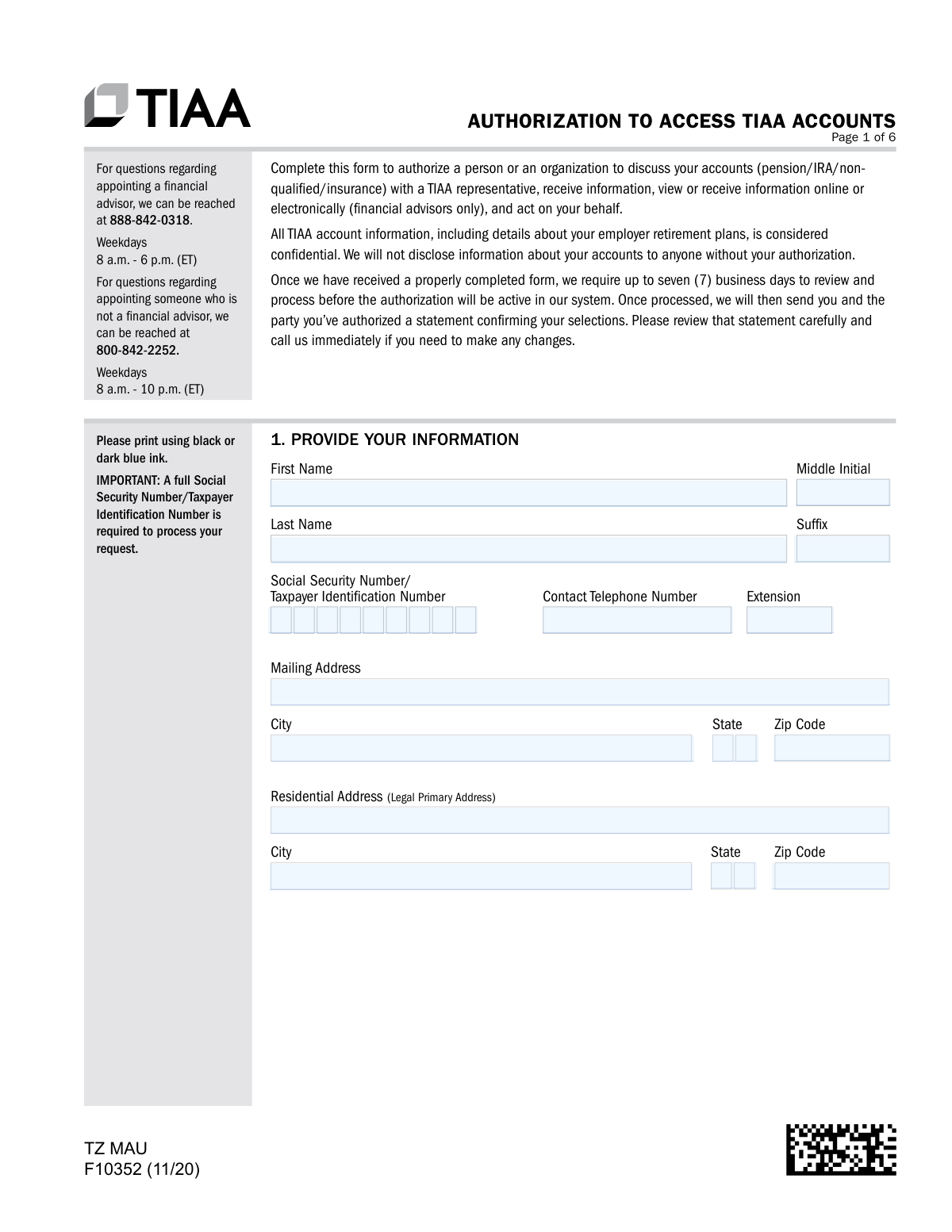
Individuals often encounter these forms during major life transitions or when seeking professional guidance. For example, documents like the Authorization to Access TIAA Accounts (Form F10352) are commonly used by retirees who want their advisors to monitor investment performance or by family members managing the affairs of an aging relative. Without these properly executed authorizations, institutions are legally bound to withhold account details, which can delay important financial decisions or administrative updates.
Managing these administrative requirements doesn't have to be a manual burden. Tools like Instafill.ai use AI to fill these forms in under 30 seconds, ensuring that data is handled accurately and securely. This approach simplifies the process of granting permissions, allowing you to focus on managing your accounts rather than wrestling with complex PDF formatting or repetitive data entry.
Every form on this page can be completed without typing. Instafill is form filling software that reads a PDF and fills it for you — including flat and scanned documents that carry no fillable fields at all.
Forms in This Category
| Form Name | Pages | FCI | |
|---|---|---|---|
| 1. | Form F10352, Authorization to Access TIAA Accounts | 1 | – |
- Enterprise-grade security & data encryption
- 99%+ accuracy powered by AI
- 1,000+ forms from all industries
- Complete forms in under 60 seconds
How to Choose the Right Form
Understanding Account Access Authorization
Account access forms are essential tools for maintaining financial privacy while ensuring the right people have the information they need. If you are managing a TIAA retirement or brokerage account, you will likely need a specific legal authorization to share your details with third parties. Because financial institutions have strict confidentiality protocols, a standard verbal agreement is rarely enough to permit data sharing.
When to Use Form F10352
Currently, the primary document in this category is Form F10352, Authorization to Access TIAA Accounts. You should choose this form if your goal is to:
- Collaborate with a Financial Advisor: Grant your professional advisor the ability to view your balances, transaction history, and asset allocations to provide more tailored investment advice.
- Assist a Family Member: Enable a trusted relative to monitor your account activity. This is a common choice for elderly account holders who want a child to help oversee their finances or for couples managing joint retirement goals.
- Authorize an Organization: Provide specific entities or institutions with the permission required to access your account data for administrative, legal, or compliance purposes.
Key Considerations Before Filling
Before you use Instafill to complete Form F10352, Authorization to Access TIAA Accounts, ensure you have the following information ready to make the process as smooth as possible:
- The Authorized Party’s Details: You will need the legal name, address, and contact information of the person or organization you are authorizing.
- Scope of Access: Be prepared to define whether you are granting access to all TIAA accounts under your name or only specific ones.
- Security Protocols: Understand that while this form allows for information access, it typically does not grant the third party the right to make withdrawals or changes to your beneficiaries unless additional power of attorney documents are filed.
By using the AI-powered tools here at Instafill, you can quickly convert the standard PDF version of Form F10352 into an interactive, fillable document, ensuring all required fields are completed accurately to avoid processing delays.
Form Comparison
| Form | Purpose | Authorized Parties | Level of Access | Common Use Case |
|---|---|---|---|---|
| Form F10352, Authorization to Access TIAA Accounts | Grants third-party permission to access and view confidential TIAA account information. | Financial advisors, family members, or designated organizations chosen by the account owner. | Provides information-only access for inquiries without granting authority to perform transactions. | Necessary when sharing account details with advisors for financial planning or family assistance. |
Tips for account access forms
When granting account access, specify whether the third party has view-only rights or the authority to perform transactions. Over-granting permissions can lead to security risks, so only authorize the specific level of access required for the individual's role.
Most account access forms require Social Security numbers or Tax ID numbers for both the account holder and the authorized party. Having these details ready before you begin filling out the document will prevent errors and ensure the form is completed in one sitting.
Managing complex financial paperwork can be tedious, but AI-powered tools like Instafill.ai can complete these forms in under 30 seconds with high accuracy. Your sensitive data stays secure during the process, providing a fast and reliable way to handle multiple account authorizations at once.
Ensure that the name and account number provided on the form match your official financial statements exactly. Even minor discrepancies, such as a missing middle initial or an incorrect digit, can cause the financial institution to reject the authorization request.
Account access forms often require signatures from both the primary account holder and the person being granted access. Ensure all parties are available to sign the document around the same time to avoid delays in submitting the final paperwork to the institution.
Financial institutions frequently update their authorization forms to comply with new privacy regulations. Always check that you are using the most recent version of the form to avoid rejection and ensure you are sending it to the correct department or fax number specified in the instructions.
Frequently Asked Questions
Account access forms are legal documents that allow an account holder to grant a third party, such as a financial advisor or family member, permission to view their account details. These forms are essential for maintaining privacy while ensuring that authorized individuals have the information they need to provide financial guidance or assistance.
These forms are commonly used by individuals who work with professional financial planners, tax preparers, or legal representatives who require visibility into retirement or investment accounts. They are also frequently used by seniors who want to grant a trusted family member the ability to monitor their account activity.
Yes, most financial institutions allow you to authorize multiple individuals or organizations, though you may need to submit a separate form for each authorized party. Each form specifies the level of access and which specific accounts the third party is permitted to view.
In most cases, standard account access forms only provide 'view-only' or informational access and do not grant the power to make withdrawals or change beneficiaries. If you need someone to perform transactions or manage funds, a different legal document, such as a Power of Attorney or a trading authorization form, is typically required.
The duration of the authorization depends on the specific institution's policies and the preferences you indicate on the form. Some authorizations remain in effect indefinitely until you manually revoke them, while others may expire after a specific timeframe, such as one year.
Completed forms should be submitted directly to the financial institution that holds the account, such as TIAA. Many organizations offer secure online upload portals for these documents, though some may still require submission via fax or traditional mail.
You will generally need to provide your full name, social security number, and the specific account numbers you wish to share. Additionally, you must provide the contact information and professional credentials of the person or organization you are authorizing to access your data.
Yes, AI tools like Instafill.ai can be used to fill out account access forms with high precision. The AI can accurately extract your personal and account data from source documents and place it directly into the required fields on the PDF.
While manual entry can take several minutes and is prone to errors, using AI-powered services like Instafill.ai allows you to complete these forms in under 30 seconds. This ensures that sensitive information like account numbers are transcribed accurately and quickly.
Requirement for notarization varies by the institution and the level of access being granted. While many simple information-access forms do not require a notary, some institutions may require a notarized signature or a Medallion Signature Guarantee to verify the identity of the account holder.
Financial institutions are bound by strict privacy laws that prevent them from sharing confidential data without explicit, written consent from the account holder. Using a standardized form like the F10352 ensures that all necessary legal disclosures are met and that the scope of access is clearly defined for both parties.
Glossary
- Participant
- The individual who owns the TIAA account or is enrolled in the retirement plan being accessed.
- Authorized Representative
- A third party, such as a financial advisor or family member, who is granted permission to view or manage account details.
- Inquiry Access
- A level of permission that allows a designated person to view account balances and history without the ability to make changes or withdrawals.
- Full Transactional Access
- A higher level of authorization that permits a representative to execute trades, move funds, or change account settings on the owner's behalf.
- Plan Sponsor
- The employer or organization that established and maintains the retirement plan through TIAA.
- Third-Party Authorization (TPA)
- A legal standing created by this form that allows an outside individual or firm to interact with TIAA regarding your private financial data.
- Annuity
- A financial product common in TIAA accounts designed to provide steady income during retirement through periodic payments.
- Qualified Plan
- An employer-sponsored retirement plan, such as a 403(b) or 401(k), that meets specific IRS requirements for tax-deferred growth.