Fill out charity forms
with AI.
Charity forms are essential documents used to manage the flow of assets, donations, and legal designations for non-profit organizations and philanthropic efforts. These documents ensure that charitable contributions, such as those made through donor-advised funds or individual retirement accounts, are handled in compliance with tax laws and organizational policies. Whether it involves setting up a distribution or documenting a gift, these forms provide the necessary paper trail to validate the intent of the donor and the eligibility of the recipient. This category covers the administrative paperwork required to bridge the gap between financial institutions and the organizations that rely on their support.
By continuing, you acknowledge Instafill's Privacy Policy and agree to get occasional product update and promotional emails.
About charity forms
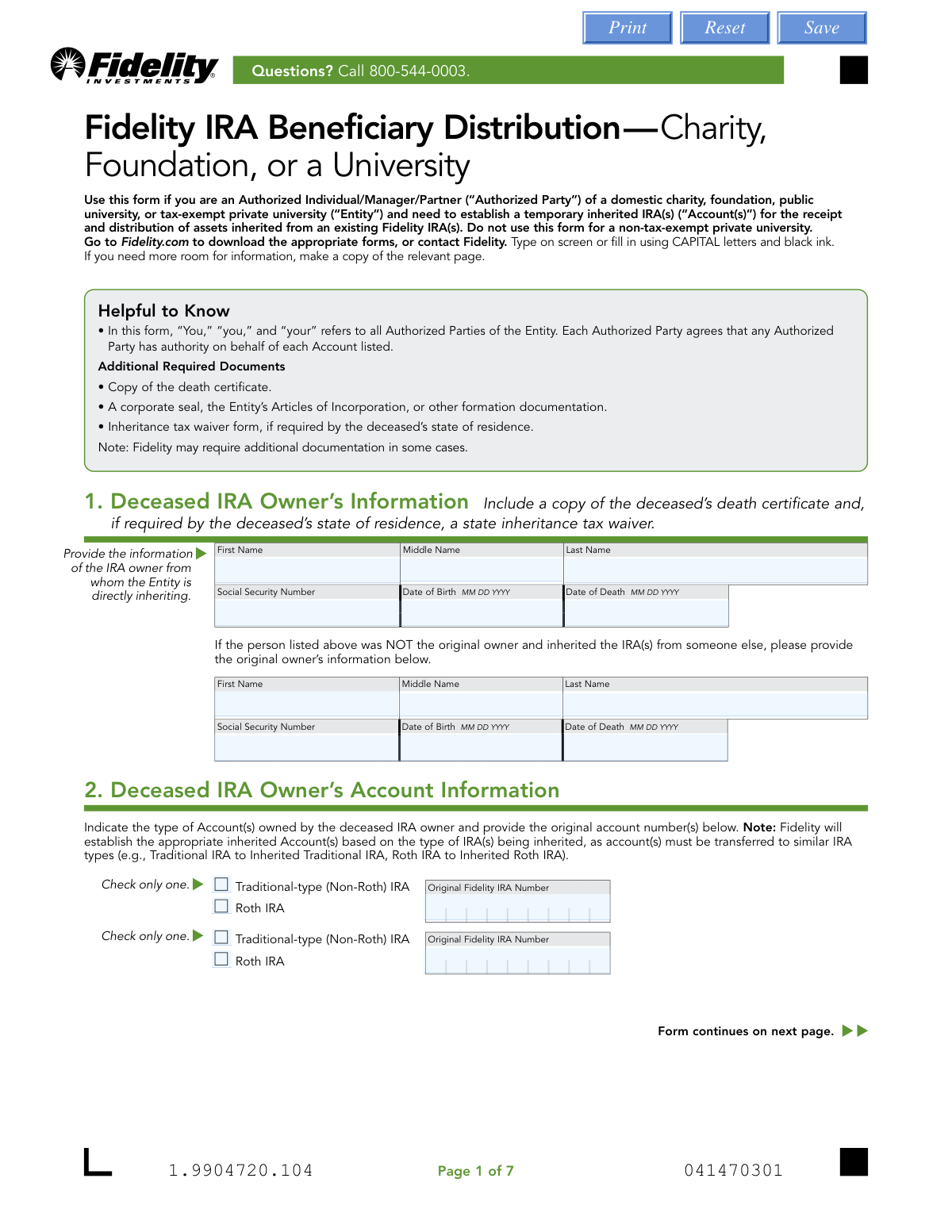
These forms are typically used by estate executors, financial advisors, and representatives of domestic charities, foundations, or universities. For instance, when a charity is named as a beneficiary of an IRA, specific documentation like the Fidelity IRA Beneficiary Distribution form is required to establish a temporary inherited IRA and facilitate the transfer of funds. In these high-stakes situations, accuracy is paramount to avoid delays in funding or unintended tax consequences. Managing these documents often falls on individuals navigating complex legal processes or busy non-profit administrators who need to streamline their operations. Tools like Instafill.ai use AI to fill these forms in under 30 seconds, handling the data accurately and securely so that more time can be spent on the philanthropic mission rather than the paperwork.
Every form on this page can be completed without typing. Instafill is form filling software that reads a PDF and fills it for you — including flat and scanned documents that carry no fillable fields at all.
Forms in This Category
The forms in this category have a median Form Complexity Index of 57/100 (Moderate), measured across 2 forms by field count, input difficulty, length, conditional logic and structure. See how it is calculated.
| Form Name | Pages | FCI | |
|---|---|---|---|
| 1. | Fidelity IRA Beneficiary Distribution — Charity, Foundation, or a University | 1 | Moderate 53 |
| 2. | Form 1-S, Full Requirement Initial Charity Registration Application | 2 | Moderate 57 |
- Enterprise-grade security & data encryption
- 99%+ accuracy powered by AI
- 1,000+ forms from all industries
- Complete forms in under 60 seconds
How to Choose the Right Form
Navigating the complexities of charitable distributions requires specific documentation, particularly when an organization is named as a beneficiary of a retirement account. While "charity forms" can cover a wide range of administrative tasks, the forms in this category focus on the legal transfer of assets from individual retirement accounts to non-profit entities.
When to Use the Fidelity Beneficiary Distribution Form
If your organization has been notified that it is a beneficiary of a deceased individual's Fidelity IRA, you must use the Fidelity IRA Beneficiary Distribution — Charity, Foundation, or a University form. This document is essential for the following scenarios:
- Establishing an Inherited IRA: Most financial institutions require charities to set up a temporary "Inherited IRA" to hold the assets before they are liquidated and transferred to the charity’s general fund.
- Domestic Entities: This form is specifically tailored for domestic charities, private foundations, and universities based in the United States.
- Asset Liquidation: Use this form when the goal is to receive and immediately distribute the funds from a Fidelity account to your organization’s primary bank account.
Essential Information for Completion
To ensure the Fidelity IRA Beneficiary Distribution — Charity, Foundation, or a University form is processed without rejection, have the following details on hand:
- Deceased's Account Details: You will need the decedent's name and the specific Fidelity account number.
- Organizational Credentials: Your Tax Identification Number (TIN) and official legal name as registered with the IRS are required.
- Authorized Signatory: Only individuals authorized to sign on behalf of the foundation or university should complete this document.
By using Instafill.ai, you can transform the static PDF version of this Fidelity form into a smart, interactive document. Our AI helps you navigate the complex fields required for institutional beneficiary distributions, making it easier for your charity to access and utilize its much-needed contributions.
Form Comparison
| Form | Purpose | Eligible Beneficiaries | Key Function |
|---|---|---|---|
| Fidelity IRA Beneficiary Distribution — Charity, Foundation, or a University | Establishes a temporary inherited IRA to receive assets from a deceased individual's account. | Domestic charities, foundations, or universities designated as beneficiaries of a Fidelity IRA. | Facilitates the transfer, liquidation, and final distribution of inherited funds to the entity. |
Tips for charity forms
Ensure the name entered on the form matches your IRS determination letter exactly. Discrepancies between the charity’s registered name and the information on the IRA account can lead to processing delays or rejection.
Double-check your organization’s Employer Identification Number (EIN) before you begin filling out the document. This number is essential for the financial institution to report the distribution correctly to the IRS.
Charitable distribution forms usually require a signature from a specific authorized officer or trustee of the foundation or university. Confirm who has the legal authority to sign on behalf of your organization to avoid having the document returned for an invalid signature.
AI-powered tools like Instafill.ai can complete these forms in under 30 seconds with high accuracy. This is a significant time-saver for organizations handling multiple distributions, and your data stays secure throughout the entire process.
Most financial institutions require a certified copy of the death certificate and proof of the charity's non-profit status. Having these documents scanned and ready for upload ensures a smoother submission process when finalizing the distribution.
Clearly indicate whether the organization intends to liquidate the assets into cash or transfer them to a temporary inherited IRA. Selecting the correct method upfront prevents unwanted tax implications or additional administrative steps later.
Missing fields in the beneficiary or asset sections are the most common reasons for form rejection. Perform a final check to ensure all required sections, especially those regarding tax withholding and contact information, are fully addressed.
Frequently Asked Questions
Charity forms cover a wide range of administrative tasks, including registering a non-profit, reporting donations, or claiming inherited assets from an estate. These documents ensure that funds are transferred legally and that the receiving organization is properly identified for tax and compliance purposes.
Generally, an authorized representative of the charity, foundation, or university must complete and sign these forms. This individual should have the legal authority to act on behalf of the institution to claim assets or manage financial accounts.
Financial institutions require specific documentation to verify the tax-exempt status of the beneficiary and to establish the correct type of account, such as an inherited IRA. This process ensures that the distribution follows IRS regulations and the original account owner's estate plan.
Yes, you can use AI tools like Instafill.ai to complete charity forms in under 30 seconds. These tools accurately extract necessary data from your source documents and place it into the correct fields, significantly reducing the risk of manual entry errors.
Most forms require the organization’s legal name, Tax Identification Number (TIN) or Employer Identification Number (EIN), and contact information for the authorized officer. You may also need to provide details regarding the deceased account holder and the specific assets being distributed.
Processing times vary depending on the financial institution and the complexity of the estate, but it typically takes several business days to a few weeks. Ensuring that the form is filled out completely and accurately can help prevent administrative delays in the transfer of funds.
While charities are often tax-exempt, specific rules apply to how they receive and report different types of distributions. It is important for the receiving organization to consult with a tax professional to ensure compliance with current IRS regulations regarding charitable contributions.
Using AI-powered automation is one of the most effective ways to ensure accuracy when filling out complex financial forms. Instafill.ai uses advanced data extraction to map information from your records directly into the PDF, maintaining high data integrity throughout the process.
Once completed, these forms are typically submitted directly to the financial institution managing the assets, such as Fidelity. Many institutions now allow for digital submission via a secure portal, though some may still require a physical copy to be mailed.
Most financial distribution forms require a signature from an authorized representative to be legally binding. Depending on the institution's requirements, this may be a traditional wet-ink signature, a notarized signature, or a secure electronic signature.
Glossary
- Form Complexity Index
- Instafill’s 0–100 measure of how much effort a form takes to complete, calculated deterministically from the form’s own structure rather than estimated. It combines the number of fillable fields (the largest factor), how difficult those fields are to complete based on their type, the number of pages that contain fields, the amount of conditional “fill-only-if” logic, and how many sections the form is divided into, then adds modifiers for tables and repeating lists, bundled instruction pages, and dense page layouts. A higher score means the form is harder to fill out by hand. The forms in this category have a median Form Complexity Index of 57/100 (Moderate). See exactly how it is calculated.
- Inherited IRA
- An account opened to receive assets from a deceased person's retirement plan. For charities, this serves as a temporary vehicle to hold and then liquidate funds transferred from a donor's original Fidelity account.
- EIN (Employer Identification Number)
- A unique nine-digit tax identification number assigned by the IRS to business entities and non-profit organizations. It is required on these forms to identify the charity or foundation receiving the distribution.
- 501(c)(3)
- The section of the U.S. tax code that grants federal tax-exempt status to non-profit organizations. Most charities and universities must maintain this status to legally receive tax-free distributions from retirement accounts.
- Lump-Sum Distribution
- A payment method where the entire balance of the inherited IRA is paid out to the beneficiary in a single transaction. This is the standard way for a charity to claim and use the full amount of a donation from an estate.
- Authorized Signatory
- An individual, such as a director or treasurer, who has been granted the legal authority to sign documents and make financial decisions on behalf of the charity or foundation.
- Medallion Signature Guarantee
- A certification stamp provided by a financial institution that verifies the authenticity of a signature. It is often required for high-value asset transfers to prevent fraud and ensure the person signing has the authority to do so.