Fill out consumer forms
with AI.
Consumer forms represent the essential documentation required to navigate the relationship between individuals, businesses, and regulatory agencies. This category encompasses a wide range of paperwork, from credit report disputes and FTC reports to professional licensing applications and financial disclosure statements. These documents are vital because they serve as the official record for protecting consumer rights, verifying professional qualifications, and ensuring financial transparency in the marketplace.
By continuing, you acknowledge Instafill's Privacy Policy and agree to get occasional product update and promotional emails.
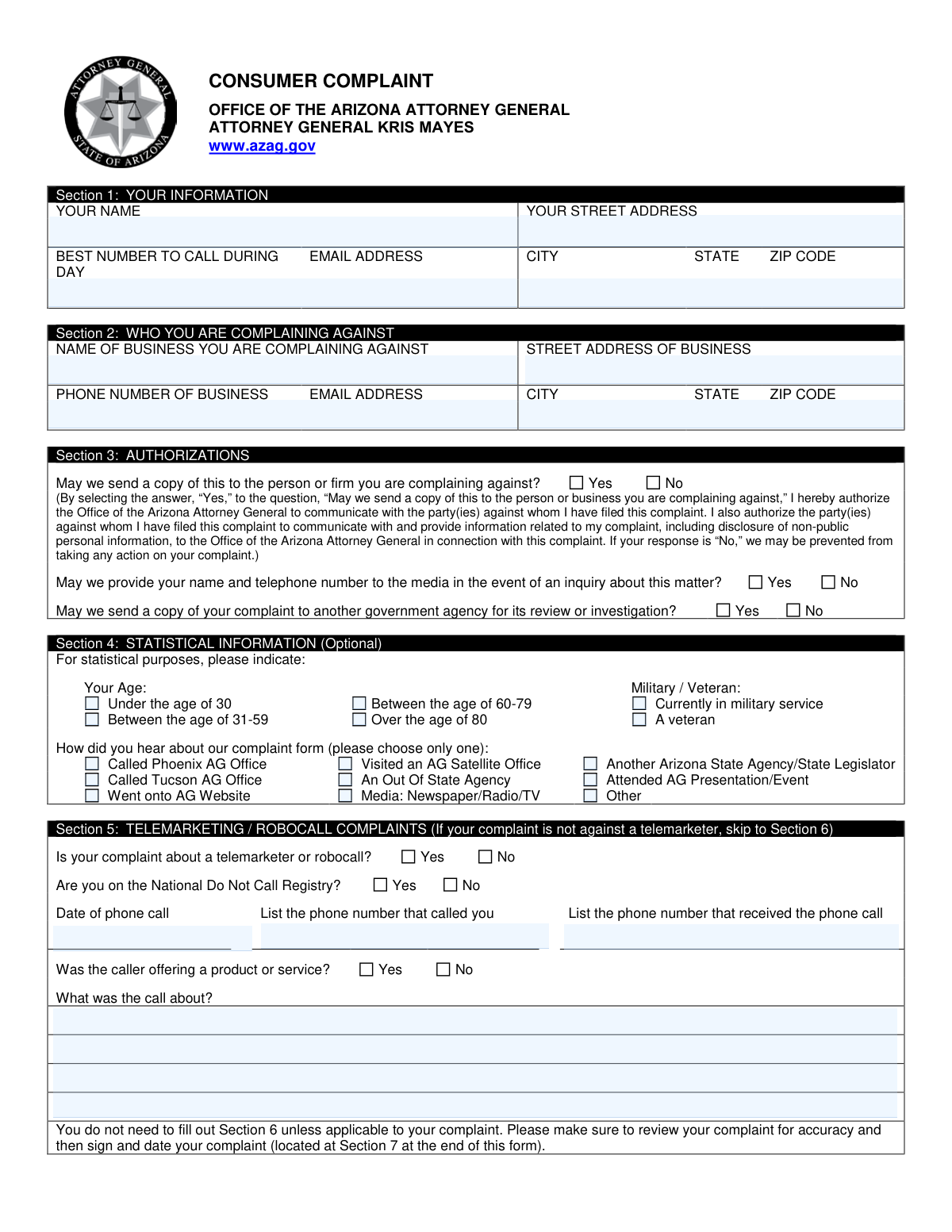
About consumer forms
Typically, these forms are needed by individuals seeking to establish themselves in a new trade, manage their personal credit health, or report consumer grievances. For instance, a professional might use these forms to apply for a state contractor’s license, which requires providing detailed financial statements and project histories to prove competency and fiscal responsibility. Because many of these processes are strictly regulated, providing accurate and complete information is crucial to avoid administrative delays or the rejection of an application.
Navigating these complex requirements can be time-consuming, but tools like Instafill.ai use AI to fill these forms in under 30 seconds, ensuring that data is handled accurately and securely. This allows users to focus on their professional goals rather than the manual effort of data entry.
Every form on this page can be completed without typing. Instafill is form filling software that reads a PDF and fills it for you — including flat and scanned documents that carry no fillable fields at all.
Forms in This Category
The forms in this category have a median Form Complexity Index of 50/100 (Moderate), measured across 3 forms by field count, input difficulty, length, conditional logic and structure. See how it is calculated.
- Enterprise-grade security & data encryption
- 99%+ accuracy powered by AI
- 1,000+ forms from all industries
- Complete forms in under 60 seconds
How to Choose the Right Form
Navigating the intersection of consumer rights and professional licensing requires precision, especially when dealing with state regulatory boards. If you are an individual looking to establish yourself as a licensed professional in the construction industry, the forms in this category are designed to facilitate that transition while ensuring consumer protection.
For Individual Business Owners
If you are an individual planning to operate a construction business without partners or a corporate structure, the State of Hawaii DCCA Application for Contractor's License (Sole Proprietor) (CT-36) is your primary document. This form is essential for verifying your age, work authorization, and general eligibility to sit for the required licensing examination.
Substantiating Your Field Experience
A license is not granted on paperwork alone; you must provide documented proof of your hands-on history and supervisory capabilities.
- Experience Certificate (CT-03): Use this supporting form to provide notarized proof of your supervisory experience from past employers or references.
- Chronological History of Projects (Project List): This document provides a detailed timeline of your past work, allowing the Board to verify the technical complexity and duration of your background.
Demonstrating Financial Responsibility
Because this category involves financial and credit oversight, the Contractors Financial Statement (CT-02) is a critical component of your packet. This document typically requires a CPA-prepared statement to evaluate your financial standing. The Board reviews this to ensure that contractors have the credit history and liquidity necessary to manage projects safely for consumers without the risk of financial abandonment.
Avoiding Application Delays
To prevent your application from being deemed abandoned or deficient under Hawaii law, ensure you have completed the full packet including the CT-36, the CT-03 certificates, the Project List, and the CT-02 financial statement. Using Instafill.ai, you can quickly turn these complex PDF requirements into interactive, easy-to-complete digital forms, ensuring every field is addressed before you submit.
Form Comparison
| Form | Primary Purpose | Key Requirements | Who Files It | Submission Frequency |
|---|---|---|---|---|
| State of Hawaii Department of Commerce and Consumer Affairs (DCCA) Contractors License Board – Application for Contractor's License (Sole Proprietor) (CT-36) with supporting forms (Experience Certificate CT-03, Contractors Financial Statement CT-02, and Chronological History of Projects/Project List) | Initial application for a Hawaii sole proprietor contractor license and experience verification. | Requires CT-36 form, CT-03 experience certificates, and CT-02 financial statements. | Individual sole proprietors applying for a new contractor license in Hawaii. | Submitted once at the start of the licensing or re-application process. |
Tips for consumer forms
Gather your CPA-prepared financial statements and notarized experience certificates before beginning the main application. Having these supporting documents ready prevents delays and ensures that the information you enter on the CT-36 matches your official records.
The State of Hawaii requires a specific financial statement (CT-02) prepared by a CPA to prove financial responsibility. Ensure your accountant is aware of these requirements early to avoid common errors that could lead to your application being deemed abandoned.
When filling out the Project List, ensure there are no unexplained gaps in your professional history. Clear, sequential documentation of your supervisory experience helps the Board verify your eligibility without requesting additional clarification.
Because the licensing board evaluates credit and financial responsibility, it is best practice to review your own credit reports for any errors before submitting. Addressing discrepancies beforehand can prevent your application from being flagged during the review process.
AI-powered tools like Instafill.ai can complete these detailed consumer and licensing forms in under 30 seconds with high accuracy. This is a significant time-saver for applicants managing multiple forms, and your sensitive data stays secure throughout the automated process.
Double-check that the dates and descriptions on your Experience Certificates (CT-03) align perfectly with your main application and project list. Inconsistent information across different forms is a common mistake that often results in a deficiency notice from the DCCA.
Frequently Asked Questions
This category primarily includes professional licensing applications, financial disclosure statements, and credit-related forms used for regulatory compliance. These documents are designed to help state boards and consumer protection agencies verify an individual's qualifications and financial stability.
Individuals seeking to work as a sole proprietor contractor in the State of Hawaii must complete this packet. It is required for those who wish to bid on construction projects and must demonstrate they have the necessary experience, financial standing, and legal authorization to operate.
Yes, AI-powered tools like Instafill.ai can automatically fill out these forms in under 30 seconds. The AI accurately extracts data from your source documents and places it into the correct fields, ensuring the application is completed quickly and precisely.
Filling out complex consumer forms manually can take hours, but using AI tools can reduce that time to less than a minute. AI services can instantly map your professional history and financial data to the appropriate sections of the form, significantly speeding up the process.
Most consumer-related professional forms require a comprehensive financial statement, often prepared by a CPA. This documentation helps boards assess your creditworthiness, assets, and liabilities to ensure you are financially responsible enough to handle consumer contracts.
A project list provides a detailed history of your hands-on work and supervisory experience. Regulatory boards use this information to verify that you have the practical skills and time-in-grade required to meet the specific standards for a professional license.
The Experience Certificate serves as third-party verification of your work history. It must typically be signed by a supervisor or a licensed professional who can vouch for the duration and quality of the work you performed in your trade.
Licensing boards often review credit reports to evaluate an applicant's financial integrity. Significant issues like unpaid tax liens or bankruptcies can impact your eligibility, as the board needs to ensure you can meet the financial obligations associated with consumer services.
Incomplete submissions can lead to a deficiency notice, which delays the review process. In some cases, if the missing information is not provided within a specific timeframe, the application may be considered abandoned, requiring you to start the process over.
Yes, AI-powered platforms like Instafill.ai can convert static, non-fillable PDF versions of consumer forms into interactive documents. This allows you to enter your information digitally, ensuring the final document is legible and professionally presented for the reviewing board.
Many forms in this category, particularly experience certificates and main applications, require a notary's signature. This is a standard security measure used by state agencies to confirm the identity of the applicant and the truthfulness of the information provided.
Completed forms are usually submitted to the specific state regulatory agency, such as the Department of Commerce and Consumer Affairs (DCCA). Depending on the department's rules, you may be able to submit them via mail, in person, or through an official online portal.
Glossary
- Form Complexity Index
- Instafill’s 0–100 measure of how much effort a form takes to complete, calculated deterministically from the form’s own structure rather than estimated. It combines the number of fillable fields (the largest factor), how difficult those fields are to complete based on their type, the number of pages that contain fields, the amount of conditional “fill-only-if” logic, and how many sections the form is divided into, then adds modifiers for tables and repeating lists, bundled instruction pages, and dense page layouts. A higher score means the form is harder to fill out by hand. The forms in this category have a median Form Complexity Index of 50/100 (Moderate). See exactly how it is calculated.
- DCCA
- The Hawaii Department of Commerce and Consumer Affairs, the state agency responsible for overseeing business registrations and professional licensing boards.
- Sole Proprietor
- An individual business owner who is personally responsible for all debts and legal obligations of the company, rather than a separate legal entity like a corporation.
- Experience Certificate (CT-03)
- A formal, notarized document used to verify that an applicant has completed the required years of supervisory work in a specific trade.
- CPA-Prepared Financial Statement
- A report on a business's financial health that must be reviewed or audited by a Certified Public Accountant to ensure the applicant meets minimum capital requirements.
- Chronological History of Projects
- A detailed list documenting past construction work in order of occurrence to prove the applicant has the necessary hands-on experience for the license.
- Financial Responsibility
- A standard used by the licensing board to evaluate an applicant's credit history and financial stability before granting a contractor's license.
- Notarization
- The process of having a certified official, known as a Notary Public, verify your identity and witness the signing of a document to prevent fraud.
- Deficiency
- A formal notice from the licensing board stating that an application is missing information or required documents, which can lead to the application being abandoned if not corrected.