Fill out property rental forms
with AI.
Property rental forms are the backbone of the real estate management process, ensuring that agreements between landlords and tenants are legally binding and clearly defined. This category encompasses a wide range of documentation required throughout the lifecycle of a rental arrangement—from the initial screening of potential tenants to the final tax filings. Proper documentation helps protect the interests of all parties involved, ensuring that financial transactions, property conditions, and legal obligations are recorded accurately to prevent future disputes.
By continuing, you acknowledge Instafill's Privacy Policy and agree to get occasional product update and promotional emails.
About property rental forms
These forms are typically utilized by individual landlords, property management companies, and real estate developers. For instance, those managing new developments or substantially renovated units often need to handle specific tax-related documents, such as the GST/HST New Residential Rental Property Rebate (Form GST524), to recover costs and maintain project viability. Whether you are processing a standard lease agreement or filing for government rebates, having the correct paperwork on hand is essential for maintaining compliance with local housing laws and tax regulations.
Navigating these complex documents can be time-consuming, but modern tools like Instafill.ai use AI to fill these forms in under 30 seconds while ensuring data is handled accurately and securely. This allows property owners to focus more on managing their investments and less on the administrative burden of manual data entry.
Every form on this page can be completed without typing. Instafill is form filling software that reads a PDF and fills it for you — including flat and scanned documents that carry no fillable fields at all.
Forms in This Category
The forms in this category have a median Form Complexity Index of 53/100 (Moderate), measured across 3 forms by field count, input difficulty, length, conditional logic and structure. See how it is calculated.
| Form Name | Pages | FCI | |
|---|---|---|---|
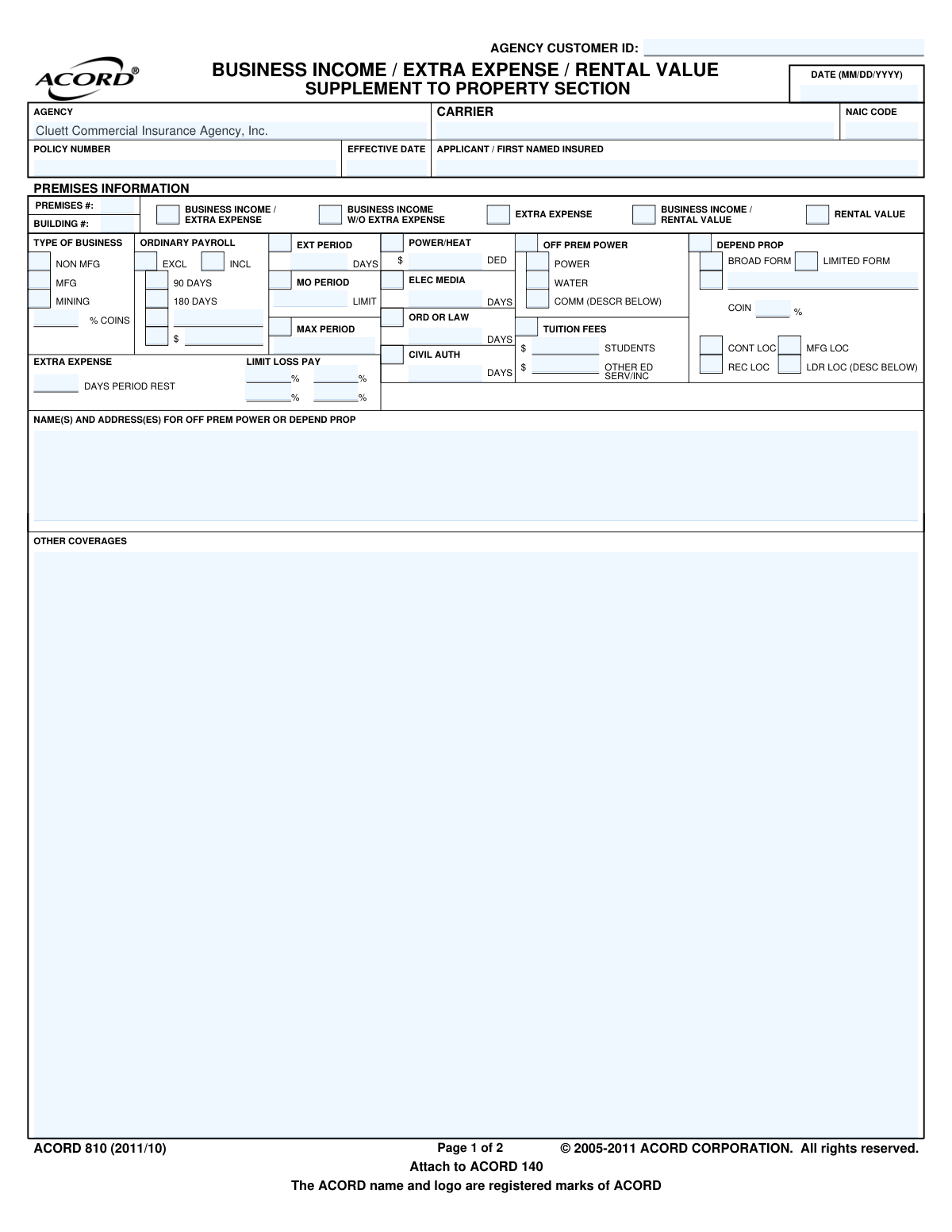
| 1. | ACORD 810, Business Income / Extra Expense / Rental Value | 2 | Moderate 53 |
| 2. | Confirmation Of Closing – Rental Property | 1 | Simple 26 |
| 3. | Form GST524, GST/HST New Residential Rental Property Rebate | 12 | – |
- Enterprise-grade security & data encryption
- 99%+ accuracy powered by AI
- 1,000+ forms from all industries
- Complete forms in under 60 seconds
How to Choose the Right Form
Navigating Property Rental Tax Forms
If you are a landlord or a builder, managing the financial aspects of your investment is just as important as finding the right tenant. In this category, the primary focus is on tax recovery and compliance for residential developments, specifically through the use of Form GST524.
Recovering Costs on New Construction
The Form GST524, GST/HST New Residential Rental Property Rebate is the essential document for those who have paid GST or HST on residential projects. You should choose this form if you fall into one of the following categories:
- New Property Owners: If you purchased a newly constructed residential building specifically to rent it out.
- Renovators: If you have completed a "substantial renovation" of an existing property and intend to use it for long-term residential leasing.
- Builders: If you have constructed a new residential addition or a purpose-built rental housing complex.
Why Form GST524 is Critical
This form is designed to ensure the affordability of rental housing by allowing landlords and builders to recover a portion of the tax paid during the construction or acquisition phase. It is a vital tool for maintaining cash flow in property management.
When selecting this form, ensure your use case aligns with the Canada Revenue Agency (CRA) definitions of a "qualifying residential unit." This typically means the unit must be a self-contained residence that is used as a primary place of residence by the tenant.
Filing with Confidence
Because the Form GST524 involves complex tax calculations, using an AI-assisted tool can help you navigate the requirements for purpose-built rental housing. Whether you are an individual landlord or a commercial developer, completing this form accurately is the first step toward securing your GST/HST rebate and ensuring your rental business remains compliant and profitable.
Form Comparison
| Form | Purpose | Who Files It | Key Requirement | Primary Benefit |
|---|---|---|---|---|
| Form GST524, GST/HST New Residential Rental Property Rebate | Claim rebate for GST/HST paid on new residential rental properties. | Landlords and builders of new residential units. | New or substantially renovated residential buildings. | Recovers taxes paid on purpose-built rental housing. |
| Form GST524, GST/HST New Residential Rental Property Rebate | Rebate for GST/HST paid on renovated rental properties. | Property owners and builders seeking tax recovery. | Substantially renovated residential rental properties. | Ensures affordability and compliance with tax regulations. |
| Form GST524, GST/HST New Residential Rental Property Rebate | Claim rebate for taxes paid on residential rentals. | Landlords and builders of residential property. | New residential rental property or additions. | Recovery of taxes paid on purpose-built rental housing. |
| Form GST524, GST/HST New Residential Rental Property Rebate | GST/HST rebate application for new rental builds. | Builders and landlords of new residential properties. | Newly constructed or substantially renovated residential units. | Financial recovery of taxes for property owners. |
| Form GST524, GST/HST New Residential Rental Property Rebate | Claim GST/HST rebate for residential rental properties. | Landlords and builders of residential rental housing. | New or substantially renovated residential rental property. | Tax recovery for purpose-built rental housing projects. |
Tips for property rental forms
Ensure that the property address and legal owner information exactly match your purchase agreements and property titles. Discrepancies in these basic details are common reasons for processing delays or the rejection of rebate applications.
Before starting your application, gather all necessary sales agreements, construction invoices, and lease agreements for the rental units. Having these documents ready makes it much easier to cross-reference figures and ensure your claim is supported by evidence.
Mathematical errors are a frequent mistake when calculating tax rebates for property. Carefully review the tax amounts paid on the property and ensure the rebate percentages are applied correctly to the specific type of rental unit you are claiming for.
AI-powered tools like Instafill.ai can complete these complex rental forms in under 30 seconds with high accuracy. Your data stays secure during the process, making it a reliable and efficient way to handle high volumes of paperwork without manual data entry.
Many rental rebate forms require proof that the unit is occupied by a qualifying tenant. Ensure you have the start dates of leases and tenant information ready to demonstrate that the property meets the criteria for a residential rental rebate.
If you are managing a multi-unit building, create a consistent workflow or template for each unit's application. Grouping similar forms together allows you to replicate standard information while only updating unit-specific details, saving significant administrative time.
Frequently Asked Questions
These forms are primarily used by landlords, builders, and property owners to manage the financial and legal aspects of residential rental properties. In this specific collection, the forms focus on claiming GST/HST rebates for new or substantially renovated rental housing. They help owners recover a portion of the taxes paid during construction or purchase to ensure the affordability of rental units.
Eligibility generally applies to individuals or businesses who have built or purchased a new residential building intended for long-term rental. This includes landlords who purchase new units from a builder or owners who perform substantial renovations on an existing property. The property must typically be used as a primary place of residence for the tenants to qualify for the rebate.
You should typically file these forms after the rental property is completed and the first tenant has moved in. There are specific time limits, often within two years of the end of the month in which the tax first became payable. It is important to check the specific deadlines set by the tax authority to ensure you do not lose your eligibility for a rebate.
You will generally need details regarding the purchase price or fair market value of the property, the amount of GST/HST paid, and information about the lease agreement. Supporting documents such as the statement of adjustments, construction invoices, or a copy of the lease are often required to verify the claim. Having these documents ready makes the filing process much smoother.
Yes, AI tools like Instafill.ai can significantly simplify the process of completing these documents. The AI accurately extracts data from your source documents—such as sales agreements or tax receipts—and places it into the correct fields on the PDF form. This reduces the risk of manual entry errors and ensures that all required sections are addressed accurately.
Filling out these forms manually can take hours of cross-referencing documents, but using an AI-powered platform can complete the task in under 30 seconds. By automating the data extraction and placement process, users can finalize their property rental forms quickly and efficiently. This speed is particularly helpful for landlords managing multiple properties or rebate claims.
Completed forms like the GST524 are usually submitted directly to the Canada Revenue Agency (CRA) or the relevant regional tax authority. Depending on the specific requirements, you may be able to file them electronically through an online portal or by mailing a physical copy to a designated tax center. Always confirm the current submission address or portal link on the official government website before filing.
A substantial renovation generally involves a project where most of the existing building is removed or replaced, leaving only the foundation, external walls, or floor. This category of form allows owners to claim rebates similar to those available for entirely new constructions. It is intended to encourage the improvement and modernization of the rental housing stock.
In many cases, a single form can cover multiple units within the same residential complex, but specific rules apply depending on the structure of the building. For example, a multi-unit apartment building might be handled differently than individual condominium units. It is important to review the instructions for each form to determine if separate filings are necessary for each specific address.
No, they serve very different purposes. Rental application forms are used by landlords to screen potential tenants and collect personal and financial history before signing a lease. Tax rebate forms, like the ones in this category, are financial documents used to recover taxes paid on the property itself. Both are essential parts of managing a rental property business but involve different stakeholders and processes.
Glossary
- Form Complexity Index
- Instafill’s 0–100 measure of how much effort a form takes to complete, calculated deterministically from the form’s own structure rather than estimated. It combines the number of fillable fields (the largest factor), how difficult those fields are to complete based on their type, the number of pages that contain fields, the amount of conditional “fill-only-if” logic, and how many sections the form is divided into, then adds modifiers for tables and repeating lists, bundled instruction pages, and dense page layouts. A higher score means the form is harder to fill out by hand. The forms in this category have a median Form Complexity Index of 53/100 (Moderate). See exactly how it is calculated.
- GST/HST
- The Goods and Services Tax and Harmonized Sales Tax applied to most goods and services in Canada, including the construction or purchase of new residential property.
- New Residential Rental Property Rebate
- A financial claim that allows landlords or builders to recover a portion of the sales tax paid on a new or significantly renovated rental building.
- Substantially Renovated
- A legal designation for a building where nearly all of the interior (usually 90% or more) has been replaced, qualifying it for the same tax benefits as a new construction.
- Fair Market Value (FMV)
- The estimated price a property would sell for on the open market, which is used to calculate the tax owed when a rental unit is first occupied.
- Self-Supply Rule
- A tax regulation where a builder is treated as having sold and then repurchased a property at fair market value once it is ready for rental occupancy.
- Qualifying Residential Unit
- A self-contained residential suite that includes a private kitchen, bathroom, and living area, meeting the requirements to be eligible for a tax rebate.
- CRA (Canada Revenue Agency)
- The federal government agency responsible for collecting taxes and administering the GST/HST rebate programs in Canada.