Fill out public records forms
with AI.
Public records forms are official documents used to formally request access to government and court-held information. Whether you're seeking judicial records, agency documents, or other materials held by public institutions, these forms establish a legal framework that balances transparency with the protection of sensitive personal information. They are governed by specific laws — such as Pennsylvania's Right-to-Know Law or Florida's rules for judicial branch access — that define what information is available, how requests must be submitted, and how agencies must respond.
By continuing, you acknowledge Instafill's Privacy Policy and agree to get occasional product update and promotional emails.
About public records forms
These forms are commonly used by journalists, attorneys, researchers, businesses, and private citizens who need access to public records for legal proceedings, investigative reporting, background research, or personal matters. For example, someone appealing a denied records request in Pennsylvania would rely on the Standard Right-to-Know Law Request Form to document their original inquiry, while individuals or attorneys in Florida might reference Form 2.420 to understand what judicial records are accessible and under what conditions.
Filling out these forms accurately is important — incomplete or vague requests can lead to delays, denials, or complications during appeals. Tools like Instafill.ai use AI to help complete these forms in under 30 seconds, ensuring the required fields are filled correctly and securely, which can make a real difference when time-sensitive requests are involved.
Every form on this page can be completed without typing. Instafill is form filling software that reads a PDF and fills it for you — including flat and scanned documents that carry no fillable fields at all.
Forms in This Category
The forms in this category have a median Form Complexity Index of 50/100 (Moderate), measured across 2 forms by field count, input difficulty, length, conditional logic and structure. See how it is calculated.
| Form Name | Pages | FCI | |
|---|---|---|---|
| 1. | Request for Madison County Public Records | 2 | Basic 33 |
| 2. | Form 2.420, Public Access to Judicial Branch Records | 19 | Moderate 50 |
- Enterprise-grade security & data encryption
- 99%+ accuracy powered by AI
- 1,000+ forms from all industries
- Complete forms in under 60 seconds
How to Choose the Right Form
Selecting the correct public records form depends primarily on the jurisdiction of the records and the branch of government that holds them. Public records laws vary significantly between states and between the judicial and executive branches.
Judicial Records vs. Administrative Records
If you are seeking information related to court proceedings, legal filings, or the administration of the court system in Florida, you should use Form 2.420, Public Access to Judicial Branch Records. This form is specifically designed to navigate the Rules of General Practice and Judicial Administration. It is the correct choice when you need to request access to records while accounting for confidentiality protections that apply to sensitive court data.
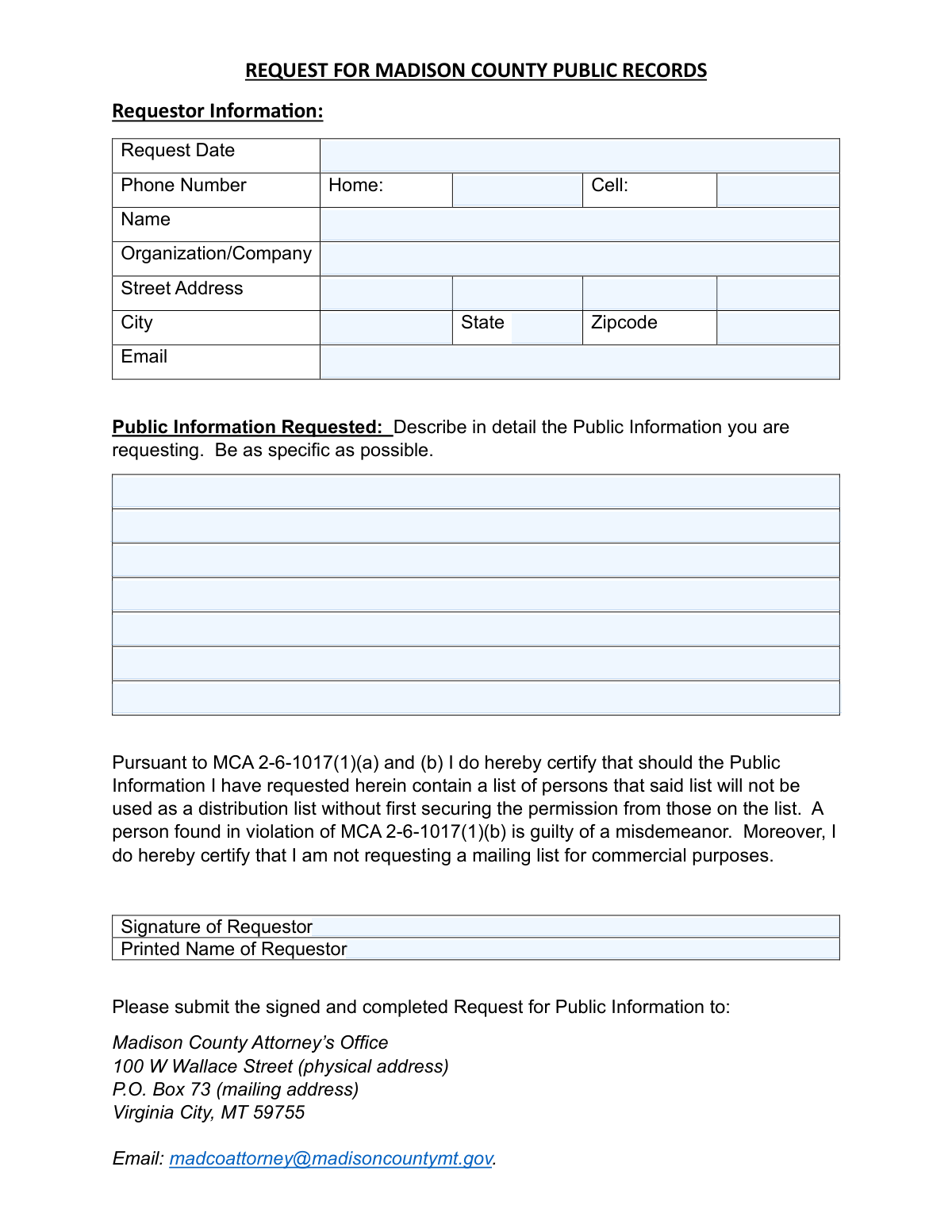
Conversely, if you are looking for general government documents, meeting minutes, or departmental records within a local government, you need a county-specific request form. For example, the Request for Madison County Public Records is the appropriate document for accessing information held by Madison County, Montana. This form is governed by Montana state statutes rather than judicial rules.
Geographic and Legal Jurisdiction
Always choose the form that matches the location where the records are maintained:
- Florida Judicial System: Use Form 2.420 for any records falling under the Florida judicial branch’s authority. This form helps ensure your request meets the legal basis for transparency while respecting privacy rights.
- Madison County, Montana: Use the Request for Madison County Public Records for local administrative data. Note that this form requires a certification of the intended use of the information and may involve a review by the County Attorney’s Office.
Key Considerations Before Filing
Before submitting your form, check if the request requires a fee for duplication or research. The Request for Madison County Public Records specifically outlines potential costs, whereas Form 2.420 focuses more on the legal categorization of the records. Using Instafill.ai can help you quickly complete these forms and ensure all required fields—such as your contact information and the specific description of the records—are clearly documented.
Form Comparison
| Form | Jurisdiction | Scope of Records | Primary Requirement |
|---|---|---|---|
| Form 2.420, Public Access to Judicial Branch Records | Florida Judicial Branch | Accessing court records and judicial administrative documents | Identifying and protecting confidential information within judicial proceedings |
| Request for Madison County Public Records | Madison County, Montana | General county government records and public information | Certifying intended use and acknowledging potential search or copy fees |
Tips for public records forms
Avoid broad or vague descriptions that may lead to processing delays or denials. Clearly state the specific dates, names, or case numbers associated with the documents to help the records custodian locate the information quickly.
Ensure you are submitting the form to the specific agency or department that holds the information. Sending a judicial record request to a county administrative office, or vice versa, will result in your request being rejected or redirected.
Many agencies charge for the labor involved in extensive searches or for physical copies of documents. Check the form instructions for fee schedules and consider requesting an estimate before the search begins to avoid unexpected costs.
AI-powered tools like Instafill.ai can complete these public records forms in under 30 seconds with high accuracy. This is a significant time-saver for those managing multiple requests, and your data stays secure throughout the entire process.
Some jurisdictions require you to certify that the requested data will not be used for prohibited purposes, such as commercial solicitation. Carefully read the 'intended use' section of the form to ensure your request complies with local statutes and avoid a summary denial.
Keep a dated copy of every public records request you file to track mandatory response timelines. This documentation is essential if you need to follow up with an agency or provide proof of your request during a formal appeal process.
Frequently Asked Questions
Public records forms serve as the official mechanism for individuals to request access to information held by government agencies, courts, or local municipalities. These forms ensure that the request is legally documented and processed according to transparency laws, such as the Freedom of Information Act or specific state statutes.
The correct form depends on the jurisdiction and the nature of the information you are seeking. For example, requests for court proceedings or judicial documents often require a specific judicial branch form like Form 2.420, while administrative or local government data would require a county-specific request form.
Generally, any member of the public—including private citizens, journalists, and corporate entities—can file a public records request. While the right to access is broad, some jurisdictions may require you to state the intended use of the information to ensure it is not being used for prohibited purposes like commercial solicitation.
Yes, AI tools like Instafill.ai can be used to fill out public records forms quickly and accurately. The AI can extract relevant data from your existing documents and place it into the correct fields on the form, ensuring that your request is professional and complete.
Yes, certain records are exempt from public disclosure to protect sensitive information. Common exemptions include documents related to national security, active law enforcement investigations, trade secrets, and personal records that would violate an individual's right to privacy if released.
When using AI-powered services, you can typically complete public records forms in under 30 seconds. The technology automates the data entry process by identifying the required information in your source files and populating the PDF fields instantly.
While many agencies provide digital copies of records at no cost, others may charge fees for physical duplication, postage, or the labor required for extensive research. Most forms will indicate if a fee is required or if the agency will provide a cost estimate before processing the request.
Submission methods vary depending on the agency and may include online portals, email, or traditional mail. You should check the specific instructions provided on the form or the official website of the government body you are contacting to ensure it is sent to the correct records custodian.
If an agency denies your request, they are usually required to provide a written response explaining the legal basis for the denial. You may have the option to appeal the decision through an administrative review process or by seeking a court order to compel the release of the records.
In many jurisdictions, you are not required to provide a reason for your request. However, some forms, such as those for Madison County, may ask for a certification of intended use to comply with state laws that protect data from being used for certain commercial or private interests.
Glossary
- Form Complexity Index
- Instafill’s 0–100 measure of how much effort a form takes to complete, calculated deterministically from the form’s own structure rather than estimated. It combines the number of fillable fields (the largest factor), how difficult those fields are to complete based on their type, the number of pages that contain fields, the amount of conditional “fill-only-if” logic, and how many sections the form is divided into, then adds modifiers for tables and repeating lists, bundled instruction pages, and dense page layouts. A higher score means the form is harder to fill out by hand. The forms in this category have a median Form Complexity Index of 50/100 (Moderate). See exactly how it is calculated.
- Custodian of Records
- The designated official or department within a government agency responsible for maintaining public documents and processing requests for access to them.
- Redaction
- The process of obscuring or removing sensitive, private, or legally protected information from a document before it is released to the public.
- Sunshine Law
- A common term for state-level statutes that require government proceedings and records to be open and accessible to the public.
- Statutory Exemption
- A specific legal provision that allows or requires a government agency to withhold certain information from public disclosure, such as trade secrets or medical records.
- Judicial Branch Records
- Administrative or case-related documents maintained by the court system, which are often governed by specific rules of judicial administration rather than general executive branch laws.
- Certification of Use
- A formal declaration by the person requesting records stating that the information will not be used for prohibited purposes, such as commercial solicitation.
- Reasonable Costs
- The allowable fees a government agency may charge a requester for the labor, materials, and postage required to fulfill a public records request.
- In Camera Inspection
- A private review of requested records by a judge to determine if they are truly confidential or if they must be disclosed to the public.