
Yes! You can use AI to fill out Form 1099-C, Cancellation of Debt
Don't type 50 fields by hand. Tell our AI about yourself, or upload your W-2 or last year's return, and it fills every field in seconds. You check it, then download, print or sign.
The AI does the filling. You just check it.
No typing into boxes, nothing to install.
What this form asks for
The AI fills all of it, from your answers or your documents.
The AI checks your answers before you download
15 checks built for this form, so a wrong date or a missing answer is caught before anyone else sees it.
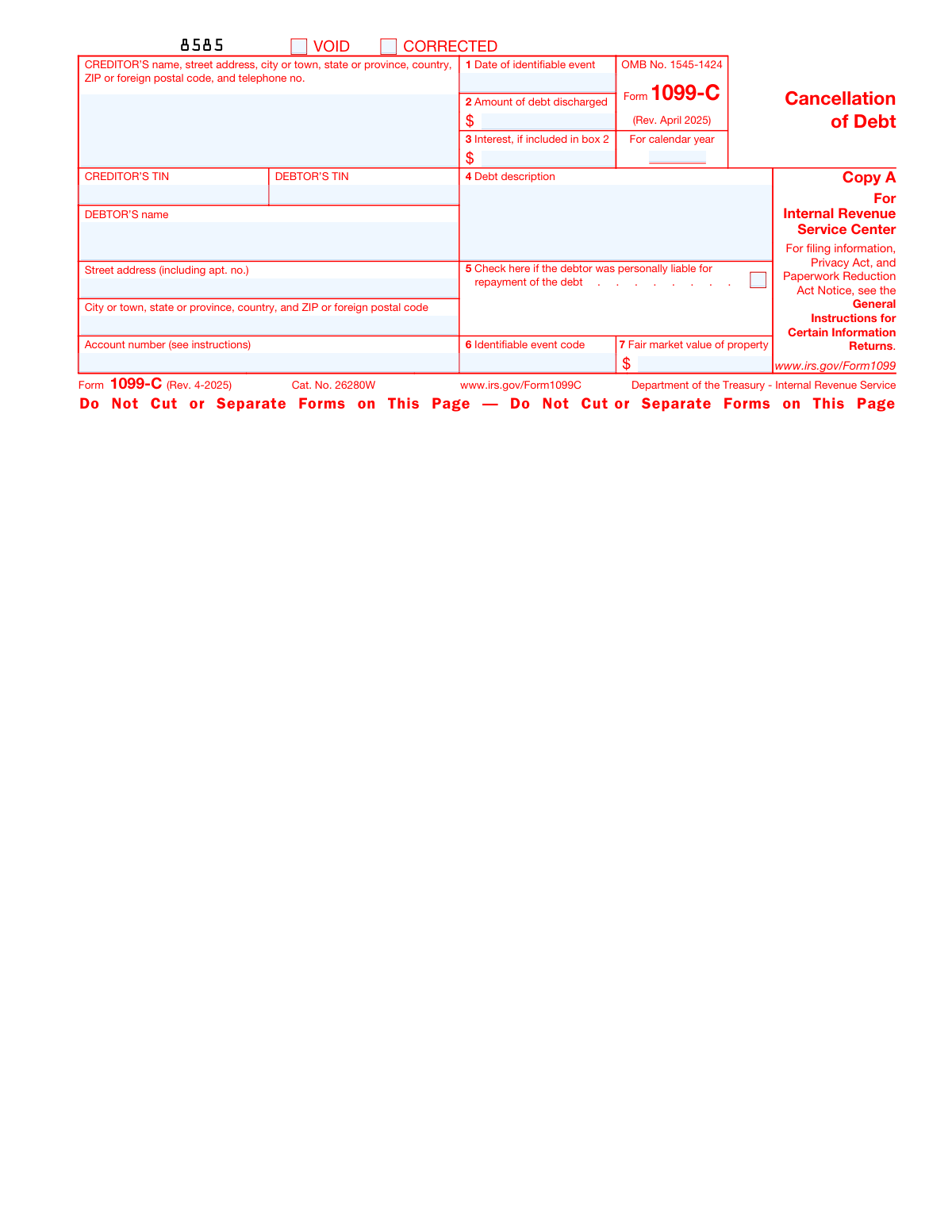
The software ensures that the version of Form 1099-C used for Copy A is the official IRS scannable form to prevent any penalties that may arise from using non-compliant forms. It checks for the correct layout, format, and barcode that are required for the IRS scanning equipment. The software also alerts the user if a non-scannable form is detected and provides guidance on obtaining the correct version. This validation is crucial to maintain compliance with IRS regulations and to facilitate accurate processing of the form.
The software confirms that when Form 1099-C is not submitted on paper, the electronic filing is correctly done through the IRS FIRE (Filing Information Returns Electronically) or AIR (Affordable Care Act Information Returns) systems. It ensures that the electronic submission meets the IRS's technical requirements and that the user is directed to the appropriate system based on the form being filed. The software also provides reminders of electronic filing deadlines and assists with troubleshooting common electronic filing issues to ensure timely and accurate submission.
The software verifies that all required creditor information on Form 1099-C is complete and accurate. It checks that the creditor's name, address, Taxpayer Identification Number (TIN), and telephone number are properly entered and formatted according to IRS standards. The software cross-references this information with official databases when possible to ensure its validity. In case of missing or incorrect details, the software prompts the user to provide the necessary information to avoid processing delays or errors.
The software checks that the debtor's Taxpayer Identification Number (TIN), name, and full address are accurately entered on Form 1099-C. It validates the TIN against IRS records to ensure it matches the debtor's name and performs address verification to confirm the address is properly formatted and recognized by postal services. The software also highlights any discrepancies or missing information and requests clarification or additional details from the user to ensure the form is correctly completed.
The software confirms that if an account or unique number is applicable, it is provided in the Account Number section of Form 1099-C. This unique identifier helps distinguish the specific debt being canceled and is essential for accurate record-keeping and tracking by both the IRS and the debtor. The software ensures that this number is present and correctly formatted, and if it is missing, the software alerts the user to include this critical piece of information.
The AI ensures that the date of the identifiable event, which is a critical piece of information on Form 1099-C, is entered correctly in Box 1. It checks the format of the date to ensure it complies with the standard date format (MM/DD/YYYY). Additionally, the AI cross-references the date with the calendar to confirm that it is a valid date and not a future date beyond the current tax year. It also verifies that the date is consistent with the timeline of the debt cancellation event.
And 9 more checks
- Ensures that the amount of discharged debt is accurately reported in Box 2.
- Checks if the amount of interest, if applicable, is included in Box 3 and corresponds with the discharged debt in Box 2.
- Provides a brief description of the debt in Box 4 and, if applicable, describes the associated property when Box 7 is completed.
- Confirms that Box 5 is checked if the debtor was personally liable for the debt.
- Verifies that the correct identifiable event code is entered in Box 6 according to IRS Publication 4681.
- Ensures that the fair market value of the property is entered in Box 7 if applicable.
- Checks the 'CORRECTED' box if the form is a correction of a previously filed Form 1099-C.
- Includes instructions for the debtor on how to report the information on their tax return with Copy B.
- Retains Copy C for the creditor's records and follows the instructions for creditors regarding filing and furnishing the form.
Let AI fill out your Form 1099-C
No typing. Every field filled in seconds, checked, ready to sign.
How to Fill Out Form 1099-C Online for Free in 2026
What the AI walks you through.
- Visit instafill.ai site and select Form 1099-C
- Enter creditor's information
- Input debtor's TIN and name
- Fill in debtor's address details
- Specify debt and property details
- Sign and date the form electronically
- Check for accuracy and submit form
Common Mistakes in Completing Form 1099-C
The ones the AI is built to catch.
Using a non-scannable Form 1099-C for Copy A
Failing to use IRS FIRE or AIR systems for e-filing
Omitting the creditor's Taxpayer Identification Number (TIN)
Entering incorrect or incomplete debtor's TIN
Not providing full debtor's name and address details
Leaving the account number blank when applicable
Incorrectly entering the date of the identifiable event
Misreporting the amount of discharged debt in Box 2
Forgetting to include interest amount in Box 3 if applicable
Providing insufficient description of the debt in Box 4
Failing to check Box 5 when the debtor was personally liable
Entering the wrong identifiable event code in Box 6
Neglecting to enter fair market value in Box 7 when required
Not checking the 'CORRECTED' box when amending a form
Failing to provide debtor with instructions for Copy B
Not retaining Copy C for the creditor's records
Overlooking the need to reference IRS Publication 4681 for exceptions
Using outdated forms or instructions from the IRS website
Frequently Asked Questions About Form 1099-C
Is it really free for 7 days?
Can I fill other forms too?
How do I cancel?
How does the AI fill out Form 1099-C?
What happens to my information?
How complex is Form 1099-C to fill out?
What is Form 1099-C?
When should a Form 1099-C be filed?
What should I do if I receive a Form 1099-C?
How do I know if I am personally liable for repayment of the debt reported on Form 1099-C?
What does the 'Date of identifiable event' mean on Form 1099-C?
What should I do if the amount of debt discharged reported on Form 1099-C is incorrect?
Is interest included in the amount of debt discharged on Form 1099-C?
What are the exceptions and exclusions for including canceled debt in income?
What is an identifiable event code on Form 1099-C?
How is the fair market value of property reported on Form 1099-C?
What are the consequences of not reporting taxable income from canceled debt?
Can I file Form 1099-C electronically?
Where can I find more information about the implications of debt cancellation?
What should I do if I disagree with the information reported by the creditor on Form 1099-C?
What is the significance of the checkbox indicating the debtor was personally liable for the debt?
What are the IRS publications that provide more information about Form 1099-C?
How can I order official IRS information returns like Form 1099-C?
What is the purpose of the different copies (A, B, C) of Form 1099-C?
What is the deadline for filing Form 1099-C with the IRS?
Where can I find the General Instructions for Certain Information Returns?
Get your Form 1099-C filled out by AI
$0 today. Cancel before Nov 1 and you pay nothing.
Other forms like this one
1099 forms: Form 1099-NEC, Nonemployee Compensation, Form 4852, Substitute for Form W-2 or 1099-R, Form 1099-MISC, Miscellaneous Information, Form 1099-INT, Interest Income, Form 1099-DIV, Dividends and Distributions, Form 1099-R, Distributions From Pensions etc., Form 1099-S, Proceeds From Real Estate Transactions, Form 1099-G, Certain Government Payments, Form 1099-K, Payment Card and Third Party Network Transactions, Form 1099-OID, Original Issue Discount, Form 1099-PATR, Taxable Distributions from Cooperatives, Form 1099-Q, Payments From Qualified Education Programs, Form 1099-SA, Distributions from HSA/MSA, Form 1099-B, Proceeds From Broker Transactions, Form 1099-NEC, Nonemployee Compensation, Form 1099-NEC, Nonemployee Compensation, Form 1099-NEC, Nonemployee Compensation, Form 1099-NEC, Nonemployee Compensation, Instructions for Forms 1099-R and 5498, Form 1099-MISC, Miscellaneous Information
Let AI fill out your Form 1099-C
Your trial starts once a card is added. You pay nothing before Nov 1.
Our AI already knows this form, all 50 fields of it. Skip the typing: tell it about yourself, or upload what you have, and it fills the whole form in seconds.
- AI fills every field on all 5 pages, checkboxes included
- No typing into boxes: answer a few questions, or upload your W-2 or last year's return, an old copy of this form, a photo of a document
- The AI checks the answers; you review and change anything before you download
- Download the finished PDF, print it, or sign it online
- Encrypted, and never used to train AI
Cancel before Nov 1 and you pay nothing.
A card is needed to start the trial. Cancel in two clicks from your account.
Terms · Privacy