Yes! You can use AI to fill out Special Tax Notice Regarding Plan Payments
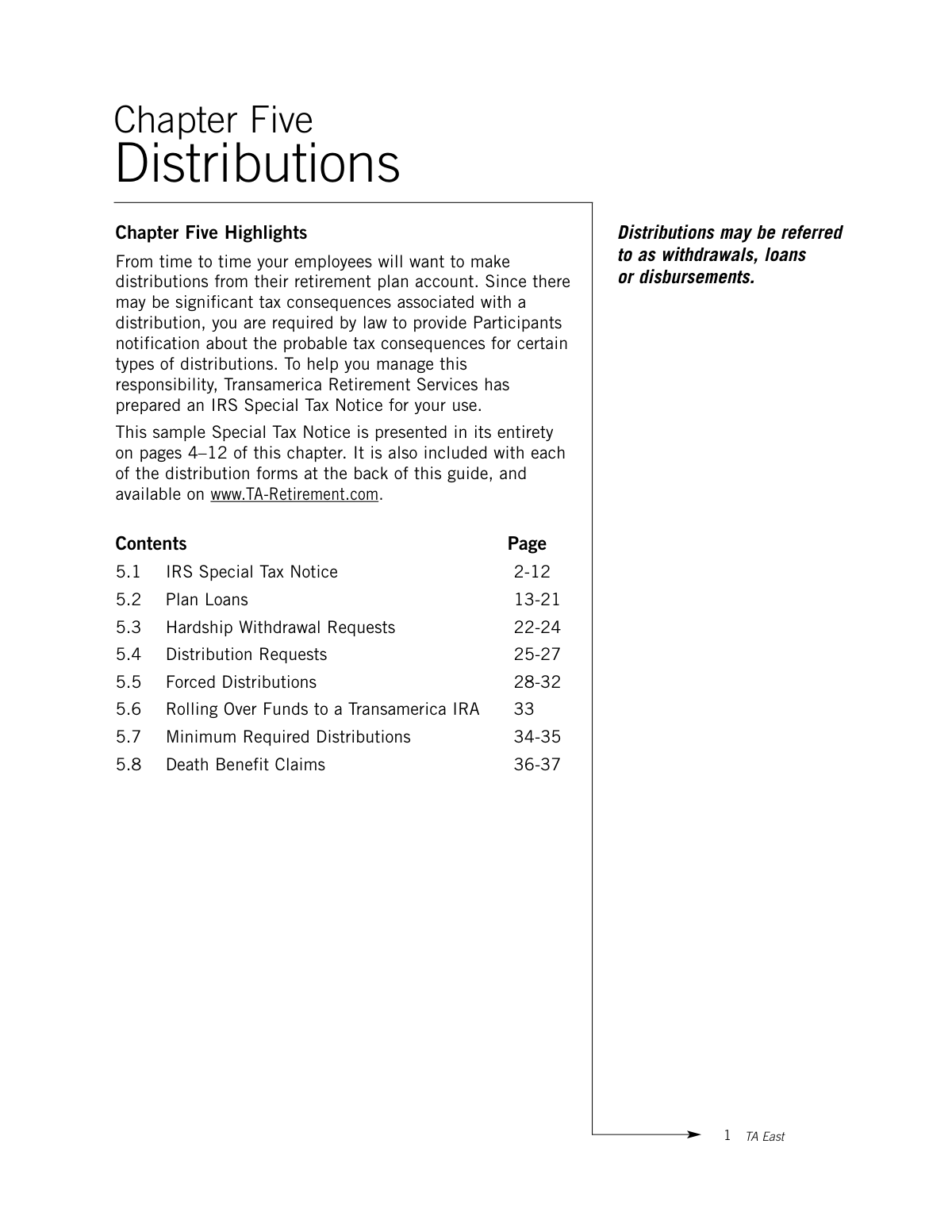
The Special Tax Notice Regarding Plan Payments is a document required by the IRS that plan administrators must give to individuals receiving a payment from a retirement plan that is eligible for rollover. It explains the significant tax implications of distribution choices, such as the benefits of a direct rollover to another plan or IRA versus receiving the payment directly, which triggers a mandatory 20% tax withholding. This notice is crucial for making informed financial decisions to continue deferring taxes on retirement savings. Today, the distribution request forms that accompany this notice can be filled out quickly and accurately using AI-powered services like Instafill.ai, which can also convert non-fillable PDF versions into interactive fillable forms.
IRS Special Tax Notice is part of the
payment forms category on Instafill.
Rather not fill this in by hand? Instafill is an online form filler that completes PDF forms automatically — upload the blank form, answer a few questions, and the AI fills every field.
Form specifications
| Form name: | Special Tax Notice Regarding Plan Payments |
| Number of pages: | 1 |
| Language: | English |
Our AI automatically handles information lookup, data retrieval, formatting, and form filling.
It takes less than a minute to fill out IRS Special Tax Notice using our AI form filling.
Securely upload your data. Information is encrypted in transit and deleted immediately after the form is filled out.
Instafill Demo: How to fill out PDF forms in seconds with AI
How to Fill Out IRS Special Tax Notice Online for Free in 2026
Are you looking to fill out a IRS SPECIAL TAX NOTICE form online quickly and accurately? Instafill.ai offers the #1 AI-powered PDF filling software of 2026, allowing you to complete your IRS SPECIAL TAX NOTICE form in just 37 seconds or less.
Follow these steps to fill out your IRS SPECIAL TAX NOTICE form online using Instafill.ai:
- 1 Navigate to Instafill.ai and upload your retirement plan's Distribution Request form, which is typically provided with the Special Tax Notice.
- 2 Use the AI assistant to automatically detect and label the fields on the form, such as personal information, distribution reason, and payment instructions.
- 3 Enter your personal details, including name, Social Security Number, and contact information, letting the AI guide you through each required section.
- 4 Indicate your distribution choice based on the information in the Special Tax Notice, selecting either a 'Direct Rollover' to an IRA or another plan, or a 'Payment Paid to You'.
- 5 If choosing a direct rollover, provide the details of the receiving financial institution and account. If choosing a direct payment, review the tax withholding information.
- 6 Securely sign the form electronically. If spousal consent is required, invite your spouse to sign the designated section as well.
- 7 Download the completed, signed form and submit it to your Plan Administrator as instructed in your distribution packet.
Our AI-powered system ensures each field is filled out correctly, reducing errors and saving you time.
Why Choose Instafill.ai for Your Fillable IRS Special Tax Notice Form?
Speed
Complete your IRS Special Tax Notice in as little as 37 seconds.
Up-to-Date
Always use the latest 2026 IRS Special Tax Notice form version.
Cost-effective
No need to hire expensive lawyers.
Accuracy
Our AI performs 10 compliance checks to ensure your form is error-free.
Security
Your personal information is protected with bank-level encryption.
Frequently Asked Questions About IRS Special Tax Notice
This notice explains the tax rules for distributions from your retirement plan. It helps you understand your options, such as rolling over your funds to an IRA or another plan to continue deferring taxes, or receiving a direct payment.
Your Plan Administrator is required by the IRS to provide this notice to any plan participant or beneficiary who is requesting a distribution or withdrawal of funds from their retirement account.
A Direct Rollover sends your money directly to another retirement account, like an IRA, and is not immediately taxed or subject to withholding. If a payment is made directly to you, it is subject to a mandatory 20% federal income tax withholding.
If you receive an eligible distribution directly instead of rolling it over, the plan is legally required to withhold 20% for federal income tax. You can still roll over the full amount within 60 days, but you must use other funds to replace the 20% that was withheld.
You must be given a 30-day period to consider your options after receiving the Special Tax Notice. However, you can choose to waive this waiting period by making an affirmative election if you wish to receive your distribution sooner.
A hardship withdrawal is for an immediate and heavy financial need, such as purchasing a primary residence, paying tuition, covering unreimbursed medical expenses, or preventing eviction. You must exhaust other options, like plan loans, before taking a hardship withdrawal.
You can request a general-purpose loan online, through the voice response system, or by completing a paper Loan Application form from your employer. Note that residential and hardship loans always require the paper form and Plan Sponsor approval.
You must either repay the loan in full, or the outstanding balance will be 'offset' from your account distribution. This loan offset is treated as a taxable distribution unless you roll over an equivalent amount to an IRA or another plan within 60 days.
Yes, if your vested account balance is $5,000 or less, your employer can initiate a 'forced distribution' after you leave the company. They must provide you with 30 days' notice before processing the distribution.
The beneficiary must submit a completed Death Benefit Claim form, an original certified copy of the death certificate, and the Beneficiary Designation Form on file with the plan.
You must generally begin taking MRDs by April 1 of the year after you turn 70½ or the year you retire, whichever is later. Special rules apply if you are a 5% owner of the company.
Yes, services like Instafill.ai use AI to accurately auto-fill form fields, which can save you time and help prevent errors on complex financial forms.
You can use a service like Instafill.ai to fill out your forms online. Simply upload the PDF, and the tool will make it fillable, allowing you to type your information and complete it digitally.
If you have a non-fillable or 'flat' PDF, you can use a tool like Instafill.ai to convert it into an interactive, fillable form. This allows you to easily type your information directly onto the document before printing and signing.
Compliance IRS Special Tax Notice
Validation Checks by Instafill.ai
1
Validates Maximum Loan Amount
This check verifies that the requested loan amount does not exceed the legal maximum, which is the lesser of $50,000 or 50% of the participant's vested account balance, reduced by the highest outstanding loan balance in the preceding 12 months. This is crucial for maintaining the plan's qualified status and preventing prohibited transactions under IRS and DOL regulations. If the requested amount is too high, the application will be rejected, and the participant will be notified of their correct maximum eligible amount.
2
Ensures Spousal Consent for Non-Annuity Distributions
For plans requiring a Qualified Joint and Survivor Annuity (QJSA), this validates that if the participant's vested balance exceeds $5,000, any distribution option other than a QJSA has written, notarized spousal consent. This is a critical legal requirement to protect the rights of the non-participant spouse. Failure to provide valid consent will halt the distribution process until the consent is obtained or the participant elects the QJSA.
3
Verifies Prerequisite for Hardship Withdrawal
This check confirms that the participant has exhausted all other available financial resources from the plan, specifically by taking any available plan loans, before a hardship withdrawal is granted. This is a 'safe harbor' requirement to ensure hardship withdrawals are a last resort for genuine financial need. If a loan is available but has not been taken, the hardship request will be denied and the participant will be directed to apply for a loan first.
4
Confirms Valid Reason for Hardship Withdrawal
This validation ensures the participant has selected one of the legally permissible 'safe harbor' reasons for a hardship withdrawal, such as purchasing a principal residence, paying tuition, covering medical expenses, or preventing eviction. The check also confirms the participant has attested to possessing the required supporting documentation for the selected reason. An invalid reason or failure to attest will result in the rejection of the hardship request.
5
Verifies Submission of Certified Death Certificate
For all Death Benefit Claims, this check ensures that an original, certified copy of the participant's death certificate is included with the submission. This document is the primary legal proof of death required to authorize the release of plan assets to a beneficiary. Without the certified death certificate, the claim cannot be processed and will be placed on hold pending its receipt.
6
Validates Proof of Disability for Disability Claims
This check confirms that a distribution request for disability benefits is accompanied by a letter from the Social Security Administration (SSA) confirming the participant's qualification for permanent disability. This documentation is essential for correct tax reporting and to waive the 10% early withdrawal penalty for participants under age 59 ½. If the SSA letter is missing, the claim will be treated as a standard termination distribution, potentially with adverse tax consequences.
7
Ensures Court-Certified QDRO Documentation
When processing a distribution to an alternate payee, this check verifies that a court-certified copy of the Qualified Domestic Relations Order (QDRO) is attached to the request form. A valid QDRO is the legal instrument that permits the plan to divide a participant's retirement assets pursuant to a divorce or separation. A distribution cannot be made to an alternate payee without this certified legal document.
8
Validates Vested Balance for Forced Distribution
This check verifies that a former employee's vested account balance is $5,000 or less (or the plan's specified limit) before a plan sponsor's request for a forced distribution is processed. This rule prevents sponsors from forcing out participants with larger balances who have a right to keep their assets in the plan. If the balance exceeds the threshold, the forced distribution request will be rejected.
9
Confirms 30-Day Notice for Forced Distribution
This validation ensures the plan sponsor has certified on their request form that they provided the former employee with the required 30-day written notice, a distribution form, and the IRS Special Tax Notice before initiating a forced distribution. This notice period is a legal requirement giving the participant a chance to make their own distribution election. A request lacking this certification will not be processed.
10
Verifies Rollover Eligibility of Distribution Type
This check confirms that the type of funds being distributed are eligible for rollover, as certain payments like hardship withdrawals, required minimum distributions, or corrective distributions cannot be rolled over. This is important for ensuring correct tax withholding and reporting, as non-eligible rollovers can result in tax penalties for the participant. If a rollover is requested for an ineligible distribution, the request will be rejected and the participant will be informed of their valid options.
11
Validates Beneficiary Status Against Selected Option
For death benefit claims, this check cross-references the claimant's status (surviving spouse vs. non-spousal beneficiary) with the distribution option they selected on the form. Spouses have unique options, such as rolling over the assets into their own IRA or leaving the funds in the plan, which are not available to non-spousal beneficiaries. An invalid selection will cause the form to be rejected, requiring the beneficiary to submit a new form with a permissible choice.
12
Checks for Affirmative Waiver of 30-Day Decision Period
This check verifies that if a distribution is requested to be processed in less than 30 days from the participant's receipt of the Special Tax Notice, the participant has made an affirmative election to waive this waiting period. The 30-day period is a legally mandated time for the participant to consider their options, particularly a direct rollover. Processing a distribution before this period ends without a clear, affirmative waiver could lead to plan compliance issues.
Common Mistakes in Completing IRS Special Tax Notice
Married participants often overlook the requirement for their spouse's written, notarized consent for any distribution other than a Qualified Joint and Survivor Annuity (QJSA). This happens because they either don't read the instructions carefully or don't understand the legal requirement. Submitting a form without a valid spousal signature will lead to an automatic rejection of the request, causing significant processing delays until a correctly completed form is resubmitted.
Many distribution types require specific supporting documents, such as an original certified death certificate for a death claim or a Social Security disability award letter. Applicants frequently submit photocopies instead of originals, or provide the wrong type of evidence, leading to rejection. To avoid this, carefully review the checklist for your specific distribution type and gather all required original documents before submission. AI-powered tools like Instafill.ai can help by highlighting required attachments for specific form fields.
When requesting a cash distribution, many people are surprised to receive only 80% of the taxable amount, not realizing a mandatory 20% is withheld for federal taxes. This misunderstanding can cause immediate financial planning issues if they were counting on the full amount. To avoid this, understand that any eligible rollover distribution paid directly to you is subject to this withholding; only a direct rollover to another IRA or plan avoids it.
When rolling over funds that include after-tax contributions to a traditional IRA, it becomes the individual's responsibility to track this 'basis'. People often forget this step, causing the after-tax portion to be taxed a second time upon withdrawal from the IRA. To prevent this double taxation, you must meticulously track the after-tax amount and file IRS Form 8606 with your tax returns for the year of the rollover and any year you take a distribution from the IRA.
An employee leaving their job with an outstanding plan loan may not realize that the unpaid balance is often 'offset' against their account and treated as a taxable distribution. This can result in a surprise tax bill, plus a 10% early withdrawal penalty if under age 59 ½. To avoid this, you must either repay the loan in full before termination or roll over an equivalent amount of money from other sources into an IRA within 60 days of the offset.
Participants facing financial distress may immediately apply for a hardship withdrawal, not knowing it's a last resort. If the plan offers loans, the rules require the participant to exhaust that option first. An application for a hardship withdrawal will be denied if an available plan loan has not been taken, delaying access to necessary funds and creating more paperwork.
Plan Sponsors are responsible for verifying and documenting the participant's immediate and heavy financial need, but they sometimes approve requests without collecting and filing the necessary proof (e.g., eviction notices, medical bills). This failure creates a significant compliance risk, as the absence of this documentation during an IRS audit could lead to plan disqualification. Sponsors must maintain a clear, documented paper trail for every hardship withdrawal approval.
When rolling funds into a new Transamerica IRA, participants sometimes only fill out the IRA Rollover Application and neglect the main Distribution Request form. The IRA application opens the new account, but the Distribution Request form is what authorizes the movement of money from the existing plan. Submitting one without the other results in an incomplete request that cannot be processed, leaving the funds in the original plan.
Terminated participants who continue to repay a plan loan often mistakenly send personal checks directly to Transamerica. The instructions state that personal checks are not accepted and that repayments should be remitted through the employer. This error can cause payments to be returned and may lead to a loan default, which would make the entire outstanding balance a taxable distribution.
A Plan Sponsor may attempt to 'force out' a former employee with a small balance without following the strict notification rules. This includes failing to send the required IRS Special Tax Notice and Distribution Request form via a trackable method to a confirmed address. Forcing a distribution without proof of receipt by the former employee is non-compliant and can create legal and tax liabilities for the plan. Since these forms are often flat PDFs, a tool like Instafill.ai can make them fillable for easier completion by the former employee.
Saved over 80 hours a year
“I was never sure if my IRS forms like W-9 were filled correctly. Now, I can complete the forms accurately without any external help.”
Kevin Martin Green
Your data stays secure with advanced protection from Instafill and our subprocessors




Robust compliance program
Transparent business model
You’re not the product. You always know where your data is and what it is processed for.
ISO 27001, HIPAA, and GDPR
Our subprocesses adhere to multiple compliance standards, including but not limited to ISO 27001, HIPAA, and GDPR.
Security & privacy by design
We consider security and privacy from the initial design phase of any new service or functionality. It’s not an afterthought, it’s built-in, including support for two-factor authentication (2FA) to further protect your account.
Fill out IRS Special Tax Notice with Instafill.ai
Worried about filling PDFs wrong? Instafill securely fills special-tax-notice-regarding-plan-payments-1 forms, ensuring each field is accurate.
