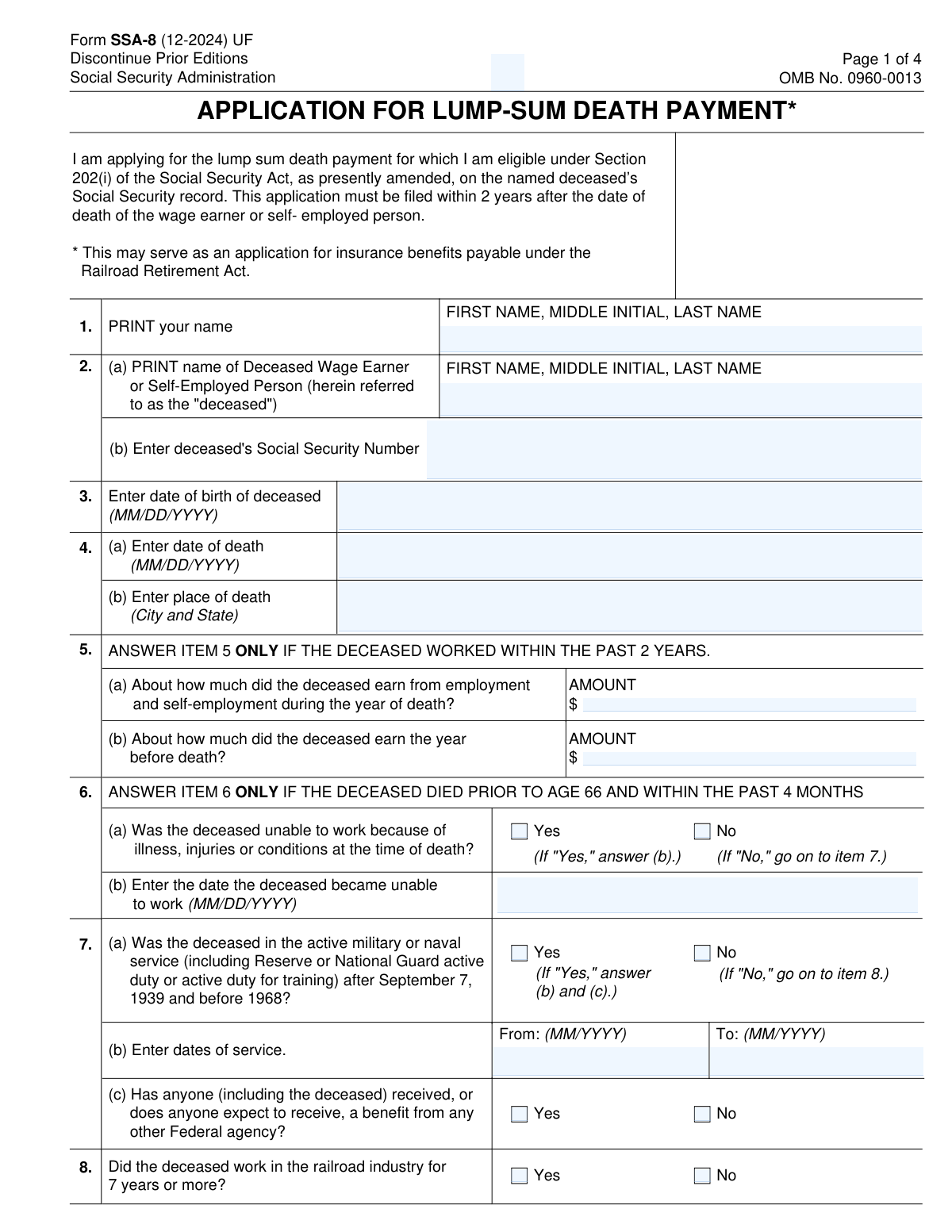
Yes! You can use AI to fill out Form SSA-8, Application for Lump-Sum Death Payment

Form SSA-8, Application for Lump-Sum Death Payment, is used to request a one-time payment from Social Security for eligible survivors. It is important to complete this form accurately to ensure timely processing of benefits.
Our AI automatically handles information lookup, data retrieval, formatting, and form filling.
It takes less than a minute to fill out Form SSA-8 using our AI form filling.
Securely upload your data. Information is encrypted in transit and deleted immediately after the form is filled out.

Form specifications

Form name: Form SSA-8, Application for Lump-Sum Death Payment
Number of fields: 125
Number of pages: 4
Official download URL: https://www.ssa.gov/forms/ssa-8.pdf
Language: English
main-image

Instafill Demo: filling out a legal form in seconds

How to Fill Out Form SSA-8 Online for Free in 2025

Are you looking to fill out a FORM SSA-8 form online quickly and accurately? Instafill.ai offers the #1 AI-powered PDF filling software of 2025, allowing you to complete your FORM SSA-8 form in just 37 seconds or less.
Follow these steps to fill out your FORM SSA-8 form online using Instafill.ai:
  1. 1 Visit instafill.ai site and select Form SSA-8.
  2. 2 Enter your name and deceased's details.
  3. 3 Provide dates of birth and death.
  4. 4 Fill in earnings and military service information.
  5. 5 Sign and date the form electronically.
  6. 6 Check for accuracy and submit the form.

Our AI-powered system ensures each field is filled out correctly, reducing errors and saving you time.

Why Choose Instafill.ai for Your Fillable Form SSA-8 Form?

Speed

Complete your Form SSA-8 in as little as 37 seconds.

Up-to-Date

Always use the latest 2025 Form SSA-8 form version.

Cost-effective

No need to hire expensive lawyers.

Accuracy

Our AI performs 10 compliance checks to ensure your form is error-free.

Security

Your personal information is protected with bank-level encryption.

Frequently Asked Questions About Form Form SSA-8

Form SSA-8 is used to apply for a lump-sum death payment from the Social Security Administration (SSA). This payment is made to eligible survivors of a deceased individual who had sufficient work credits under Social Security.

Eligible applicants for the lump-sum death payment include the surviving spouse, children, or other dependents of the deceased individual who had earned enough Social Security credits. Specific eligibility criteria may vary based on the relationship to the deceased and the deceased's work history.

The deadline for filing Form SSA-8 is typically within two years of the date of the deceased's death. It is important to submit the application as soon as possible to ensure timely processing and payment.

Form SSA-8 requires information about the deceased individual, including their full name, Social Security number, date of birth, date of death, and details regarding their work history and earnings. This information helps the SSA determine eligibility and calculate the payment amount.

To report the deceased's earnings on Form SSA-8, you will need to provide details of their work history, including the names of employers, the dates of employment, and the amounts earned. This information is crucial for the SSA to verify the deceased's eligibility for the lump-sum death payment.

If the deceased worked in the railroad industry, you should contact the Railroad Retirement Board (RRB) for information regarding any benefits that may be available. The RRB administers benefits for railroad workers and their families, and they can provide guidance on how to proceed with the application for a lump-sum death payment.

If the deceased served in the military, you may be eligible for additional benefits through the Department of Veterans Affairs (VA). It is important to gather any military service records and contact the VA to determine what benefits may be available in conjunction with the lump-sum death payment application.

To provide information about the deceased's surviving spouse, you will need to include the spouse's full name, Social Security number, and date of birth on the application form. Additionally, you may need to provide documentation that verifies the marriage, such as a marriage certificate.

When providing information about the deceased's children, you should include each child's full name, Social Security number, and date of birth. If any of the children are minors, you may also need to provide information about their guardianship.

If the deceased had prior marriages, you will need to provide information about those marriages, including the names of the former spouses and the dates of the marriages and divorces. This information is important for determining eligibility for benefits and ensuring that all relevant parties are accounted for in the application process.

To indicate if the deceased was disabled at the time of death, you should complete the relevant section on Form SSA-8 where it asks about the deceased's disability status. Provide any necessary documentation or details that support the claim of disability.

If you have previously filed for Social Security benefits on the deceased's record, you should indicate this on Form SSA-8. This information is important for the Social Security Administration to process your application for the lump-sum death payment accurately.

If you are the surviving spouse, you should complete Form SSA-8 and provide all required information, including your relationship to the deceased. You may also need to provide documentation proving your marriage and your identity.

You can provide your contact information on Form SSA-8 in the designated section. Ensure that you include your current address, phone number, and any other relevant contact details so that the Social Security Administration can reach you if needed.

After submitting Form SSA-8, the Social Security Administration will review your application. They may contact you for additional information or documentation. Once your application is processed, you will be notified of the decision regarding the lump-sum death payment.

You can check the status of your claim by contacting the Social Security Administration (SSA) directly. You can call their toll-free number or visit your local SSA office. Additionally, you can create an account on the SSA's website to access your claim status online.

If you change your mailing address after submitting Form SSA-8, you should notify the Social Security Administration as soon as possible. You can do this by calling their office or updating your address through your online SSA account. Keeping your address updated ensures that you receive important correspondence regarding your claim.

The Privacy Act Statement for Form SSA-8 informs you about how the Social Security Administration will use the information you provide on the form. It outlines your rights regarding your personal information and how it will be protected. You can find this statement included with the form or on the SSA's website.

You can find your local Social Security office by visiting the Social Security Administration's website and using their office locator tool. You can enter your zip code to find the nearest office, along with its address and contact information.

If you need assistance while filling out Form SSA-8, you can contact the Social Security Administration for help. They have representatives available to answer your questions. Additionally, you may seek help from family members or friends who are familiar with the process, or you can visit your local SSA office for in-person assistance.

Compliance Form SSA-8
Validation Checks by Instafill.ai

1
Verifies that the applicant's full name is printed clearly, including first name, middle initial, and last name.
This validation check ensures that the applicant's full name is clearly printed on the form, which is crucial for identification purposes. It confirms that all components of the name, including the first name, middle initial, and last name, are present and legible. By verifying this information, the software helps to prevent any potential delays in processing the application due to unclear or incomplete name entries. This check is essential for maintaining the integrity of the application process.
2
Confirms that the deceased's full name is provided in section 2(a), including first name, middle initial, and last name.
This validation check verifies that the full name of the deceased is accurately provided in section 2(a) of the form. It ensures that all necessary components of the name, such as the first name, middle initial, and last name, are included to avoid any discrepancies. By confirming this information, the software helps to ensure that the application is processed smoothly and that the correct individual is associated with the claim. This check is vital for the accurate identification of the deceased.
3
Ensures that the deceased's Social Security Number is entered correctly in section 2(b).
This validation check verifies that the Social Security Number (SSN) of the deceased is entered correctly in section 2(b) of the form. It ensures that the format of the SSN adheres to the standard nine-digit structure, which is essential for accurate record-keeping and processing. By confirming the correctness of the SSN, the software helps to prevent any potential issues related to identity verification or payment processing. This check is crucial for ensuring that the application is linked to the correct Social Security record.
4
Checks that the date of birth of the deceased is formatted as MM/DD/YYYY in section 3.
This validation check ensures that the date of birth of the deceased is entered in the correct format of MM/DD/YYYY in section 3 of the form. It verifies that the date is not only present but also formatted correctly to avoid any confusion or misinterpretation. By checking the format, the software helps to maintain consistency and accuracy in the application data. This check is important for ensuring that all dates are processed uniformly.
5
Validates that the date of death is provided in MM/DD/YYYY format in section 4(a).
This validation check confirms that the date of death is entered in the required MM/DD/YYYY format in section 4(a) of the form. It ensures that the date is clearly specified and adheres to the expected format, which is critical for accurate processing of the application. By validating this information, the software helps to prevent any potential errors that could arise from incorrect date entries. This check is essential for the proper handling of the application and associated benefits.
6
Ensures that the place of death, including city and state, is specified in section 4(b).
This validation check ensures that the applicant has accurately filled out the place of death in section 4(b). It verifies that both the city and state are provided, as this information is crucial for processing the application. The check confirms that the details are not left blank and are formatted correctly. By validating this information, the software helps to prevent any delays in the application process due to incomplete data.
7
Confirms that the estimated earnings from employment and self-employment during the year of death are provided in section 5(a).
This validation check confirms that the applicant has entered the estimated earnings from both employment and self-employment for the year of death in section 5(a). It verifies that the figures are provided in a numerical format and are not left empty. This information is essential for determining the eligibility for the lump-sum death payment. By ensuring this data is complete, the software aids in the accurate assessment of the application.
8
Verifies that the estimated earnings from the year before death are entered in section 5(b).
This validation check verifies that the applicant has included the estimated earnings from the year prior to the death in section 5(b). It ensures that the information is not omitted and is presented in a clear numerical format. This data is important for the evaluation of the deceased's financial situation leading up to their passing. By confirming this entry, the software helps to maintain the integrity of the application process.
9
Checks that the applicant has answered section 6 regarding the deceased's ability to work due to illness or injury, if applicable.
This validation check checks that the applicant has provided a response in section 6 concerning the deceased's ability to work due to any illness or injury. It ensures that this critical information is not overlooked, as it can impact the assessment of the application. The software verifies that the response is clear and relevant to the circumstances of the deceased. By validating this section, the software contributes to a thorough review of the application.
10
Ensures that military service details are provided in section 7 if the deceased served in the military after September 7, 1939, and before 1968.
This validation check ensures that if the deceased served in the military during the specified time frame, the applicant has provided the necessary details in section 7. It verifies that all relevant military service information is included, as this can affect eligibility for benefits. The check confirms that the section is not left blank and that the information is accurate. By performing this validation, the software helps to ensure that all pertinent details are considered in the application review.
11
Validates that information regarding work in the railroad industry is indicated in section 8 if applicable.
This validation check ensures that any relevant work history in the railroad industry is accurately reported in section 8 of the form. It verifies that the applicant has provided all necessary details if they have worked in this sector. The check confirms that the information aligns with the requirements set forth by the Social Security Administration. By doing so, it helps to prevent any discrepancies that could affect the processing of the application.
12
Confirms that any international work covered under another country's social security system is specified in section 9 if applicable.
This validation check verifies that the applicant has disclosed any international work that may be covered under a foreign social security system in section 9. It ensures that all pertinent details are included to avoid potential issues with benefit eligibility. The check confirms that the applicant understands the implications of international work on their claim. By ensuring this information is provided, it helps streamline the review process for the application.
13
Ensures that the surviving spouse's information is provided in section 10 if applicable, including name, marriage details, and Social Security Number.
This validation check confirms that the surviving spouse's information is accurately filled out in section 10 of the form. It ensures that all required details, such as the spouse's name, marriage date, and Social Security Number, are included if applicable. The check verifies that this information is complete to facilitate the processing of benefits. By ensuring the accuracy of this section, it helps to prevent delays in the application review.
14
Checks that all surviving children eligible for benefits are listed in section 11 with full names and that they meet age and marital status criteria.
This validation check ensures that all surviving children who are eligible for benefits are properly listed in section 11. It verifies that the full names of each child are provided and that they meet the necessary age and marital status criteria. The check confirms that the applicant has accurately reported this information to avoid any issues with benefit distribution. By doing so, it helps to ensure that all eligible beneficiaries are accounted for in the application.
15
Verifies that the applicant has indicated if there is a surviving parent receiving support from the deceased in section 12.
This validation check ensures that the applicant has indicated whether there is a surviving parent who is receiving support from the deceased in section 12. It verifies that this information is clearly stated to assess the eligibility for benefits accurately. The check confirms that the applicant understands the importance of this detail in the context of the application. By ensuring this information is provided, it helps to clarify the family dynamics relevant to the claim.
16
Ensures that the applicant has indicated any prior claims filed for Social Security benefits on the deceased's earnings record in section 13.
This validation check verifies that the applicant has accurately completed section 13 of the Form SSA-8, which pertains to any prior claims filed for Social Security benefits related to the deceased's earnings record. It ensures that all relevant claims are disclosed, as this information is crucial for processing the application correctly. By confirming the presence of this information, the check helps prevent any potential delays or issues in the application review process. Additionally, it ensures that the Social Security Administration has a complete understanding of the deceased's benefits history.
17
Confirms that the applicant has signed and dated the application, providing accurate contact information in the signature section.
This validation check ensures that the applicant has properly signed and dated the Form SSA-8, which is a critical requirement for the application to be considered valid. It verifies that the signature section contains accurate contact information, allowing for effective communication regarding the application status. By confirming these details, the check helps to prevent any administrative errors that could arise from missing or incorrect information. Furthermore, it ensures that the applicant's intent to apply for the lump-sum death payment is clearly documented and legally binding.

Common Mistakes in Completing Form SSA-8

Missing full name of the applicant

Providing only a partial name can lead to processing delays or rejections. It is essential to include the applicant's full legal name as it appears on official documents. To avoid this mistake, double-check that all parts of your name, including first, middle, and last names, are accurately filled in. Ensure that any suffixes, such as Jr. or Sr., are also included if applicable.

Incorrect format for dates of birth and death

Using an incorrect date format can result in confusion and may delay the processing of your application. The form typically requires dates to be entered in a specific format, such as MM/DD/YYYY. To prevent this error, familiarize yourself with the required format before filling out the form, and consider using a date format guide if necessary. Always verify that the dates are accurate and correspond to the official records.

Omitting the deceased's Social Security Number

Failing to include the deceased's Social Security Number can lead to significant delays in processing the application. This number is crucial for identifying the individual and ensuring that the correct benefits are issued. To avoid this mistake, ensure that you have the correct Social Security Number readily available and double-check that it is entered accurately on the form. If you are unsure of the number, consult official documents or records.

Not including middle initials for names

Omitting middle initials can create discrepancies in identity verification and may lead to processing issues. It is important to provide the full name, including any middle initials, to ensure that the application is matched correctly with official records. To avoid this mistake, review the name fields carefully and include all initials as they appear on identification documents. This attention to detail can help streamline the application process.

Failing to list all surviving children

Neglecting to include all surviving children can result in incomplete information and may affect the distribution of benefits. It is essential to provide a comprehensive list of all surviving children, regardless of their age or living situation. To prevent this oversight, take the time to gather all relevant information about surviving children before completing the form. Ensure that each child's name and details are accurately recorded to avoid complications.

Inaccurate earnings estimates in section 5

Providing inaccurate estimates of earnings in section 5 can lead to delays or denials of the lump-sum death payment. It is crucial to ensure that the earnings reported are as accurate as possible, reflecting the deceased's actual income. To avoid this mistake, gather all relevant financial documents and verify the figures before submission. Double-checking calculations and consulting with a financial advisor can also help ensure accuracy.

Neglecting to indicate prior marriages

Failing to disclose prior marriages can complicate the application process and may result in the application being rejected. It is important to provide complete information about all previous marriages, including dates and the names of former spouses. To prevent this oversight, review the application thoroughly and ensure that all relevant details are included. Keeping a record of past marriages can also facilitate accurate reporting.

Not providing details of living situation

Omitting details about the living situation can lead to misunderstandings regarding eligibility for the lump-sum death payment. It is essential to clearly describe the living arrangements of the deceased, including whether they lived alone or with others. To avoid this mistake, take the time to provide a comprehensive overview of the deceased's living situation. Including this information can help expedite the processing of the application.

Forgetting to sign and date the application

Neglecting to sign and date the application is a common error that can result in delays in processing. A signature is required to validate the application and confirm that the information provided is accurate. To avoid this mistake, make it a habit to review the application for completeness, including the signature and date, before submission. Setting a checklist can help ensure that all necessary steps are completed.

Missing contact information

Failing to provide complete contact information can hinder communication regarding the application status. It is vital to include accurate phone numbers and addresses to ensure that any necessary follow-up can occur without delay. To prevent this issue, double-check that all contact details are filled out correctly and are up to date. Keeping a record of your contact information handy can also help ensure that nothing is overlooked.

Incorrectly filling out surviving spouse information

Providing inaccurate or incomplete information about the surviving spouse can lead to delays in processing the application. It is essential to ensure that the name, Social Security number, and relationship to the deceased are correctly filled out. To avoid this mistake, double-check the information against official documents and ensure that all required fields are completed. Additionally, consider having another person review the information for accuracy before submission.

Not indicating military service correctly

Failing to accurately report military service can affect eligibility for benefits. It is crucial to provide complete details regarding any military service, including branch, dates of service, and discharge status. To prevent this error, refer to military records or documentation to ensure all information is correct. If unsure, consult with a veteran's service officer for assistance in accurately reporting military service.

Omitting details about international work

Neglecting to include information about work performed outside the United States can lead to complications in benefit calculations. It is important to disclose any international employment, including the duration and nature of the work. To avoid this mistake, gather all relevant employment records and ensure that all international work is documented clearly on the form. Consulting with a tax professional may also help clarify any international work implications.

Failing to provide witness signatures if needed

Not including required witness signatures can result in the application being rejected or delayed. If the form specifies that a witness signature is necessary, it is vital to ensure that this is completed correctly. To avoid this issue, carefully read the instructions regarding witness requirements and ensure that all signatures are obtained before submission. It may also be helpful to have a checklist to confirm that all necessary signatures are included.

Not keeping a copy of the completed form

Failing to retain a copy of the submitted form can create difficulties in tracking the application status or addressing any issues that arise. It is advisable to keep a copy for personal records and future reference. To prevent this mistake, make a photocopy or digital scan of the completed form before sending it. This practice not only helps in maintaining records but also provides a reference point in case any discrepancies occur.

Not specifying place of death accurately

Accurate specification of the place of death is crucial for processing the application for a lump-sum death payment. Failing to provide the correct location can lead to delays or even denial of the application. To avoid this mistake, ensure that you include the full address, including city, state, and zip code, as it appears on official documents. Double-check the information against reliable sources to confirm its accuracy before submitting the form.
Saved over 80 hours a year

“I was never sure if my IRS forms like W-9 were filled correctly. Now, I can complete the forms accurately without any external help.”

Kevin Martin Green

Your data stays secure with advanced protection from Instafill and our subprocessors

Robust compliance program

Transparent business model

You’re not the product. You always know where your data is and what it is processed for.

ISO 27001, HIPAA, and GDPR

Our subprocesses adhere to multiple compliance standards, including but not limited to ISO 27001, HIPAA, and GDPR.

Security & privacy by design

We consider security and privacy from the initial design phase of any new service or functionality. It’s not an afterthought, it’s built-in, including support for two-factor authentication (2FA) to further protect your account.

Fill out Form SSA-8 with Instafill.ai

Worried about filling PDFs wrong? Instafill securely fills ssa-8 forms, ensuring each field is accurate.