Yes! You can use AI to fill out Understanding your withdrawal options (PT719-02)
The 'Understanding Your Withdrawal Options' (PT719-02) guide is an informational document explaining how to access funds from a retirement savings account. It details the differences between loans, withdrawals, and distributions, and outlines the eligibility requirements, tax implications, and potential penalties. Today, any required withdrawal application forms can be filled out quickly and accurately using AI-powered services like Instafill.ai, which can also convert non-fillable PDF versions into interactive fillable forms.
PT719-02 is part of the
withdrawal forms category on Instafill.
Rather not fill this in by hand? Instafill is an online form filler that completes PDF forms automatically — upload the blank form, answer a few questions, and the AI fills every field.
Form specifications
| Form name: | Understanding your withdrawal options (PT719-02) |
| Number of pages: | 1 |
| Language: | English |
Our AI automatically handles information lookup, data retrieval, formatting, and form filling.
It takes less than a minute to fill out PT719-02 using our AI form filling.
Securely upload your data. Information is encrypted in transit and deleted immediately after the form is filled out.
Instafill Demo: How to fill out PDF forms in seconds with AI
How to Fill Out PT719-02 Online for Free in 2026
Are you looking to fill out a PT719-02 form online quickly and accurately? Instafill.ai offers the #1 AI-powered PDF filling software of 2026, allowing you to complete your PT719-02 form in just 37 seconds or less.
Follow these steps to fill out your PT719-02 form online using Instafill.ai:
- 1 Navigate to Instafill.ai and upload or select the relevant retirement withdrawal application form.
- 2 Use the AI assistant to automatically populate your personal information, such as name, address, and account details.
- 3 Specify the type of withdrawal you are requesting (e.g., hardship, age 59½, rollover) and the desired amount.
- 4 Indicate your preferences for federal and state tax withholding and choose your preferred method for receiving the funds (e.g., direct deposit, check, wire).
- 5 If required by your plan, complete and attach supplementary documents like a Spousal Consent Form or proof of hardship, which Instafill.ai can help you manage.
- 6 Carefully review all entered information for accuracy, provide your electronic signature, and submit the completed application package as instructed.
Our AI-powered system ensures each field is filled out correctly, reducing errors and saving you time.
Why Choose Instafill.ai for Your Fillable PT719-02 Form?
Speed
Complete your PT719-02 in as little as 37 seconds.
Up-to-Date
Always use the latest 2026 PT719-02 form version.
Cost-effective
No need to hire expensive lawyers.
Accuracy
Our AI performs 10 compliance checks to ensure your form is error-free.
Security
Your personal information is protected with bank-level encryption.
Frequently Asked Questions About PT719-02
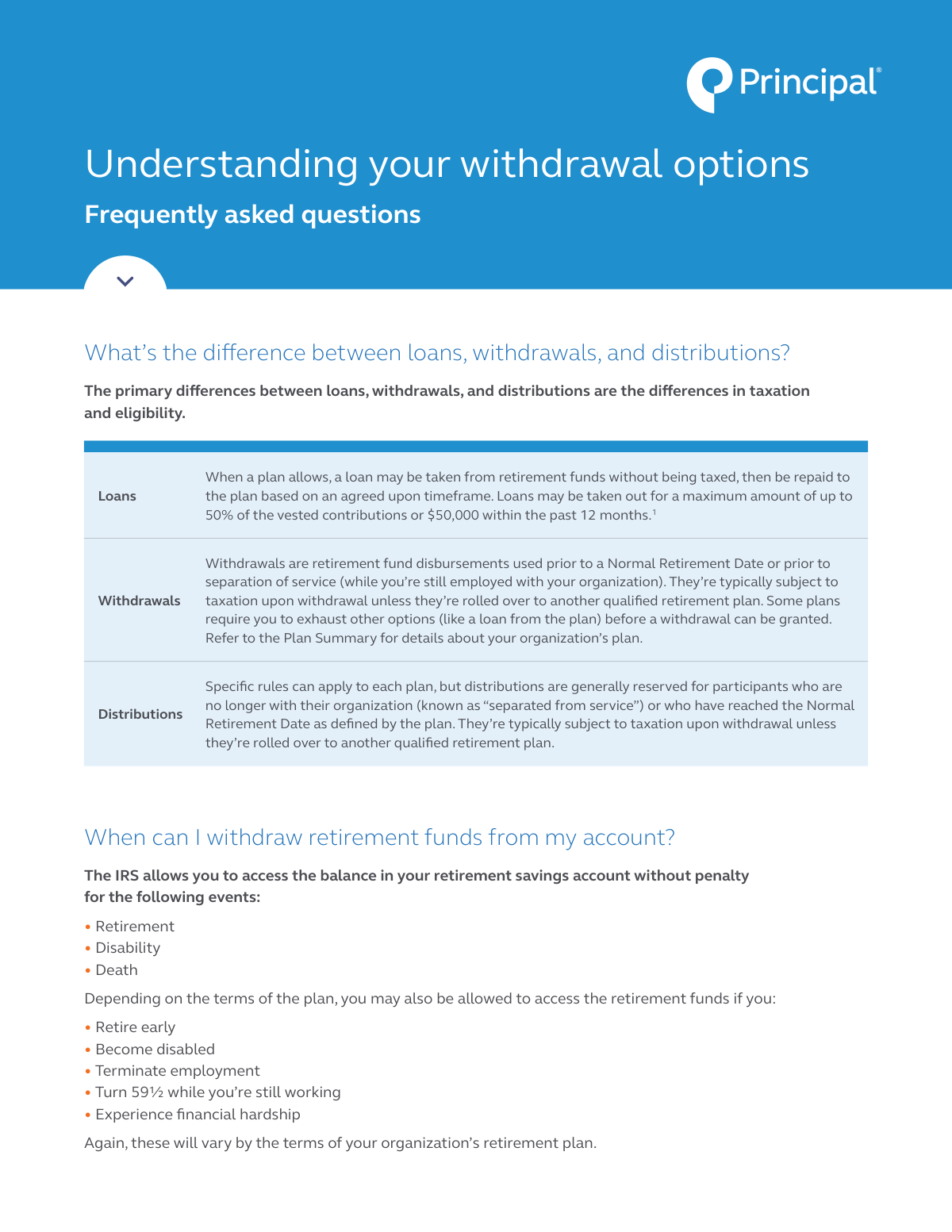
This document explains your options for accessing funds from your retirement savings account. It covers the rules for loans, withdrawals, and distributions, including potential tax implications, to help you make an informed decision.
The IRS allows penalty-free withdrawals for specific events like retirement, disability, or death. Your plan may also allow access if you retire early, leave your job, or reach age 59½, but you should check your specific plan details.
A loan is borrowed from your account and must be repaid, usually without immediate taxes. A withdrawal is taken while you are still employed, and a distribution is for those who have left their job or retired; both are typically taxable unless rolled over.
Generally, you can only withdraw funds in which you are vested. The exact amount available depends on your plan's specific rules and the market conditions when your withdrawal is processed.
If you are under age 59½, your withdrawal may be subject to a 10% early withdrawal tax from the IRS, in addition to your regular income tax. You also lose the benefit of compound earnings on the money you take out.
After approval, processing takes up to 7 days, but delivery time varies. A direct deposit or wire transfer takes 1-2 business days to reach your account, while a mailed check will take longer due to postal delivery.
Depending on your plan's rules, you may need your spouse's signature to authorize a withdrawal. If required, you will receive a Spousal Consent Form that must be completed before your request can be processed.
A hardship withdrawal is for an immediate and heavy financial need, and you will likely need to provide documentation to prove the hardship. Note that hardship withdrawals cannot be rolled over to another retirement account.
Yes, if you are withdrawing pre-tax funds in cash, the amount is considered taxable income. A mandatory 20% federal tax withholding is typically required for eligible rollover distributions, and state taxes may also apply.
To defer paying income tax, you can directly roll your funds over into another qualified retirement plan or an IRA. This option is not available for hardship withdrawals or loans.
Yes, you can use services like Instafill.ai to accurately auto-fill your withdrawal application forms. AI tools can help save time and reduce the chance of making errors on your paperwork.
Simply upload your withdrawal application to Instafill.ai, and its AI will identify and populate the form fields with your information. After you review the auto-filled data for accuracy, you can finalize and submit your request.
If your form is a non-fillable PDF, you can use a service like Instafill.ai to instantly convert it into an interactive, fillable form. This allows you to easily complete the application on your computer without needing to print it.
Yes, processing fees may apply and will vary based on the services selected by your plan sponsor. All applicable fees are required to be disclosed to you before you finalize your withdrawal request.
Compliance PT719-02
Validation Checks by Instafill.ai
Common Mistakes in Completing PT719-02
Applicants often misunderstand the specific eligibility rules for different withdrawal types, such as requesting a hardship withdrawal without first exhausting loan options as required by the plan. This mistake happens due to not reading the Summary Plan Description carefully. The consequence is an immediate rejection of the request, causing significant delays in accessing funds when they may be needed urgently. To avoid this, always verify your eligibility for a specific withdrawal type in your plan documents before filling out the form.
A simple typo in a routing or account number for a direct deposit or wire transfer is a frequent and critical error. This can cause the funds to be rejected by the bank or, in a worst-case scenario, sent to the wrong person's account, leading to a lengthy and stressful recovery process. To prevent this, always double-check your banking information against a check or your bank's official website. AI-powered form filling tools like Instafill.ai can help by validating routing numbers to ensure they belong to a valid financial institution.
Many retirement plans legally require a spouse's signature to authorize a withdrawal, a detail that is easily overlooked. Submitting the form without this consent will halt the process entirely, as the request is considered incomplete. The form will be returned, and you will need to obtain the signature, which may require a notary, and resubmit, delaying access to your money. Always check your plan's rules regarding spousal consent at the beginning of the process.
Hardship withdrawals require extensive documentation to prove an 'immediate and heavy financial need' as defined by the IRS and the plan. Applicants often submit incomplete proof, such as a single bill without context, leading to the denial of their request. This forces the applicant to restart the process, causing delays during a time of financial distress. Before applying, gather all specified documents, like eviction notices or medical invoices, and ensure you've met other requirements, like taking a plan loan first.
Forms will apply mandatory federal tax withholding (e.g., 20%), but applicants often don't realize this may not cover their total tax liability, especially when combined with state taxes and potential 10% early withdrawal penalties. This misunderstanding can lead to a large, unexpected tax bill when filing annual income taxes. To avoid this, understand that default withholding is a minimum and consider electing to withhold an additional amount to better cover your estimated tax obligation.
When moving funds to an IRA, an applicant might mistakenly select a cash distribution to themselves instead of a 'direct rollover' to the new institution. This error immediately triggers a mandatory 20% tax withholding and requires the applicant to make up that 20% out-of-pocket to complete the rollover within 60 days. Failing to do so results in significant taxes and penalties. To prevent this costly mistake, always select the 'direct rollover' option and provide the receiving institution's information.
Applicants sometimes confuse their total account balance with their 'vested' balance, which is the amount they are legally entitled to withdraw. Requesting the total balance can lead to the form being rejected or the amount being automatically adjusted, causing confusion and delays. Before filling out the form, log into your plan's online portal or review your statement to find the exact vested amount available for withdrawal.
In a rush to access funds, it's easy to miss a signature line, date, or checkbox on a multi-page form. Any missing information renders the application incomplete, causing it to be rejected and returned by the plan administrator. This simple oversight can delay the process by days or even weeks. To avoid this, slowly review every page before submission. If the form is a non-fillable PDF, tools like Instafill.ai can convert it into an interactive version that helps ensure all required fields are completed.
People may not fully grasp the difference between a loan, which is repaid to the account, and a withdrawal, which is a permanent, taxable distribution. They might apply for a withdrawal to cover a temporary expense, unnecessarily incurring taxes and penalties and permanently reducing their retirement savings. This happens from not understanding all available options. To avoid this, carefully read the plan materials that explain loans versus withdrawals to determine which better suits your financial situation.
For a direct rollover, the payment must be made out to the new financial institution for your benefit (e.g., 'ABC Custodian FBO Jane Doe'). Applicants often just put their own name or an incorrect name for the institution. This causes the receiving institution to reject the funds, forcing a reissue of the payment and risking a missed 60-day rollover window. Always contact the new institution beforehand to get the exact payee titling they require.
Saved over 80 hours a year
“I was never sure if my IRS forms like W-9 were filled correctly. Now, I can complete the forms accurately without any external help.”
Kevin Martin Green
Your data stays secure with advanced protection from Instafill and our subprocessors




Robust compliance program
Transparent business model
You’re not the product. You always know where your data is and what it is processed for.
ISO 27001, HIPAA, and GDPR
Our subprocesses adhere to multiple compliance standards, including but not limited to ISO 27001, HIPAA, and GDPR.
Security & privacy by design
We consider security and privacy from the initial design phase of any new service or functionality. It’s not an afterthought, it’s built-in, including support for two-factor authentication (2FA) to further protect your account.
Fill out PT719-02 with Instafill.ai
Worried about filling PDFs wrong? Instafill securely fills understanding-your-withdrawal-options-pt719-02 forms, ensuring each field is accurate.
