Fill out withdrawal forms
with AI.
Withdrawal forms are essential legal and financial documents used to authorize the distribution of funds from various accounts, including retirement plans, investment portfolios, and government benefits. Whether you are closing an account entirely or requesting a partial distribution, these forms ensure that the transaction is documented according to federal regulations and internal institutional policies. Accuracy is vital because these documents often dictate tax withholding, determine potential early-withdrawal penalties, and provide the paper trail necessary for IRS reporting.
By continuing, you acknowledge Instafill's Privacy Policy and agree to get occasional product update and promotional emails.
About withdrawal forms
Typically, individuals encounter these financial forms during significant life transitions or unexpected emergencies. You might need an Empower Retirement Plan Withdrawal form when separating from an employer, or a Fidelity IRA distribution form to manage your cash flow during retirement. Others may require specialized documents like Form SSA-521 to withdraw a Social Security application or hardship forms to cover urgent medical expenses. Because these situations are often time-sensitive, having immediate access to the correct paperwork is the first step in accessing your capital or benefits without unnecessary administrative delays.
Managing these retirement forms and financial documents doesn't have to be a manual burden. Tools like Instafill.ai use AI to fill these forms in under 30 seconds, handling your data accurately and securely to save you time during important financial moments.
Every form on this page can be completed without typing. Instafill is form filling software that reads a PDF and fills it for you — including flat and scanned documents that carry no fillable fields at all.
Forms in This Category
The forms in this category have a median Form Complexity Index of 48/100 (Moderate), measured across 51 forms by field count, input difficulty, length, conditional logic and structure. See how it is calculated.
- Enterprise-grade security & data encryption
- 99%+ accuracy powered by AI
- 1,000+ forms from all industries
- Complete forms in under 60 seconds
How to Choose the Right Form
Choosing the right withdrawal form depends primarily on the type of account you hold and your reason for requesting funds. Selecting the incorrect document can result in tax penalties or processing delays.
Retirement and Employer-Sponsored Plans
If you are accessing funds from a workplace retirement account like a 401(k) or 403(b), you must use the form specific to your plan provider.
- General Distributions: For standard payouts after leaving a job or reaching retirement age, use the Empower Retirement Plan Withdrawal Request Form, Principal Financial 401(k) Withdrawal Form, or Voya Form 83516.
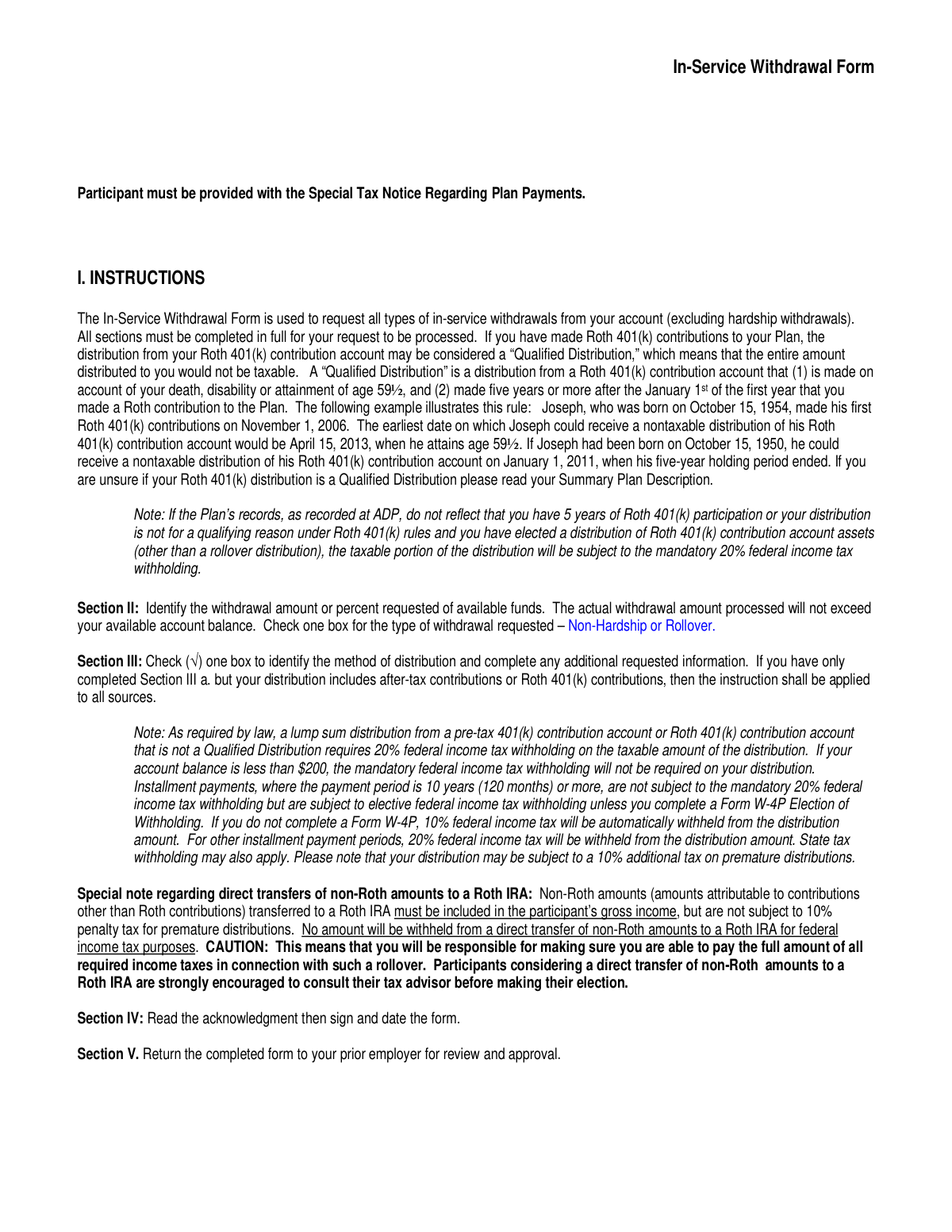
- In-Service Withdrawals: If you are still employed but need to access funds, look for forms like the In-Service Withdrawal Request 401(a) Plan or the AeroVironment Profit Sharing and Salary Deferral 401(k) Plan In-Service Withdrawal Form.
- Separation from Service: If you have recently left your employer, use the Separation from Employment Withdrawal Kit or the Separation from Employment Withdrawal Form (CERF).
Hardship and Emergency Requests
When you need funds for an "immediate and heavy financial need" as defined by the IRS (such as medical bills or preventing eviction), you must use a specific hardship application.
- Use the Hardship Withdrawal Request - Empower, MassMutual Application for Hardship Withdrawal, or TIAA Form F11270 (Request for Hardship Withdrawal). These forms require you to certify the nature of your emergency.
Education and Personal Investment Accounts
For accounts designed for college savings or general investing, the forms are categorized by the institution and the tax status of the account.
- 529 College Savings: Use the Vanguard 529 College Savings Plan: Withdrawal Request Form (529DRF) or the Fidelity Investments Withdrawals—529 College Savings Plan.
- IRAs and Brokerage: For personal accounts, choose the Fidelity One-Time Withdrawal – IRA or the Vanguard Personal Investor Withdrawal form.
Social Security and Insurance
- Social Security: If you need to cancel a previously submitted application for benefits, you must use Form SSA-521, Request for Withdrawal.
- Insurance Premiums: To manage automatic payments for life or disability insurance, use Form DD 688-25, Pre-Authorized Monthly Premium Withdrawals.
Form Comparison
| Form | Account Type | Primary Purpose | Distribution Method |
|---|---|---|---|
| Form SSA-521, Request for Withdrawal | Social Security Benefits | Cancel a previously submitted application for Social Security benefits | Formal reversal of application; may require benefit repayment |
| One-Time Withdrawal – IRA, Fidelity Investments | Traditional, Roth, SEP, or SIMPLE IRA | Request a single, tax-reportable distribution from an IRA account | Check, EFT, bank wire, or transfer to another account |
| Fidelity Investments Withdrawals—529 College Savings Plan | 529 College Savings Plan | Access funds for qualified education expenses or plan rollovers | Payment to account owner, beneficiary, or educational institution |
| Empower Retirement Plan Withdrawal Request Form | Employer-sponsored retirement plans | Access savings due to retirement, termination, or age-based rules | Lump sum, direct rollover, or periodic installments |
| Hardship Withdrawal Request - Empower | 401(k) or similar retirement plan | Emergency withdrawal for immediate and heavy financial needs | Cash distribution to participant, subject to taxes and penalties |
| Separation from Employment Withdrawal Form | 457 Plan or CERF Savings Plan | Withdraw vested funds after leaving a specific employer | Direct payment to individual or rollover to eligible IRA |
| Principal Financial 401(k) Withdrawal Form | Principal Financial 401(k) Plan | General withdrawal for retirement, hardship, or rolling over funds | Direct payout or transfer to another qualified retirement account |
| Equitable Hardship Withdrawal Request (Form E13770) | Equitable-managed retirement plan | Emergency funds for medical bills, tuition, or preventing foreclosure | Immediate cash payout to cover specific qualifying financial hardships |
| TIAA Form F11270, Request for Hardship Withdrawal | TIAA Retirement Plan | Early withdrawal for IRS-defined immediate and heavy financial needs | Cash distribution requiring certification and supporting documentation of hardship |
| Voya Form 83516, Withdrawal Request 401 Corporate ERISA | 401 Corporate ERISA Plan | Request distribution due to termination, retirement, or plan hardship | Full or partial withdrawal via check or rollover transfer |
| The Vanguard 529 College Savings Plan: Withdrawal Request Form | Vanguard 529 Savings Plan | Withdraw funds for qualified education or nonqualified personal use | Check or electronic transfer to owner, beneficiary, or school |
Tips for withdrawal forms
A single digit error in your bank account or routing number can result in funds being sent to the wrong person or returned to the institution. Double-check these numbers against a voided check or your online banking portal before submitting the form to ensure a smooth transfer.
Most retirement and investment withdrawals are considered taxable income and may be subject to mandatory withholding. Review the tax section of the form carefully to ensure you are electing enough withholding to cover your year-end tax liability and avoid potential underpayment penalties.
If you are applying for a hardship withdrawal, most plan administrators require specific documentation like medical bills, eviction notices, or tuition statements. Having these digital files ready before you start the form will prevent the processing delays that occur when documentation is missing.
Filling out multi-page financial documents manually is time-consuming and prone to errors. AI-powered tools like Instafill.ai can complete these withdrawal forms in under 30 seconds with high accuracy while ensuring your sensitive financial data stays secure throughout the process.
When moving funds to another retirement account, ensure you select the 'Direct Rollover' option rather than a cash distribution. Choosing a cash payment, even if you intend to deposit it later, often triggers immediate tax withholding and potential early withdrawal penalties that are difficult to reverse.
Many employer-sponsored retirement plans require a spouse's signature, often notarized, for certain types of distributions. Review the 'Authorization' or 'Signatures' section early in the process to see if you need to coordinate with a spouse or a notary public before submission.
For Social Security forms like the SSA-521, remember that withdrawing an application often requires you to repay all benefits received to date in a single lump sum. Before submitting, confirm that you have the necessary funds available to satisfy this requirement so your request is not rejected by the SSA.
Frequently Asked Questions
Withdrawal forms are legal documents used to request the distribution of funds from financial accounts, such as 401(k) plans, IRAs, 529 college savings plans, or standard brokerage accounts. They allow you to specify the amount you wish to receive, the reason for the request, and how the funds should be delivered to you.
These forms are required by account owners who want to access their savings, former employees moving funds after leaving a company, or beneficiaries who have inherited an account. In some cases, plan trustees or administrators may also use specific versions of these forms to authorize distributions on behalf of a plan.
You should use an 'In-Service' form if you are currently employed by the company sponsoring the retirement plan but wish to access funds due to reaching a certain age or meeting specific plan criteria. A 'Separation from Employment' form is used specifically when you have left your job and need to roll over or cash out your vested balance.
Hardship withdrawals generally require you to prove an immediate and heavy financial need, such as medical expenses, tuition, or preventing eviction. Most financial institutions will require you to certify the reason for the withdrawal and may ask for supporting documentation like invoices or legal notices.
Yes, you can use AI tools like Instafill.ai to complete these complex financial forms in under 30 seconds. The AI accurately extracts data from your source documents and places it into the correct fields, reducing the risk of manual errors that could delay your payment.
While manual entry can take 15 to 30 minutes due to the detailed tax and banking information required, using an AI-powered service like Instafill.ai allows you to finish the process in less than 30 seconds. This ensures that your withdrawal request is ready for submission almost instantly.
A one-time withdrawal is a single, immediate distribution of a specific dollar amount or the full account balance. An automatic or systematic withdrawal plan sets up a recurring schedule, allowing you to receive regular income monthly, quarterly, or annually without filing a new form each time.
Yes, most withdrawal forms include a section for federal and state tax withholding elections, often incorporating or referencing IRS Form W-4R. This allows you to choose how much tax should be taken out of your distribution upfront to avoid potential underpayment penalties.
The submission process depends on the specific financial institution, such as Fidelity, Vanguard, or Empower. Generally, you will submit the form directly to the plan administrator or the financial company via their online portal, secure fax, or traditional mail as specified in the form's instructions.
Many categories of withdrawal forms include specific 'Beneficiary Account' versions designed for individuals who have inherited an account. These forms allow the beneficiary to choose between a lump-sum payment, a rollover into an inherited IRA, or periodic installments based on their specific tax situation.
You can typically choose to receive your funds via a physical check mailed to your address, an Electronic Funds Transfer (EFT) to a linked bank account, or a direct wire transfer. Some forms also allow you to transfer the funds directly into another account held at the same financial institution.
Yes, 529 plans use specific withdrawal forms to distinguish between qualified distributions for educational expenses and non-qualified distributions. Using the correct form is essential for reporting the distribution accurately to the IRS and ensuring you receive the intended tax benefits.
Glossary
- Form Complexity Index
- Instafill’s 0–100 measure of how much effort a form takes to complete, calculated deterministically from the form’s own structure rather than estimated. It combines the number of fillable fields (the largest factor), how difficult those fields are to complete based on their type, the number of pages that contain fields, the amount of conditional “fill-only-if” logic, and how many sections the form is divided into, then adds modifiers for tables and repeating lists, bundled instruction pages, and dense page layouts. A higher score means the form is harder to fill out by hand. The forms in this category have a median Form Complexity Index of 48/100 (Moderate). See exactly how it is calculated.
- Hardship Withdrawal
- An emergency distribution from a retirement plan taken before the age of 59½ to meet an 'immediate and heavy financial need,' such as medical expenses, tuition, or preventing eviction.
- Rollover
- The process of moving funds from one retirement account to another, such as from a 401(k) to an IRA, typically to avoid immediate taxes and early withdrawal penalties.
- In-Service Withdrawal
- A distribution of funds from a retirement account while the participant is still actively employed by the company that sponsors the plan.
- Separation from Employment
- A status change that occurs when you leave a company due to resignation, retirement, or termination, which usually grants you the right to move or withdraw your full retirement balance.
- Vested Balance
- The portion of your retirement account that you legally own and can take with you, including all of your own contributions and the portion of employer-matched funds earned through years of service.
- Qualified Distribution
- A withdrawal from a tax-advantaged account, like a 529 plan or Roth IRA, that is used for IRS-approved purposes (such as education) and is therefore exempt from taxes or penalties.
- Required Minimum Distribution (RMD)
- The minimum amount the IRS requires you to withdraw from your retirement accounts annually once you reach a certain age, typically 72 or 73.
- Tax Withholding (Form W-4R)
- The amount of federal or state income tax taken out of your withdrawal at the time of payment to ensure you meet your tax obligations to the government.