Fill out transfer forms
with AI.
Transfer forms are essential legal and financial documents used to formalize the movement of assets, ownership rights, or professional records between parties. This category covers a broad spectrum of transactions, ranging from the relocation of investment portfolios and retirement savings to the legal transfer of vehicle titles and business licenses. Whether you are moving funds between brokerage accounts or documenting the sale of a property, these forms ensure that the transition is recorded accurately with the relevant financial institutions or government agencies to maintain legal compliance.
By continuing, you acknowledge Instafill's Privacy Policy and agree to get occasional product update and promotional emails.
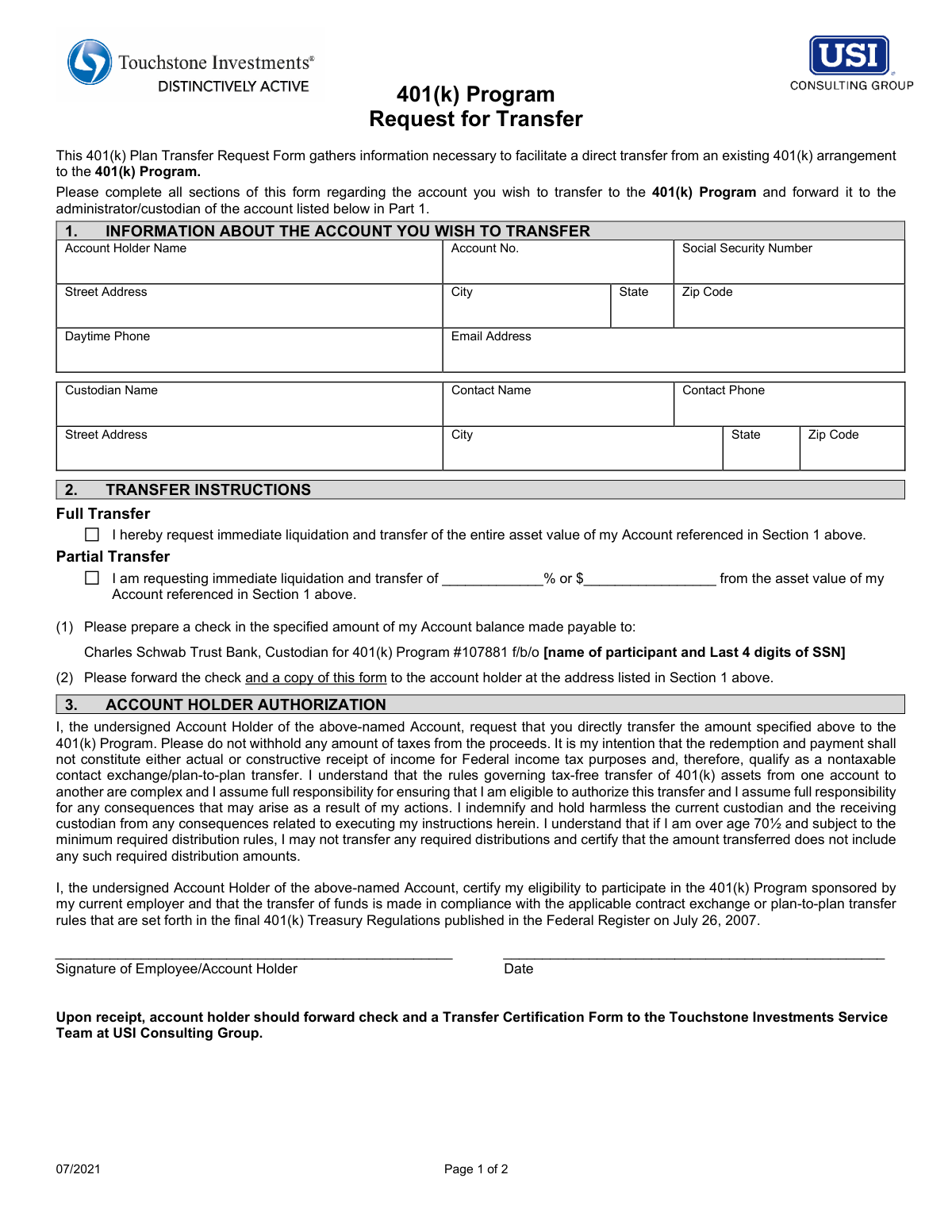
About transfer forms
Typically, these forms are required by individuals navigating significant life changes, such as consolidating retirement accounts like a 401(k) or IRA into a single provider like Fidelity or Vanguard. They are also frequently used by business owners transferring alcoholic beverage licenses or by vehicle owners in states like California using a REG 227 form to update ownership records. Because these documents often involve sensitive financial data and strict regulatory requirements, precision is vital to prevent processing delays or unintended tax consequences. Tools like Instafill.ai use AI to fill these forms in under 30 seconds, handling your data accurately and securely to simplify the process.
By centralizing these various transfer documents, we provide a clear path for anyone needing to update their records or move their holdings. From medical record releases to complex international garnishment orders, having the right paperwork is the first step in a successful transfer. Using modern technology to assist with the data entry ensures that your information is mapped correctly to the right fields every time, saving you the hassle of manual transcription.
Every form on this page can be completed without typing. Instafill is form filling software that reads a PDF and fills it for you — including flat and scanned documents that carry no fillable fields at all.
Forms in This Category
The forms in this category have a median Form Complexity Index of 47/100 (Moderate), measured across 89 forms by field count, input difficulty, length, conditional logic and structure. See how it is calculated.
- Enterprise-grade security & data encryption
- 99%+ accuracy powered by AI
- 1,000+ forms from all industries
- Complete forms in under 60 seconds
How to Choose the Right Form
Transfer forms are essential for moving assets, titles, or records between parties or institutions. To find the correct document, first identify the type of asset you are moving and the institution receiving it.
Investment and Retirement Account Consolidation
If you are moving stocks, mutual funds, or retirement savings to a new brokerage, look for a Transfer of Assets (TOA) or Rollover form specific to the receiving institution:
- Fidelity Users: Use the Fidelity Investments Transfer/Rollover/Exchange Form for 401(k) or IRA consolidations, or the Fidelity Transfer of Assets Form (TOA) for standard brokerage moves.
- Schwab Users: Choose Form APP13017-29, Transfer Your Account to Schwab for general transfers, or the Schwab MoneyLink® Electronic Funds Transfer Form to set up recurring bank-to-brokerage moves.
- Vanguard Users: Select the Vanguard Asset Transfer Authorization for 403(b) plans or the Vanguard Personal Investor – Transfer form for general holdings.
Health and Specialty Savings
Consolidating health or disability savings requires specific tax-compliant forms:
- Health Savings Accounts: Use the Fidelity HSA Group Transfer Form or the HSA Bank Investment Account Transfer Form to move medical savings without tax penalties.
- Disability Savings: For ABLE accounts, use the Fidelity ABLE Account Rollover/Transfer Request Form to move funds from 529 plans or other ABLE providers.
Ownership Changes: Gifting, Divorce, and Death
When a transfer is triggered by a life event rather than a simple consolidation, use these specialized documents:
- Divorce: Use the Fidelity Advisor Transfer Due to Divorce—IRA Form to comply with court-ordered asset splits.
- Inheritance: Use the Vanguard Transfer on Death Plan Form to designate beneficiaries or the Inherited IRA Transfer of Assets/ Direct Rollover Form for Voya accounts.
- Gifting: Use the Transfer Shares as a Gift — Nonretirement form or a general Stock Power Form to change ownership names.
Vehicles, Real Estate, and Business Licenses
For physical assets or regulated business transfers, location-specific forms are required:
- Vehicles: California residents should use Form REG 227, Application for Replacement or Transfer of Title.
- Liquor Licenses: Use DBPR ABT-6002 for transferring Florida alcoholic beverage licenses.
- Real Estate: Use the City of Harvey Real Estate Transfer Declaration & Application for municipal property conveyances in that jurisdiction.
Tips for transfer forms
One of the most common reasons for transfer rejection is a name or title mismatch between the sending and receiving institutions. Before submitting, verify that the account holder's name, tax ID, and account type are identical on both ends of the transaction to avoid processing delays.
High-value financial transfers often require a Medallion Signature Guarantee, which is more rigorous than a standard notary seal. You typically need to visit a physical bank or brokerage branch to obtain this specific stamp before mailing your form, as digital signatures are often not accepted for these specific sections.
AI-powered tools like Instafill.ai can complete these complex transfer forms in under 30 seconds with high accuracy. Your sensitive data stays secure during the process, providing a practical and reliable way to handle high volumes of paperwork without manual data entry.
Not all securities can be moved 'in-kind' between different firms, especially proprietary mutual funds or specific employer-sponsored stock plans. Check with your new provider to see if you need to liquidate certain holdings into cash before initiating the transfer to prevent the form from being returned.
Many transfer forms, such as those for real estate, liquor licenses, or divorce-related IRA splits, require supplemental documents like court decrees, property deeds, or background disclosures. Having digital copies of these attachments ready ensures you can complete and submit the entire package in one sitting.
For electronic funds transfers (EFT) or wire authorizations, a single digit error in a routing or account number can lead to significant delays or misdirected funds. Always cross-reference these numbers with a voided check or an official bank statement to ensure the data is 100% accurate before finalizing the form.
Because financial and asset transfers can take several weeks to process, it is essential to save a copy of the completed and signed form for your own records. This documentation is vital if you need to follow up with a customer service representative to track the status of your assets or resolve any discrepancies.
Frequently Asked Questions
Transfer forms are legal and financial documents used to move ownership of an asset, such as a vehicle, real estate, or investment account, from one party to another. They are also frequently used to consolidate financial holdings, such as moving a 401(k) or HSA from a previous employer's provider to a new institution like Fidelity or Schwab. These forms ensure that the change is documented for tax, legal, and regulatory purposes.
The correct form depends on whether you are moving assets between different firms (External Transfer of Assets) or between accounts at the same firm (Internal Transfer). You should also check if the transfer involves a retirement account, which often requires a specific 'Rollover' form to maintain tax-advantaged status. If the transfer is due to a specific life event like a divorce or a death, most providers offer specialized forms to handle those legal requirements.
A trustee-to-trustee transfer moves funds directly from one financial institution to another without you ever receiving the money, which is generally non-reportable to the IRS. A direct rollover specifically refers to moving assets from an employer-sponsored plan (like a 401(k)) into an IRA or another eligible plan. Both methods are designed to avoid the 20% mandatory federal income tax withholding that applies if the funds are paid directly to you.
Yes, you can use AI tools to complete complex transfer documents efficiently. Platforms like Instafill.ai can fill out these forms in under 30 seconds by accurately extracting data from your existing statements or identification documents and placing it into the correct fields. This helps reduce manual entry errors that often lead to rejected transfer requests.
While manually filling out multi-page financial or state-issued transfer forms can take 15 to 30 minutes, using AI-powered services significantly speeds up the process. With Instafill.ai, users can complete even highly detailed forms in less than half a minute. The AI ensures that repetitive information, such as account numbers and addresses, is consistently and accurately applied throughout the document.
A Medallion Signature Guarantee is a special certification stamp used by financial institutions to confirm that a signature authorizing a securities transfer is genuine. It is often required for high-value transfers, such as gifting large amounts of stock or transferring assets to a different individual's account. Most banks and credit unions provide this service, and it offers a higher level of security than a standard notary public stamp.
Yes, many financial institutions like Fidelity and Vanguard have dedicated 'Transfer Due to Divorce' forms for IRAs, HSAs, and 529 plans. These forms are designed to comply with IRS regulations and typically require a copy of the court-signed divorce decree or separation agreement. Using the correct form ensures the transfer is treated as a non-taxable event under the relevant sections of the Internal Revenue Code.
To transfer a vehicle title, you generally need the vehicle identification number (VIN), the current license plate number, and the names and addresses of both the current owner and the new buyer. If the original title is lost, you may need a specific form like California's REG 227, which functions as both an application for a replacement title and a transfer document. Most states also require a statement of the purchase price to calculate applicable sales tax.
Transferring a professional license usually requires a state-specific application, such as Florida's DBPR ABT-6002 for alcoholic beverage licenses. These forms collect detailed background information on the new owners, including criminal history disclosures and proof of the right to occupy the business premises. Because these transfers are highly regulated, they often require notarized signatures and approval from local zoning or health departments before the state will finalize the change.
The submission process varies depending on the type of form; financial transfer forms are usually submitted to the 'receiving' institution, which then coordinates the pull of assets from your old firm. Government forms, such as real estate declarations or vehicle transfers, are submitted to the specific municipal or state agency (e.g., the DMV or County Clerk). Always check the instructions page of the form, as many institutions now allow for secure digital uploads or faxing rather than traditional mail.
Glossary
- Form Complexity Index
- Instafill’s 0–100 measure of how much effort a form takes to complete, calculated deterministically from the form’s own structure rather than estimated. It combines the number of fillable fields (the largest factor), how difficult those fields are to complete based on their type, the number of pages that contain fields, the amount of conditional “fill-only-if” logic, and how many sections the form is divided into, then adds modifiers for tables and repeating lists, bundled instruction pages, and dense page layouts. A higher score means the form is harder to fill out by hand. The forms in this category have a median Form Complexity Index of 47/100 (Moderate). See exactly how it is calculated.
- ACATS (Automated Customer Account Transfer Service)
- A standardized system used to move stocks, bonds, and mutual funds between different brokerage firms and banks automatically without having to liquidate the assets.
- Medallion Signature Guarantee
- A special certification stamp that confirms a signature's authenticity, typically required by financial institutions for transferring securities to provide a higher level of fraud protection than a standard notary.
- In-Kind Transfer
- The process of moving investments, such as specific shares of stock or mutual funds, directly to a new account without selling them and moving the cash value.
- Trustee-to-Trustee Transfer
- A direct move of funds between two financial institutions (often for IRAs or HSAs) where the money never touches the account holder's hands, preventing it from being taxed as a distribution.
- DTC Number
- A unique four-digit identification code assigned to a brokerage or bank by the Depository Trust Company to facilitate the electronic clearing and settlement of securities.
- 1035 Exchange
- A tax-free transfer of one annuity or life insurance policy for another of like kind, named after the specific section of the Internal Revenue Code that permits it.
- Transfer on Death (TOD)
- A legal designation on a non-retirement account that allows the assets to pass directly to named beneficiaries upon the owner's death, bypassing the lengthy probate process.
- Cost Basis
- The original value of an investment or property for tax purposes, used to determine the capital gain or loss when the asset is eventually sold.