Fill out care licensing forms
with AI.
Care licensing forms are essential regulatory documents used to ensure that care facilities—ranging from child care centers to residential adult care—meet the strict safety and administrative standards set by state authorities like the California Department of Social Services (CDSS). These forms establish a legal framework for operation, documenting everything from facility management structures to individual safety protocols. By maintaining accurate records, providers ensure they remain in compliance with state regulations, which protects both the licensee and the individuals under their care.
By continuing, you acknowledge Instafill's Privacy Policy and agree to get occasional product update and promotional emails.
About care licensing forms
These forms are typically required by facility owners, administrators, and applicants who are either seeking a new license or maintaining an existing one. For example, documents like the Administrative Organization form (LIC 309) are vital when there are changes in corporate leadership or ownership interest. Meanwhile, child care providers rely on specific form packets to manage parent disclosures, emergency medical consents, and immunization records. Whether you are updating a facility's legal structure or onboarding new children, these documents serve as the primary record of accountability for licensing agencies and health departments.
Navigating the administrative burden of these requirements can be time-consuming, but tools like Instafill.ai use AI to fill these forms in under 30 seconds while ensuring data accuracy and security. This allows providers to spend less time on manual data entry and more time focusing on the quality of care they provide to their community.
Every form on this page can be completed without typing. Instafill is form filling software that reads a PDF and fills it for you — including flat and scanned documents that carry no fillable fields at all.
Forms in This Category
The forms in this category have a median Form Complexity Index of 76/100 (Complex), measured across 2 forms by field count, input difficulty, length, conditional logic and structure. See how it is calculated.
- Enterprise-grade security & data encryption
- 99%+ accuracy powered by AI
- 1,000+ forms from all industries
- Complete forms in under 60 seconds
How to Choose the Right Form
Navigating the requirements of the California Department of Social Services (CDSS) can be complex. Whether you are opening a new facility or maintaining compliance for an existing one, choosing the right documentation is essential for meeting Title 22 regulations.
Managing Child Care Enrollment and Compliance
If your primary goal is to enroll a new child or update a student's file to meet California Health and Human Services requirements, you should use the California Department of Social Services (CDSS) Community Care Licensing Child Care Forms Packet. This comprehensive bundle is designed for child care providers and school administrators who need to maintain a complete compliance record for each child.
This packet includes several critical documents, such as:
- LIC 700 & LIC 627: For emergency identification and medical treatment consent.
- CDPH 286: To document immunization records for pre-K through grade 12.
- LIC 9227: For creating individual infant sleeping plans.
- LIC 995A & LIC 282: To ensure parents’ rights and liability insurance disclosures are properly acknowledged.
Defining Your Business and Legal Structure
If you are in the process of applying for a license or need to report a change in your facility's management, the California Department of Social Services (CDSS) Community Care Licensing Division — Administrative Organization (LIC 309) is the correct choice.
Unlike child-specific forms, the LIC 309 focuses on the legal entity operating the facility. You should select this form if you need to:
- Document the legal structure of a Corporation, LLC, or partnership.
- Identify officers, directors, or owners with a 10% or more interest.
- Update the Licensing Agency regarding changes in partners or corporate officers to remain compliant with California Code of Regulations, Title 22.
Summary of Choice
- Choose the Child Care Forms Packet for day-to-day facility operations, student enrollment, and safety documentation.
- Choose LIC 309 for administrative updates, business entity changes, and establishing legal accountability for the facility.
Form Comparison
| Form | Purpose | Primary Audience | Frequency of Use | Key Information Tracked |
|---|---|---|---|---|
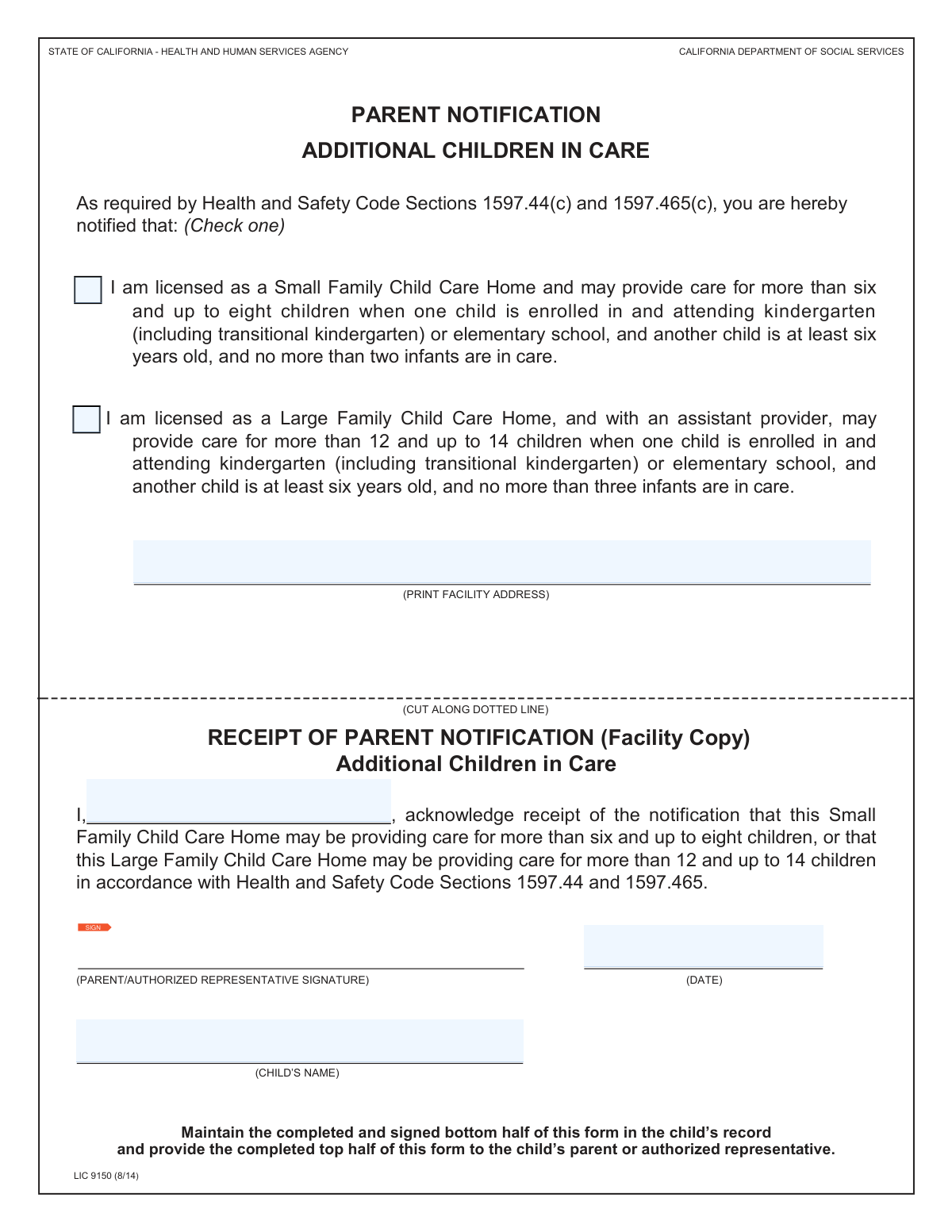
| California Department of Social Services (CDSS) Community Care Licensing Child Care Forms Packet (LIC 9150, LIC 282, LIC 627, LIC 700, LIC 995A, CDPH 286, LIC 9227) | Documents statutory requirements for child care enrollment, safety, and medical consent. | Parents, guardians, and child care facility operators. | Required at initial enrollment and for school entry compliance. | Emergency contacts, immunization records, liability disclosures, and infant sleep plans. |
| California Department of Social Services (CDSS) Community Care Licensing Division — Administrative Organization (LIC 309) | Identifies the legal and administrative management structure of the facility licensee. | Facility applicants, licensees, and corporate or LLC officers. | Submitted during application or whenever organizational leadership changes. | Names of officers, directors, and owners with 10% or more interest. |
Tips for care licensing forms
When completing administrative forms like the LIC 309, double-check that the names of officers, directors, and owners match your legal articles of incorporation exactly. Even minor discrepancies in ownership percentages or legal names can lead to delays in licensing approval or compliance audits.
Child care packets contain multiple distinct forms like emergency consents and immunization records. Save a master copy of each completed packet for every child in a secure digital folder so you can quickly update individual forms, such as the sleeping plan, as the child's needs change.
AI-powered tools like Instafill.ai can complete these complex licensing forms in under 30 seconds with high accuracy. Your data stays secure during the process, making it a major time-saver when you need to process multiple child care packets or administrative updates simultaneously.
California regulations require you to update the Licensing Agency whenever there are changes to your facility's partners or corporate structure. Keeping these forms updated ensures your facility remains in good standing and that the state has the correct contact information for legally responsible parties.
Ensure that the emergency contact information on the LIC 700 matches the details provided on the LIC 627 (Consent for Emergency Medical Treatment). Consistency between these forms is critical for first responders and facility staff during an actual emergency situation.
Forms like the CDPH 286 require specific data from healthcare providers regarding a child's vaccination history. Before submitting the packet, verify that all dates are legible and that the form is fully signed to avoid being flagged during a regulatory inspection.
Many care licensing forms, such as the Parents’ Rights Acknowledgement, require signatures from both the facility representative and the parent or guardian. Missing signatures are one of the most common reasons for form rejection, so perform a final sweep of all signature lines before filing.
Frequently Asked Questions
Individuals and organizations operating community care facilities, such as child care centers, family child care homes, and residential care facilities, must complete these forms. They are used to comply with California Department of Social Services (CDSS) regulations and ensure the safety and legal accountability of the facility.
The child care forms packet, which includes documents like LIC 700 and LIC 627, is designed to create a comprehensive record for each child in care. These forms document emergency contacts, medical consent, immunization status, and parent rights, which must be kept on-site for regulatory compliance and emergency preparedness.
Form LIC 309 must be updated and submitted to the Licensing Agency whenever there are changes to your facility's legal or management structure. This includes changes in partners, corporate officers, or owners who hold a 10% or more interest in the entity operating the facility.
Most administrative forms are submitted to your local regional office of the CDSS Community Care Licensing Division. However, many child-specific forms, such as the Emergency Information and Consent forms, are meant to be kept in the facility's active files for immediate access and state inspection.
Yes, you can use AI-powered tools like Instafill.ai to complete these forms quickly. The AI accurately extracts data from your source documents and places it into the correct fields on the official CDSS forms in under 30 seconds.
While manual completion of a full licensing packet can take significant time, using AI automation can reduce the process to less than a minute. AI tools ensure that data is placed precisely in the required boxes, which helps avoid errors and speeds up the submission process.
Yes, the legal and administrative documentation requirements apply to all licensed community care facilities regardless of their tax status. Any entity listed as a licensee must provide accurate organizational information to the state to maintain their operating license.
These forms capture critical safety data including individual infant sleeping plans, immunization records, and authorized persons for child pick-up. This information ensures that the facility can respond appropriately during medical emergencies and remains in compliance with state health mandates.
Forms like the LIC 995A ensure that parents are fully informed of their legal rights and the facility's responsibilities. Keeping a signed copy on file is a regulatory requirement that protects both the provider and the families by documenting that all necessary disclosures were made.
Maintaining incomplete or outdated records can lead to compliance violations during a state inspection. Licensing evaluators check these files to ensure the facility is operating safely and legally; failures can result in citations, fines, or actions against the facility's license.
Glossary
- Form Complexity Index
- Instafill’s 0–100 measure of how much effort a form takes to complete, calculated deterministically from the form’s own structure rather than estimated. It combines the number of fillable fields (the largest factor), how difficult those fields are to complete based on their type, the number of pages that contain fields, the amount of conditional “fill-only-if” logic, and how many sections the form is divided into, then adds modifiers for tables and repeating lists, bundled instruction pages, and dense page layouts. A higher score means the form is harder to fill out by hand. The forms in this category have a median Form Complexity Index of 76/100 (Complex). See exactly how it is calculated.
- CDSS
- The California Department of Social Services, the state agency responsible for the oversight and administration of social service programs, including care facility licensing.
- CCLD
- The Community Care Licensing Division, a branch of the CDSS that monitors and inspects licensed care facilities to ensure they meet health and safety standards.
- Title 22
- A specific set of California state regulations that outline the legal requirements for operating community care facilities, such as child care centers and residential homes.
- Licensee
- The person or legal entity, such as a corporation or LLC, that holds the license to operate a care facility and is legally responsible for its operation.
- Administrative Organization
- A formal document detailing the legal structure of a facility, including the names of officers, directors, and any owners with a 10% or greater interest.
- Liability Insurance Disclosure
- A mandatory notification that informs parents or guardians whether the care provider carries insurance coverage for injuries that might occur on the premises.
- Individual Infant Sleeping Plan
- A required form for infants under one year old that documents safe sleep practices and schedules to ensure compliance with SIDS prevention guidelines.
- Statutory Requirement
- A rule or obligation that is strictly defined by state law or legislation, which facilities must follow to maintain their license and avoid penalties.