Fill out money transfer forms
with AI.
Money transfer forms are essential documents used to authorize the movement of funds between different financial institutions. These forms serve as a bridge between your brokerage accounts and your traditional bank accounts, ensuring that financial transactions are handled securely and according to specific legal and regulatory standards. By providing a formal record of authorization for either one-time or recurring electronic fund transfers (EFTs), these documents protect both the account holder and the financial institution from unauthorized activity.
By continuing, you acknowledge Instafill's Privacy Policy and agree to get occasional product update and promotional emails.
About money transfer forms
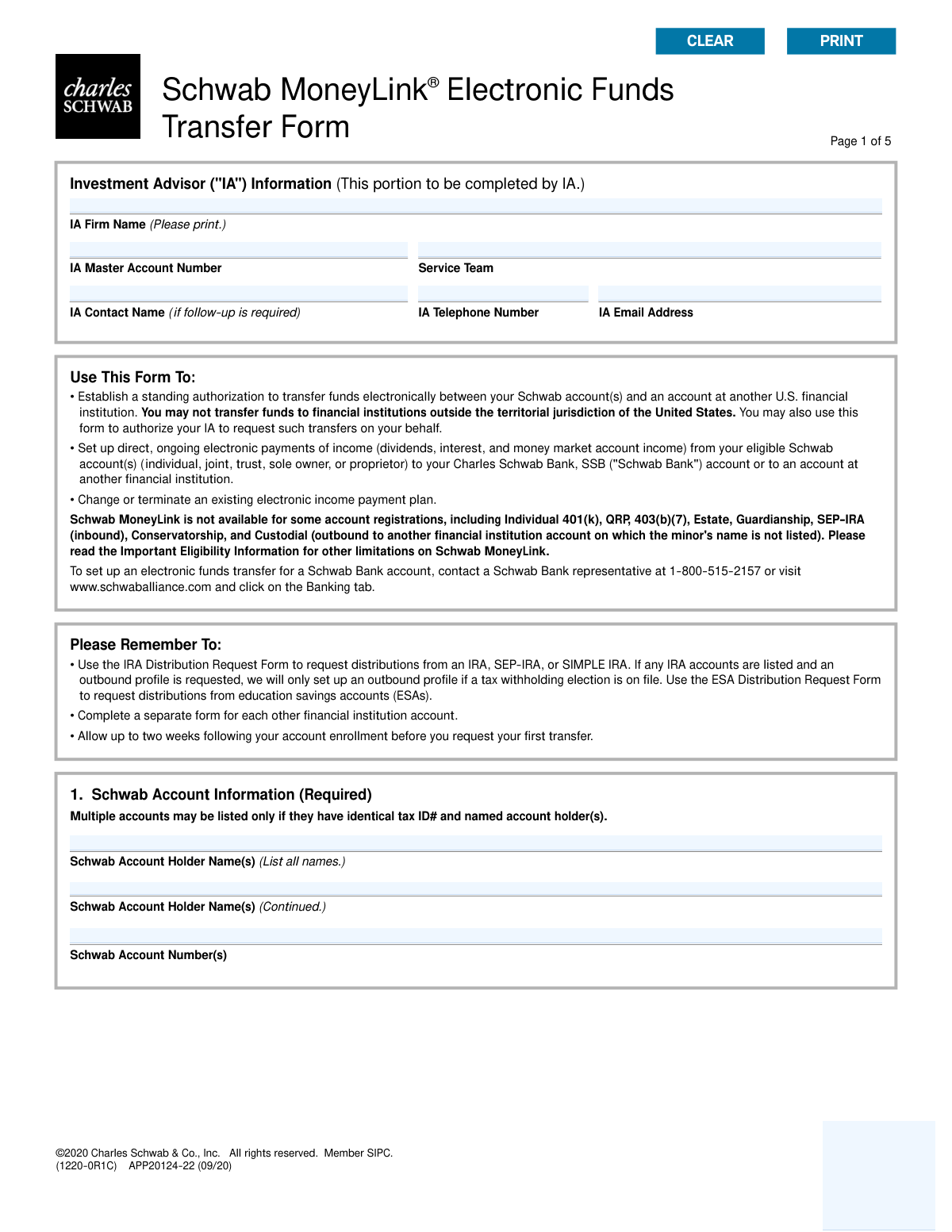
These forms are typically required by individuals managing their investment portfolios, small business owners streamlining their cash flow, or financial advisors acting on behalf of their clients. Whether you are setting up a direct deposit for investment income, establishing a recurring transfer to fund a retirement account, or moving money to a checking account for daily expenses, having the correct documentation is vital. For example, documents like the Schwab MoneyLink® Electronic Funds Transfer Form allow users to establish standing authorizations that simplify long-term financial management without the need for repeated manual requests.
Manually entering bank routing numbers and sensitive account details into these documents can be tedious and prone to human error. Tools like Instafill.ai use AI to fill these forms in under 30 seconds, ensuring that data is handled accurately and securely. This technology streamlines the process by automatically populating required fields, helping you complete your financial paperwork quickly so you can focus on your broader financial goals.
Every form on this page can be completed without typing. Instafill is form filling software that reads a PDF and fills it for you — including flat and scanned documents that carry no fillable fields at all.
Forms in This Category
The forms in this category have a median Form Complexity Index of 45/100 (Basic), measured across 2 forms by field count, input difficulty, length, conditional logic and structure. See how it is calculated.
| Form Name | Pages | FCI | |
|---|---|---|---|
| 1. | Schwab MoneyLink® Electronic Funds Transfer Form (09/20) | 1 | Basic 45 |
| 2. | Schwab MoneyLink® Electronic Funds Transfer Form (12/15) | 1 | Basic 42 |
- Enterprise-grade security & data encryption
- 99%+ accuracy powered by AI
- 1,000+ forms from all industries
- Complete forms in under 60 seconds
How to Choose the Right Form
Selecting the right document for moving your capital ensures that your financial transactions are processed securely and without delay. In this category, the primary tool for Charles Schwab clients is the Schwab MoneyLink® Electronic Funds Transfer Form. While the form name remains the same, how you use it depends on your specific banking needs.
Establishing New Connections
If you are linking your Schwab account to an external U.S. bank for the first time, you will use the Schwab MoneyLink® Electronic Funds Transfer Form to create a "standing authorization." This is necessary for:
- On-Request Transfers: Moving money manually between accounts at your convenience.
- Direct Deposits: Automatically routing investment income, such as dividends or interest, directly to your external checking or savings account.
Automating Your Finances
For users looking to put their savings or withdrawals on autopilot, the Schwab MoneyLink® Electronic Funds Transfer Form allows you to set up recurring transfers. This is the ideal choice for monthly contributions to a brokerage account or regular distributions for living expenses.
Professional Advisor Permissions
If you work with a financial professional, you can use the Schwab MoneyLink® Electronic Funds Transfer Form to grant an Investment Advisor the authority to initiate transfers on your behalf. This ensures your advisor can manage your liquidity and investment capital efficiently without requiring a new form for every transaction.
Modifying or Ending a Link
You do not need a separate document to change your current setup. The Schwab MoneyLink® Electronic Funds Transfer Form is also used to:
- Modify existing banking instructions or update account numbers.
- Terminate a standing authorization that is no longer required.
Using Instafill.ai, you can quickly complete these forms by converting non-fillable PDFs into interactive documents, ensuring all banking details are captured accurately before submission.
Form Comparison
| Form | Primary Purpose | Transfer Types | Key Requirements |
|---|---|---|---|
| Schwab MoneyLink® Electronic Funds Transfer Form | Establish standing authorization for electronic transfers between Schwab and U.S. banks. | One-time, recurring transfers, and direct deposit of investment income. | U.S. bank account details and signature for electronic fund authorization. |
| Schwab MoneyLink® Electronic Funds Transfer Form | Set up, modify, or terminate standing authorization for electronic fund transfers. | On-request transfers, recurring transfers, or direct payment of dividends. | Financial institution information and Schwab account number for setup. |
| Schwab MoneyLink® Electronic Funds Transfer Form | Authorize electronic movement of funds to or from another U.S. bank. | Recurring payments, direct deposit, or advisor-initiated transfer requests. | Authorization for third-party advisors or personal bank account verification. |
Tips for money transfer forms
Ensure that the names and account numbers on your money transfer forms exactly match your bank statements. Even a minor typo in the routing or account number can lead to rejected transfers or funds being sent to the wrong destination.
Clearly specify whether you are setting up a one-time transfer or a standing recurring authorization. For dividend or interest payments, ensure you select the correct frequency to automate your investment income without manual intervention.
AI-powered tools like Instafill.ai can complete these forms in under 30 seconds with high accuracy, ensuring all financial fields are mapped correctly. Your data stays secure during the process, providing a practical and fast solution for managing multiple transfer requests.
Since these forms contain sensitive data like Social Security and bank account numbers, always submit them through secure portals or encrypted mail. Avoid sending completed PDFs via standard, unencrypted email to protect your financial identity from potential breaches.
Many financial institutions require a voided check or a bank letter to verify account ownership when setting up electronic transfers. Having a digital scan of these documents ready to attach to your form will prevent processing delays during the verification stage.
If you are authorizing an Investment Advisor to move funds, ensure you understand the scope of their access. You can typically choose between allowing them to initiate transfers only to your own linked accounts or to external third parties.
For joint accounts, most money transfer forms require signatures from all named account holders to be valid. Missing a signature is a common reason for form rejection, so double-check that every required party has signed before final submission.
Frequently Asked Questions
These forms are used to establish a legal, standing authorization for moving funds electronically between a brokerage account and an external U.S. bank account. They allow account holders to initiate one-time transfers, set up recurring deposits, or direct investment income to another financial institution.
You will generally need the account numbers for both the sending and receiving accounts, along with the ABA routing number for the external bank. Additionally, personal identification details and signatures from all authorized account holders are required to verify the request.
Yes, AI-powered tools like Instafill.ai can help you complete these forms by accurately extracting data from your source documents and placing it into the correct fields. This ensures that sensitive information like routing numbers and account details are transcribed without manual entry errors.
While manual entry can be time-consuming due to the precision required for financial data, AI tools can fill these forms in under 30 seconds. These platforms automate the process by identifying the required fields and populating them instantly from your uploaded documents.
Most standard electronic funds transfer forms in this category are designed specifically for transfers between U.S.-based financial institutions. For moving money to a bank outside of the United States, you will likely need to request a specific international wire transfer form.
Yes, many money transfer forms include a section that allows you to grant an Investment Advisor the authority to initiate transfers on your behalf. This is a common feature for those who want their advisor to manage the movement of assets for investment or distribution purposes.
A one-time transfer is a single transaction for a specific amount, while a recurring transfer establishes a schedule for moving money automatically at set intervals, such as monthly or quarterly. Both options can typically be authorized using the same standing authorization form.
Many financial institutions require a voided check or a recent bank statement to be submitted alongside the transfer form. This documentation is used to verify that the account and routing numbers provided are accurate and that you are the owner of the external account.
Once the form is filled out and signed, it should be submitted to the financial institution where the primary account is held. Most firms accept these documents via secure online upload through their client portal, though some may still require submission via mail or fax.
After submitting the form, the financial institution typically takes a few business days to verify the external bank account details. Once the authorization is established, electronic transfers usually take between one and three business days to process depending on the banking network used.
Glossary
- Form Complexity Index
- Instafill’s 0–100 measure of how much effort a form takes to complete, calculated deterministically from the form’s own structure rather than estimated. It combines the number of fillable fields (the largest factor), how difficult those fields are to complete based on their type, the number of pages that contain fields, the amount of conditional “fill-only-if” logic, and how many sections the form is divided into, then adds modifiers for tables and repeating lists, bundled instruction pages, and dense page layouts. A higher score means the form is harder to fill out by hand. The forms in this category have a median Form Complexity Index of 45/100 (Basic). See exactly how it is calculated.
- EFT (Electronic Funds Transfer)
- A digital method of moving money from one financial institution to another without the use of paper checks or cash.
- ACH (Automated Clearing House)
- The primary electronic network used in the United States to process financial transactions, including direct deposits and recurring payments.
- Standing Authorization
- A continuous legal permission granted to a financial institution to move funds whenever a request is made, remaining in effect until the owner cancels it.
- Routing Number
- A unique nine-digit code that identifies a specific U.S. bank or credit union during the electronic transfer process.
- Account Title
- The exact name or names of the individuals, trusts, or entities that legally own the bank or brokerage account.
- Recurring Transfer
- An automated movement of funds that occurs on a regular, pre-set schedule, such as monthly or quarterly.
- Direct Deposit
- The electronic transfer of income, such as dividends or interest, directly into a designated bank account rather than receiving a physical check.
- Investment Advisor (IA) Authorization
- A provision that allows a professional financial advisor to initiate money transfers on behalf of the account holder without needing a signature for every transaction.