Fill out self employment forms
with AI.
Self-employment forms are the tax and financial documents that independent workers, freelancers, sole proprietors, and small business owners need to accurately report their income and meet their obligations with the IRS. Unlike traditional employees who receive a W-2, self-employed individuals are responsible for tracking their own earnings, deductible expenses, and calculating taxes owed — all of which require specific forms designed for that purpose. Getting these forms right matters because errors can affect how much tax you owe, your eligibility for deductions, and whether you trigger an audit.
By continuing, you acknowledge Instafill's Privacy Policy and agree to get occasional product update and promotional emails.
About self employment forms
The most common example in this category is Schedule C (Form 1040), which sole proprietors use to report business profit or loss directly on their personal tax return. Anyone running a business as an individual — whether a freelance designer, independent contractor, or small shop owner — typically needs to file this form each tax year. The figures reported on Schedule C flow directly into your self-employment tax calculation, making accuracy especially important.
Filling out these forms can be time-consuming, particularly when tracking down expense categories or deciphering IRS instructions. Tools like Instafill.ai use AI to fill these forms in under 30 seconds, handling the details accurately so you can focus on running your business rather than wrestling with paperwork.
Every form on this page can be completed without typing. Instafill is form filling software that reads a PDF and fills it for you — including flat and scanned documents that carry no fillable fields at all.
Forms in This Category
The forms in this category have a median Form Complexity Index of 68/100 (Complex), measured across 5 forms by field count, input difficulty, length, conditional logic and structure. See how it is calculated.
| Form Name | Pages | FCI | |
|---|---|---|---|
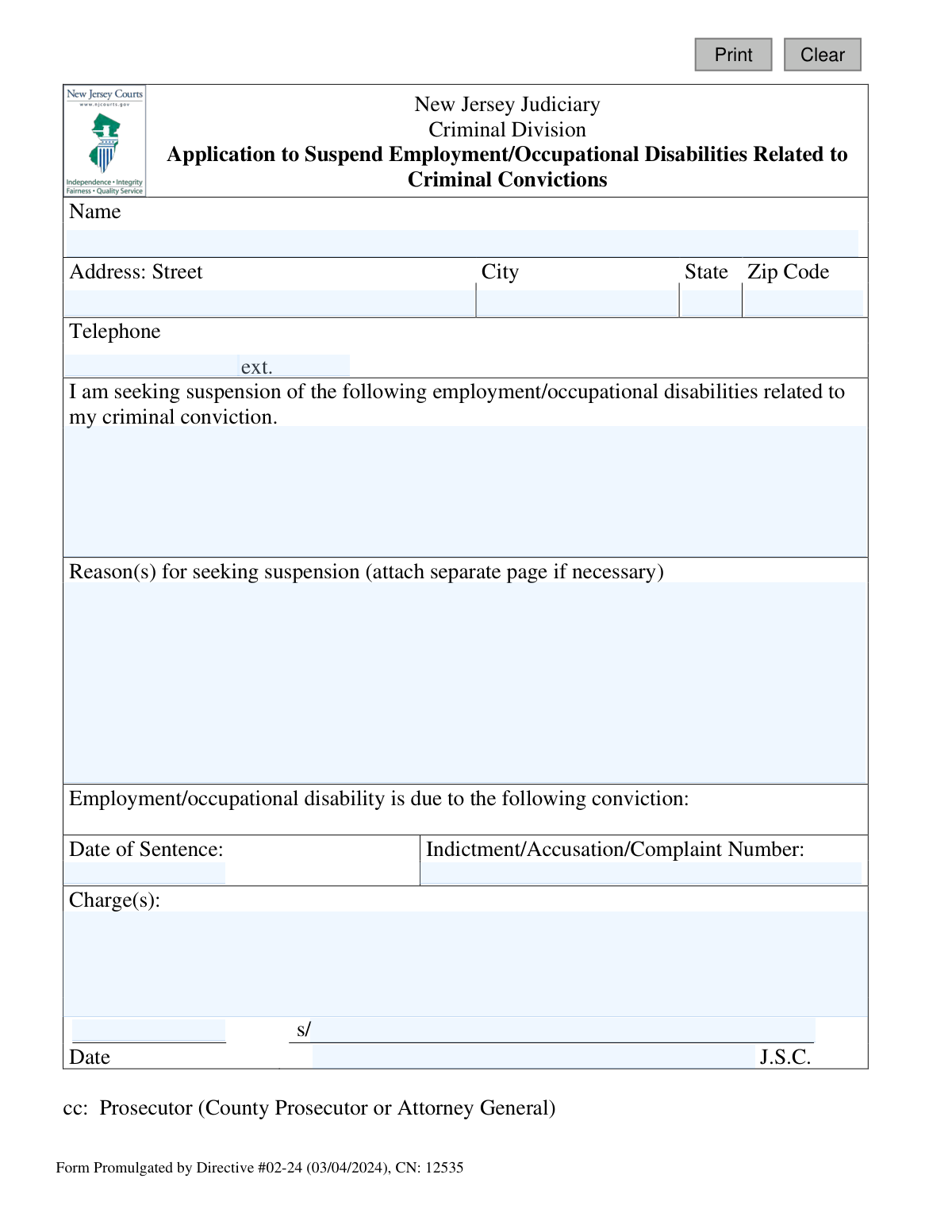
| 1. | Application to Suspend Employment/Occupational Disabilities Related to Criminal Convictions (CN: 12535) | 1 | Simple 28 |
| 2. | Form 204B, Statement of Self-Employment Income | 2 | Complex 72 |
| 3. | Form DISC-002, Form Interrogatories—Employment Law | 1 | Basic 44 |
| 4. | Form IL444-2790, Self-Employment Record | 2 | Complex 70 |
| 5. | Form SSA-820-BK, Work Activity Report - Self-Employment | 10 | Complex 68 |
- Enterprise-grade security & data encryption
- 99%+ accuracy powered by AI
- 1,000+ forms from all industries
- Complete forms in under 60 seconds
How to Choose the Right Form
With only one form in this category, the decision is straightforward — but it helps to know exactly who needs Schedule C and when.
Who Should Use Schedule C (Form 1040)
Schedule C (Form 1040), Profit or Loss From Business is the go-to form if you:
- Are a sole proprietor running your own business (not incorporated as an LLC, S-Corp, or C-Corp)
- Work as a freelancer, independent contractor, or gig worker (rideshare, delivery, consulting, etc.)
- Received a 1099-NEC or 1099-K for self-employment income
- Operate a side business in addition to a regular W-2 job
- Run a single-member LLC that has not elected corporate tax treatment
What Schedule C Covers
This form handles everything related to your self-employment finances in one place:
- Gross receipts and sales from your business
- Cost of goods sold (if you sell physical products)
- Deductible business expenses — advertising, supplies, phone, software, and more
- Vehicle use for business purposes
- Home office deductions
The net profit or loss you calculate on Schedule C flows directly into your Form 1040 and determines how much self-employment tax you owe.
When You Might Need Additional Forms
Schedule C alone may not cover every situation:
- If you have employees, you'll also need payroll tax forms (e.g., Form 941)
- If your net earnings exceed $400, you'll likely need Schedule SE to calculate self-employment tax
- If you use a home office, consider Form 8829 alongside Schedule C
Bottom Line
If you're self-employed as a sole proprietor or single-member LLC, Schedule C is the form you need. Fill it out accurately using Instafill.ai's AI-powered tools to avoid common errors that could affect your tax liability.
Form Comparison
| Form | Purpose | Who Files It | When to Use |
|---|---|---|---|
| Schedule C (Form 1040), Profit or Loss From Business (Sole Proprietorship) | Report business income, expenses, and net profit or loss | Sole proprietors and single-member LLC owners | Annually when filing federal income tax return |
Tips for self employment forms
Don't wait until tax season to gather receipts and records. Keeping a running log of business expenses — including mileage, supplies, and software subscriptions — throughout the year makes completing Schedule C far less stressful and reduces the risk of missing deductible items.
One of the most common mistakes sole proprietors make is mixing personal and business transactions in the same bank account. Using a dedicated business account or credit card makes it much easier to accurately report gross receipts and expenses on Schedule C without guesswork.
If you use part of your home exclusively and regularly for business, you may qualify for a home office deduction on Schedule C. Many self-employed filers skip this legitimate deduction simply because they're unaware of it or unsure how to calculate it — both the simplified and regular methods are worth exploring.
The net profit or loss calculated on Schedule C flows directly into your Form 1040 and is also used to calculate self-employment tax (typically filed alongside Schedule SE). Underreporting income or overclaiming expenses doesn't just risk an audit — it can throw off your entire tax liability calculation.
AI-powered tools like Instafill.ai can complete Schedule C in under 30 seconds with high accuracy, pulling the right information into the right fields automatically. Your data stays secure throughout the process, making it a practical time-saver for self-employed individuals juggling multiple tax documents at once.
If you use a vehicle for business purposes, the IRS requires detailed records including dates, destinations, business purposes, and mileage. Failing to maintain a mileage log is one of the most common audit triggers for Schedule C filers, so consider using a mileage tracking app throughout the year.
Schedule C asks for gross receipts first, then deducts cost of goods sold and business expenses to arrive at net profit. First-time filers often confuse total revenue with taxable profit — make sure you're reporting the correct figures in each section to avoid errors that could delay processing or trigger a review.
Frequently Asked Questions
Self employment forms are IRS tax documents used by individuals who work for themselves, including freelancers, independent contractors, and sole proprietors. Anyone who earns income outside of traditional employment — without having taxes withheld by an employer — generally needs to report that income using these forms. The most common is Schedule C (Form 1040), which sole proprietors use to report business profit or loss.
Schedule C is an IRS form attached to your Form 1040 that reports the income and expenses from your sole proprietorship or self-employed business activity. The net profit or loss calculated on Schedule C directly impacts both your federal income tax and your self-employment tax liability, making accurate completion critical. It covers everything from gross receipts and cost of goods sold to deductible business expenses and home office deductions.
Generally, if your net self-employment earnings exceed a certain threshold (currently $400 or more), you are required to file a Schedule C and pay self-employment tax. Even if your business operated at a loss, filing Schedule C can be beneficial because it may allow you to deduct that loss against other income. It's always a good idea to consult IRS guidelines or a tax professional to confirm your specific filing obligations.
Self employment forms like Schedule C are filed as part of your annual federal tax return, which is typically due by April 15th of the following year. If you are self-employed, you may also be required to make quarterly estimated tax payments throughout the year to cover your income and self-employment tax obligations. Missing these deadlines can result in penalties and interest charges.
Schedule C is submitted to the IRS as an attachment to your Form 1040 — it is not filed separately. You can submit your return electronically through IRS e-file or by mailing a paper return to the appropriate IRS processing center. Most tax software and online filing services support electronic submission, which is generally faster and provides confirmation of receipt.
Schedule C allows you to deduct a wide range of ordinary and necessary business expenses, including advertising, office supplies, professional fees, travel, vehicle use, and home office costs. You can also deduct the cost of goods sold if your business involves selling products. Keeping thorough records and receipts throughout the year is essential to accurately report and substantiate these deductions.
The forms you use depend on your business structure. Sole proprietors and single-member LLCs typically use Schedule C as their primary self employment form, while partnerships, S-corporations, and C-corporations file different returns. If you are unsure which category your business falls into, the IRS website and a tax professional can help you identify the correct forms for your situation.
Yes — AI-powered tools like Instafill.ai can fill out self employment forms such as Schedule C in under 30 seconds by accurately extracting and placing data from your source documents. This significantly reduces the time spent on manual data entry and helps minimize errors. The platform can also convert non-fillable PDF versions of IRS forms into interactive, fillable documents.
Filling out self employment forms manually can take anywhere from 30 minutes to several hours depending on the complexity of your business finances. Using AI tools like Instafill.ai, the data extraction and form-filling process can be completed in under 30 seconds, leaving you to review and verify the information before submission. Having your financial records organized in advance will further speed up the process.
No — sole proprietors do not file a separate business tax return. Instead, business income and expenses are reported on Schedule C, which is attached to the owner's personal Form 1040. This is one of the simpler tax structures available, as business and personal taxes are combined into a single annual filing.
You should keep records of all business income received, including invoices and payment confirmations, as well as receipts and documentation for every deductible expense. Mileage logs, bank statements, and records of any assets purchased for business use are also important. The IRS generally recommends retaining these records for at least three years after filing.
Yes — many people have both W-2 employment income and self-employment income in the same tax year. In this case, you would report your salaried income on your Form 1040 as usual and attach a Schedule C to report your additional self-employment business activity. Both income sources are combined to determine your total tax liability.
Glossary
- Form Complexity Index
- Instafill’s 0–100 measure of how much effort a form takes to complete, calculated deterministically from the form’s own structure rather than estimated. It combines the number of fillable fields (the largest factor), how difficult those fields are to complete based on their type, the number of pages that contain fields, the amount of conditional “fill-only-if” logic, and how many sections the form is divided into, then adds modifiers for tables and repeating lists, bundled instruction pages, and dense page layouts. A higher score means the form is harder to fill out by hand. The forms in this category have a median Form Complexity Index of 68/100 (Complex). See exactly how it is calculated.
- Schedule C
- An IRS tax form attached to Form 1040 that sole proprietors use to report business income, expenses, and net profit or loss for the tax year. The resulting figure flows directly into your personal tax return and determines how much self-employment tax you owe.
- Self-Employment Tax (SE Tax)
- A tax covering Social Security and Medicare contributions for individuals who work for themselves, since no employer withholds these taxes on their behalf. It is calculated on Schedule SE based on the net profit reported on Schedule C.
- Sole Proprietorship
- The simplest business structure where one individual owns and operates an unincorporated business, with no legal distinction between the owner and the business. All profits and losses are reported on the owner's personal tax return via Schedule C.
- Net Profit or Loss
- The amount remaining after all allowable business expenses are subtracted from gross business income. A net profit increases your taxable income, while a net loss may reduce it.
- Gross Receipts
- The total revenue your business earned from sales or services before any expenses or deductions are subtracted. This is the starting figure used on Schedule C to calculate your net profit or loss.
- Cost of Goods Sold (COGS)
- The direct costs associated with producing or purchasing the products your business sells, including materials and inventory. COGS is deducted from gross receipts on Schedule C to determine gross profit.
- Home Office Deduction
- A tax deduction available to self-employed individuals who use a portion of their home regularly and exclusively for business purposes. The deductible amount can be calculated using either the simplified method or actual expense method on Schedule C.
- Deductible Business Expenses
- Ordinary and necessary costs incurred in running your business that the IRS allows you to subtract from your gross income, such as advertising, supplies, insurance, and professional fees. Properly claiming these expenses reduces your taxable net profit.
- Estimated Quarterly Taxes
- Periodic tax payments that self-employed individuals are generally required to make four times a year to cover income tax and self-employment tax, since no employer withholds taxes from their pay. Underpaying can result in IRS penalties.
- Form 1040
- The standard U.S. individual federal income tax return filed annually with the IRS. Schedule C is attached to this form so that self-employment income and losses are included in the taxpayer's overall personal tax calculation.