Fill out lease application forms
with AI.
Lease application forms are the foundation of the tenant and business screening process, giving landlords, property managers, and commercial lenders the information they need to make informed decisions. These forms typically gather personal or business identification details, rental and employment history, income verification, references, and consent for background and credit checks. Whether you're applying for a residential unit or seeking commercial equipment financing, completing these documents accurately and thoroughly is essential — errors or omissions can delay approval or result in an application being rejected outright.
By continuing, you acknowledge Instafill's Privacy Policy and agree to get occasional product update and promotional emails.
About lease application forms
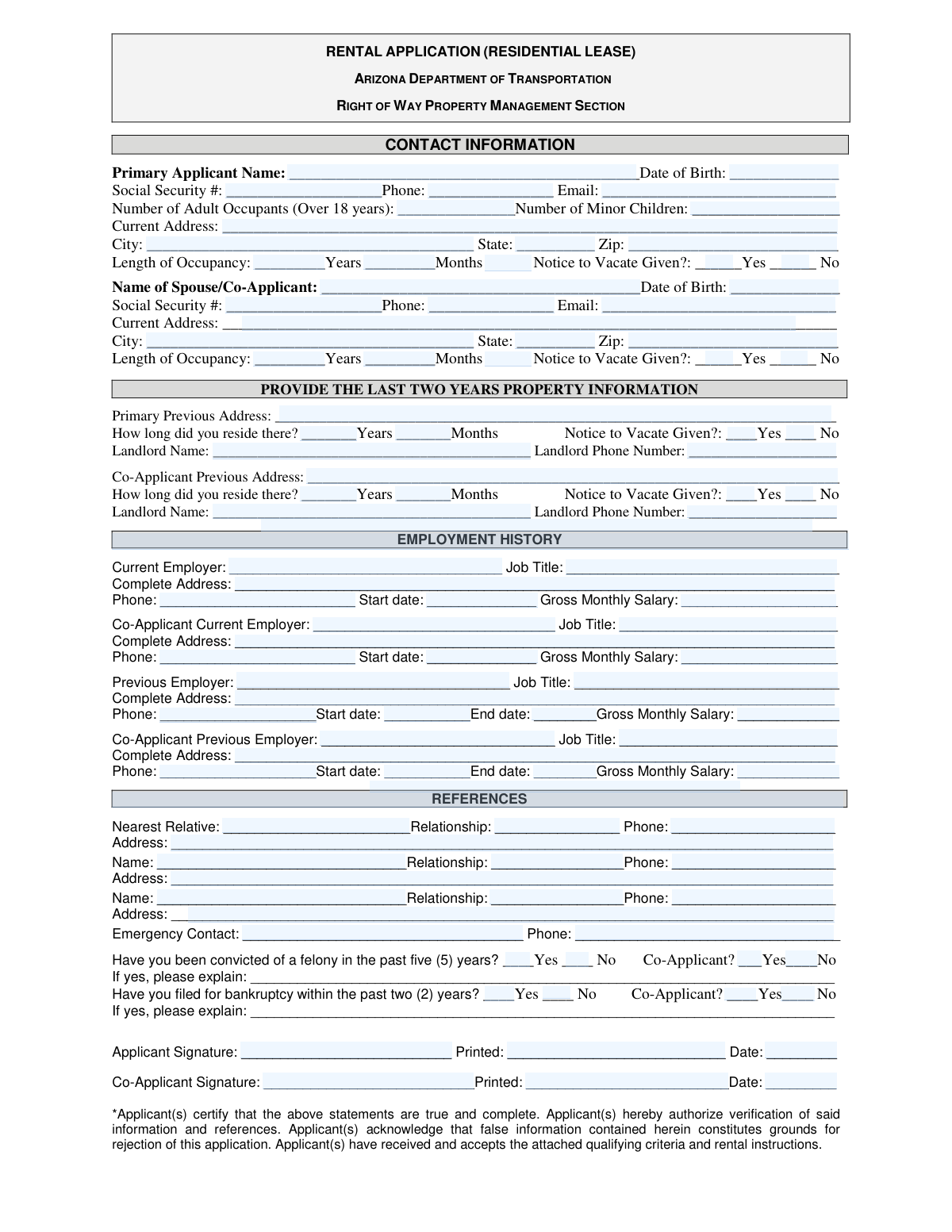
Residential applicants, small business owners, and companies seeking commercial leases or equipment financing are the most common users of forms in this category. For example, a prospective tenant applying through a property management company like Inland Residential Real Estate Services would complete a standard rental application, while a business seeking commercial credit would submit a form like the Commercial and Lease Application to support underwriting decisions. Both scenarios require careful attention to detail and accurate disclosure of financial and personal information.
Tools like Instafill.ai use AI to fill these forms in under 30 seconds, handling the data accurately and securely — a practical time-saver whether you're a first-time renter or a business navigating commercial financing paperwork.
Every form on this page can be completed without typing. Instafill is form filling software that reads a PDF and fills it for you — including flat and scanned documents that carry no fillable fields at all.
Forms in This Category
The forms in this category have a median Form Complexity Index of 72/100 (Complex), measured across 7 forms by field count, input difficulty, length, conditional logic and structure. See how it is calculated.
- Enterprise-grade security & data encryption
- 99%+ accuracy powered by AI
- 1,000+ forms from all industries
- Complete forms in under 60 seconds
How to Choose the Right Form
Are You Applying as an Individual or a Business?
The most important question to ask before choosing a form in this category is whether you're applying as an individual renter or a business entity. These two forms serve very different purposes.
For Individual Renters
- Inland Residential Real Estate Services LLC Application for Lease (Form 4301) is designed for prospective residential tenants applying to rent a specific unit.
- Use this form if you're an individual (or household) seeking to rent an apartment or home managed by Inland Residential Real Estate Services.
- It collects personal details like rental history, employment, income, occupants, pets, and vehicles — everything a residential landlord needs to screen a tenant.
- It also covers fair housing disclosures and authorizes background and credit checks.
For Businesses Seeking Equipment Financing or Commercial Leases
- Commercial and Lease Application (Commercial Credit Application, Rev. 02/2023) is built for business applicants — not individual renters.
- Choose this form if your company is applying for commercial equipment financing or a business lease, and you need to provide business details, guarantor information, and business references.
- This form is tied to NMLS ID: 22437 and includes Equal Credit Opportunity Act disclosures, making it specific to commercial credit underwriting.
- It's ideal for sole proprietors, partnerships, or corporations seeking equipment or asset financing through a commercial lender.
Quick Decision Summary
| Situation | Use This Form |
|---|---|
| Renting a residential unit as an individual | Form 4301 (Inland Residential) |
| Applying for a business/commercial lease or equipment financing | Commercial Credit Application (Rev. 02/2023) |
If you're still unsure, check whether the application asks for a Social Security Number (residential) or a business EIN and references (commercial) — that's a reliable indicator of which form fits your situation.
Form Comparison
| Form | Purpose | Who Files It | When to Use |
|---|---|---|---|
| Inland Residential Real Estate Services LLC Application for Lease (Form 4301, Rev. 11/14) | Screen prospective tenants for a residential rental unit | Individual applicants seeking to rent a residential property | Applying for a residential lease at an Inland-managed property |
| Commercial and Lease Application (Commercial Credit Application) (Rev. 02/2023) | Evaluate businesses for commercial equipment financing or lease | Business owners, proprietors, or guarantors seeking commercial credit | Applying for commercial equipment financing or a business lease |
Tips for lease application forms
Lease and credit applications ask for specific details like employer contact information, monthly income figures, landlord references, and business financials. Having pay stubs, tax returns, bank statements, and reference contact info on hand before you begin prevents incomplete submissions and delays in approval.
Mismatched names, incorrect Social Security numbers, or transposed digits on business EINs are among the most common reasons applications get flagged or rejected. Cross-reference your entries against your official ID or business registration documents before submitting.
Reviewers and underwriters expect every field to be addressed. If a section doesn't apply to you — such as a pet policy field or a co-guarantor section — write 'N/A' rather than leaving it empty, which can signal an incomplete or careless application.
Both residential and commercial lease applications include consent clauses authorizing background checks, credit pulls, and information sharing with affiliates. Read these sections carefully so you know what data will be accessed and who may receive it before you sign.
If you're applying to multiple properties or submitting both a personal and commercial lease application, AI-powered tools like Instafill.ai can complete these forms accurately in under 30 seconds — pulling in your details consistently across forms. Your data stays secure throughout the process, making it a practical time-saver when you're juggling multiple applications at once.
Residential lease applications typically require you to list every person who will live in the unit and all vehicles that will be parked on the property. Omitting an occupant or vehicle can be treated as misrepresentation and may affect your tenancy, so be thorough and honest.
Commercial lease and credit applications require business references with full contact details. Vague or incomplete references slow down the underwriting process — include full business names, phone numbers, and account numbers where applicable to keep your application moving forward.
Save a completed copy of each lease or credit application you submit, whether as a PDF or printed document. This protects you if disputes arise about what was disclosed, and it gives you a ready reference if you need to fill out a similar application for another property or lender.
Frequently Asked Questions
This category includes two forms: the Inland Residential Real Estate Services LLC Application for Lease (Form 4301) for prospective residential tenants, and the Commercial and Lease Application for businesses seeking commercial equipment financing or leasing. Each form is tailored to its respective context — personal rental screening or business credit evaluation.
Anyone applying to rent a residential unit managed by Inland Residential Real Estate Services LLC will need to complete Form 4301. This includes all prospective adult tenants who will occupy the unit, as landlords typically require each applicant to submit their own application for screening purposes.
The Commercial and Lease Application is designed for businesses applying for commercial equipment financing or leasing arrangements. It is typically completed by business owners, proprietors, or authorized representatives who are seeking credit approval and must provide business details, guarantor information, and references.
Residential lease applications generally require personal identification, contact details, rental history, employment and income information, occupant details, pet and vehicle information, and emergency contacts. Commercial lease applications typically request business information, ownership details, financial references, and guarantor information to support underwriting decisions.
Yes, both forms in this category include authorization sections where applicants consent to background and credit checks. Residential applicants authorize the property manager to obtain consumer reports covering credit, rental, and criminal history, while commercial applicants authorize the lender to pull business credit reports and share information with affiliates or partners.
Yes. The residential lease application includes fair housing disclosures to ensure applicants are evaluated without discrimination. The commercial application includes Equal Credit Opportunity Act (ECOA) notices, which protect business applicants from discrimination in credit decisions. Reviewing these disclosures before signing is always recommended.
Residential lease applications are typically submitted directly to the property manager or leasing office overseeing the unit you are applying for. Commercial lease applications are submitted to the financing company or lender identified on the form. Always confirm submission instructions with the requesting party, as some organizations accept digital submissions while others require physical copies.
Application fees vary depending on the property manager or lender and are not set by the forms themselves. Residential applications may include a processing or screening fee to cover background check costs, while commercial applications may have their own underwriting fees. Check directly with the organization requesting the form for current fee information.
Yes. AI-powered tools like Instafill.ai can fill out lease application forms in under 30 seconds by accurately extracting and placing your information from source documents. This is especially useful for the Commercial and Lease Application, where Instafill.ai can also convert non-fillable PDF versions into interactive fillable forms.
Manually completing a lease application can take anywhere from 10 to 30 minutes depending on the complexity of the form and how much information you have on hand. Using an AI tool like Instafill.ai, the same forms can be completed in under 30 seconds by automatically populating fields from your existing documents.
After submission, the property manager or lender will review your application, verify the information provided, and typically run the authorized background or credit checks. For residential applications, you will usually receive a decision within a few business days. Commercial applications may take longer depending on the complexity of the credit review and underwriting process.
Both forms require applicant signatures to certify the accuracy of the information provided and to authorize background or credit checks. Whether electronic signatures are accepted depends on the property manager or lender requesting the form — it is best to confirm their preferred signing method before submitting.
Glossary
- Form Complexity Index
- Instafill’s 0–100 measure of how much effort a form takes to complete, calculated deterministically from the form’s own structure rather than estimated. It combines the number of fillable fields (the largest factor), how difficult those fields are to complete based on their type, the number of pages that contain fields, the amount of conditional “fill-only-if” logic, and how many sections the form is divided into, then adds modifiers for tables and repeating lists, bundled instruction pages, and dense page layouts. A higher score means the form is harder to fill out by hand. The forms in this category have a median Form Complexity Index of 72/100 (Complex). See exactly how it is calculated.
- Consumer Report
- A report obtained from a credit bureau or reporting agency that includes information about an individual's credit history, rental history, and/or criminal background, used by landlords to evaluate a prospective tenant's reliability.
- Guarantor
- A person or entity that agrees to be legally responsible for fulfilling the lease or loan obligations if the primary applicant fails to do so, commonly required when an applicant has limited credit history.
- Underwriting
- The process by which a lender or property manager evaluates the financial risk of approving an applicant, using information such as income, credit history, and employment to make an approval decision.
- NMLS ID
- A unique identifier assigned by the Nationwide Multistate Licensing System to mortgage and financial services companies, used to verify a lender's registration and regulatory compliance.
- Equal Credit Opportunity Act (ECOA)
- A federal law that prohibits lenders and landlords from discriminating against applicants based on race, color, religion, national origin, sex, marital status, age, or receipt of public assistance.
- Fair Housing Disclosure
- A statement included in rental applications informing applicants of their legal protections against housing discrimination under federal, state, and local fair housing laws.
- Rental History
- A record of an applicant's previous rental residences, including landlord contact information and payment behavior, used by property managers to assess how responsibly an applicant has handled past tenancies.
- Commercial Equipment Financing
- A type of business credit arrangement in which a lender provides funds for a company to acquire or lease equipment, with the equipment often serving as collateral for the loan.
- Proprietor
- The sole owner of an unincorporated business, who is personally liable for the business's debts and obligations and whose personal financial information is typically required on a commercial credit application.