Fill out practitioner forms
with AI.
Practitioner forms are essential administrative tools used to verify the qualifications, legal standing, and professional history of individuals providing specialized services. These documents serve as a bridge between practitioners and the regulatory bodies, health plans, or government departments that oversee their work. Whether it is for medical credentialing, legal representation, or specialized licensing, these forms ensure that practitioners meet the rigorous standards required to operate safely and legally within their respective fields.
By continuing, you acknowledge Instafill's Privacy Policy and agree to get occasional product update and promotional emails.
About practitioner forms
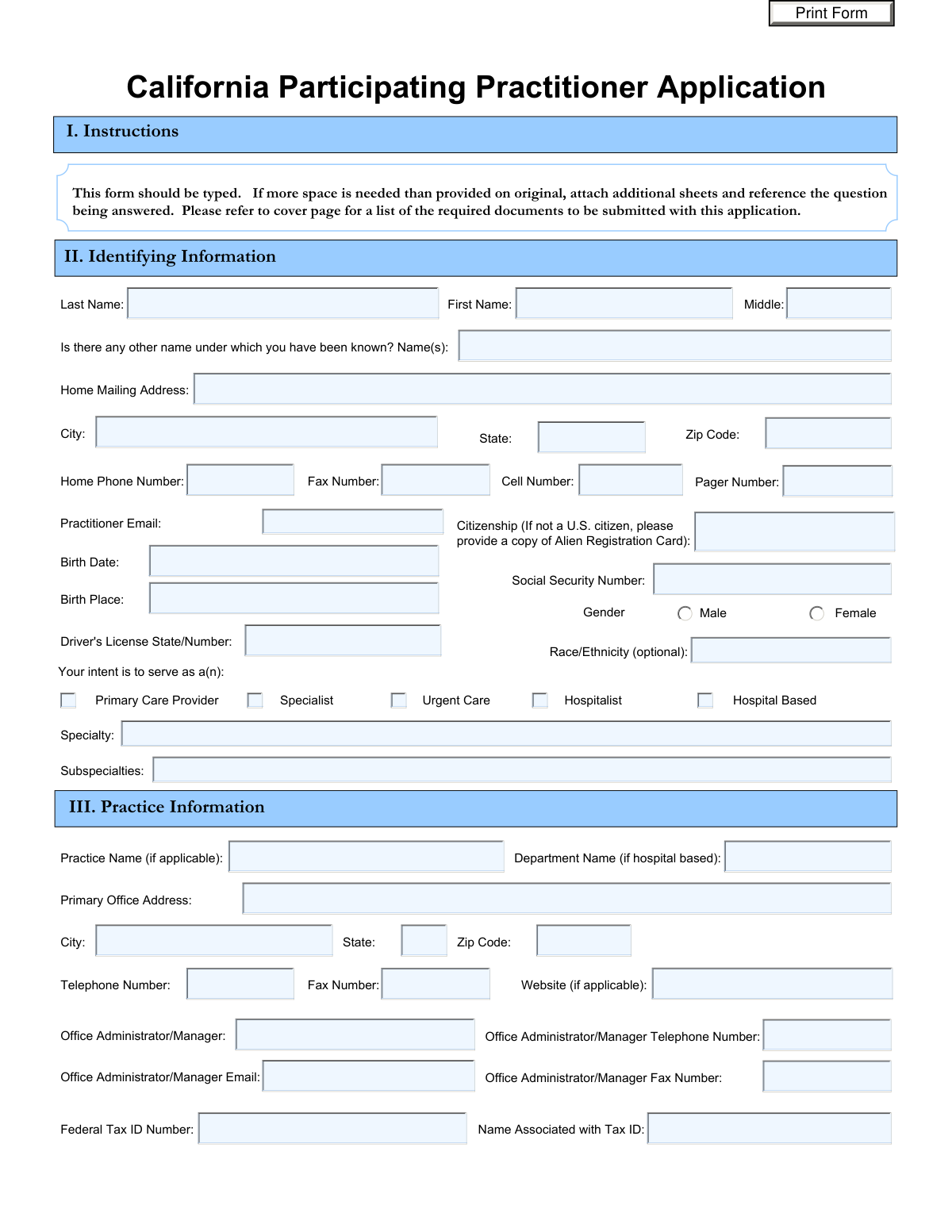
This category typically serves healthcare providers, legal professionals, and registered agents who need to maintain their professional standing or authorize their work on behalf of clients. For instance, medical professionals often use the Oregon Practitioner Credentialing Application or the California Participating Practitioner Application (CPPA) to secure privileges at hospitals or join insurance networks. Meanwhile, immigration specialists use forms like the Australian Department of Home Affairs Form 956 to officially notify authorities of their appointment as a legal representative. Accurate completion is critical, as even minor errors or omissions can lead to significant delays in approval, loss of privileges, or the inability to represent clients effectively.
Navigating these complex documents can be time-consuming, but tools like Instafill.ai use AI to fill these forms in under 30 seconds while ensuring data is handled accurately and securely. This allows busy practitioners to focus on their clients and patients rather than administrative paperwork.
Every form on this page can be completed without typing. Instafill is form filling software that reads a PDF and fills it for you — including flat and scanned documents that carry no fillable fields at all.
Forms in This Category
The forms in this category have a median Form Complexity Index of 85/100 (Very Complex), measured across 10 forms by field count, input difficulty, length, conditional logic and structure. See how it is calculated.
- Enterprise-grade security & data encryption
- 99%+ accuracy powered by AI
- 1,000+ forms from all industries
- Complete forms in under 60 seconds
How to Choose the Right Form
Navigating practitioner forms often depends on your specific industry and geographic location. This category includes standardized applications for healthcare credentialing, legal representation in immigration matters, and specialized local permits.
Healthcare Credentialing by State
If you are a medical professional applying for hospital privileges or seeking to join a health plan network, your choice depends on the state where you practice. These forms are standardized to simplify the verification of your education, licensure, and work history:
- Oregon: Use the Oregon Practitioner Credentialing Application for all hospitals and health plans within the state. Ensure you include Attachment A if you need to detail professional liability actions.
- California: Use the California Participating Practitioner Application (CPPA). This is the industry-standard form for both initial credentialing and recredentialing across California health plans and provider organizations.
Australian Immigration Representation
Legal practitioners and migration agents must notify the government when they begin or end representation for a client.
- Form 956, Appointment of a registered migration agent, legal practitioner or exempt person: This is the primary form used to authorize a representative to act on a client's behalf for a specific visa application or cancellation matter.
- Department of Home Affairs — Appointment or cessation notification: Use this form specifically to advise the Department of the start or end of an authorized person’s role in providing immigration assistance. It ensures that all written communication is directed to the correct authorized recipient.
Specialized Local Licensing
For practitioners in the personal services industry within specific jurisdictions:
- Contra Costa Environmental Health Division Body Arts Practitioner Application: Choose this form if you are a tattoo artist, piercer, or permanent makeup professional operating in Contra Costa County, California. This application is required to prove compliance with the California Safe Body Art Act, including bloodborne pathogen training and vaccination records.
Form Comparison
| Form | Primary Purpose | Industry Sector | Geographic Scope |
|---|---|---|---|
| Oregon Practitioner Credentialing Application (including Attachment A: Professional Liability Action Detail) | Standardized application for medical credentialing with hospitals and health plans. | Healthcare / Medical | Oregon, USA |
| Department of Home Affairs — Appointment or cessation of a registered migration agent, legal practitioner or exempt person providing immigration assistance (Appointment notification form) | Notifies the department about the start or end of immigration representation. | Immigration / Legal | Australia |
| California Participating Practitioner Application (CPPA) | Comprehensive credentialing and recredentialing for practitioners across multiple health plans. | Healthcare / Medical | California, USA |
| Form 956, Appointment of a registered migration agent, legal practitioner or exempt person | Authorizes a representative to provide immigration assistance and receive official communications. | Immigration / Legal | Australia |
| Contra Costa Environmental Health Division Body Arts Practitioner Application | Registration for practitioners of tattooing, piercing, and permanent cosmetics. | Body Art / Public Health | Contra Costa County, California |
Tips for practitioner forms
Many practitioner forms, such as the CPPA or Oregon credentialing application, require an uninterrupted work history and current peer references. Gaps in your timeline or missing contact information for references can cause significant delays in the credentialing process or even lead to a denial of privileges.
Whether you are registering as a body art practitioner in Contra Costa or a migration agent in Australia, you will need to attach proof of training, insurance, or licensure. Scan these documents early so you can quickly upload or reference them while completing the primary application forms.
Managing multiple practitioner forms can be time-consuming, but AI-powered tools like Instafill.ai can complete these forms in under 30 seconds with high accuracy. Your sensitive professional data stays secure during the process, making it a real time-saver for professionals dealing with high volumes of paperwork.
For immigration matters involving Form 956, it is vital to notify the Department of Home Affairs immediately when a practitioner's appointment ends. Failing to submit a cessation notice can lead to sensitive correspondence being sent to the wrong party, potentially compromising client confidentiality.
Forms like the Oregon Credentialing Application include specific attachments for professional liability action details. Providing clear, honest explanations for any past claims prevents red flags during the verification phase and ensures the reviewing committee has the full context of your professional standing.
Standardized forms like the CPPA are designed to be processed through specific administrative workflows. Avoid changing the wording or formatting of the questions, as this can lead to the form being rejected by health plans or hospitals that utilize automated data entry systems.
Errors in your NPI, DEA, or state license numbers are the most common reasons for practitioner form rejection. Verify these digits against your official certificates before submission to ensure your identity is correctly linked to your professional records across different jurisdictions.
Frequently Asked Questions
Practitioner forms are specialized documents used to verify the qualifications, legal status, or representative authority of a professional. They are commonly used in healthcare for credentialing, in legal settings for designating representation, and in local government for licensing specialized services like body art.
These forms are usually completed by healthcare providers (such as doctors and nurses), legal practitioners, migration agents, or specialized service providers like tattoo artists. They are required by hospitals, health plans, government agencies, or regulatory bodies to ensure the individual is authorized to practice or represent a client.
You generally need these forms if you are a healthcare provider seeking to join a hospital staff or a health plan network within those specific states. Organizations in Oregon and California use standardized forms like the ACPCI or CPPA to streamline the evaluation of your training, licensure, and professional history.
Form 956 is used to notify the Australian Department of Home Affairs that a registered migration agent, legal practitioner, or exempt person has been appointed to provide immigration assistance. It establishes who is authorized to receive communications and act on behalf of a client for specific visa or citizenship matters.
While requirements vary, you will typically need to provide proof of professional liability insurance, state licenses, educational transcripts, and certifications. Some forms, such as the body art application, also require proof of specific training like bloodborne pathogen courses and vaccination records.
Yes, you can fill out practitioner forms using AI-powered tools. Services like Instafill.ai can accurately extract your professional data from source documents and place it into the correct fields of the PDF, completing the entire process in under 30 seconds.
Manually filling out complex practitioner forms can take several hours due to the extensive work history and credentialing data required. However, using AI tools like Instafill.ai allows you to complete these applications in under 30 seconds by automatically mapping your information to the form's fields.
Submission instructions depend on the specific form and the organization requesting it. Credentialing applications are usually sent to the medical staff office of a hospital or the provider relations department of a health plan, while immigration and environmental health forms are submitted directly to the relevant government agency.
Inaccurate or incomplete information can lead to significant delays in your ability to practice or receive payment. In some cases, omissions or misstatements are viewed as grounds for the denial of privileges or the termination of your participation in a health plan network.
Most of these forms are designed for both initial appointments and periodic recredentialing or renewals. For example, the CPPA in California is used for the initial evaluation of a practitioner as well as the regular updates required to maintain their status within a provider organization.
Yes, specific forms like the Australian Department of Home Affairs notification allow you to indicate the 'cessation' of an appointment. This ensures that the government agency stops sending sensitive client correspondence to you once your professional relationship with the client has concluded.
Regulatory bodies and health plans use your professional liability history to assess risk and ensure you meet their insurance requirements. Providing detailed information about past actions or settlements, often via supplemental attachments, is a standard requirement for maintaining professional transparency.
Glossary
- Form Complexity Index
- Instafill’s 0–100 measure of how much effort a form takes to complete, calculated deterministically from the form’s own structure rather than estimated. It combines the number of fillable fields (the largest factor), how difficult those fields are to complete based on their type, the number of pages that contain fields, the amount of conditional “fill-only-if” logic, and how many sections the form is divided into, then adds modifiers for tables and repeating lists, bundled instruction pages, and dense page layouts. A higher score means the form is harder to fill out by hand. The forms in this category have a median Form Complexity Index of 85/100 (Very Complex). See exactly how it is calculated.
- Credentialing
- The formal process of verifying a healthcare practitioner's qualifications, experience, and professional standing to ensure they are competent to provide services.
- NPI (National Provider Identifier)
- A unique 10-digit identification number issued to healthcare providers in the United States to improve the efficiency of electronic health information exchange.
- Attestation
- A legally binding statement where the applicant confirms that the information provided in the form is true, accurate, and complete.
- DEA/CSR Registration
- Federal or state certifications that allow healthcare practitioners to prescribe, dispense, or administer controlled substances.
- Authorized Recipient
- A person formally designated to receive all official written correspondence from a government agency, such as the Department of Home Affairs, on behalf of a client.
- CME (Continuing Medical Education)
- Ongoing educational activities required for healthcare professionals to maintain their licenses and stay current in their specific field of practice.
- Migration Agent
- A professional registered to provide immigration assistance and advice, specifically regarding visa applications and representation in Australian migration matters.
- Body Art Practitioner
- An individual who performs procedures such as tattooing, body piercing, or permanent cosmetics, requiring specific health department registration and safety training.