Fill out tax exemption forms
with AI.
Tax exemption forms are official documents that allow individuals, businesses, and organizations to legally avoid paying certain taxes — or to document why a tax was not collected on a transaction. This category covers a range of forms, from sales and use tax exemption certificates used by businesses purchasing goods for resale, to income tax schedules that help individuals claim dependent exemptions and earned income credits. Getting these forms right matters: errors or omissions can lead to unexpected tax liability, compliance issues, or delayed credit approvals.
By continuing, you acknowledge Instafill's Privacy Policy and agree to get occasional product update and promotional emails.
About tax exemption forms
These forms are typically needed by business owners applying for trade credit and sales tax exemptions across multiple states, retailers and purchasers documenting tax-free transactions (such as Texas Form 01-339), and individual taxpayers filing state income tax returns who need to claim dependents or credits like the Illinois Earned Income Tax Credit. The situations vary widely, but the common thread is that accuracy and completeness are essential — a missing permit number or an incorrect exemption reason can create real legal and financial consequences.
Because these forms often require pulling together information from multiple sources — business registration numbers, federal tax figures, bank references — they can be time-consuming to complete manually. Tools like Instafill.ai use AI to fill these forms in under 30 seconds, handling the data accurately and securely so you can focus on what actually needs your attention.
Every form on this page can be completed without typing. Instafill is form filling software that reads a PDF and fills it for you — including flat and scanned documents that carry no fillable fields at all.
Forms in This Category
The forms in this category have a median Form Complexity Index of 48/100 (Moderate), measured across 5 forms by field count, input difficulty, length, conditional logic and structure. See how it is calculated.
- Enterprise-grade security & data encryption
- 99%+ accuracy powered by AI
- 1,000+ forms from all industries
- Complete forms in under 60 seconds
How to Choose the Right Form
Tax exemption forms serve various purposes, ranging from avoiding sales tax on business inventory to claiming personal income tax credits. To choose the right form, first determine if you are handling a business-to-business transaction or filing your personal state tax return.
Business Purchases and Resale Certificates
If you are a business owner or purchasing agent looking to buy goods without paying sales tax because you intend to resell them, you need a resale or exemption certificate. The choice depends on your vendor and your location:
- For WestRock Customers: Use the WestRock Credit Application and Uniform Sales & Use Tax Exemption/Resale Certificate. This is a specialized multijurisdictional packet. Choose this if you are seeking trade credit directly from WestRock while simultaneously establishing your tax-exempt status across multiple states.
- For Texas-Based Transactions: Use Form 01-339, Texas Sales and Use Tax Resale Certificate / Texas Sales and Use Tax Exemption Certification. This is the standard document required for transactions governed by Texas tax laws. Use the front side for resale (which requires a permit number) and the back side for specific exemptions, such as manufacturing or non-profit use.
Individual Income Tax Exemptions
If you are an individual filer looking to reduce your state income tax liability or claim credits based on your household status, you need a state-specific schedule rather than a resale certificate.
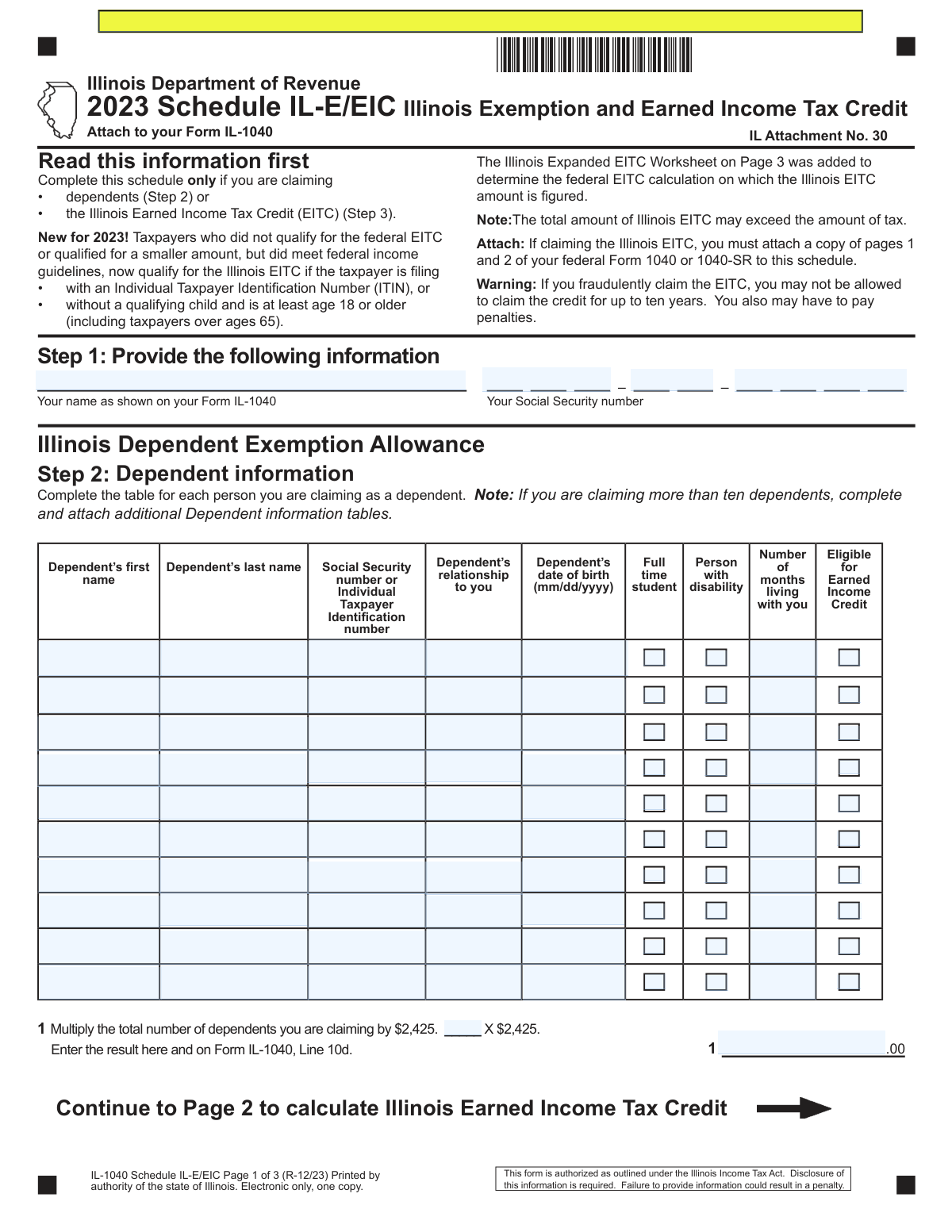
- For Illinois Residents: Use the 2023 Schedule IL-E/EIC, Illinois Exemption and Earned Income Tax Credit. This form must be attached to your IL-1040. Select this form if you are claiming dependent exemptions or the Illinois Earned Income Tax Credit, including cases where you may have an ITIN or are an older filer newly eligible under the 2023 state expansion.
Quick Selection Guide
- Buying for resale in Texas? Select Form 01-339.
- Setting up a business account with WestRock? Select the WestRock Credit Application.
- Filing Illinois personal taxes with dependents? Select Schedule IL-E/EIC.
Form Comparison
| Form | Purpose | Tax Type | Jurisdiction | Key Requirement |
|---|---|---|---|---|
| WestRock Credit Application and Uniform Sales & Use Tax Exemption/Resale Certificate — Multijurisdiction | Combines trade credit application with multi-state sales tax exemption for business purchases. | Sales & Use Tax and Business Credit | Multijurisdictional (multiple participating states) | Requires company financials, trade references, and state-specific tax registration numbers. |
| Form 01-339, Texas Sales and Use Tax Resale Certificate / Texas Sales and Use Tax Exemption Certification | Documents tax-free purchases for resale or specific exempt uses within Texas. | Sales & Use Tax | Texas | Requires a Texas Sales Tax Permit Number or a valid exemption reason. |
| 2023 Schedule IL-E/EIC, Illinois Exemption and Earned Income Tax Credit (Illinois Department of Revenue) | Calculates dependent exemptions and Earned Income Tax Credit for state income returns. | Personal Income Tax | Illinois | Requires federal tax data, dependent details, and residency or ITIN information. |
Tips for tax exemption forms
When filling out resale certificates like the Texas Form 01-339, ensure the business name and tax ID exactly match your state-issued permit. Even minor discrepancies can lead to the certificate being rejected by suppliers or flagged during a tax audit.
Use a Resale Certificate when purchasing items intended for resale or lease to customers. Use an Exemption Certification when the item itself is exempt from tax based on how it will be used, such as in manufacturing or for a non-profit organization.
Managing multiple tax exemption and credit forms can be tedious and prone to manual error. AI-powered tools like Instafill.ai can complete these forms in under 30 seconds with high accuracy, ensuring your data stays secure during the process.
For forms like the Illinois Schedule IL-E/EIC, have your federal Form 1040 ready. These state-level exemption schedules rely heavily on federal figures to calculate dependent allowances and earned income credits, so accuracy on your federal return is crucial.
The Uniform Sales & Use Tax Exemption Certificate is accepted by many states, but not all. Before submitting a multi-jurisdiction form to a vendor, verify that the specific state where the transaction occurs recognizes this format to avoid unexpected tax charges.
Always maintain a digital folder of every exemption certificate you provide to sellers. In the event of a state tax audit, you will need to prove why sales tax was not paid on specific business purchases or credit applications.
Business credit applications that include tax exemptions, such as the WestRock packet, often require an authorized signature from an officer or owner. Ensure the signer has the legal authority to bind the company to the terms to prevent processing delays.
Frequently Asked Questions
Tax exemption forms allow individuals or businesses to legally avoid paying sales tax on specific purchases or to claim deductions that reduce their overall tax liability. These documents are essential for ensuring that taxes are only collected at the appropriate stage of a transaction, such as at the final point of sale to a consumer.
A resale certificate is a specific type of exemption form used by businesses to buy inventory or materials that will be resold, leased, or rented. While all resale certificates are exemption forms, not all exemption forms are for resale; some are used for non-profit status, agricultural use, or government purchases.
You should use a multijurisdiction form when your business operates or makes purchases across several different states that accept a unified format, such as the Multistate Tax Commission certificate. This prevents you from having to fill out a separate, unique form for every individual state where you have a valid sales tax permit.
Many large suppliers bundle credit applications with tax exemption forms to streamline the onboarding process for new business accounts. This allows the supplier to simultaneously determine your credit limit and establish the legal documentation needed to sell to you without charging sales tax.
Any purchaser in Texas who intends to resell, lease, or rent taxable items must provide Form 01-339 to their vendor to avoid paying sales tax at the time of purchase. The form requires a valid Texas Sales and Use Tax Permit Number to be considered legally sufficient for the seller.
Yes, forms like the Illinois Schedule IL-E/EIC are used by individuals during the income tax filing process to claim dependent exemptions and earned income credits. These forms help calculate the specific dollar amounts that can be subtracted from your taxable income or added to your refund.
Business-related forms like resale certificates and credit applications are usually submitted directly to the vendor or supplier you are purchasing from. In contrast, income tax exemption schedules must be attached to your state tax return and submitted to the relevant Department of Revenue.
Most forms require your legal business name, address, and a state-issued tax identification or permit number. You may also need to provide a description of the items being purchased and the specific legal reason why the transaction should be exempt from tax.
Yes, AI tools like Instafill.ai can fill out these forms by accurately extracting data from your existing business documents and placing it into the correct fields. This technology ensures that complex identifiers like tax IDs and addresses are transcribed correctly without manual typing.
While manual entry can take several minutes per page, using an AI-powered tool can reduce the time to under 30 seconds. The AI automatically maps your information to the PDF, allowing you to review and sign the document almost instantly.
Expiration rules vary by state and the type of exemption being claimed; some forms remain valid as long as the business relationship exists, while others require renewal every few years. It is important to periodically review your certificates to ensure they still reflect your current registration status.
Misusing an exemption form to avoid paying taxes on personal items or non-exempt goods can result in significant penalties, interest, and potential legal action. Sellers who accept invalid forms may also be held liable for the uncollected tax, which is why they often verify the information provided.
Glossary
- Form Complexity Index
- Instafill’s 0–100 measure of how much effort a form takes to complete, calculated deterministically from the form’s own structure rather than estimated. It combines the number of fillable fields (the largest factor), how difficult those fields are to complete based on their type, the number of pages that contain fields, the amount of conditional “fill-only-if” logic, and how many sections the form is divided into, then adds modifiers for tables and repeating lists, bundled instruction pages, and dense page layouts. A higher score means the form is harder to fill out by hand. The forms in this category have a median Form Complexity Index of 48/100 (Moderate). See exactly how it is calculated.
- Sales and Use Tax
- A tax imposed on the sale or consumption of goods; sales tax is collected by the seller at the point of purchase, while use tax is paid by the buyer if no tax was collected at the time of sale.
- Resale Certificate
- A document provided by a business to a seller that allows them to purchase goods tax-free, provided the items are intended to be resold to customers.
- Multijurisdiction
- Refers to a standardized tax form or certificate that is legally recognized and accepted by multiple different states or tax authorities simultaneously.
- EITC (Earned Income Tax Credit)
- A refundable tax credit for low-to-moderate-income working individuals and families that reduces the amount of tax owed and may result in a refund.
- ITIN (Individual Taxpayer Identification Number)
- A tax processing number issued by the IRS for individuals who are required to have a U.S. taxpayer identification number but are ineligible for a Social Security number.
- Exemption Certification
- A form used to document why a specific transaction is not subject to tax, often used for non-profit organizations, government entities, or specific agricultural uses.
- Dependent Exemption
- A reduction in taxable income allowed for each person who qualifies as a dependent, such as a child or a relative who relies on the taxpayer for financial support.
- Trade Credit
- A business-to-business agreement where a customer can purchase goods or services on account and pay the supplier at a later date, rather than paying cash upfront.