
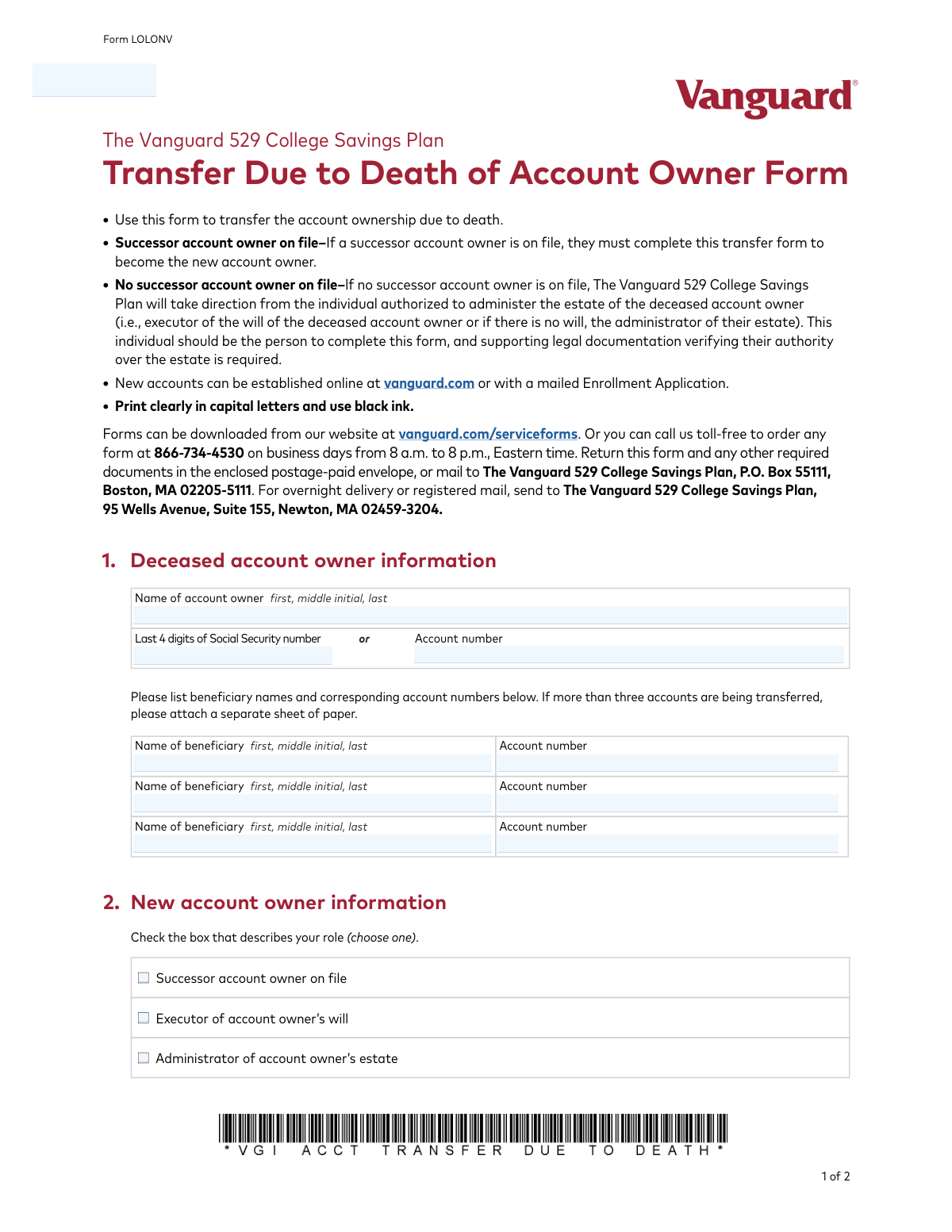
Yes! You can use AI to fill out The Vanguard 529 College Savings Plan Transfer Due to Death of Account Owner Form
Don't type 36 fields by hand. Tell our AI about yourself, or upload a document you already have, and it fills every field in seconds. You check it, then download, print or sign.
The AI does the filling. You just check it.
No typing into boxes, nothing to install.
What this form asks for
The AI fills all of it, from your answers or your documents.
The AI checks your answers before you download
14 checks built for this form, so a wrong date or a missing answer is caught before anyone else sees it.
This validation verifies that exactly one checkbox is selected in Section 2 to define the new account owner's role (Successor, Executor, or Administrator). This is critical because the role determines the required legal documentation and the authority to transfer the account. If zero or more than one box is checked, the form is ambiguous and cannot be processed, requiring rejection and resubmission by the client.
This check ensures the birth date provided in Section 2 is in a valid MM/DD/YYYY format and represents a real date. It also calculates the new owner's age to confirm they meet the minimum legal age requirement (e.g., 18 years) to own a financial account. This prevents the creation of accounts for minors who are not legally able to enter into such agreements, and a failure would halt the transfer until a valid date for an eligible individual is provided.
This validation confirms that the 'Today’s date' field in Section 4 is filled out, follows the 'mm dd yyyy' format, and is not a future date. The signature date legally attests to when the information was certified as true and complete by the signer. An invalid, missing, or future date can call the legality of the document into question, so the form would be returned for correction.
This check enforces a rule based on the 'Y/N' question in Section 2. If the user answers 'Yes' (indicating they have an existing account for the beneficiary), the system verifies that the corresponding beneficiary name and account number fields are filled out. This information is necessary to correctly consolidate the assets into the existing account. If the fields are left blank after a 'Yes' response, the form is considered incomplete and will be rejected.
This is a logical check triggered when the user answers 'No' to the 'Y/N' question in Section 2, indicating they do not have an existing account for the beneficiary. The system flags that a separate 'Enrollment Application' must be included with the submission package. This ensures all necessary paperwork to establish a new account is present, preventing processing delays.
This validation links the role selected in Section 2 to the documentation requirements in Section 3. If 'Successor account owner' is checked, the system flags the need for a certified death certificate. If 'Executor' or 'Administrator' is chosen, it flags the need for a Certified Letter of Testamentary or Administration. This check ensures the processing agent verifies the presence of the correct legal proofs of authority.
And 8 more checks
- Validates Completeness of Deceased Owner's Information
- Ensures Completeness of New Owner's Personal Data
- Verifies Signature is Present
- Validates Email Address Format
- Checks for Valid Phone Number Structure
- Confirms Beneficiary Consistency Across Accounts
- Flags 60-Day Certification Window for Legal Documents
- Verifies At Least One Account is Listed for Transfer
Let AI fill out your LOLONV
No typing. Every field filled in seconds, checked, ready to sign.
How to Fill Out LOLONV Online for Free in 2026
What the AI walks you through.
- Navigate to Instafill.ai and upload or select the Vanguard Transfer Due to Death of Account Owner Form.
- Provide information about the deceased account owner, including their name and the relevant account numbers.
- Enter the details for the new account owner, indicating their role as either the successor, executor, or administrator.
- Gather and prepare the required supporting documents, such as a certified copy of the death certificate and Letters of Testamentary/Administration if needed.
- Use the AI-powered tool to accurately fill in all sections, including beneficiary details and any existing account information for the new owner.
- Carefully review the entire form for accuracy, then sign and date it in Section 4 as the successor or estate representative.
- Download the completed form and your supporting documents to mail to The Vanguard 529 College Savings Plan.
Common Mistakes in Completing LOLONV
The ones the AI is built to catch.
Incorrectly Identifying Your Role
Submitting Expired Legal Certification
Forgetting or Attaching Incorrect Documentation
Mishandling the New Enrollment Requirement
Using Illegible Handwriting or Incorrect Ink
Failing to List All Account Numbers
Providing an Informal Name Instead of a Legal Name
Forgetting to Sign or Date the Form
Omitting Key Personal Details for the New Owner
Using an Incorrect Date Format
Frequently Asked Questions About LOLONV
Is it really free for 7 days?
Can I fill other forms too?
How do I cancel?
How does the AI fill out LOLONV?
What happens to my information?
How complex is LOLONV to fill out?
What is the purpose of the 'Transfer Due to Death of Account Owner' form?
Who is supposed to fill out this form?
What documents do I need to submit with this form?
The certification on my legal documents is over 60 days old. What should I do?
I am the new owner but don't have an existing Vanguard 529 account for this beneficiary. What's the process?
How do I transfer more than three accounts from the same deceased owner?
Where should I mail the completed form and required documents?
As the estate executor, whose information do I put in Section 2 for the 'New account owner'?
Will my original documents, like the death certificate, be returned to me?
Who signs the form in Section 4?
Can I use an AI tool to help me fill out this form?
How can I fill out this Vanguard form online instead of by hand?
The PDF I downloaded from the website is not fillable. What can I do?
Get your LOLONV filled out by AI
$0 today. Cancel before Nov 2 and you pay nothing.
Other forms like this one
college HR forms: Melbourne City College Australia Education Agent Application Form, South Sydney College International Student Application Form, Sidney Sussex College Cambridge, Application for Employment, Rollover Request — 529 College Savings Plan, Fidelity Investments Withdrawals—529 College Savings Plan, The Vanguard 529 College Savings Plan: Power of Attorney, The Vanguard 529 College Savings Plan Agent Authorization/Limited Power of Attorney, The Vanguard 529 College Savings Plan Direct Rollover Out to Roth IRA Form, The Vanguard 529 College Savings Plan Incoming Direct Rollover Form, The Vanguard 529 College Savings Plan: Withdrawal Request Form, Merrill Lynch 529 College Savings Plan Withdrawal Request Form, Form 529TCF, The Vanguard 529 College Savings Plan, Trustee Certification, Fidelity Institutional 529 College Savings Plan Beneficiary Change, 529 College Savings Plan Beneficiary Change Form, CollegeAdvantage Direct 529 Savings Plan Beneficiary Change Form
529 plan forms: Fidelity Investments Withdrawals—529 College Savings Plan, Rollover Request — 529 College Savings Plan, The Vanguard 529 College Savings Plan: Power of Attorney, The Vanguard 529 College Savings Plan Agent Authorization/Limited Power of Attorney, The Vanguard 529 College Savings Plan Direct Rollover Out to Roth IRA Form, The Vanguard 529 College Savings Plan Incoming Direct Rollover Form, The Vanguard 529 College Savings Plan: Withdrawal Request Form, IAdvisor 529 Plan Certification of Authorized Individual(s), Merrill Lynch 529 College Savings Plan Withdrawal Request Form, 529 Plan Account Transfer Form, Fidelity Institutional CHET Advisor 529 Plan New Account Application, Form 529TCF, The Vanguard 529 College Savings Plan, Trustee Certification, 529 Plan Account Application, Fidelity Institutional 529 College Savings Plan Beneficiary Change, 529 College Savings Plan Beneficiary Change Form, CollegeAdvantage Direct 529 Savings Plan Beneficiary Change Form, Account Application for Merrill West Virginia Residents - The Hartford SMART529, Nest 529 Beneficiary Change Form, NextGen 529 Client Direct Series Withdrawal Request Form, NextGen 529 Series Change Form
college savings forms: Fidelity Investments Withdrawals—529 College Savings Plan, Rollover Request — 529 College Savings Plan, The Vanguard 529 College Savings Plan: Power of Attorney, The Vanguard 529 College Savings Plan Agent Authorization/Limited Power of Attorney, The Vanguard 529 College Savings Plan Direct Rollover Out to Roth IRA Form, The Vanguard 529 College Savings Plan Incoming Direct Rollover Form, The Vanguard 529 College Savings Plan: Withdrawal Request Form, Merrill Lynch 529 College Savings Plan Withdrawal Request Form, Form 529TCF, The Vanguard 529 College Savings Plan, Trustee Certification, Fidelity Institutional 529 College Savings Plan Beneficiary Change, 529 College Savings Plan Beneficiary Change Form, CollegeAdvantage Direct 529 Savings Plan Beneficiary Change Form, 529 Plan Account Application, 529 Plan Account Transfer Form, Account Application for Merrill West Virginia Residents - The Hartford SMART529, Bright Directions 529 Beneficiary Change Form, Fidelity Institutional CHET Advisor 529 Plan New Account Application, Nest 529 Beneficiary Change Form, NextGen 529 Client Direct Series Incoming Rollover Form, NextGen 529 Client Direct Series Withdrawal Request Form
account transfer forms: Fidelity Funds Account Transfer of Assets Form, Group Transfer Form Fidelity Health Savings Account (HSA), Form APP13017-29, Transfer Your Account to Schwab, Transfer of Assets Out - Partial Account or Charitable Gift Transfers, Charles Schwab & Co., Inc. Account Transfer Form, HSA Bank Investment Account Transfer Form, Rollover/Transfer Request — ABLE Account, Schwab Health Savings Brokerage Account (HSBA) to HSA Invest Choice Account Transfer Form, Retirement Transfer Between Existing Vanguard Accounts, Vanguard Brokerage Account CREST Transfer Form, Account Transfer Authorization (ACATS) Form, AbbVie Savings Plan 401(k) Account Transfer Notice, Transfer Between Existing Fidelity Accounts, Rollover/Transfer Request — ABLE Account, TIAA Brokerage Incoming Account Transfer Form, TIAA Brokerage Joint Transfer on Death Account Agreement, TIAA Brokerage Incoming Managed Account Transfer Form (F11319), Health Savings Account (HSA) Transfer Request, Client Account Transfer Form to Merrill Lynch, Pierce, Fenner & Smith Incorporated, Authorization to transfer funds from a bank retirement account
Vanguard forms: Gift of Nonretirement Assets to Existing Vanguard Account Form, Vanguard VRPA Transfer Request Form, Vanguard Personal Investor – Transfer form, Vanguard Asset Transfer Authorization Form for the Emory University Retirement Plan, Retirement Transfer Between Existing Vanguard Accounts, Vanguard Personal Investor – Transfer initiation form – Transfer out, Vanguard Asset Transfer Authorization, Moving your Vanguard funds to a Vanguard Brokerage Account Disclosure statement, Make a contribution - Vanguard Charitable, Vanguard Transfer Form, Vanguard Full Agent Authorization, Vanguard Transfer on Death Plan Form, The Vanguard 529 College Savings Plan: Power of Attorney, Vanguard Direct Rollover IRA Adoption Agreement, Vanguard Limited Agent Authorization, The Vanguard 529 College Savings Plan Agent Authorization/Limited Power of Attorney, The Vanguard 529 College Savings Plan Direct Rollover Out to Roth IRA Form, Your guide to completing a rollover - Vanguard, Vanguard IRA Distribution Kit (including IRA Distribution Form RRDFT and Form W-4R), The Vanguard 529 College Savings Plan Incoming Direct Rollover Form
savings plan forms: Rollover Request — 529 College Savings Plan, Fidelity Investments Withdrawals—529 College Savings Plan, The Church of the Nazarene 403(b) Retirement Savings Plan Beneficiary Designation Form, The Vanguard 529 College Savings Plan: Power of Attorney, The Vanguard 529 College Savings Plan Agent Authorization/Limited Power of Attorney, The Vanguard 529 College Savings Plan Direct Rollover Out to Roth IRA Form, The Vanguard 529 College Savings Plan Incoming Direct Rollover Form, Vanguard Phillips 66 Savings Plan Rollover Contribution Request, The Vanguard 529 College Savings Plan: Withdrawal Request Form, Vanguard Retirement Plan Beneficiary Designation - Phillips 66 Savings Plan, Incoming Rollover Election for The Heritage Group Retirement Savings Plan, AbbVie Savings Plan 401(k) Account Transfer Notice, Incoming Rollover Election Form for International Dairy Queen, Inc. Retirement Savings Plan, TE Connectivity Retirement Savings and Investment Plan (RSIP) Transition Frequently Asked Questions, Principal Life Insurance Company UCTIE INTERNATIONAL UNION 401(K) SAVINGS PLAN Enrollment Form, Principal Financial Group Pre-Approved Basic Savings Plan - Plus, In-Service Withdrawal Request, City of Toledo Savings and Protection Plan, Merrill Lynch 529 College Savings Plan Withdrawal Request Form, XL America, Inc. Employee Savings Plan Rollover Contribution Form, Distribution Request Form Local No. 1 Retirement Savings Plan #241805
savings account forms: Form 8889, Health Savings Accounts, Group Transfer Form Fidelity Health Savings Account (HSA), Schwab Health Savings Brokerage Account (HSBA) to HSA Invest Choice Account Transfer Form, AbbVie Savings Plan 401(k) Account Transfer Notice, Health Savings Account (HSA) Transfer Request, Form 8889, Health Savings Accounts (HSAs)
529 forms: Bright Directions 529 Beneficiary Change Form, Transfer Due to Divorce — IRA/HSA/529, Rollover Request — 529 College Savings Plan, Fidelity Investments Withdrawals—529 College Savings Plan, The Vanguard 529 College Savings Plan: Power of Attorney, The Vanguard 529 College Savings Plan Agent Authorization/Limited Power of Attorney, The Vanguard 529 College Savings Plan Direct Rollover Out to Roth IRA Form, The Vanguard 529 College Savings Plan Incoming Direct Rollover Form, The Vanguard 529 College Savings Plan: Withdrawal Request Form, IAdvisor 529 Plan Certification of Authorized Individual(s), NextGen 529 Series Change Form, NextGen 529 Client Direct Series Incoming Rollover Form, Merrill Lynch 529 College Savings Plan Withdrawal Request Form, 529 Plan Account Transfer Form, Fidelity Institutional CHET Advisor 529 Plan New Account Application, Form 529TCF, The Vanguard 529 College Savings Plan, Trustee Certification, Account Application for Merrill West Virginia Residents - The Hartford SMART529, 529 Plan Account Application, Fidelity Institutional 529 College Savings Plan Beneficiary Change, 529 College Savings Plan Beneficiary Change Form
529 college savings forms: Form 529TCF, The Vanguard 529 College Savings Plan, Trustee Certification, Rollover Request — 529 College Savings Plan, Fidelity Investments Withdrawals—529 College Savings Plan, The Vanguard 529 College Savings Plan: Power of Attorney, The Vanguard 529 College Savings Plan Agent Authorization/Limited Power of Attorney, The Vanguard 529 College Savings Plan Direct Rollover Out to Roth IRA Form, The Vanguard 529 College Savings Plan Incoming Direct Rollover Form, The Vanguard 529 College Savings Plan: Withdrawal Request Form, Merrill Lynch 529 College Savings Plan Withdrawal Request Form, Fidelity Institutional 529 College Savings Plan Beneficiary Change, 529 College Savings Plan Beneficiary Change Form, CollegeAdvantage Direct 529 Savings Plan Beneficiary Change Form
transfer on death forms: Form F11004, TIAA Brokerage Individual Transfer on Death Account Agreement, Beneficiaries — Nonretirement Transfer on Death, Vanguard Transfer on Death Plan Form, TIAA Brokerage Joint Transfer on Death Account Agreement, Transfer on Death Letter of Authorization, Texas Transfer on Death Deed (Revocable), Affidavit of Death for Transferring Title on Property Listed in a Transfer on Death Deed, Individual Transfer on Death Account Agreement (03-25), Individual Transfer on Death Account Agreement (09-25)
Let AI fill out your LOLONV
Your trial starts once a card is added. You pay nothing before Nov 2.
Our AI already knows this form, all 36 fields of it. Skip the typing: tell it about yourself, or upload what you have, and it fills the whole form in seconds.
- AI fills every field on both pages, checkboxes included
- No typing into boxes: answer a few questions, or upload a document you already have, an old copy of this form, a photo of a document
- The AI checks the answers; you review and change anything before you download
- Download the finished PDF, print it, or sign it online
- Encrypted, and never used to train AI
Cancel before Nov 2 and you pay nothing.
A card is needed to start the trial. Cancel in two clicks from your account.
Terms · Privacy