Fill out employer tax forms
with AI.
Employer tax forms are the IRS documents that businesses use to report, calculate, and remit taxes related to their workforce. These forms cover everything from federal unemployment contributions to the quarterly reporting of income tax withholding and payroll taxes like Social Security and Medicare. Getting them right matters — late or inaccurate filings can trigger IRS penalties and disrupt a company's compliance standing.
By continuing, you acknowledge Instafill's Privacy Policy and agree to get occasional product update and promotional emails.
About employer tax forms
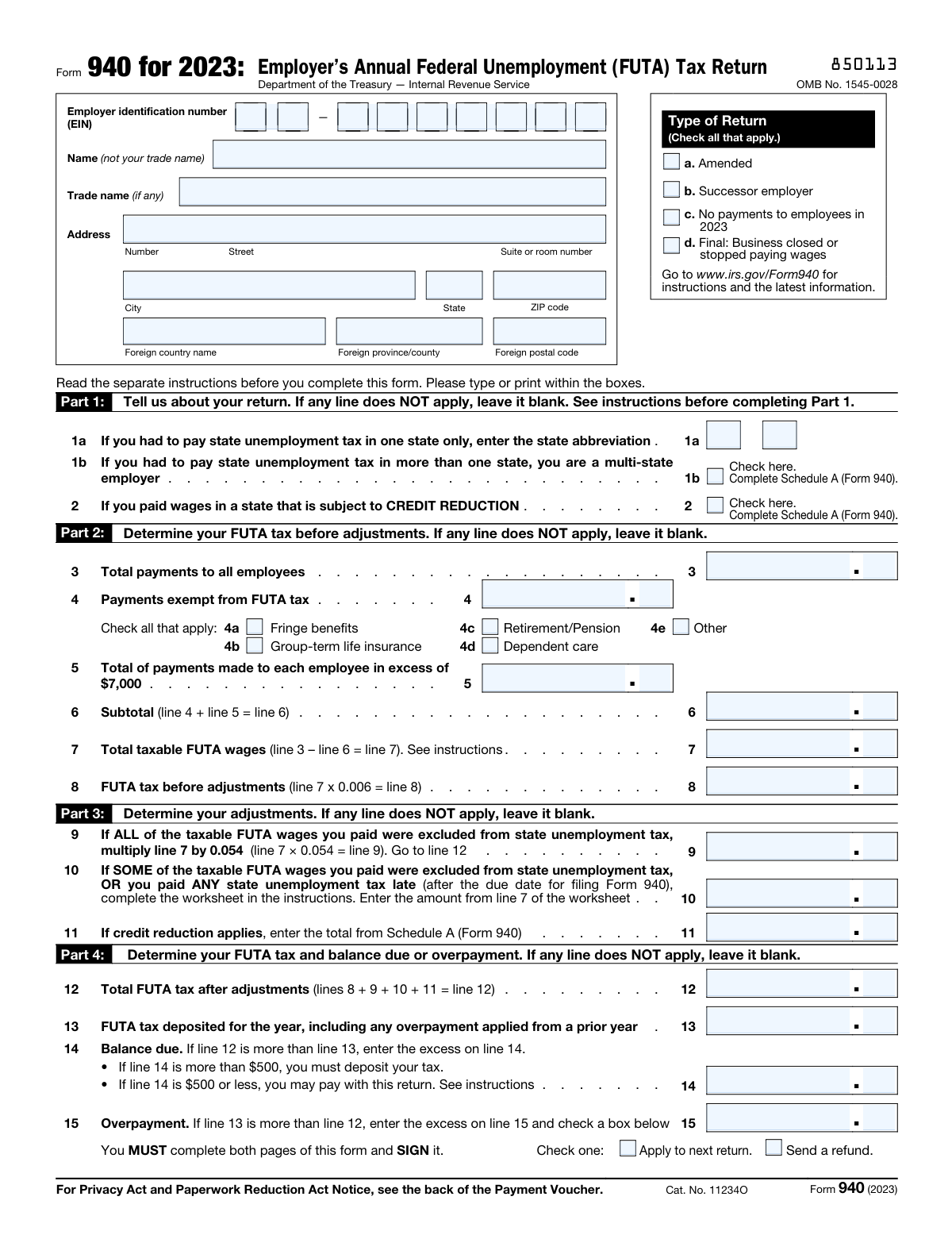
Most employers — from small businesses with a handful of employees to large corporations — are required to file these forms on a regular schedule. Form 941, for example, must be filed four times a year to report wages and withheld taxes, while Form 940 captures annual federal unemployment (FUTA) tax liability. If a past quarterly return contained an error, Form 941-X provides the mechanism to correct it and either apply a credit or request a refund. These filings are a routine but critical part of running any business that pays employees.
Because these forms involve precise figures pulled from payroll records, accuracy is essential. Tools like Instafill.ai use AI to fill these forms in under 30 seconds, handling the data carefully and securely — a practical option for business owners, payroll administrators, and accountants who need to move quickly without sacrificing accuracy.
Every form on this page can be completed without typing. Instafill is form filling software that reads a PDF and fills it for you — including flat and scanned documents that carry no fillable fields at all.
Forms in This Category
The forms in this category have a median Form Complexity Index of 62/100 (Moderate), measured across 6 forms by field count, input difficulty, length, conditional logic and structure. See how it is calculated.
| Form Name | Pages | FCI | |
|---|---|---|---|
| 1. | Form 940, Employer’s Annual FUTA Tax Return | 4 | Moderate 54 |
| 2. | Form 8850, Pre-Screening Notice and Certification Request for the Work Opportunity Credit | 2 | Basic 36 |
| 3. | Form 941, Employer's QUARTERLY Federal Tax Return (Rev. March 2025) | 3 | Moderate 60 |
| 4. | Form 941-X, Adjusted Employer’s QUARTERLY Federal Tax Return or Claim for Refund | 6 | Complex 72 |
| 5. | Form 941-X (Rev. April 2023), Adjusted Employer’s QUARTERLY Federal Tax Return or Claim for Refund | 6 | Complex 76 |
| 6. | Form 941, Employer’s Quarterly Federal Tax Return | 3 | Moderate 62 |
- Enterprise-grade security & data encryption
- 99%+ accuracy powered by AI
- 1,000+ forms from all industries
- Complete forms in under 60 seconds
How to Choose the Right Form
Start by identifying whether you're filing for the first time, making a correction, or handling annual unemployment taxes — each scenario points to a different form.
Reporting Payroll Taxes Each Quarter
Most employers will need Form 941. It covers federal income tax withholding, Social Security, and Medicare (FICA) taxes for each quarter. There are two versions available:
- Form 941 (Rev. March 2025) — Use this for current filings. It reflects the latest IRS updates and is the version most employers should use today.
- Form 941, Employer's Quarterly Federal Tax Return — An earlier version; confirm which revision your filing period requires before using this one.
> Tip: Form 941 is due four times a year — April 30, July 31, October 31, and January 31.
Correcting a Previously Filed Form 941
If you made an error on a past quarterly return — such as reporting the wrong wages, withholding amounts, or FICA taxes — do not refile the original form.
- Use Form 941-X (Rev. April 2023) to submit corrections. It lets you report the original amounts, the corrected amounts, and the difference, and choose between an adjustment or a refund claim.
Reporting Annual Federal Unemployment Taxes
FUTA taxes are separate from payroll withholding and are reported once a year, not quarterly.
- Use Form 940 if you paid wages to employees during the year. This covers your federal unemployment tax obligations, which fund state unemployment benefit programs.
Quick Decision Summary
- Filing quarterly payroll taxes now? → Form 941 (Rev. March 2025)
- Fixing a past quarterly return? → Form 941-X
- Reporting annual unemployment taxes? → Form 940
Form Comparison
| Form | Purpose | Who Files It | When to Use |
|---|---|---|---|
| Form 940, Employer's Annual FUTA Tax Return | Report annual federal unemployment (FUTA) tax liability | Employers who paid wages of $1,500+ or had employees | Once per year, due January 31 |
| Form 941, Employer's Quarterly Federal Tax Return | Report withheld income, Social Security, and Medicare taxes | Most employers who pay wages to employees | Four times per year, each quarter |
| Form 941-X (Rev. April 2023), Adjusted Employer's QUARTERLY Federal Tax Return or Claim for Refund | Correct errors on a previously filed Form 941 | Employers who made mistakes on a prior Form 941 | After discovering errors on a filed Form 941 |
| Form 941, Employer's QUARTERLY Federal Tax Return (Rev. March 2025) | Report wages, withheld taxes, and FICA contributions quarterly | Most employers who pay wages to employees | Four times per year using the latest 2025 revision |
Tips for employer tax forms
Form 940 is filed annually for FUTA taxes, while Form 941 is filed quarterly for income, Social Security, and Medicare taxes. Mixing up these filing frequencies is a common mistake that can result in late penalties, so confirm the correct form and schedule before you begin.
Form 941 requires you to reconcile your tax liability with deposits already made to the IRS. Before filling out the form, gather your payroll records and deposit confirmations so the numbers align — discrepancies are one of the most common triggers for IRS notices.
If you discover a mistake on a previously filed Form 941, do not simply refile the original form with corrections. The IRS requires Form 941-X specifically for amendments, and you must clearly indicate whether you are making an adjustment or claiming a refund, as each follows a different process.
Organize employee wages, withholding amounts, and tax deposits by quarter throughout the year rather than scrambling at filing time. This habit makes completing Form 941 much faster and reduces the risk of errors that require a corrective Form 941-X later.
Employers in certain states may be subject to a FUTA credit reduction, which increases the effective FUTA tax rate on Form 940. Check the IRS's annual list of credit reduction states before finalizing your Form 940 to avoid underpaying your federal unemployment tax liability.
AI-powered tools like Instafill.ai can fill out employer tax forms such as Form 940 and Form 941 with high accuracy in under 30 seconds, saving significant time for payroll administrators managing multiple filings. Your data stays secure throughout the process, making it a practical solution for businesses handling quarterly and annual tax obligations.
Employer tax forms have strict filing deadlines tied to the end of each quarter and the tax year, and late filings can result in significant IRS penalties. Set recurring calendar reminders well in advance of each due date so you have time to gather payroll data and review the completed form before submission.
An incorrect Employer Identification Number (EIN) or mismatched business name is a simple but costly error that can cause the IRS to misapply your payments or flag your return for review. Always verify these details match your IRS registration exactly before submitting any employer tax form.
Frequently Asked Questions
Employer tax forms are IRS documents that businesses use to report wages, withheld taxes, and payroll tax liabilities to the federal government. Most employers who pay wages to employees — including small businesses, corporations, and nonprofits — are required to file one or more of these forms depending on their payroll activity and tax obligations.
Form 940 is filed annually to report Federal Unemployment Tax Act (FUTA) taxes, which fund unemployment benefits for workers. Form 941, on the other hand, is filed quarterly and covers income tax withholding, Social Security, and Medicare taxes withheld from employee paychecks, along with the employer's matching share of those taxes.
The filing frequency depends on the specific form. Form 941 must be filed four times per year — once for each calendar quarter. Form 940 is filed once a year. If you've made errors on a previously filed Form 941, you would also need to file Form 941-X as a correction.
Form 941 is generally due at the end of the month following the close of each calendar quarter. Employers should check the IRS website or the form's instructions for the exact due dates each year, as deadlines can shift slightly when they fall on weekends or federal holidays.
Form 941-X is used to correct errors made on a previously filed Form 941 for a specific calendar quarter. You should file it as soon as you discover a mistake, whether that involves wages, withheld taxes, Social Security, Medicare, or certain credits. The form requires you to report both the originally filed amounts and the corrected amounts, along with an explanation of the changes.
Employer tax forms are submitted to the IRS, either by mail or electronically. The specific mailing address depends on your business location and whether you are including a payment, so it's important to refer to the instructions for each form. Many employers also use IRS e-file options or authorized payroll services to submit these forms electronically.
Generally, employers who paid wages of $1,500 or more in any calendar quarter, or who had at least one employee for part of a day in 20 or more different weeks, are required to file Form 940. Even if no FUTA tax is owed, you may still be required to file — consult the IRS instructions or a tax professional to confirm your specific obligation.
Filing late or reporting incorrect information on employer tax forms can result in IRS penalties and interest charges. If you discover an error after filing Form 941, you can correct it by submitting Form 941-X. It's important to address mistakes promptly to minimize potential penalties.
Yes — AI-powered tools like Instafill.ai can fill out employer tax forms such as Form 940, Form 941, and Form 941-X in under 30 seconds by accurately extracting and placing data from your source documents. This significantly reduces manual data entry errors and speeds up the filing preparation process.
Filling out employer tax forms manually can take anywhere from 20 minutes to over an hour, depending on the complexity of your payroll data. Using AI tools like Instafill.ai, these forms can be completed in under 30 seconds, with data automatically extracted and populated into the correct fields from your existing documents.
Most new employers will need to start with Form 941 to report quarterly payroll taxes, and Form 940 to report annual FUTA taxes. Form 941-X is only needed if you need to amend a previously filed Form 941. If you're unsure which forms apply to your business, the IRS website and a tax professional can help you determine your specific obligations.
Yes, the IRS periodically revises Form 941, and it's important to use the version that corresponds to the quarter you are filing for. For example, the March 2025 revision should be used for quarters covered by that version. Using an outdated version may result in processing delays or errors, so always verify you have the correct revision before filing.
Glossary
- Form Complexity Index
- Instafill’s 0–100 measure of how much effort a form takes to complete, calculated deterministically from the form’s own structure rather than estimated. It combines the number of fillable fields (the largest factor), how difficult those fields are to complete based on their type, the number of pages that contain fields, the amount of conditional “fill-only-if” logic, and how many sections the form is divided into, then adds modifiers for tables and repeating lists, bundled instruction pages, and dense page layouts. A higher score means the form is harder to fill out by hand. The forms in this category have a median Form Complexity Index of 62/100 (Moderate). See exactly how it is calculated.
- FUTA (Federal Unemployment Tax Act)
- A federal law that requires employers to pay a tax used to fund unemployment benefits for workers who lose their jobs. Unlike most payroll taxes, FUTA is paid solely by the employer, not withheld from employee wages.
- FICA (Federal Insurance Contributions Act)
- A federal law mandating payroll taxes that fund Social Security and Medicare programs. Both employers and employees each contribute a share, with employers responsible for withholding the employee's portion and paying a matching amount themselves.
- Payroll Tax Deposit
- A required payment made by employers to the IRS to submit withheld employee taxes and employer-owed taxes before the tax return is filed. Employers are assigned a deposit schedule (monthly or semi-weekly) based on their total tax liability.
- Tax Liability
- The total amount of tax an employer owes to the IRS for a given period, including withheld income taxes plus both the employer's and employees' shares of Social Security and Medicare taxes.
- Withholding
- The portion of an employee's wages that an employer deducts and sends directly to the IRS on the employee's behalf, covering federal income tax, Social Security, and Medicare obligations.
- Amended Return
- A corrected version of a previously filed tax return, used to fix errors in amounts originally reported. For quarterly employment taxes, employers use Form 941-X to amend a previously submitted Form 941.
- Adjustment vs. Claim (Process)
- Two methods for correcting employment tax errors on Form 941-X: the adjustment process applies any overcollected or underpaid amount as a credit or balance due on a current return, while the claim process requests a direct refund or abatement from the IRS.
- Calendar Quarter
- One of four three-month periods in a year (January–March, April–June, July–September, October–December) that determines the filing period for quarterly employer tax forms like Form 941.
- Employer Identification Number (EIN)
- A unique nine-digit number assigned by the IRS to identify a business entity for tax purposes, required on all employer tax filings. It functions similarly to a Social Security Number but for businesses rather than individuals.
- FUTA Credit Reduction
- A reduction in the normal credit employers receive against their FUTA tax rate, applied to employers in states that have borrowed federal funds to pay unemployment benefits and not repaid them on time. This effectively increases the employer's FUTA tax liability for that year.