Fill out property administration forms
with AI.
Property administration forms are essential for maintaining oversight and accountability of assets, particularly within the context of government contracting and defense management. These documents ensure that contractors adhere to strict regulatory standards, such as those outlined in the Federal Acquisition Regulation (FAR). By formalizing the reporting and auditing processes, these forms help organizations track property lifecycles, conduct system analyses, and maintain the integrity of government-furnished or contractor-acquired property.
By continuing, you acknowledge Instafill's Privacy Policy and agree to get occasional product update and promotional emails.
About property administration forms
These forms are typically used by Defense Contract Management Agency (DCMA) personnel, property administrators, and compliance officers who must evaluate property management systems. Whether you are conducting a Property Management System Analysis (PMSA) or documenting the disposition of assets, accurate record-keeping is vital to avoid audit failures or contractual disputes. In high-stakes environments where regulatory compliance is non-negotiable, having standardized documentation ensures that every piece of equipment and material is accounted for according to federal guidelines.
Managing the extensive paperwork required for property oversight can be a time-consuming administrative burden. Tools like Instafill.ai use AI to fill these forms in under 30 seconds, ensuring data is handled accurately and securely while saving significant manual effort. This allows administrators to focus on the analysis and oversight of property systems rather than the repetitive task of data entry.
Every form on this page can be completed without typing. Instafill is form filling software that reads a PDF and fills it for you — including flat and scanned documents that carry no fillable fields at all.
Forms in This Category
| Form Name | Pages | FCI | |
|---|---|---|---|
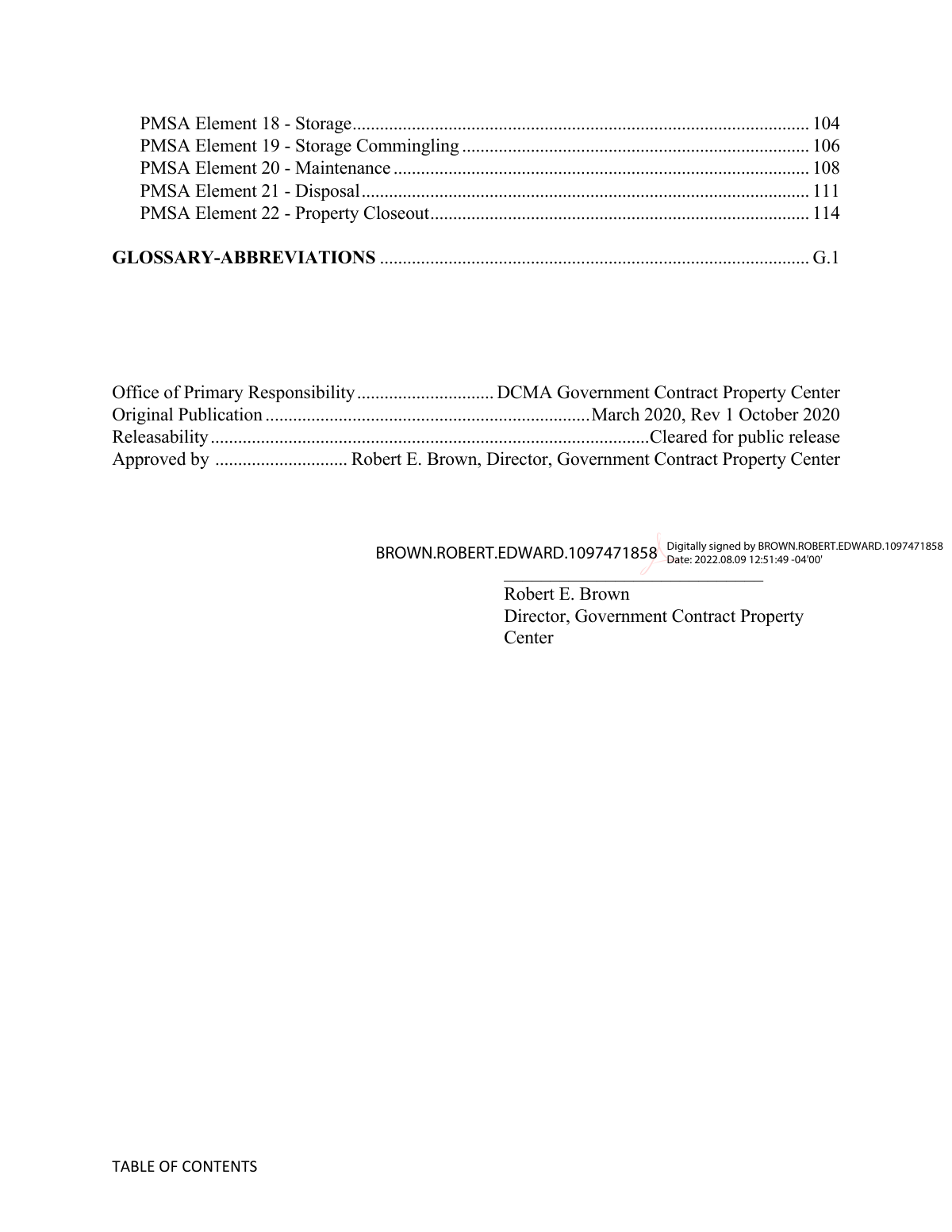
| 1. | DCMA Guidebook for Government Contract Property Administration | 1 | – |
- Enterprise-grade security & data encryption
- 99%+ accuracy powered by AI
- 1,000+ forms from all industries
- Complete forms in under 60 seconds
How to Choose the Right Form
Navigating property administration within government contracting requires strict adherence to federal regulations. While our current selection focuses on a primary foundational document, it is essential for ensuring compliance and operational consistency across government-furnished and contractor-acquired property.
For Government Contractors and DCMA Personnel
If you are involved in the management or oversight of government-owned property, the DCMA Guidebook for Government Contract Property Administration is your primary resource. This document is specifically designed for:
- Compliance Officers: Use this guidebook to understand the rigorous requirements of FAR 52.245-1 and ensure your internal systems meet federal standards before an audit occurs.
- DCMA Personnel: This is the standard operational manual for conducting a Property Management System Analysis (PMSA). It provides the necessary analysis techniques and procedures to maintain consistent oversight across different contractor systems.
- Contract Administrators: It serves as a comprehensive process summary, detailing how to handle government property throughout the entire contract lifecycle, from acquisition to final disposition.
Why Use This Guidebook?
The DCMA Guidebook for Government Contract Property Administration is more than just a reference; it is an actionable framework. It outlines the specific reporting requirements and process summaries needed to pass audits and avoid costly system deficiencies. It ensures that all parties involved in Defense Contract Management Agency (DCMA) oversight are following the same set of rules and expectations.
Streamlining Your Documentation
Managing the various reports and forms referenced within this guidebook can be labor-intensive. Using Instafill.ai, you can transform the static requirements and non-fillable PDF reports mentioned in the manual into interactive, AI-powered forms. This ensures that your property management documentation is accurate, standardized, and submitted on time, significantly reducing the risk of non-compliance during a PMSA.
Form Comparison
| Form | Primary Purpose | Targeted Users | Regulatory Basis |
|---|---|---|---|
| DCMA Guidebook for Government Contract Property Administration | Standardizes oversight and analysis of contractor-held government property management systems. | Defense Contract Management Agency (DCMA) personnel and Government Property Administrators. | Ensures compliance with FAR 52.245-1 and related government contracting regulations. |
Tips for property administration forms
Property administration often requires detailed proof of acquisition, maintenance logs, and disposal records. Having these receipts and tracking logs organized beforehand prevents delays and ensures you don't have to leave the form partially completed while searching for data.
Government property administration relies heavily on Federal Acquisition Regulation (FAR) requirements. Double-check that your terminology and data fields match the specific standards outlined in the guidebook to ensure compliance and pass Property Management System Analysis (PMSA) audits.
Effective administration involves tracking assets from acquisition through disposition. Categorizing your forms and reports by these specific stages makes it significantly easier for DCMA personnel to review the flow of government-furnished property.
AI-powered tools like Instafill.ai can complete complex property administration forms in under 30 seconds with high accuracy. This is a massive time-saver for professionals dealing with multiple forms, and your sensitive contract data stays secure throughout the entire process.
Instead of treating every property report as a unique task, create internal templates for recurring data points like location codes and contract numbers. This consistency reduces manual data entry errors and speeds up the reporting process for large property inventories.
A common mistake is reporting outdated property locations or conditions based on old records. Always perform a quick digital or physical verification of the assets mentioned in your forms to ensure the submitted data reflects the current reality of the inventory.
Frequently Asked Questions
These forms are used to track, manage, and report on government-owned property that is currently held by contractors. They provide a standardized way to ensure accountability and compliance with federal regulations throughout the lifecycle of a contract.
Responsibilities are shared between Defense Contract Management Agency (DCMA) personnel and the contractors themselves. Contractors must maintain records of the property they hold, while DCMA Property Administrators use guidebooks and forms to conduct oversight and system analyses.
A PMSA is a formal review conducted by a government Property Administrator to evaluate whether a contractor's management system is compliant with contract terms. The analysis covers various outcomes, such as acquisition, receiving, records, and physical inventory.
The primary regulations are found in the Federal Acquisition Regulation (FAR) Part 45 and the associated clause FAR 52.245-1. These rules establish the requirements for contractors to protect, preserve, and account for all government property in their possession.
Yes, AI tools like Instafill.ai can fill out complex property administration forms in under 30 seconds. By accurately extracting data from your source documents and placing it into the correct fields, AI significantly reduces the manual effort required for compliance reporting.
While manual entry for detailed property records can take hours, using an AI-powered service allows you to complete these forms almost instantly. The system can process data from existing spreadsheets or PDFs and populate the necessary administrative forms automatically.
Contractors are required to report any loss, theft, damage, or destruction of government property as soon as it is discovered. This usually involves submitting a formal report through the Procurement Integrated Enterprise Environment (PIEE) or directly to the assigned Property Administrator.
Completed forms and reports are generally submitted to the Administrative Contracting Officer (ACO) or the designated Property Administrator at the DCMA. Most modern submissions are handled through electronic portals to ensure a permanent audit trail.
You should review the specific property clauses in your contract, as they will dictate the reporting frequency and the types of forms needed. The DCMA Guidebook also provides a comprehensive summary of the processes and documentation required for different contract types.
During a physical inventory, the contractor must verify the existence, location, and condition of all government property listed in their records. The results are then compared against the official property records, and any discrepancies must be documented and reported.
Glossary
- FAR (Federal Acquisition Regulation)
- The primary set of rules regarding government procurement in the United States, specifically Part 45 which governs the management of government property.
- PMSA (Property Management System Analysis)
- A systematic review and evaluation of a contractor’s property management system to ensure compliance with contract terms and federal regulations.
- GFP (Government-Furnished Property)
- Property owned by the government that is provided to a contractor for use in performing a specific contract.
- CAP (Contractor-Acquired Property)
- Property purchased or fabricated by a contractor for which the government has title, usually reimbursed as a direct cost on a contract.
- Plant Clearance
- The formal process of reporting and disposing of excess government property that is no longer required for the performance of a contract.
- Property Administrator
- An authorized representative of the contracting officer who is responsible for overseeing the contractor's property management system.
- IUID (Item Unique Identification)
- A system of marking and identifying tangible assets with a machine-readable 2D data matrix to track them throughout their lifecycle.
- Loss of Government Property
- The unintended or accidental loss, damage, or destruction of government property, which requires specific reporting and liability determinations.