Fill out rental application forms
with AI.
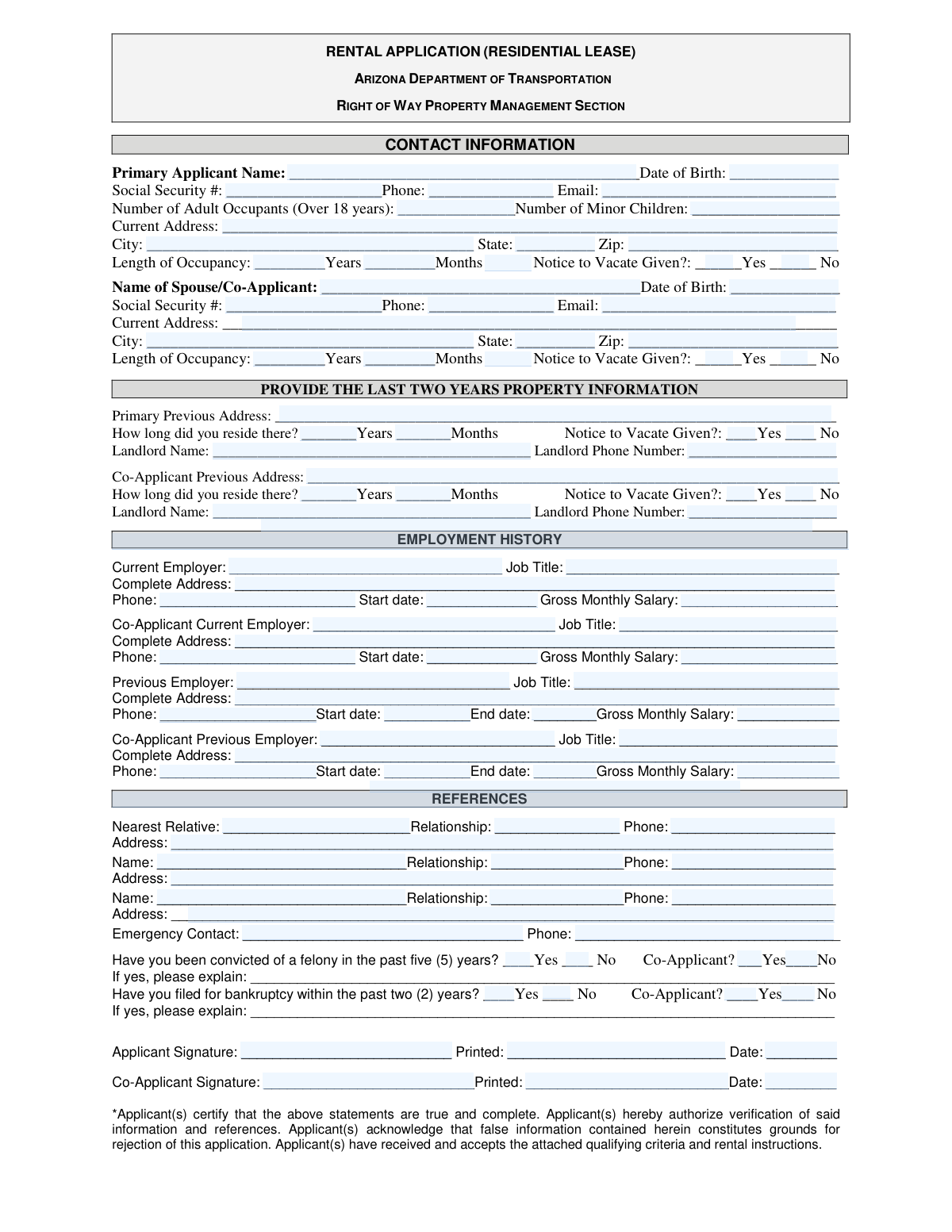
Rental application forms are the essential first step in the leasing process, serving as a standardized way for property managers and landlords to evaluate a prospective tenant's reliability and financial stability. These documents collect critical information—including employment history, credit disclosures, and prior rental references—to ensure that property owners make informed decisions while remaining compliant with local housing regulations. Whether you are dealing with a standard California Apartment Association (CAA) form or a specialized corporate application, these documents establish a professional and legal foundation for a new tenancy.
By continuing, you acknowledge Instafill's Privacy Policy and agree to get occasional product update and promotional emails.
About rental application forms
This category of forms is used daily by individuals searching for their next home, as well as by real estate agents and property management firms looking to streamline their screening workflows. Because rental laws vary significantly by region, it is common to see specific documentation tailored to different jurisdictions, such as the NAA forms used in Virginia or the OREA forms required for residential rentals in Ontario. Using the correct, up-to-date paperwork helps protect both the landlord's investment and the tenant's rights throughout the application phase.
Completing these multi-page PDFs can be a tedious and repetitive task, especially when applying to multiple properties at once. Tools like Instafill.ai use AI to fill these forms in under 30 seconds, handling your data accurately and securely to save you the hassle of manual data entry.
Every form on this page can be completed without typing. Instafill is form filling software that reads a PDF and fills it for you — including flat and scanned documents that carry no fillable fields at all.
Forms in This Category
The forms in this category have a median Form Complexity Index of 73/100 (Complex), measured across 12 forms by field count, input difficulty, length, conditional logic and structure. See how it is calculated.
- Enterprise-grade security & data encryption
- 99%+ accuracy powered by AI
- 1,000+ forms from all industries
- Complete forms in under 60 seconds
How to Choose the Right Form
Choosing the right rental application is essential for ensuring legal compliance with local housing laws and collecting the necessary data to screen tenants effectively. Most forms are categorized by geographic region or the specific entity applying for the lease.
US State-Specific Forms
If you are a landlord or property manager in the United States, you must use a form that complies with state-specific disclosure requirements and screening laws:
- California & National: Use the California/National Apartment Association Official Form B-15 for a standardized approach that includes the critical Application Agreement and consent for background reporting.
- New York: The New York Rental Application Form is designed specifically for the NY market, including authorizations for credit and rental history checks.
- Virginia: Select the NAA Rental Application for Residents and Occupants (Virginia), which is tailored to Virginia state law and property management standards.
- New Mexico: The Northland Application for Rental – New Mexico is the preferred choice for properties managed under Northland guidelines within that state.
International Rental Applications
For properties located outside the United States, regulatory requirements vary significantly regarding privacy and tenant rights:
- Canada (Ontario): Use OREA Form 410 for residential rentals. It is the standard form developed by the Ontario Real Estate Association for evaluating financial and employment backgrounds.
- Australia (Queensland): Use the Rental application (Form 22) to comply with the Residential Tenancies and Rooming Accommodation Act 2008.
- Australia (Victoria): Select the Residential Rental Application (Statement of Information for Rental Applicants). This package includes the mandatory legal disclosures required by the Victorian Residential Tenancies Act 1997.
Specialized & Corporate Applications
- Business Tenants: If a company is leasing a unit rather than an individual, use the Corporate Application for Rental. This form focuses on tax IDs and trade references rather than personal credit history.
- Affordable Housing: For units under government-regulated programs, use the Supplemental Rental Application for Units Under Government Regulated Affordable Housing Programs (often paired with the Virginia NAA form) to verify specific income and asset eligibility.
Form Comparison
| Form | Jurisdiction | Primary Use Case | Key Unique Features |
|---|---|---|---|
| California/National Apartment Association Official Form B-15, Rental Application for Residents and Occupants (May 2015) with Application Agreement | California and National (USA) | Standard residential screening for apartment residents and occupants. | Combines the rental application with a formal application agreement document. |
| Rental application (Form 22) — Residential Tenancies and Rooming Accommodation Act 2008 (Qld) | Queensland, Australia | Statutory residential tenancy applications under the 2008 Act. | Includes standardized disclosures regarding tenancy database checks and submission methods. |
| Residential Rental Application (Statement of Information for Rental Applicants) — Residential Tenancies Act 1997 (Vic) s 29C; Residential Tenancies Regulations 2021 (Vic) reg 14 | Victoria, Australia | Residential leases governed by the Victorian Residential Tenancies Act. | Mandatory Statement of Information and 100-point identification verification system. |
| National Apartment Association (NAA) Rental Application for Residents and Occupants (Virginia) and Supplemental Rental Application for Units Under Government Regulated Affordable Housing Programs | Virginia, USA | Standard screening and government-regulated affordable housing eligibility. | Includes supplemental forms for verifying household assets and subsidy eligibility. |
| New York Rental Application Form | New York, USA | General residential screening for New York landlords and property managers. | Covers proposed lease terms, security deposit arrangements, and background check authorizations. |
| Corporate Application for Rental | General / RAM Partners | Leasing applications submitted by corporations, partnerships, or business entities. | Requires Federal Tax ID, trade references, and a personal individual guarantor. |
| Northland Application for Rental – New Mexico | New Mexico, USA | Tenant screening for properties specifically managed by Northland in New Mexico. | Standardizes identification, employment, and income verification for property-specific requirements. |
| OREA Form 410, Rental Application Residential | Ontario, Canada | Standard residential rental applications facilitated by real estate agents. | Official Ontario Real Estate Association form used for comprehensive tenant evaluation. |
Tips for rental application forms
Have your proof of income, identification, and previous landlord contact information ready before you begin. Most rental applications require specific details like monthly gross income and exact dates of prior residency to be processed efficiently.
Double-check that your reported income matches your pay stubs or tax returns exactly. Discrepancies between your application and your supporting documents can cause significant delays or lead to a landlord questioning your credibility during the screening process.
Avoid leaving fields blank, as property managers may view an incomplete application as a reason for immediate rejection. If a section does not apply to you, such as pet details or vehicle information, write 'N/A' to show you have not overlooked the field.
Reach out to your personal and professional references before submitting your application so they are prepared for a verification call. This proactive step ensures they respond quickly, which is crucial in competitive rental markets where timing is everything.
AI-powered tools like Instafill.ai can complete these complex rental forms in under 30 seconds with high accuracy. Your sensitive data stays secure during the process, making it a reliable way to apply for multiple properties without repetitive manual entry.
If you are applying on behalf of a business, ensure you use the specific Corporate Application form which requires tax IDs and business references. Even for corporate leases, the individual occupant is often required to submit a personal supplemental application for background checks.
Different regions, such as Victoria or Queensland, use specific point systems or mandatory disclosure statements for identification. Review the local requirements listed on the form to ensure you have the correct combination of documents, such as a passport or utility bill, to meet the 100-point check.
Frequently Asked Questions
A rental application is a screening tool used by landlords and property managers to evaluate the suitability of a prospective tenant. It collects essential data regarding an applicant's financial stability, rental history, and background to help the owner make an informed decision and comply with fair housing regulations.
The correct form depends on the location of the property and the type of applicant. For example, properties in Ontario typically use OREA Form 410, while those in California often use CAA Form B-15. If you are applying as a business entity rather than an individual, you should look for a Corporate Application for Rental.
Yes, you can fill out these forms efficiently using AI tools like Instafill.ai. These services can accurately extract data from your existing documents and place it into the correct fields of a rental application, ensuring the final PDF is professional and complete.
While manual entry can take 15 to 20 minutes, using an AI-powered service like Instafill.ai allows you to complete these forms in under 30 seconds. The AI handles the data extraction and placement, which significantly speeds up the application process.
Most forms require personal identification, such as a Social Security Number or government ID, along with employment history, income verification, and contact details for previous landlords. You may also need to provide references and details about any pets or vehicles that will be on the property.
A standard residential application is for individuals who will be living in the unit, whereas a corporate application is for businesses or partnerships leasing a property. Corporate forms require business-specific details like a Tax ID, trade references, and often a personal guarantee from the individual occupant.
Organizations like the National Apartment Association (NAA) and the Ontario Real Estate Association (OREA) create standardized forms to ensure legal compliance within specific jurisdictions. These forms are regularly updated to reflect changes in local tenancy laws and anti-discrimination protections.
Supplemental applications are required when applying for units governed by government-regulated affordable housing programs. These forms collect additional data on household composition, assets, and total annual income to verify that the applicant meets specific eligibility requirements.
Completed forms are typically submitted directly to the property manager, landlord, or real estate agent representing the property. Depending on their preference, you may submit the PDF via email, upload it to a secure leasing portal, or provide a printed copy in person.
It is helpful to have digital copies of your recent pay stubs, a government-issued ID, and your previous address history ready. Having these source documents available allows AI tools to quickly populate the application form with high accuracy.
Glossary
- Form Complexity Index
- Instafill’s 0–100 measure of how much effort a form takes to complete, calculated deterministically from the form’s own structure rather than estimated. It combines the number of fillable fields (the largest factor), how difficult those fields are to complete based on their type, the number of pages that contain fields, the amount of conditional “fill-only-if” logic, and how many sections the form is divided into, then adds modifiers for tables and repeating lists, bundled instruction pages, and dense page layouts. A higher score means the form is harder to fill out by hand. The forms in this category have a median Form Complexity Index of 73/100 (Complex). See exactly how it is calculated.
- Consumer Report
- A background screening report provided by a third-party agency that includes your credit history, criminal records, and past eviction data used to determine rental eligibility.
- Tenancy Database
- A specialized electronic system (often called a 'blacklist') where landlords record and search for tenants who have previously breached lease agreements or left owing debt.
- Guarantor
- A third party, often a parent or employer, who signs the lease agreement and takes legal responsibility for rent payments if the primary tenant fails to pay.
- Lessor
- The legal term for the landlord or property owner who grants the lease to the tenant (the lessee).
- 100-Point ID Check
- A verification process used primarily in Australian rental applications where different identification documents are assigned specific point values to confirm an applicant's identity.
- Affordable Housing Supplemental
- An additional form used for government-regulated properties to verify that an applicant’s total household income and assets meet specific low-to-moderate income requirements.
- Corporate Lease
- A rental agreement where a business entity is the legal tenant, often requiring a separate individual occupant to provide a personal guarantee.
- Application Agreement
- The section of a rental form where the applicant legally consents to background checks and acknowledges that any false information provided can lead to immediate rejection or eviction.