Fill out congressional forms
with AI.
Congressional forms and documents serve as the primary link between the legislative branch and the public, providing a structured way to document the nation's lawmaking process. This category encompasses a wide range of official records and submissions, including the Congressional Record, which tracks the daily proceedings, debates, and legislative actions of the U.S. House and Senate. These materials are essential for maintaining transparency in government, allowing citizens to follow policy developments and understand the historical context behind national legislation.
By continuing, you acknowledge Instafill's Privacy Policy and agree to get occasional product update and promotional emails.
About congressional forms
These documents are frequently utilized by legal researchers, historians, and policy analysts who need to track the evolution of specific laws or verify official statements made on the floor of Congress. Additionally, constituents and advocacy groups often interact with related forms when submitting petitions or formal communications to their representatives. Navigating and completing these official documents is a critical part of civic engagement, legal research, and administrative compliance within the federal system.
Managing and completing complex government paperwork can be a time-consuming task, especially when dealing with dense legislative records. Tools like Instafill.ai use AI to fill these forms in under 30 seconds, ensuring that data is handled accurately and securely while saving users the effort of manual entry. This allows professionals and citizens alike to focus on their research or advocacy rather than the mechanics of document preparation.
Every form on this page can be completed without typing. Instafill is form filling software that reads a PDF and fills it for you — including flat and scanned documents that carry no fillable fields at all.
Forms in This Category
The forms in this category have a median Form Complexity Index of 24/100 (Simple), measured across 1 forms by field count, input difficulty, length, conditional logic and structure. See how it is calculated.
| Form Name | Pages | FCI | |
|---|---|---|---|
| 1. | Congressional Record - Proceedings and Debates of the Sixty-sixth Congress, First Session | 1 | Simple 24 |
- Enterprise-grade security & data encryption
- 99%+ accuracy powered by AI
- 1,000+ forms from all industries
- Complete forms in under 60 seconds
How to Choose the Right Form
Navigating the archives of the United States government can be a complex task, especially when dealing with historical legislative documentation. While the "congressional forms" category often implies modern administrative paperwork, it also encompasses vital historical records used for research and legal analysis.
Understanding the Congressional Record
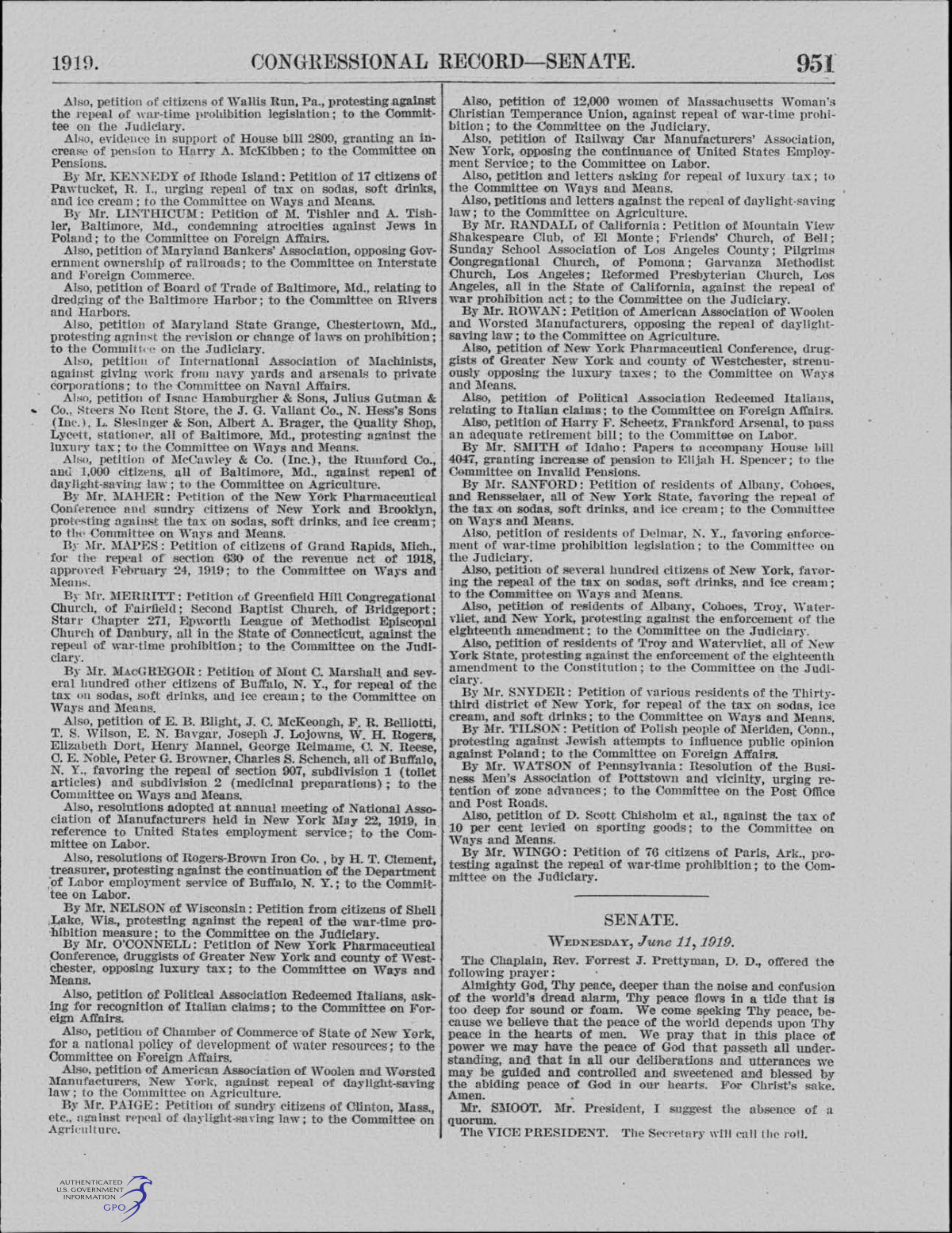
The primary document available in this category is the Congressional Record - Proceedings and Debates of the Sixty-sixth Congress, First Session. Unlike a standard application or petition, this is a comprehensive transcript of the legislative process from a specific historical period.
Choose this document if you are:
- Conducting Historical Research: If you need to trace the origins of specific laws or understand the political climate of the early 20th century.
- Establishing Legislative Intent: Legal professionals often reference the Congressional Record to interpret the original meaning of statutes by reviewing the speeches and debates of the lawmakers who drafted them.
- Tracking Petitions and Actions: This record documents every petition submitted and action taken, providing a transparent look at the day-to-day operations of the Sixty-sixth Congress.
Working with Historical PDFs
Historical documents are often provided as non-interactive scans. If you are working with the Congressional Record - Proceedings and Debates of the Sixty-sixth Congress, First Session, you can use Instafill.ai to make the document more manageable. Our AI-powered tools can help you:
- Extract Specific Data: Quickly find mentions of specific names, dates, or legislative acts within the dense text.
- Convert to Fillable Formats: If you need to annotate or create a structured response based on the record, our platform can convert non-fillable PDF versions into interactive documents.
Whether you are a historian, a law student, or a concerned citizen, understanding these proceedings is key to grasping the evolution of American lawmaking.
Form Comparison
| Form | Purpose | Content Type | Historical Significance |
|---|---|---|---|
| Congressional Record - Proceedings and Debates of the Sixty-sixth Congress, First Session | Official daily record of legislative debates and proceedings from the 66th Congress. | Includes transcripts of floor speeches, petitions, and summaries of legislative actions. | Provides a transparent, historical account of the nation's lawmaking process and legislative intent. |
Tips for congressional forms
Congressional forms are often processed based on jurisdiction. Before filling out a form, use your zip code to confirm that you are contacting the specific representative or senator who serves your district to ensure your request is not rerouted or ignored.
If you are requesting assistance with a federal agency, a signed privacy release form is legally required. Congressional offices cannot advocate on your behalf or access your personal records without this specific authorization, so ensure it is attached to your initial submission.
When submitting petitions or discussing the Congressional Record, include precise bill numbers or session dates. Providing exact citations helps staffers quickly locate the relevant legislative history and ensures your correspondence is filed accurately within the correct legislative file.
Managing multiple government documents can be overwhelming. AI-powered tools like Instafill.ai can complete these forms in under 30 seconds with high accuracy, and your data stays secure during the process, making it an ideal solution for those dealing with high volumes of paperwork.
Keep digital copies of every form and supporting document you submit to a congressional office. Having a timestamped record of your submission makes it easier to follow up on the status of your request and provides a reference if you need to resubmit information.
Congressional procedures and required form versions can change at the start of a new Congress or session. Always verify that you are using the most current version of a form to avoid processing delays caused by outdated formatting or obsolete filing instructions.
Frequently Asked Questions
Congressional forms and records serve to document the official business, debates, and legislative actions of the United States Congress. They provide a transparent history of how laws are made, including speeches, floor votes, and petitions submitted by members of the House and Senate.
Legal researchers, historians, journalists, and policy analysts often use the Congressional Record to understand legislative intent or track the progress of specific bills. It is also a valuable resource for citizens who want to stay informed about their representatives' positions and statements on the floor.
Historical records, such as those from the Sixty-sixth Congress, are archived by the Government Publishing Office (GPO) and are often available through the Library of Congress. Modern records are digitized and can be searched by date, member name, or specific keywords related to legislative topics.
Yes, many contemporary congressional and government forms can be completed using AI tools like Instafill.ai. These tools can fill out complex forms in under 30 seconds by accurately extracting data from your source documents and placing it into the correct fields.
While manual entry can take a significant amount of time for detailed government documents, using an AI-powered service like Instafill.ai allows you to complete forms in less than 30 seconds. The AI handles the data mapping and extraction, significantly reducing the time required for administrative tasks.
This document is the official daily record of everything that happens on the floor of the U.S. House of Representatives and the U.S. Senate. It includes verbatim transcripts of debates, which are essential for courts and agencies when interpreting the meaning of federal statutes.
Yes, the Congressional Record often includes petitions, memorials, and other materials submitted by private citizens or organizations to their representatives. These submissions become part of the public record and can influence the legislative process.
Most congressional documents are filed with the Clerk of the House or the Secretary of the Senate and are published by the Government Publishing Office. Digital copies are maintained on official government websites for public transparency and historical preservation.
Yes, many historical or official documents are provided as static PDFs that cannot be easily edited. Services like Instafill.ai can convert these non-fillable versions into interactive forms, making it easier to manage and organize legislative data.
While requirements can vary, most submissions require the name of the petitioner, a clear statement of the request or grievance, and the identification of the specific legislative body being addressed. These materials are then formally presented on the floor and recorded in the official proceedings.
Glossary
- Form Complexity Index
- Instafill’s 0–100 measure of how much effort a form takes to complete, calculated deterministically from the form’s own structure rather than estimated. It combines the number of fillable fields (the largest factor), how difficult those fields are to complete based on their type, the number of pages that contain fields, the amount of conditional “fill-only-if” logic, and how many sections the form is divided into, then adds modifiers for tables and repeating lists, bundled instruction pages, and dense page layouts. A higher score means the form is harder to fill out by hand. The forms in this category have a median Form Complexity Index of 24/100 (Simple). See exactly how it is calculated.
- Privacy Act Release Form
- A document required by law that gives a Member of Congress written permission to contact federal agencies on a constituent's behalf to investigate a personal issue.
- Constituent
- A person who resides in the specific district or state represented by a member of the House of Representatives or the Senate.
- Casework
- The process where congressional staff assists individuals with problems they are having with federal agencies, such as Social Security, Veterans Affairs, or immigration.
- Congressional Record
- The official daily transcript of all proceedings, debates, and legislative actions occurring on the floor of the U.S. House and Senate.
- Extension of Remarks
- A section of the Congressional Record where members can add statements, articles, or other materials that were not actually read aloud during a session.
- Legislative History
- The collection of official documents, including bills, committee reports, and floor debates, that show the intent and development of a law.
- Petitions and Memorials
- Formal requests or communications sent to Congress by private citizens, organizations, or state legislatures to express a position or request action.
- Session
- The annual period during which Congress meets to conduct business; each two-year Congress is typically divided into a first and second session.