Fill out employment eligibility forms
with AI.
Employment eligibility forms are a fundamental component of the American hiring process, serving as the primary mechanism for the federal government to ensure that every individual joining the workforce is legally authorized to work. These documents, primarily overseen by U.S. Citizenship and Immigration Services (USCIS), are non-negotiable for regulatory compliance. Maintaining accurate and up-to-date records is essential for businesses of all sizes, as errors or missing documentation can lead to significant legal penalties and operational disruptions.
By continuing, you acknowledge Instafill's Privacy Policy and agree to get occasional product update and promotional emails.
About employment eligibility forms
This category of forms is most frequently used by HR professionals, business owners, and new hires during the onboarding phase. Whether you are processing a single hire or managing a large-scale recruitment drive, documents such as the Form I-9 and the E-Verify Memorandum of Understanding (MOU) are standard requirements. These forms facilitate the verification of identity and work authorization, requiring both the employer and the employee to provide specific, verifiable information before work can officially begin.
Completing these documents manually can be a time-consuming task that is often prone to administrative errors. Tools like Instafill.ai use AI to fill these forms in under 30 seconds, ensuring that data is handled accurately and securely to simplify the compliance process. By automating these essential filings, businesses can reduce their administrative burden and focus more on successfully integrating their new team members.
Every form on this page can be completed without typing. Instafill is form filling software that reads a PDF and fills it for you — including flat and scanned documents that carry no fillable fields at all.
Forms in This Category
The forms in this category have a median Form Complexity Index of 69/100 (Complex), measured across 6 forms by field count, input difficulty, length, conditional logic and structure. See how it is calculated.
| Form Name | Pages | FCI | |
|---|---|---|---|
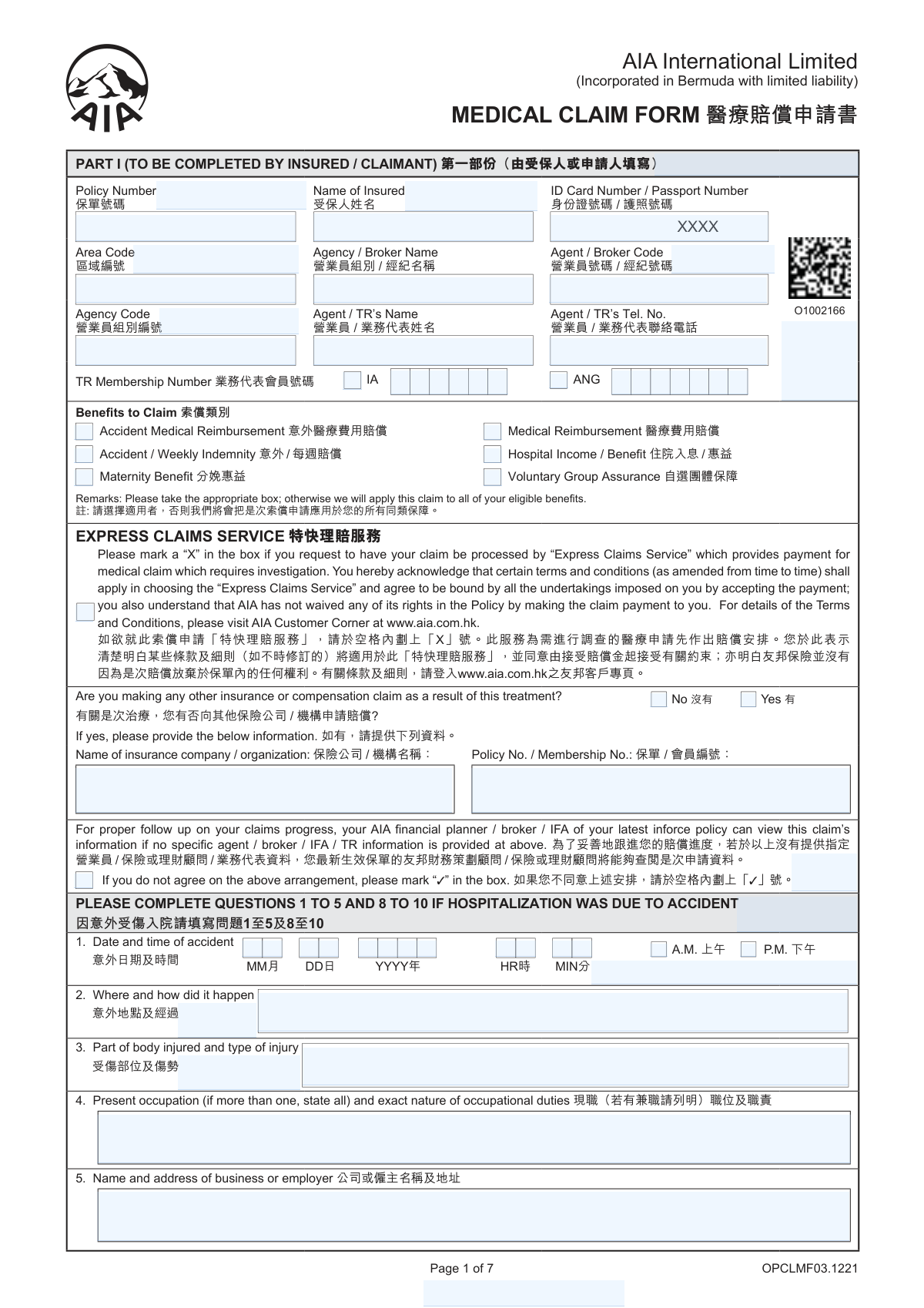
| 1. | AIA International Limited Medical Claim Form | 7 | Moderate 59 |
| 2. | Form I-9, Employment Eligibility Verification | 1 | – |
| 3. | Form I-9, Employment Eligibility Verification (08/01/23) | 4 | Complex 70 |
| 4. | Form I-9, Employment Eligibility Verification (08/01/23) - Duplicate | 4 | Complex 69 |
| 5. | Formulario I-9, Verificación de Elegibilidad de Empleo | 5 | Complex 70 |
| 6. | The E-Verify Memorandum of Understanding for Employers | 13 | Moderate 55 |
- Enterprise-grade security & data encryption
- 99%+ accuracy powered by AI
- 1,000+ forms from all industries
- Complete forms in under 60 seconds
How to Choose the Right Form
Navigating employment eligibility requires staying compliant with U.S. Citizenship and Immigration Services (USCIS) and Department of Homeland Security (DHS) regulations. Depending on whether you are onboarding an individual or enrolling your business in federal verification programs, you will need to select the appropriate documentation from this list.
For Every New Hire: Form I-9
The Form I-9, Employment Eligibility Verification is the most essential document for any U.S. employer. It is mandatory for every new hire, regardless of citizenship status.
- Who it’s for: Both the employer and the employee must complete their respective sections.
- Purpose: To verify the identity and legal work authorization of a new staff member.
- Action: If you have a new employee starting work, this is the form you must fill out and retain in your records. At Instafill.ai, we provide interactive versions of this form to ensure you don't miss critical fields required for compliance.
For Business Program Enrollment: E-Verify MOU
While the I-9 is a standard requirement for all businesses, some employers choose—or are required—to go a step further using the E-Verify system. This requires a different type of paperwork.
- The E-Verify Memorandum of Understanding (MOU) for Employers: This is a binding agreement between your business and the DHS.
- Who it’s for: Business owners, HR directors, or legal representatives of a company.
- Purpose: This form is used to formalize your participation in the E-Verify program, which allows you to electronically confirm the information provided on an employee's Form I-9.
- Use Case: Select this if you are a federal contractor or operate in a state where E-Verify is mandatory, and you need to establish your company's account.
Summary of Selection
- Choose Form I-9 for day-to-day hiring and standard employee onboarding.
- Choose The E-Verify Memorandum of Understanding for high-level company enrollment in federal verification databases.
Form Comparison
| Form | Primary Purpose | Mandatory Status | Completion Deadline |
|---|---|---|---|
| Form I-9, Employment Eligibility Verification | Verifies the identity and legal work authorization of all new employees. | Legally mandatory for every employer and new hire in the U.S. | Must be completed within three business days of the employee's start date. |
| The E-Verify Memorandum of Understanding for Employers | Binding agreement to use the electronic E-Verify system for employment eligibility. | Mandatory for federal contractors; voluntary for most other U.S. employers. | Signed once when an organization initially enrolls in the E-Verify program. |
Tips for employment eligibility forms
Ensure that the names, dates, and identification numbers entered on the forms match the physical documents provided by the employee exactly. Even minor discrepancies or typos can trigger issues during a USCIS audit or cause delays in the E-Verify system.
Section 1 of the Form I-9 must be completed by the employee’s first day of employment, while Section 2 must be completed within three business days. Keeping a tight schedule for these forms is essential for maintaining federal compliance and avoiding penalties.
It is a best practice to keep all employment eligibility forms and supporting documents in a dedicated file separate from general personnel records. This organization simplifies the process during a government inspection and ensures you only share the specific data required by law.
Employers should never tell an employee which specific documents to provide from the 'List of Acceptable Documents.' Allow the employee to choose which valid identification they wish to present to ensure you are following anti-discrimination guidelines.
AI-powered tools like Instafill.ai can complete these forms in under 30 seconds with high accuracy, ensuring every mandatory field is filled correctly. Your data stays secure during the process, providing a fast and reliable way to handle high-volume hiring without manual entry errors.
Periodically review your active and terminated employee files to ensure no forms are missing or incomplete. Catching and correcting errors internally using official USCIS correction procedures is much safer than waiting for an external audit to reveal mistakes.
Frequently Asked Questions
These forms are used by employers to verify that individuals are legally authorized to work in the United States. They help businesses comply with federal immigration laws and ensure that every person on their payroll has the proper documentation to be employed.
Every employer in the United States must complete Form I-9 for every individual they hire for employment, including both citizens and noncitizens. Both the employee and the employer have specific sections to fill out to document identity and work authorization.
Section 1 of the form must be completed by the employee no later than their first day of employment. Section 2 must be completed by the employer within three business days of the employee's first day of work to remain in compliance with USCIS regulations.
Yes, you can use AI tools like Instafill.ai to complete these forms quickly and accurately. These tools can extract data from source documents and place it into the correct fields in under 30 seconds, significantly reducing the risk of manual entry errors.
While manual data entry can take several minutes and is prone to errors, AI-powered services can process and fill out employment eligibility forms in less than 30 seconds. This is achieved by accurately extracting and placing data from source documents directly into the digital PDF.
The E-Verify MOU is a formal agreement between an employer and the Department of Homeland Security that outlines the terms for using the electronic verification system. It is a necessary document for employers who are legally mandated to, or choose to, electronically confirm their employees' eligibility.
While Form I-9 is mandatory for all U.S. employers, participation in E-Verify is generally voluntary for most businesses. However, it is required for many federal contractors and may be mandated by specific state laws depending on where the business operates.
Form I-9 is generally not submitted to any government agency. Instead, employers must maintain the completed forms on file for a specific period and make them available for inspection by authorized government officials if an audit is requested.
Employees must present original documents that establish both identity and employment authorization, such as a U.S. Passport, a Permanent Resident Card, or a combination of a driver's license and a Social Security card. These are categorized into List A, List B, and List C by the USCIS.
Yes, employers are permitted to sign and store Form I-9 and other eligibility documents electronically. Using digital platforms for these forms helps organize records and ensures they are easily accessible for internal audits or government inspections.
All U.S. employers require Form I-9 for every new employee regardless of their citizenship status. If your organization is a federal contractor or operates in a state with specific mandates, you may also need to complete the E-Verify Memorandum of Understanding.
Failing to properly complete or retain employment eligibility forms can lead to significant civil penalties and fines during a government audit. Maintaining accurate and timely records for every hire is essential for legal compliance and business operations.
Glossary
- Form Complexity Index
- Instafill’s 0–100 measure of how much effort a form takes to complete, calculated deterministically from the form’s own structure rather than estimated. It combines the number of fillable fields (the largest factor), how difficult those fields are to complete based on their type, the number of pages that contain fields, the amount of conditional “fill-only-if” logic, and how many sections the form is divided into, then adds modifiers for tables and repeating lists, bundled instruction pages, and dense page layouts. A higher score means the form is harder to fill out by hand. The forms in this category have a median Form Complexity Index of 69/100 (Complex). See exactly how it is calculated.
- USCIS
- U.S. Citizenship and Immigration Services, the federal agency within the Department of Homeland Security that oversees lawful immigration and manages employment eligibility documentation.
- E-Verify
- An online, web-based system that allows enrolled employers to confirm the eligibility of their employees to work in the United States by matching information from Form I-9 against government records.
- Employment Authorization
- The legal right for a person who is not a U.S. citizen to work in the United States, which must be documented and verified by an employer using specific federal forms.
- List A, B, and C Documents
- Categories of identification documents used for Form I-9; List A proves both identity and work eligibility, while List B proves identity and List C proves work eligibility.
- Memorandum of Understanding (MOU)
- A formal, legally binding agreement between an employer and the Department of Homeland Security that outlines the rules and responsibilities for participating in the E-Verify program.
- Tentative Nonconfirmation (TNC)
- A notification from E-Verify indicating that the information provided by an employee does not immediately match government records, requiring the employee to take action to resolve the issue.
- DHS
- The Department of Homeland Security, the cabinet-level department of the federal government responsible for public security, including the agencies that manage border control and employment verification.
- Reverification
- The process an employer must perform to update Form I-9 when an employee's temporary employment authorization or work permit is about to expire.