Fill out financial disposal forms
with AI.
Financial disposal forms are essential legal instruments used when an investor or account holder needs to formally relinquish ownership of specific assets. These documents are most commonly utilized for securities that have lost their marketability or carry "insignificant value"—meaning the cost of selling them would exceed their actual worth. By filing these forms, individuals and entities can clean up their portfolios, simplify tax reporting, and ensure that defunct or worthless holdings are officially removed from their brokerage accounts.
By continuing, you acknowledge Instafill's Privacy Policy and agree to get occasional product update and promotional emails.
About financial disposal forms
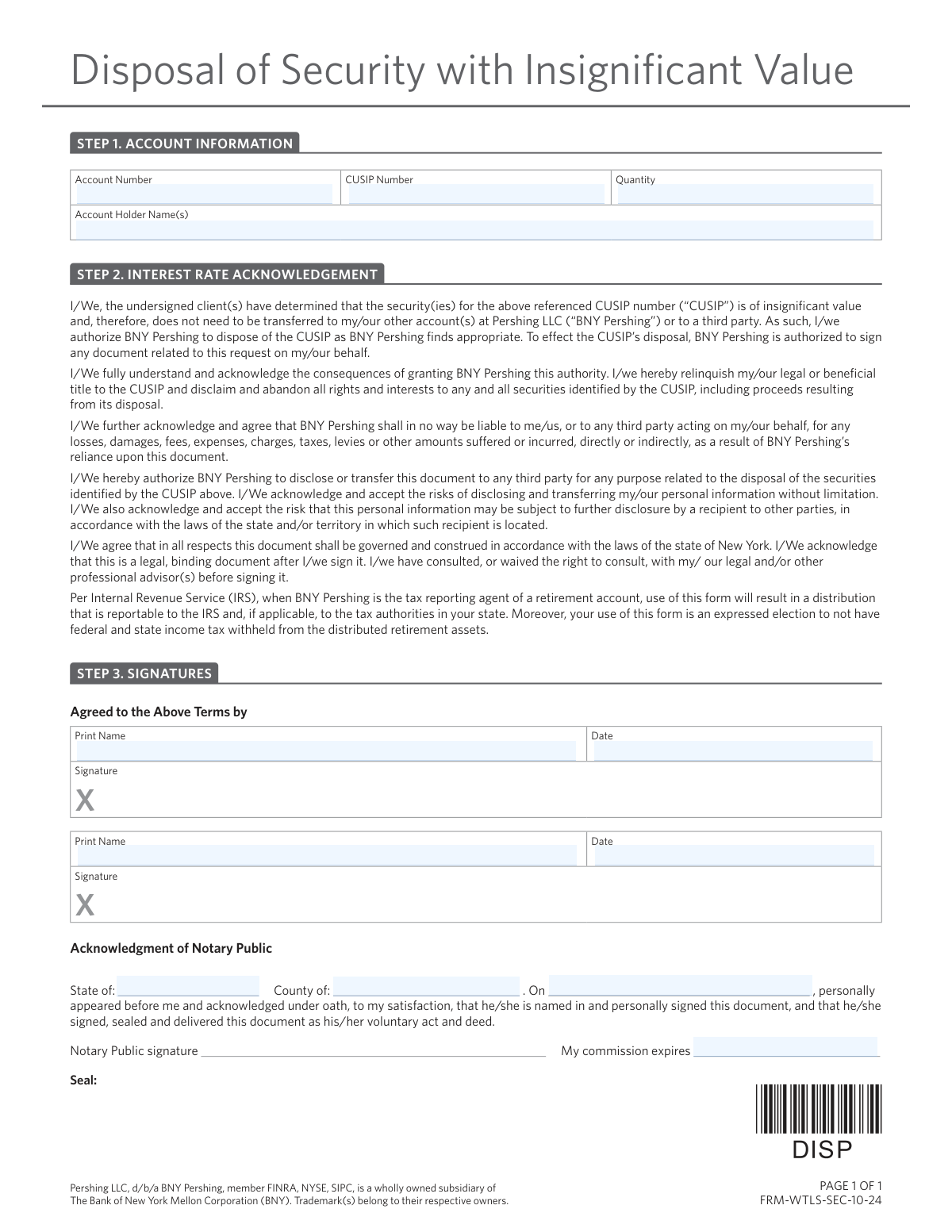
Typically, these forms are required by clients of major clearing firms and brokerages when managing legacy stocks or bonds that no longer trade on public exchanges. Whether you are settling an estate, rebalancing a corporate portfolio, or simply tidying up a personal investment account, these documents provide the necessary authorization for a financial institution to dispose of the security. Completing these forms correctly is vital, as they often include indemnification clauses that protect the brokerage while legally terminating the owner's rights and titles to the asset.
Navigating the specific requirements of financial documentation can be tedious, but modern tools have streamlined the process. Tools like Instafill.ai use AI to fill these forms in under 30 seconds, handling the data accurately and securely to ensure your records are compliant and complete without manual hassle.
Every form on this page can be completed without typing. Instafill is form filling software that reads a PDF and fills it for you — including flat and scanned documents that carry no fillable fields at all.
Forms in This Category
| Form Name | Pages | FCI | |
|---|---|---|---|
| 1. | Disposal of Security with Insignificant Value | 1 | – |
- Enterprise-grade security & data encryption
- 99%+ accuracy powered by AI
- 1,000+ forms from all industries
- Complete forms in under 60 seconds
Frequently Asked Questions
Financial disposal forms are legal documents used to authorize a brokerage or financial institution to remove securities from an account when they are deemed worthless or have insignificant value. By filing these forms, investors formally relinquish ownership, which helps clean up portfolio statements and may facilitate tax loss claims.
If a security has become 'worthless' or has such low value that the commission to sell it would exceed its market worth, a disposal form is the standard alternative. It allows the investor to move the asset out of their name without the need for a traditional market trade.
Typically, all authorized account holders listed on the brokerage account must sign the form to authorize the disposal. For accounts held by a trust, estate, or corporation, the designated trustee or authorized officer must provide their signature along with any necessary supporting documentation.
Yes, AI tools like Instafill.ai can fill out these forms in under 30 seconds by accurately extracting data from your source documents. The AI identifies relevant details like account numbers and security identifiers, placing them into the correct fields automatically.
While manual entry can be tedious and prone to errors, using an automated service allows you to complete financial disposal forms in less than a minute. AI-powered platforms ensure that complex information, such as CUSIP numbers, is transcribed accurately from your statements.
When you sign a disposal form, you generally agree to hold the financial institution harmless from any future claims or liabilities regarding that security. This protection is necessary for the firm because you are giving up all rights to the asset, including any future value it might regain.
Completed forms should be submitted to your financial advisor or directly to the clearing firm that holds your assets, such as BNY Pershing. Most institutions accept these forms via secure digital upload, although some may still require a physical copy via mail or fax.
You will typically need to provide your full brokerage account number, the exact name of the security, the number of shares or units, and the CUSIP number. Having your most recent account statement available will help ensure the data provided matches the brokerage's records.
While brokerages generally accept these forms at any time, many investors choose to submit them before the end of the calendar year. This ensures the disposal is processed and recorded in time for the current year's tax reporting cycle.
Disposing of an insignificant or worthless security often allows an investor to realize a capital loss. You should consult with a tax professional to confirm how the disposal will be treated on your tax return and what specific evidence you need to maintain for the IRS.
Generally, these disposals are considered final and irrevocable once processed by the financial institution. Because the form involves relinquishing all rights and titles to the security, it is very difficult to reclaim the asset if it unexpectedly increases in value later.
A security is often considered to have insignificant value if it is no longer traded on a public exchange or if its total market value is less than the cost of the transaction fee required to sell it. Your financial advisor can help you determine if a security meets the criteria for formal disposal.