Fill out financial enrollment forms
with AI.
Financial enrollment forms are the essential documents required to establish new accounts with brokerage firms, investment houses, or workplace savings plans. These forms serve as the gateway to managing personal wealth and retirement planning, allowing individuals to gain access to critical investment vehicles like 401(k)s, 403(b)s, or IRAs. Accurate completion of these documents is vital because they do more than just open an account; they dictate how your contributions are invested and ensure your assets are protected through legal beneficiary designations.
By continuing, you acknowledge Instafill's Privacy Policy and agree to get occasional product update and promotional emails.
About financial enrollment forms
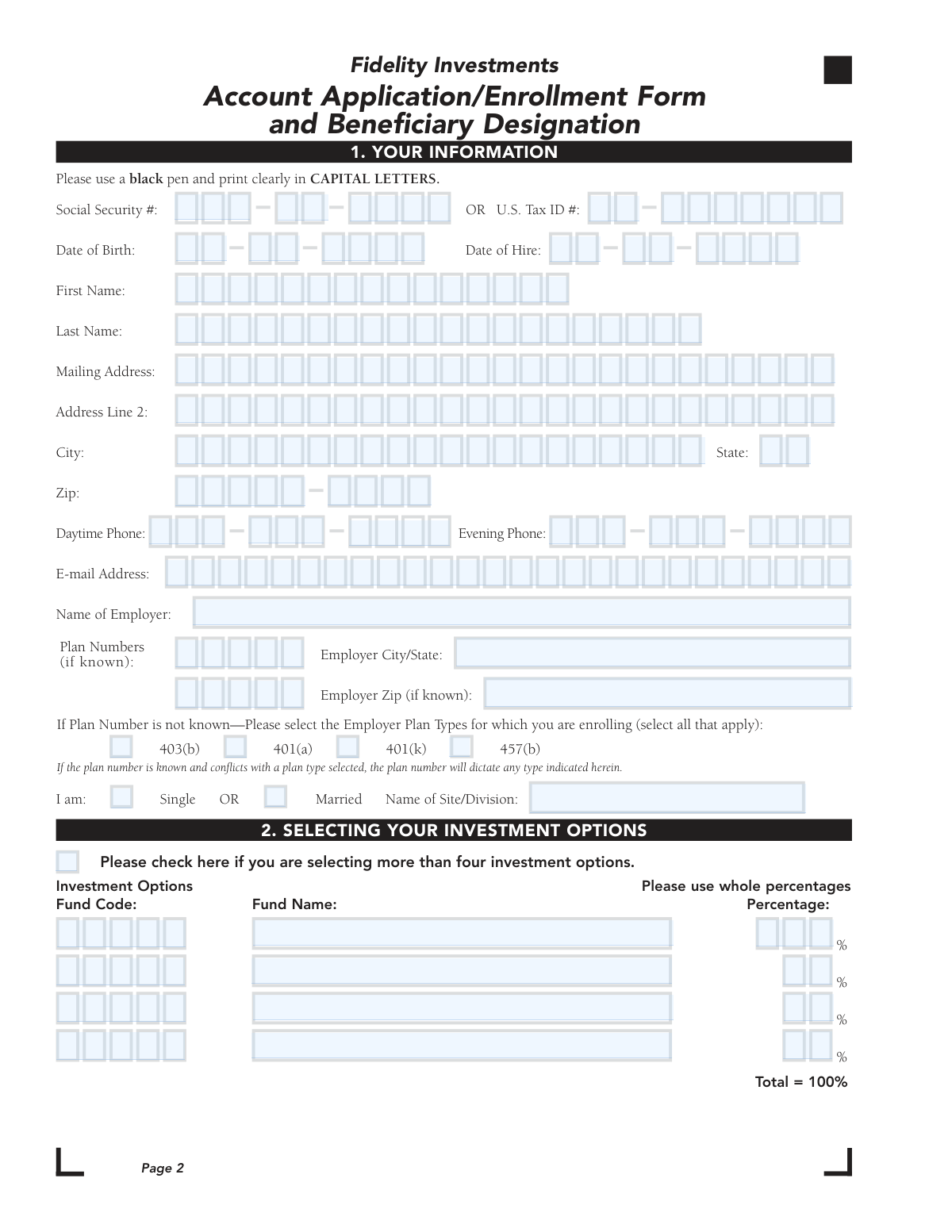
Most often, you will encounter these forms during major life transitions, such as starting a new job or deciding to consolidate your personal finances. New employees typically complete them during the onboarding process to enroll in company-sponsored retirement benefits, while individual investors use them to open independent brokerage accounts or transfer existing assets. For example, a Fidelity Investments Account Application is a standard requirement for those looking to initiate a workplace savings plan or set up a private investment account. These documents ensure that your financial intent is legally documented and your long-term goals are properly set in motion.
Navigating these complex PDFs can be time-consuming, but tools like Instafill.ai use AI to fill these forms in under 30 seconds while ensuring data is handled accurately and securely. This technology simplifies the enrollment process, allowing you to move through paperwork quickly so you can focus on your financial future.
Every form on this page can be completed without typing. Instafill is form filling software that reads a PDF and fills it for you — including flat and scanned documents that carry no fillable fields at all.
Forms in This Category
The forms in this category have a median Form Complexity Index of 53/100 (Moderate), measured across 1 forms by field count, input difficulty, length, conditional logic and structure. See how it is calculated.
| Form Name | Pages | FCI | |
|---|---|---|---|
| 1. | Fidelity Investments Account Application/Enrollment Form and Beneficiary Designation | 1 | Moderate 53 |
- Enterprise-grade security & data encryption
- 99%+ accuracy powered by AI
- 1,000+ forms from all industries
- Complete forms in under 60 seconds
How to Choose the Right Form
Navigating financial enrollment can feel overwhelming, but selecting the right document is the first step toward securing your financial future. Whether you are starting a new job or finally organizing your retirement strategy, understanding the specific components of these documents ensures your assets are managed correctly.
Setting Up Workplace Savings
If you are joining a new employer or looking to participate in a company-sponsored retirement plan, the Fidelity Investments Account Application/Enrollment Form and Beneficiary Designation is your primary tool. This form is specifically designed for:
- 401(k) and 403(b) Plans: Use this to establish your presence in a workplace savings plan and begin building your nest egg.
- Contribution Elections: It allows you to specify exactly how much of your paycheck should be diverted to your investments.
- Investment Selection: You will use this form to decide how your assets are allocated across various funds offered by your employer.
Protecting Your Assets and Heirs
A critical part of the Fidelity Investments Account Application/Enrollment Form and Beneficiary Designation is the legal designation of beneficiaries. You should choose this form if you need to:
- Designate Beneficiaries: Ensure that your assets are distributed according to your wishes rather than default state laws.
- Assign Contingents: Specify who should receive your funds if your primary beneficiary is unable to do so.
- Update Records: Use this form when life changes—like marriage or the birth of a child—require you to update who is listed on your account.
When to Use This Form
Choose this form if you have been directed by your HR department or a financial advisor to open an account under the Fidelity umbrella. It is a comprehensive document that handles account creation, investment strategy, and legal designations in one go.
Using Instafill.ai, you can quickly navigate the complex fields of this PDF, ensuring that your financial data is entered accurately before you submit it to your plan administrator.
Form Comparison
| Form | Primary Purpose | Who Files It | Key Components | Frequency |
|---|---|---|---|---|
| Fidelity Investments Account Application/Enrollment Form and Beneficiary Designation | To establish a new investment account and designate legal beneficiaries for asset distribution. | Individual investors or employees enrolling in a workplace retirement savings plan. | Personal identification, investment strategy elections, and primary or contingent beneficiary information. | Typically used once during initial account setup or when changing retirement plan providers. |
Tips for financial enrollment forms
Errors in your Social Security number or tax identification can lead to significant delays in account verification and future tax reporting. Always verify these digits against official documents before finalizing your submission to ensure your financial records remain accurate.
Ensure you provide full legal names and relationship details for all beneficiaries to avoid legal complications during asset distribution. It is a best practice to review and update these designations after major life events like marriage, divorce, or the birth of a child.
Many enrollment forms will automatically place your contributions into a default fund if you do not make a manual selection. Take a moment to review whether these default options align with your personal risk tolerance and long-term retirement goals.
Have your employer's plan ID, your bank routing numbers, and your account numbers ready before you begin the filling process. Having this data on hand prevents you from having to pause and search for information, which reduces the risk of session timeouts on digital platforms.
Financial forms often require multiple signatures, particularly if you are designating a spouse as a beneficiary or opening a joint account. Missing a single signature or date can result in the entire application being rejected, requiring you to start the process over.
AI-powered tools like Instafill.ai can complete these financial enrollment forms in under 30 seconds with high accuracy, serving as a major time-saver for those managing multiple accounts. Your data stays secure during the process, providing a safe and efficient way to handle complex PDF documents.
Frequently Asked Questions
These forms are used to officially open investment accounts, retirement plans, or insurance policies with a financial institution. They establish your legal relationship with the provider and outline how your funds will be managed, invested, and eventually distributed.
Employees starting a new job often need these forms to enroll in workplace savings plans like a 401(k) or 403(b). Individual investors also use them when opening personal brokerage accounts, IRAs, or other private investment vehicles outside of an employer-sponsored program.
You will generally need your Social Security number, legal address, employment details, and date of birth. If you are designating beneficiaries, you will also need their full names, dates of birth, and Social Security numbers to ensure the account is set up correctly.
Designating a beneficiary ensures that your assets are transferred directly to your chosen heirs in the event of your death, often bypassing the lengthy probate process. This provides legal clarity and financial security for your family or designated organizations according to your specific wishes.
Yes, AI-powered services like Instafill.ai allow you to fill out complex financial enrollment forms in under 30 seconds. These tools accurately extract data from your existing source documents and place it into the correct fields, significantly reducing the risk of manual entry errors.
While manual entry can take 15 to 30 minutes depending on the complexity of the form, using AI tools can complete the process in less than 30 seconds. This efficiency allows you to set up your accounts quickly without the need for tedious manual typing or printing and scanning.
If the form is for a workplace plan, it is often submitted to your company's HR department or directly through the provider's online portal. For personal accounts, forms are usually uploaded directly to the financial institution's secure website or sent via mail to their designated processing center.
Yes, once signed and submitted, these forms serve as a legal agreement between you and the financial institution. They dictate the terms of your account, including your contribution rates, your choice of investment allocations, and the legal distribution of assets.
Most financial institutions allow you to update your investment preferences through their online member portal at any time after the initial setup. The enrollment form sets your starting configuration, but changes can usually be made as your financial goals or market conditions evolve.
While many enrollment forms are specific to retirement plans like 401(k)s, similar forms are used for general brokerage accounts. It is important to verify that you are using the correct form version for the specific type of tax-advantaged or taxable account you intend to open.
Glossary
- Form Complexity Index
- Instafill’s 0–100 measure of how much effort a form takes to complete, calculated deterministically from the form’s own structure rather than estimated. It combines the number of fillable fields (the largest factor), how difficult those fields are to complete based on their type, the number of pages that contain fields, the amount of conditional “fill-only-if” logic, and how many sections the form is divided into, then adds modifiers for tables and repeating lists, bundled instruction pages, and dense page layouts. A higher score means the form is harder to fill out by hand. The forms in this category have a median Form Complexity Index of 53/100 (Moderate). See exactly how it is calculated.
- Beneficiary Designation
- The legal process of naming the specific individuals or entities who will receive the assets in your account in the event of your death.
- 401(k) / 403(b)
- Employer-sponsored retirement plans that allow employees to contribute a portion of their wages to individual accounts on a pre-tax or post-tax basis.
- Asset Allocation
- The strategy of dividing your investment portfolio among different asset categories, such as stocks, bonds, and cash, to balance risk based on your goals.
- Vesting
- The process by which an employee earns the right to keep employer-contributed funds in their retirement account, usually based on years of service.
- Rollover
- The transfer of funds from one retirement account, such as a previous employer's 401(k), into a new eligible plan or IRA without triggering taxes.
- Custodian
- A financial institution, such as Fidelity, that is responsible for the physical security and administrative management of your investment assets.
- Qualified Plan
- A type of retirement plan that meets specific Internal Revenue Code requirements and qualifies for certain tax-deferred benefits.
- Pre-tax Contribution
- Money deposited into a retirement account before income taxes are withheld, which lowers your total taxable income for the year.