Fill out government assistance forms
with AI.
Government assistance programs provide essential support for healthcare, housing, and financial stability, but accessing these benefits often requires navigating a complex web of paperwork. This category of forms covers the documentation necessary to establish eligibility, maintain compliance, and define the financial relationships between individuals and service providers. These documents are critical for ensuring that both the government and the recipient are on the same page regarding benefit limits and personal responsibilities.
By continuing, you acknowledge Instafill's Privacy Policy and agree to get occasional product update and promotional emails.
About government assistance forms
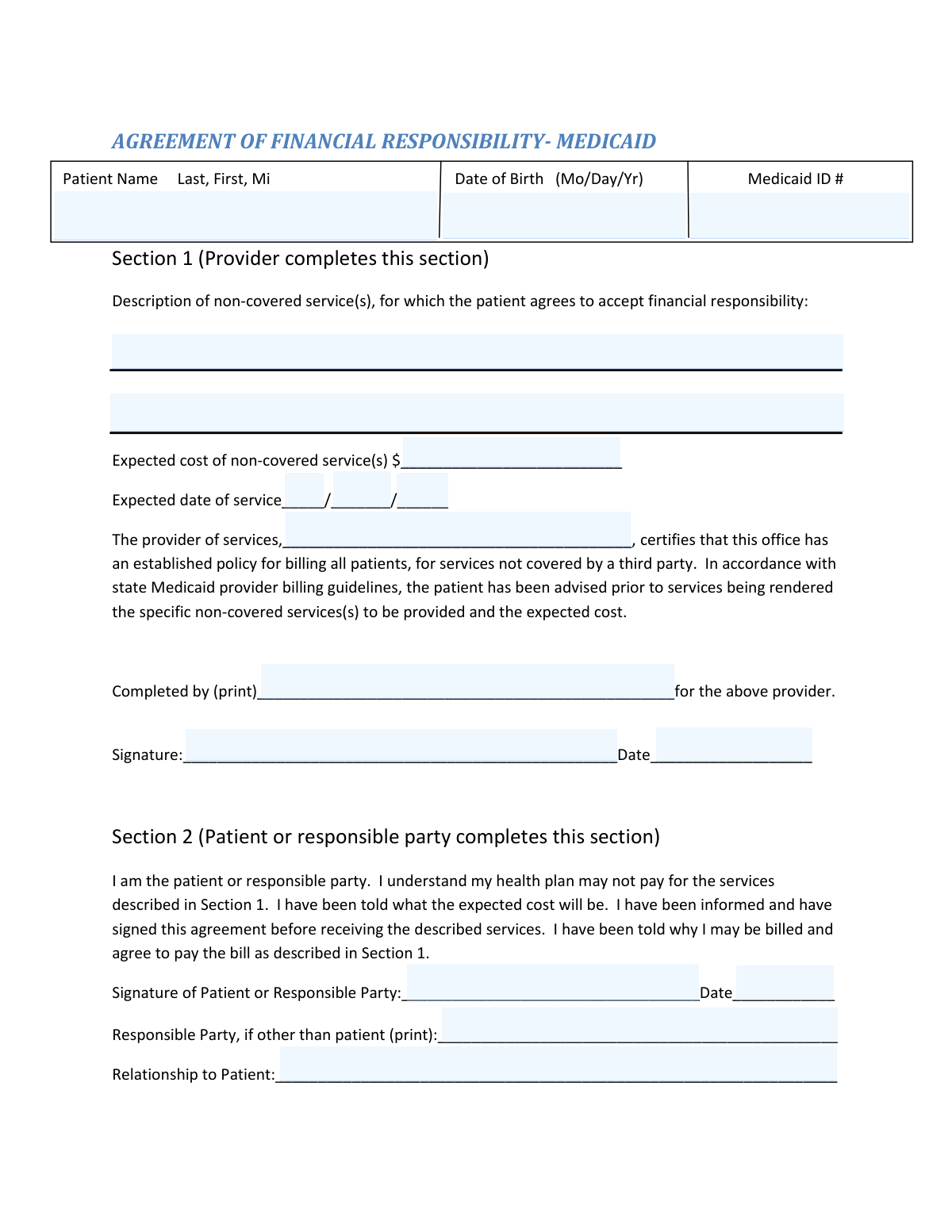
Typically, these forms are needed by patients, low-income families, or individuals facing temporary financial hardship who are interacting with programs like Medicaid. For example, documents such as the Agreement of Financial Responsibility are used in medical settings to clarify which services are covered and which remain the patient's responsibility. Completing these forms accurately is vital to avoid unexpected costs and to ensure that healthcare providers can continue offering necessary services without administrative delays.
Managing the specific requirements of government documentation can be time-consuming, but modern technology offers a more efficient path. Instafill.ai uses AI to fill these forms accurately and securely in under 30 seconds, providing a practical way to handle data entry without the usual stress. By automating the process, users can ensure their paperwork is professional and complete while focusing their energy on more important personal matters.
Every form on this page can be completed without typing. Instafill is form filling software that reads a PDF and fills it for you — including flat and scanned documents that carry no fillable fields at all.
Forms in This Category
The forms in this category have a median Form Complexity Index of 32/100 (Basic), measured across 1 forms by field count, input difficulty, length, conditional logic and structure. See how it is calculated.
| Form Name | Pages | FCI | |
|---|---|---|---|
| 1. | Agreement of Financial Responsibility - Medicaid | 1 | Basic 32 |
- Enterprise-grade security & data encryption
- 99%+ accuracy powered by AI
- 1,000+ forms from all industries
- Complete forms in under 60 seconds
How to Choose the Right Form
Navigating government assistance programs like Medicaid often involves complex paperwork to clarify what services are covered and who is responsible for costs. While this category focuses on liability and coverage gaps, understanding when this specific document is necessary is crucial for both patients and healthcare providers to avoid unexpected billing issues.
Determining If You Need This Form
If you are a healthcare provider or a patient navigating a Medicaid-covered visit, the Agreement of Financial Responsibility - Medicaid is the primary document to consider. You should use this form in the following scenarios:
- A Specific Procedure is Excluded: The medical service being requested is explicitly not covered by the state's Medicaid plan.
- Benefits Have Been Exhausted: The patient has reached the limit of their covered benefits for a specific type of care for the current period.
- Advanced Notice is Required: The provider wants to ensure the patient is fully aware of potential out-of-pocket costs before proceeding with treatment, ensuring informed consent.
Why This Form Matters
The Agreement of Financial Responsibility - Medicaid serves as a legal safeguard. For providers, it ensures that they can bill the patient directly for services that would otherwise result in a denied claim. For patients, it provides transparency, allowing them to make informed decisions about their healthcare spending and avoid the stress of surprise medical bills later on.
How to Complete the Form Efficiently
When filling out this document on Instafill.ai, ensure you have the following information ready to ensure accuracy:
- Provider Details: The official name and contact information of the medical facility or practitioner.
- Service Descriptions: A clear, detailed description of the non-covered services being provided.
- Estimated Costs: The specific dollar amount the patient will be expected to pay for these services.
- Patient Acknowledgment: A signature confirming that the patient understands their financial obligation and agrees to the terms.
Using AI-powered tools to complete the Agreement of Financial Responsibility - Medicaid helps prevent errors that could lead to billing disputes or delays in necessary medical care.
Form Comparison
| Form | Purpose | Parties Involved | Key Requirement |
|---|---|---|---|
| Agreement of Financial Responsibility - Medicaid | Documents a patient's agreement to pay for services not covered by Medicaid. | Signed by the Medicaid recipient and the healthcare service provider. | Must be completed before the non-covered medical services are rendered. |
Tips for government assistance forms
Ensure that your name, address, and Medicaid ID number exactly match your official government records. Small discrepancies can lead to processing delays or disputes regarding coverage for specific medical services.
Before signing, ask your provider for a clear list of the specific procedures or treatments that Medicaid will not pay for. Understanding these exclusions upfront prevents unexpected out-of-pocket expenses later in the billing cycle.
Always keep a copy of every financial responsibility form you sign for your personal records. Having a digital backup allows you to quickly reference the agreed-upon terms if you receive a bill that contradicts your expectations.
While the form acknowledges your responsibility, it is helpful to ask the provider for a written estimate of the costs for non-covered services. This helps you budget effectively and ensures there are no surprises when the final invoice arrives.
AI-powered tools like Instafill.ai can complete these complex forms in under 30 seconds with high accuracy. Your sensitive data stays secure during the process, making it an ideal time-saver for those managing multiple government assistance documents.
Some financial responsibility forms are only valid for a specific timeframe or a single visit. Check the dates on the form to ensure you are not inadvertently agreeing to pay for future services that might be covered later.
Missing signatures or dates are common reasons for forms being rejected or deemed invalid. Double-check that both you and the provider representative have signed the document to ensure it is legally binding and properly filed.
Frequently Asked Questions
Government assistance forms are official documents required to apply for, manage, or agree to the terms of public benefit programs such as Medicaid, SNAP, or housing assistance. They serve as a legal record to verify eligibility and ensure that both the recipient and the provider understand their rights and obligations.
This specific form is used by Medicaid beneficiaries who are receiving medical services that may not be covered by their insurance plan. It acts as a formal contract where the patient acknowledges they will be responsible for the costs if Medicaid denies payment for those specific treatments.
For financial responsibility agreements, the form must be completed and signed before the medical service is rendered. For general benefit applications, it is best to file as soon as you meet the eligibility requirements to avoid delays in receiving assistance.
Yes, AI tools like Instafill.ai can be used to fill out government assistance forms by accurately extracting data from your personal documents and populating the required fields. These tools can also convert non-fillable PDF versions of government forms into interactive documents for easier completion.
Using AI-powered services can significantly speed up the process, often allowing users to complete a form in under 30 seconds. The AI automatically identifies where data belongs, which minimizes manual entry and helps maintain high levels of accuracy.
Submission instructions vary by form; financial responsibility agreements are usually kept on file by your healthcare provider. Other assistance applications are typically submitted to your local or state social services office via their online portal, mail, or in-person drop-off.
Most forms require basic identifying information such as your full name, Social Security number, and contact details. Depending on the form, you may also need to provide your Medicaid ID number and specific details regarding the medical services or financial benefits you are addressing.
Errors on government assistance forms can lead to processing delays, denial of benefits, or unexpected medical bills. It is important to review all data for accuracy or use automated tools to ensure the information matches your official records before submission.
Many state agencies and healthcare providers now accept electronic signatures on assistance forms to streamline the application process. However, you should verify with the specific agency or provider to ensure their system is compatible with digital signature standards.
The correct form usually depends on the specific benefit you are seeking or the situation your healthcare provider has identified. If you are unsure, consulting a caseworker or your doctor's billing office can help clarify which document is required for your specific circumstances.
Glossary
- Form Complexity Index
- Instafill’s 0–100 measure of how much effort a form takes to complete, calculated deterministically from the form’s own structure rather than estimated. It combines the number of fillable fields (the largest factor), how difficult those fields are to complete based on their type, the number of pages that contain fields, the amount of conditional “fill-only-if” logic, and how many sections the form is divided into, then adds modifiers for tables and repeating lists, bundled instruction pages, and dense page layouts. A higher score means the form is harder to fill out by hand. The forms in this category have a median Form Complexity Index of 32/100 (Basic). See exactly how it is calculated.
- Medicaid
- A joint federal and state program that provides health coverage to eligible low-income adults, children, pregnant women, elderly adults, and people with disabilities.
- Beneficiary
- The individual who is officially enrolled in and receiving benefits from a government assistance program.
- Non-Covered Services
- Specific medical treatments, items, or services that a government program does not pay for, requiring the patient to pay the full cost out of pocket.
- Medically Necessary
- A determination that a specific service or supply is required to diagnose or treat a medical condition according to established clinical standards.
- Prior Authorization
- A formal approval process where a provider must obtain permission from the assistance program before delivering certain services to ensure they will be covered.
- Means-Testing
- The process of evaluating an applicant's income and assets to determine if they meet the financial criteria for receiving government aid.
- Cost-Sharing
- The share of costs for covered services that a beneficiary pays out of their own pocket, such as copayments, coinsurance, or deductibles.
- CMS (Centers for Medicare & Medicaid Services)
- The federal agency that oversees the administration of Medicaid, Medicare, and the Children's Health Insurance Program (CHIP).