Fill out healthcare compliance forms
with AI.
Healthcare compliance forms are the cornerstone of the regulatory framework that governs how medical facilities and suppliers interact with federal programs. Specifically, documentation related to 42 CFR Part 489 establishes the legal ground rules for Medicare provider agreements and supplier approvals. These forms ensure that organizations meet essential participation requirements, such as advance directive policies, surety bond obligations for home health agencies, and proper handling of patient collections. Maintaining accurate compliance documentation is not just a legal necessity; it is vital for ensuring uninterrupted service delivery and securing Medicare reimbursement.
By continuing, you acknowledge Instafill's Privacy Policy and agree to get occasional product update and promotional emails.
About healthcare compliance forms
These forms are typically required by administrators and compliance officers at hospitals, skilled nursing facilities, hospices, and other healthcare entities. Whether you are navigating the initial enrollment process, undergoing a re-validation, or managing a change in ownership, the administrative burden of these filings can be significant. Accuracy is paramount, as errors in provider agreements or supplier approvals can lead to delays in participation or issues with federal oversight.
Managing this complex paperwork manually is time-consuming and prone to clerical errors. Modern tools like Instafill.ai use AI to fill out these compliance forms in under 30 seconds, ensuring data is handled accurately and securely. The platform can also convert standard PDF documents into interactive, fillable formats, streamlining the entire documentation process for busy healthcare professionals.
Every form on this page can be completed without typing. Instafill is form filling software that reads a PDF and fills it for you — including flat and scanned documents that carry no fillable fields at all.
Forms in This Category
The forms in this category have a median Form Complexity Index of 24/100 (Simple), measured across 1 forms by field count, input difficulty, length, conditional logic and structure. See how it is calculated.
| Form Name | Pages | FCI | |
|---|---|---|---|
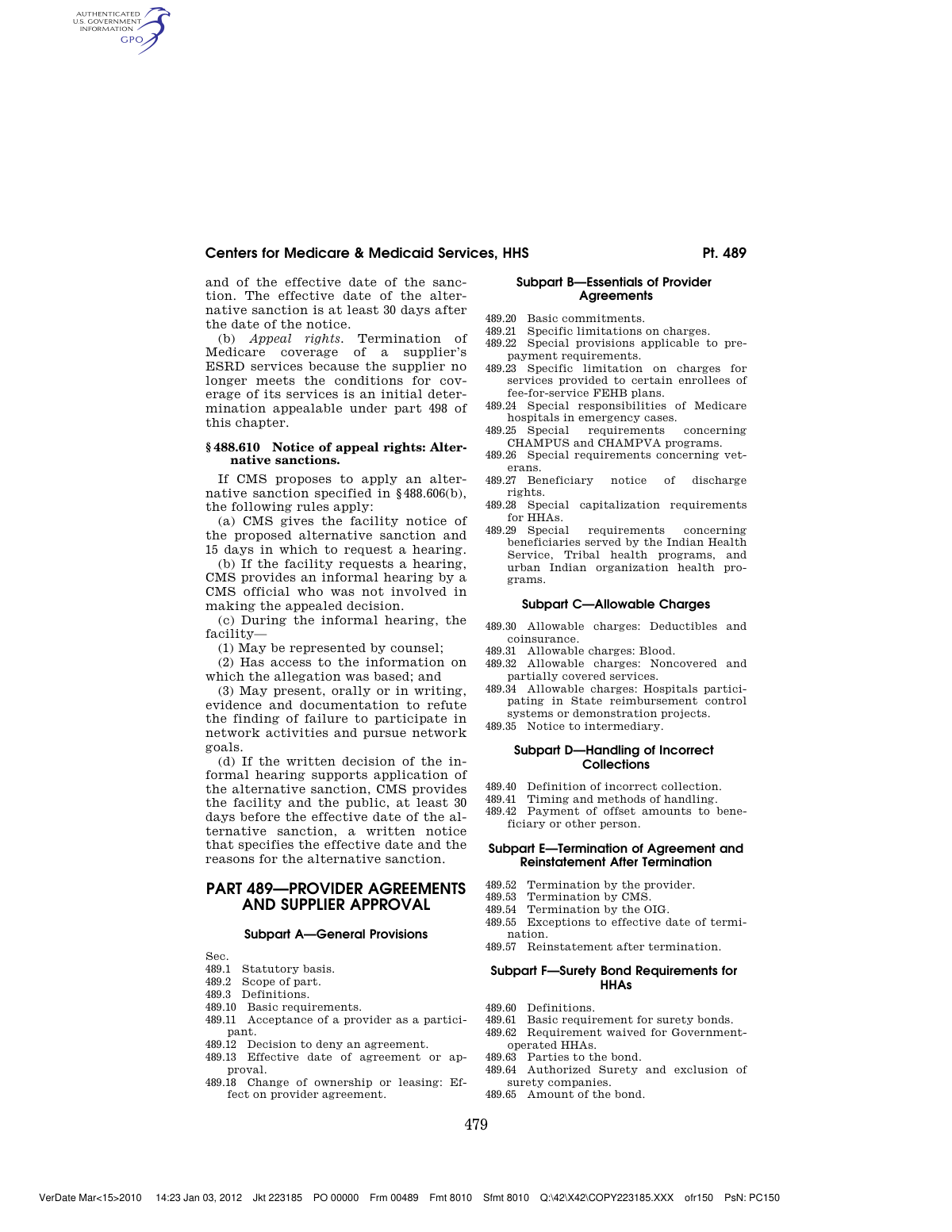
| 1. | 42 CFR Part 489 - Provider Agreements and Supplier Approval (Centers for Medicare & Medicaid Services) | 1 | Simple 24 |
- Enterprise-grade security & data encryption
- 99%+ accuracy powered by AI
- 1,000+ forms from all industries
- Complete forms in under 60 seconds
How to Choose the Right Form
Navigating healthcare compliance is critical for any facility seeking to participate in federal programs. While this category focuses on a primary federal regulation, understanding whether you need to document compliance for 42 CFR Part 489 is essential for ensuring your facility can legally receive Medicare reimbursement.
Identifying Your Provider Type
The documentation within the 42 CFR Part 489 - Provider Agreements and Supplier Approval framework applies to a specific set of healthcare entities. You should prioritize this form if you represent:
- Hospitals and Skilled Nursing Facilities (SNFs): To establish the basic requirements for participation and essential commitments.
- Home Health Agencies (HHAs): Specifically to address surety bond requirements and participation terms.
- Hospices and Clinics: To formalize the legal agreement required by the Centers for Medicare & Medicaid Services (CMS).
- Other Suppliers: Including Comprehensive Outpatient Rehabilitation Facilities (CORFs) and community mental health centers.
Key Compliance Use Cases
Use the 42 CFR Part 489 documentation to address the following specific regulatory needs:
- Initial Medicare Enrollment: When your facility is seeking its first provider agreement to begin billing the Medicare program.
- Managing Allowable Charges: To document compliance with rules regarding what can be charged to beneficiaries and how to rectify incorrect collections.
- Advance Directive Policies: To ensure your facility meets the federal mandate for providing patients with information regarding their right to make healthcare decisions.
- Termination and Reinstatement: If you are managing the voluntary or involuntary termination of a provider agreement, or seeking to reinstate an agreement after a period of non-compliance.
Because these forms define the legal terms of your participation in the Medicare program, accuracy is paramount. Using Instafill.ai ensures that these complex federal documents are completed precisely, helping you avoid administrative delays or compliance audits.
Form Comparison
| Form | Primary Purpose | Applicable Entities | Key Requirements | Frequency of Use |
|---|---|---|---|---|
| 42 CFR Part 489 - Provider Agreements and Supplier Approval (Centers for Medicare & Medicaid Services) | Establishes the legal framework for Medicare provider agreements and supplier approvals. | Hospitals, home health agencies, hospices, and skilled nursing facilities. | Covers allowable charges, termination procedures, and advance directive policies. | Required for initial Medicare participation, reinstatement, or provider status changes. |
Tips for healthcare compliance forms
When filling out provider agreements, verify that your National Provider Identifier (NPI) and Tax Identification Number (TIN) match your official CMS records. Even minor discrepancies in these identifiers can lead to significant delays in supplier approval or reimbursement processing.
Managing complex healthcare compliance paperwork can be overwhelming, but AI-powered tools like Instafill.ai can complete these forms in under 30 seconds with high accuracy. Your data stays secure during the process, providing a practical and fast solution for administrators dealing with multiple regulatory filings.
Under 42 CFR Part 489, many providers must maintain written policies regarding patient advance directives. Ensure your documentation explicitly outlines how patients are informed of their rights to avoid compliance gaps during CMS surveys or inspections.
Organize all submitted provider agreements and supporting evidence in a single, accessible location. Having a clear digital record of your commitments and approvals simplifies the process if your facility is selected for a Medicare audit or reinstatement review.
If you are filing for a home health agency, pay close attention to the surety bond requirements mentioned in the regulations. Ensure your bond amount meets the current federal threshold and that the documentation is attached correctly to prevent an immediate rejection of your application.
Before submitting your agreement, double-check the sections regarding allowable charges to beneficiaries. Incorrectly identifying which services are billable to the patient versus Medicare is a frequent compliance error that can lead to the termination of a provider agreement.
Frequently Asked Questions
These forms are legal documents used by healthcare providers to establish and maintain agreements with the Centers for Medicare & Medicaid Services (CMS). They ensure that facilities like hospitals and skilled nursing facilities adhere to federal standards for patient care, billing, and administrative operations.
Any healthcare entity seeking to participate in the Medicare program must complete these forms, including hospitals, home health agencies, hospices, and specialized clinics. These documents serve as a formal commitment to follow federal regulations in exchange for the right to receive reimbursement for services.
The documentation covers essential commitments such as allowable charges to beneficiaries, the handling of incorrect collections, and the implementation of advance directive policies. It also outlines the specific criteria for supplier approval and the maintenance of surety bonds for certain agency types.
Providers generally need to file or update these forms during initial enrollment, when there is a change in ownership, or if there are significant changes to their operational structure. Regular reviews are necessary to ensure the provider remains in good standing with CMS regulations and avoids termination of their agreement.
Yes, AI tools like Instafill.ai can streamline the process of completing complex healthcare compliance documents. These tools can accurately extract data from your source files and populate the necessary fields in under 30 seconds, reducing the risk of manual entry errors.
AI-powered services like Instafill.ai use advanced algorithms to map data from existing records directly into the required PDF fields. This ensures that technical details, such as NPI numbers or facility addresses, are placed correctly and consistently across all compliance paperwork.
Under 42 CFR Part 489, providers must document their policies regarding advance directives, which are legal instructions regarding a patient's preferences for medical care. Compliance forms often require providers to certify that they inform patients of their rights to make these healthcare decisions upon admission.
Failure to maintain accurate and up-to-date provider agreements can lead to the termination of a facility's participation in the Medicare program. This would result in the loss of federal funding and the legal inability to bill for services provided to Medicare beneficiaries.
Yes, the regulations specify that Home Health Agencies (HHAs) must often provide documentation of a surety bond as part of their supplier approval process. This serves as a financial guarantee that protects the Medicare program against potential losses, fraud, or overpayments.
Most healthcare compliance and provider agreement forms are submitted to the Centers for Medicare & Medicaid Services (CMS) or their designated Medicare Administrative Contractors (MACs). Submission processes may vary by region, so it is important to verify the specific digital portal or mailing address for your jurisdiction.
Using AI-driven platforms like Instafill.ai, the time required to complete these forms is significantly reduced compared to manual typing. Users can often finish the entire documentation process in under 30 seconds by automating the data extraction and placement from their existing records.
Glossary
- Form Complexity Index
- Instafill’s 0–100 measure of how much effort a form takes to complete, calculated deterministically from the form’s own structure rather than estimated. It combines the number of fillable fields (the largest factor), how difficult those fields are to complete based on their type, the number of pages that contain fields, the amount of conditional “fill-only-if” logic, and how many sections the form is divided into, then adds modifiers for tables and repeating lists, bundled instruction pages, and dense page layouts. A higher score means the form is harder to fill out by hand. The forms in this category have a median Form Complexity Index of 24/100 (Simple). See exactly how it is calculated.
- CMS (Centers for Medicare & Medicaid Services)
- The federal agency that administers the Medicare program and works with state governments to manage Medicaid and the Health Insurance Portability and Accountability Act (HIPAA).
- Provider Agreement
- A formal contract between a healthcare facility and CMS where the provider agrees to follow federal regulations in exchange for the right to bill and receive payments from Medicare.
- Advance Directive
- A legal document that outlines a patient's preferences for medical care if they become unable to make decisions, which providers are required to discuss with patients under federal compliance rules.
- Conditions of Participation (CoP)
- The minimum health and safety standards that healthcare organizations must meet and maintain to be eligible for participation in the Medicare and Medicaid programs.
- Surety Bond
- A financial guarantee required for certain entities, like home health agencies, to ensure the Medicare program is protected against potential financial losses or overpayments.
- Supplier Approval
- The process by which CMS certifies that a business, such as a medical equipment provider or laboratory, meets the specific requirements to provide goods and services to Medicare beneficiaries.
- Allowable Charges
- The maximum amount a healthcare provider is permitted to charge a Medicare patient for covered services as dictated by their signed provider agreement.
- Termination of Agreement
- The legal process of ending a provider's participation in the Medicare program, which can occur voluntarily by the provider or involuntarily due to a failure to meet compliance standards.