Yes! You can use AI to fill out 42 CFR Part 489 - Provider Agreements and Supplier Approval (Centers for Medicare & Medicaid Services)

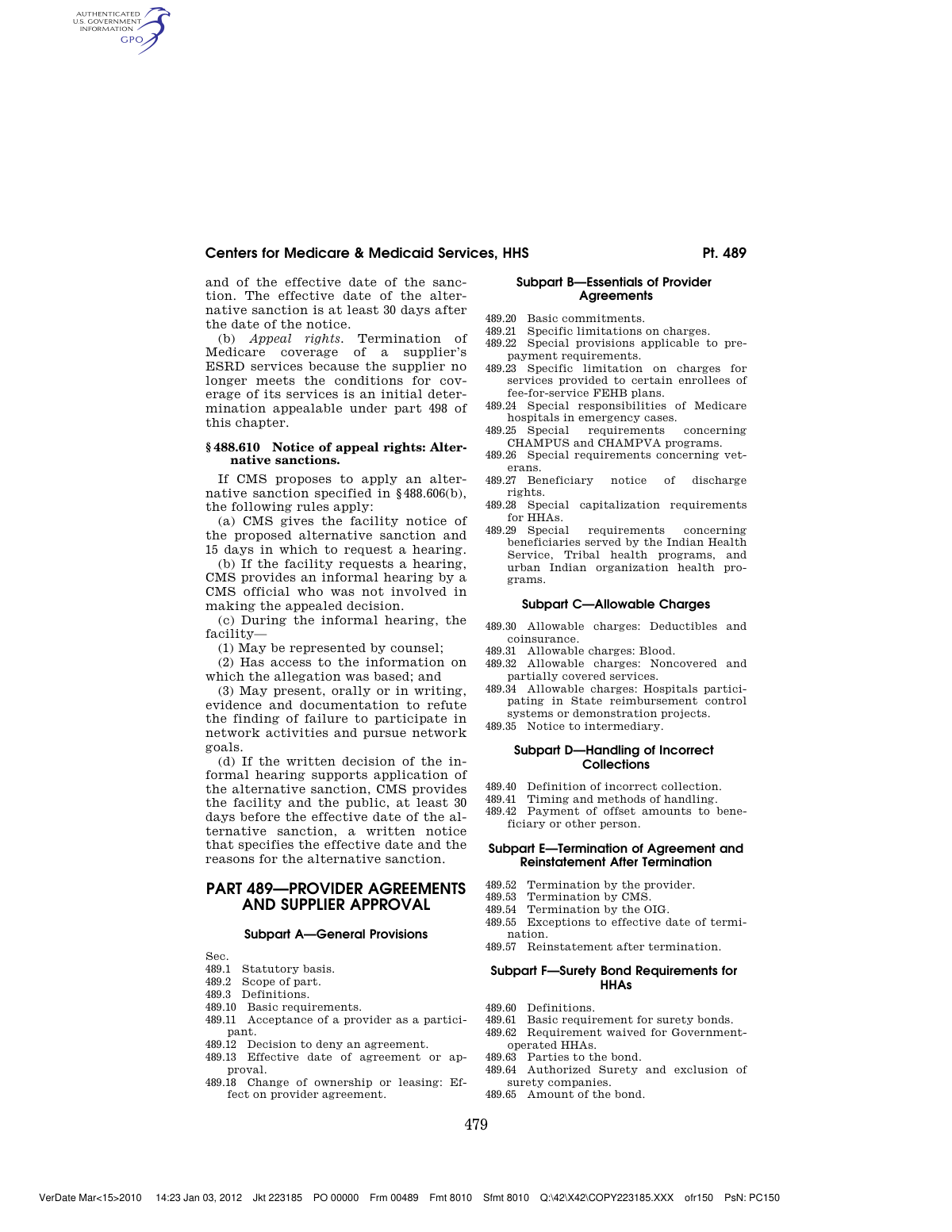
42 CFR Part 489 is a federal regulation issued by the Centers for Medicare & Medicaid Services (CMS) that establishes the legal framework for Medicare provider agreements and supplier approvals. It covers the basic requirements for participation, essential commitments providers must make, allowable charges, handling of incorrect collections, termination and reinstatement procedures, surety bond requirements for home health agencies, and advance directive policies. This regulation is critically important because it defines the terms under which hospitals, skilled nursing facilities, home health agencies, hospices, and other healthcare providers may participate in the Medicare program. Today, compliance-related forms and documentation associated with 42 CFR Part 489 can be completed quickly and accurately using AI-powered services like Instafill.ai, which can also convert non-fillable PDF versions of related forms into interactive fillable formats.
Our AI automatically handles information lookup, data retrieval, formatting, and form filling.
It takes less than a minute to fill out 42 CFR Part 489 using our AI form filling.
Securely upload your data. Information is encrypted in transit and deleted immediately after the form is filled out.

Form specifications

Form name: 42 CFR Part 489 - Provider Agreements and Supplier Approval (Centers for Medicare & Medicaid Services)
Number of pages: 1
Language: English
Categories: CAR forms, Medicaid forms, CMS forms, L.A. Care forms, Medicare forms
main-image

Instafill Demo: How to fill out PDF forms in seconds with AI

How to Fill Out 42 CFR Part 489 Online for Free in 2026

Are you looking to fill out a 42 CFR PART 489 form online quickly and accurately? Instafill.ai offers the #1 AI-powered PDF filling software of 2026, allowing you to complete your 42 CFR PART 489 form in just 37 seconds or less.
Follow these steps to fill out your 42 CFR PART 489 form online using Instafill.ai:
  1. 1 Navigate to Instafill.ai and upload or select the relevant CMS compliance form associated with 42 CFR Part 489, such as a provider agreement or enrollment application (e.g., Form CMS-855).
  2. 2 Review the regulatory requirements under 42 CFR Part 489 to identify which subparts and sections apply to your provider type (e.g., hospital, SNF, HHA, hospice).
  3. 3 Enter your organization's identifying information, including provider name, address, National Provider Identifier (NPI), and type of healthcare entity.
  4. 4 Complete the applicable sections regarding basic commitments, civil rights compliance, advance directive policies, and any special requirements relevant to your provider category.
  5. 5 If applicable, provide surety bond information (for HHAs) or capitalization documentation, including financial institution attestations and bond amounts as required under Subpart F.
  6. 6 Review all entered information for accuracy, ensuring compliance with the conditions of participation, conditions for coverage, and enrollment requirements outlined in 42 CFR Part 489.
  7. 7 Submit the completed form electronically through Instafill.ai or download and file it with CMS or the appropriate State survey agency as required.

Our AI-powered system ensures each field is filled out correctly, reducing errors and saving you time.

Why Choose Instafill.ai for Your Fillable 42 CFR Part 489 Form?

Speed

Complete your 42 CFR Part 489 in as little as 37 seconds.

Up-to-Date

Always use the latest 2026 42 CFR Part 489 form version.

Cost-effective

No need to hire expensive lawyers.

Accuracy

Our AI performs 10 compliance checks to ensure your form is error-free.

Security

Your personal information is protected with bank-level encryption.

Frequently Asked Questions About Form 42 CFR Part 489

Part 489 (42 CFR Part 489) governs Medicare Provider Agreements and Supplier Approval. It covers the basic requirements for entering into a Medicare provider agreement, the commitments providers must make, allowable charges to beneficiaries, handling of incorrect collections, termination and reinstatement of agreements, surety bond requirements for Home Health Agencies (HHAs), and advance directive requirements.

The following providers are subject to Part 489: hospitals, skilled nursing facilities (SNFs), home health agencies (HHAs), clinics/rehabilitation agencies/public health agencies, comprehensive outpatient rehabilitation facilities (CORFs), hospices, critical access hospitals (CAHs), community mental health centers (CMHCs), and religious nonmedical health care institutions (RNHCIs). Note that CMHCs may only enter agreements to furnish partial hospitalization services, and clinics/rehabilitation/public health agencies may only enter agreements for outpatient physical therapy and speech pathology services.

To participate in Medicare, a provider must: (1) meet the applicable conditions of participation or requirements for their provider type; (2) comply with civil rights requirements under Title VI of the Civil Rights Act, Section 504 of the Rehabilitation Act, and the Age Discrimination Act; (3) meet advance directive requirements (for hospitals, SNFs, HHAs, hospices, and RNHCIs); and (4) for HHAs, also meet surety bond and capitalization requirements. The State survey agency will assess whether the provider meets conditions of participation and make recommendations to CMS.

CMS may refuse to enter into a provider agreement if: (1) principals of the prospective provider have been convicted of fraud; (2) the provider failed to disclose ownership and control interests as required; (3) the provider is a physician-owned hospital without procedures for making physician ownership disclosures to patients; (4) the provider cannot give satisfactory assurance of compliance with Medicare requirements; or (5) the provider fails to comply with civil rights requirements.

If all health and safety standards are met on the date of the survey, the agreement is effective on the date the State agency, CMS, or CMS contractor survey is completed (or the effective date of accreditation). If standards are not fully met on the survey date, the effective date depends on the provider type — for SNFs, it is the date of substantial compliance; for other providers, it is the earlier of the date all conditions are met or the date a plan of correction or waiver request is received. The effective date cannot be earlier than the latest date on which CMS determines each applicable Federal requirement is met.

When a change of ownership occurs (such as a partnership change, transfer of title for a sole proprietorship, corporate merger, or lease of a facility), the existing provider agreement is automatically assigned to the new owner. The provider contemplating a change of ownership must notify CMS in advance. The assigned agreement remains subject to all applicable statutes, regulations, existing plans of correction, health and safety standards, ownership disclosure requirements, and civil rights requirements.

By signing a provider agreement, a provider commits to: limiting charges to beneficiaries per Medicare rules; returning incorrectly collected amounts; billing other primary payers before Medicare; reimbursing Medicare for overpayments within 60 days; maintaining a system to identify primary payers; complying with emergency care responsibilities (for hospitals); providing advance directive information; notifying beneficiaries of discharge rights; and complying with all applicable Medicare regulations. Hospitals also commit to maintaining on-call physician lists, emergency department logs, and posting required notices.

Under §489.24, Medicare hospitals with emergency departments must provide an appropriate medical screening examination to any individual who comes to the emergency department, regardless of ability to pay or Medicare eligibility. If an emergency medical condition is found, the hospital must provide stabilizing treatment or arrange an appropriate transfer. Hospitals with specialized capabilities (e.g., burn units, trauma centers) may not refuse appropriate transfers if they have capacity. Failure to comply can result in termination of the provider agreement.

CMS may terminate a provider agreement if the provider: fails to comply with Medicare regulations or the agreement; places improper restrictions on patients; no longer meets conditions of participation; fails to furnish required information; refuses to permit examination of records; fails to comply with civil rights requirements; fails to report suspected EMTALA violations; fails to comply with CHAMPUS/CHAMPVA or veterans' admission requirements; fails to provide discharge rights notices; or has had its Medicare enrollment revoked. For hospitals with emergency departments, CMS may also terminate for EMTALA violations. CMS generally provides at least 15 days' notice before termination, except in immediate jeopardy situations.

Yes. A provider may appeal a termination by CMS in accordance with Part 498 of the regulations. If the OIG terminates the agreement, the provider may appeal under Subpart O of Part 405 and the additional procedures in §§1001.105 through 1001.109. In both cases, the provider has the right to contest the termination through the established administrative appeals process.

Yes. All Medicare-participating HHAs (or those seeking to become participating HHAs) must obtain a surety bond from an authorized surety company and file it with CMS. The bond amount must be $50,000 or 15% of Medicare payments in the most recent accepted cost report year, whichever is greater (though the 15% provision expired for bonds submitted on or after June 1, 2005, leaving the minimum at $50,000 unless CMS specifies otherwise). Government-operated HHAs may be exempt if they meet certain criteria. Failure to obtain or maintain the bond can result in termination of the provider agreement.

Hospitals, critical access hospitals, SNFs, nursing facilities, HHAs, hospices, and RNHCIs must maintain written policies on advance directives and must: provide written information to adult patients about their rights to make medical decisions and formulate advance directives; document in the medical record whether the patient has an advance directive; not discriminate based on whether a patient has an advance directive; ensure compliance with State law; educate staff on advance directive policies; and provide community education on advance directives. This information must be provided at admission (hospitals/SNFs), before care begins (HHAs), or at initial receipt of care (hospices).

Under §489.21, providers may not charge beneficiaries for: services covered by Medicare; services that would be covered if the provider had proper certifications, required information, or timely utilization review on file; inpatient hospital services where Part A benefits are exhausted and CMS reimburses the provider; custodial care determined to be incorrectly paid after the third year following the payment notice (if the beneficiary was without fault); and items/services furnished to hospital inpatients or SNF residents for which Medicare payment would be made if furnished by the hospital or SNF.

Yes. AI-powered services like Instafill.ai can help healthcare providers and administrators auto-fill CMS forms accurately, saving significant time when completing Medicare enrollment applications, provider agreement documents, and related regulatory paperwork. Instafill.ai can also convert flat, non-fillable PDF versions of CMS forms into interactive fillable forms, making the process more efficient and reducing errors.

To fill out CMS Medicare provider agreement forms online using Instafill.ai, visit Instafill.ai and upload your CMS form (such as the CMS-855 enrollment application or other provider agreement documents). The AI will auto-populate the form fields based on the information you provide, guide you through required sections, and help ensure accuracy. If your PDF is a flat, non-fillable document, Instafill.ai can convert it into an interactive form so you can complete it digitally and submit it to CMS.

Compliance 42 CFR Part 489
Validation Checks by Instafill.ai

1
Provider Type Classification Accuracy
Validates that the provider type selected on the form matches one of the enumerated categories under §489.2(b), including hospitals, SNFs, HHAs, clinics, rehabilitation agencies, public health agencies, CORFs, hospices, CAHs, CMHCs, and RNHCIs. This is critical because each provider type is subject to different conditions of participation, coverage requirements, and agreement terms. If an incorrect provider type is selected, the wrong regulatory requirements may be applied, potentially invalidating the entire agreement.
2
Authorized Official Signature Presence
Confirms that both copies of the provider agreement have been signed by a duly authorized official of the provider organization, as required under §489.11(b). The signature must be from an individual with legal authority to bind the organization to the agreement terms. Absence of a valid authorized signature renders the agreement legally unenforceable and CMS cannot accept or process the application.
3
Insolvency and Bankruptcy Disclosure Statement
Verifies that the provider has included a written statement indicating whether it has been adjudged insolvent or bankrupt in any State or Federal court, or whether any insolvency or bankruptcy actions are pending, as required by §489.11(b). This disclosure is a mandatory component of the agreement submission. Failure to include this statement constitutes an incomplete submission and CMS cannot accept the agreement without it.
4
Effective Date Logical Consistency
Validates that the proposed effective date of the provider agreement is not earlier than the latest date on which CMS determines each applicable Federal requirement has been met, per §489.13(b). The effective date must align with the completion of the State agency or CMS survey, or the accreditation decision date, whichever applies. An effective date that precedes the satisfaction of all Federal requirements, including enrollment requirements under Part 424 Subpart P, must be flagged as invalid.
5
Civil Rights Compliance Attestation Completeness
Checks that the provider has attested to compliance with all applicable civil rights requirements under §489.10(b), including Title VI of the Civil Rights Act of 1964 (45 CFR Part 80), Section 504 of the Rehabilitation Act of 1973 (45 CFR Part 84), and the Age Discrimination Act of 1975 (45 CFR Part 90). All three statutes must be addressed; partial attestation is insufficient. Failure to attest to any one of these requirements is grounds for CMS to refuse to enter into a provider agreement under §489.12(c).
6
HHA Surety Bond Submission and Amount Validation
For Home Health Agency applicants, verifies that a surety bond has been submitted with the enrollment application and that the bond amount meets the minimum threshold of $50,000 or 15 percent of Medicare payments made in the most recent accepted fiscal year cost report, whichever is greater, per §489.65(a). The bond must name the HHA as Principal and CMS as Obligee from an authorized Surety with a valid Treasury Certificate of Authority. Failure to obtain, maintain, or timely file a surety bond is sufficient grounds under §489.68 for CMS to terminate or refuse a provider agreement.
7
HHA Initial Reserve Operating Funds Documentation
For new HHA applicants entering Medicare on or after January 1, 1998, validates that proof of initial reserve operating funds has been provided, including bank account statements and a financial institution officer attestation confirming fund availability, per §489.28(d). At least 50 percent of the required funds must be non-borrowed, and any borrowed portion must be from an unrelated lender. Missing or insufficient documentation of these funds is grounds for CMS to deny Medicare billing privileges under §489.28(g).
8
Physician-Owned Hospital Disclosure Procedure Verification
For hospitals meeting the physician-owned hospital definition under §489.3, validates that the application includes documentation of procedures for making physician ownership disclosures to patients in accordance with §489.20(u). This includes written notice to patients at the beginning of their stay and a requirement that each physician on medical staff disclose ownership interests at the time of referral. Absence of these procedures is an independent basis for CMS to deny an agreement under §489.12(a)(3).
9
Advance Directives Policy Documentation for Applicable Providers
Verifies that hospitals, CAHs, SNFs, HHAs, hospices, and RNHCIs have submitted written policies and procedures concerning advance directives as required by §489.102(a). The policies must address providing written information to patients about their rights, documenting advance directive status in medical records, non-discrimination based on advance directive status, staff education, and community education. Providers that fail to meet advance directives requirements cannot be accepted under §489.10(c).
10
Change of Ownership Notification and Agreement Assignment Validity
When a change of ownership is indicated on the form, validates that CMS has been notified as required by §489.18(b) and that the new owner acknowledges assumption of all conditions of the existing provider agreement, including any existing plan of correction, health and safety standards compliance, and civil rights requirements per §489.18(d). The type of ownership change must be correctly classified as partnership change, sole proprietorship transfer, corporate merger, or lease, as each has different legal implications for agreement assignment.
11
CMHC and FQHC Effective Date Exception Compliance
For Community Mental Health Centers and Federally Qualified Health Centers, validates that the effective date is recorded as the date on which CMS accepts a signed agreement assuring that all Federal requirements are met, per §489.13(a)(2)(i), rather than the survey completion date used for other provider types. CMHCs must also confirm that their agreement is limited to furnishing partial hospitalization services only, per §489.2(c)(2). Applying the wrong effective date rule to these entity types would result in an incorrect participation start date.
12
Fraud Conviction and Ownership Disclosure History Check
Validates that the application includes disclosure of any fraud convictions of principals per §420.204, ownership and control interest disclosures per §420.206, and business transaction information per §420.205. Any undisclosed conviction of fraud by a principal, or failure to disclose ownership interests, constitutes an independent basis for CMS to deny the agreement under §489.12(a)(1) and (a)(2). Incomplete or missing disclosures must be flagged before the application can proceed.
13
Laboratory Supplier CLIA Certificate Validity
For laboratory suppliers seeking Medicare approval, validates that a valid CLIA certificate issued under Part 493 is on file and that the approval is limited to the specialty and subspecialty tests the laboratory is authorized to perform, per §489.13(a)(2)(ii). The CLIA certificate must not be expired or revoked. A laboratory operating without a valid CLIA certificate cannot receive or maintain Medicare supplier approval, and any claims submitted outside authorized specialties would be invalid.
14
Termination Notice Timing and Content Requirements
When processing a provider-initiated termination under §489.52, validates that the written notice specifies a termination date that falls on the first day of a month, and that public notice has been or will be published in local newspapers at least 15 days before the effective termination date. For SNF closures, the notice must be submitted at least 60 days prior to closure per §483.75(r). The notice must specify the termination date and explain the extent to which services may continue under the exceptions in §489.55.
15
Reinstatement Eligibility Conditions Verification
For providers seeking reinstatement after termination under §489.57, validates that the application documents both that the reason for the prior termination has been removed with reasonable assurance it will not recur, and that all statutory and regulatory responsibilities of the previous agreement have been fulfilled or satisfactory arrangements made. Both conditions must be satisfied simultaneously; meeting only one is insufficient for CMS or the OIG to accept a new agreement. Missing documentation for either condition must result in rejection of the reinstatement application.
16
Surety Bond Term and Fiscal Year Alignment
For HHA surety bond submissions, validates that the bond term aligns with the HHA's fiscal year as required by §489.67, whether submitted as an annual bond or a continuous bond updated by rider. For new HHAs, the bond must be effective from the effective date of the provider agreement per §489.13. For change of ownership situations, the bond must be submitted no later than the effective date of the ownership change and cover the remainder of the fiscal year per §489.67(d). Misalignment between bond term and fiscal year creates gaps in coverage that could expose CMS to unprotected liability.

Common Mistakes in Completing 42 CFR Part 489

Failing to notify CMS of a pending change of ownership

Providers often overlook the requirement under §489.18(b) to notify CMS when contemplating or negotiating a change of ownership. This mistake commonly occurs because ownership transitions are complex business events where legal and administrative notifications can be overlooked. Failure to notify CMS can result in complications with the automatic assignment of the provider agreement to the new owner, potential compliance violations, and disruption of Medicare billing. Providers should establish an internal checklist that includes CMS notification as a mandatory step in any ownership transition process.

Returning only one copy of the provider agreement instead of both signed copies

Under §489.11(b), a provider wishing to participate must return BOTH copies of the provider agreement, duly signed by an authorized official, along with a written statement about insolvency or bankruptcy status. A common mistake is returning only one copy or forgetting to include the insolvency/bankruptcy statement. This can delay acceptance and push back the effective date of the agreement. Providers should carefully read the acceptance instructions and use a document checklist to ensure all required materials are submitted together.

Omitting the insolvency or bankruptcy disclosure statement when submitting the provider agreement

Section §489.11(b) explicitly requires that when returning signed copies of the provider agreement, the provider must also include a written statement indicating whether it has been adjudged insolvent or bankrupt in any State or Federal court, or whether any insolvency or bankruptcy actions are pending. Many applicants focus solely on signing and returning the agreement and forget this separate written statement. Omitting this disclosure can delay or jeopardize acceptance into the Medicare program. Providers should treat this as a mandatory attachment to the signed agreement.

Misunderstanding the effective date of the provider agreement when deficiencies exist

Under §489.13(c), if a provider fails to meet all health and safety standards on the date of survey, the effective date of the agreement is not the survey date but rather the date deficiencies are corrected or an acceptable plan of correction is received. Providers frequently assume the agreement is effective from the survey date regardless of deficiency status, leading to incorrect billing start dates and potential overpayment issues. Providers should carefully track the specific date CMS or the State survey agency receives an acceptable plan of correction, as that date—not the approval date—determines the effective date.

Failing to submit a surety bond with the enrollment application for new HHAs

Under §489.67(c), an HHA seeking to become a participating HHA must submit a surety bond with its enrollment application (Form CMS-855). Many new HHAs are unaware of this requirement or submit the bond after the application, causing delays or outright denial of the provider agreement under §489.68(b). The bond must be from an authorized Surety as defined in §489.64 and must meet all requirements of Subpart F. HHAs should obtain the surety bond before or simultaneously with submitting their enrollment application to avoid processing delays.

Incorrectly calculating the required surety bond amount for HHAs

Section §489.65 requires the surety bond amount to be $50,000 OR 15 percent of Medicare payments made in the most recent accepted fiscal year cost report, whichever is greater. HHAs frequently miscalculate by using the wrong fiscal year's data, failing to account for the 25 percent variance rule for subsequent bonds, or not applying the correct computation method for change-of-ownership situations. An incorrectly sized bond can result in non-compliance and potential termination of the provider agreement. HHAs should work with their fiscal intermediary and a qualified accountant to verify the correct bond amount calculation.

Physician-owned hospitals failing to provide required written ownership disclosure to patients

Under §489.20(u), physician-owned hospitals must furnish written notice to each patient at the beginning of their hospital stay or outpatient visit disclosing that the hospital is physician-owned and that a list of physician-owners is available upon request. Many physician-owned hospitals either fail to provide this notice, provide it too late in the admission process, or provide an incomplete notice that does not meet the regulatory standard. Failure to comply can result in termination of the provider agreement under §489.53(c). Hospitals should integrate this disclosure into their standard preadmission information package and train admissions staff accordingly.

Hospitals failing to maintain the required central log of emergency department visits

Section §489.20(r)(3) requires hospitals to maintain a central log on each individual who comes to the emergency department, documenting whether the individual refused treatment, was refused treatment, was transferred, admitted and treated, stabilized and transferred, or discharged. Hospitals often maintain incomplete logs, omit certain categories of outcomes, or fail to log individuals who leave without being seen. This is a basis for termination under §489.53(b)(2). Hospitals should implement standardized electronic or paper logging systems that capture all required data elements for every individual presenting to the emergency department.

Failing to bill other primary payers before Medicare

Under §489.20(g), providers are required to bill other primary payers before billing Medicare, and under §489.20(f), they must maintain a system to identify primary payers during the admission process. A common mistake is billing Medicare first when another payer (such as a liability insurer, workers' compensation, or employer group health plan) is primary, resulting in Medicare overpayments that must be reimbursed within 60 days per §489.20(h). Providers should implement robust coordination-of-benefits screening at admission and train billing staff on Medicare Secondary Payer rules. AI-powered tools like Instafill.ai can help flag coordination-of-benefits issues during the enrollment and billing process.

Providers failing to refund incorrect collections within the required timeframe

Under §489.41(a) and (b), providers must promptly refund incorrect collections to beneficiaries, and if unable to refund within 60 days of the notice of incorrect collection, must set aside the amount in a separate identified account. Many providers are unaware of the 60-day deadline or fail to notify their intermediary as required under §489.41(c). Failure to comply can result in offset of amounts otherwise due the provider and, if the agreement is terminated, direct payment to the beneficiary under §489.42. Providers should establish an internal tracking system for incorrect collection notices with automatic 60-day deadline alerts.

SNFs and HHAs failing to meet advance directive documentation requirements

Under §489.102, hospitals, SNFs, HHAs, hospices, and other listed providers must provide written advance directive information to patients at specified times (e.g., at admission for hospitals and SNFs, before care begins for HHAs), document in the medical record whether an advance directive has been executed, and educate staff on advance directive policies. A frequent mistake is providing the information after care has already begun, failing to document advance directive status in a prominent part of the medical record, or not updating patients on changes to State law within the required 90-day window. Providers should build advance directive inquiries and documentation into their standard intake workflows.

Providers failing to give adequate public notice before voluntary termination of their agreement

Under §489.52(c), a provider voluntarily terminating its Medicare agreement must publish notice in one or more local newspapers at least 15 days before the effective termination date, specifying the termination date and explaining the extent to which services may continue. SNFs closing their facilities have an additional requirement of providing at least 60 days' written notice to CMS under §489.52(a)(2). Providers often underestimate the lead time needed for newspaper publication or forget the public notice requirement entirely when focused on operational closure activities. Providers should build these notification deadlines into their termination planning timeline well in advance.
Saved over 80 hours a year

“I was never sure if my IRS forms like W-9 were filled correctly. Now, I can complete the forms accurately without any external help.”

Kevin Martin Green

Your data stays secure with advanced protection from Instafill and our subprocessors

Robust compliance program

Transparent business model

You’re not the product. You always know where your data is and what it is processed for.

ISO 27001, HIPAA, and GDPR

Our subprocesses adhere to multiple compliance standards, including but not limited to ISO 27001, HIPAA, and GDPR.

Security & privacy by design

We consider security and privacy from the initial design phase of any new service or functionality. It’s not an afterthought, it’s built-in, including support for two-factor authentication (2FA) to further protect your account.

Fill out 42 CFR Part 489 with Instafill.ai

Worried about filling PDFs wrong? Instafill securely fills 42-cfr-part-489-provider-agreements-and-supplier-approval-centers-for-medicare-medicaid-services forms, ensuring each field is accurate.



