Fill out provider agreement forms
with AI.
Provider agreement forms are the foundational contracts that enable healthcare professionals and facilities to participate in insurance networks and government programs like Medicare and Medicaid. These documents establish the legal and financial relationship between a service provider and a payer, outlining essential obligations regarding patient care standards, billing practices, and regulatory compliance. Whether it is a federal agreement like Form CMS-1561 or a state-specific Medicaid enrollment, these forms ensure that providers can legally treat patients and receive reimbursement for their services.
By continuing, you acknowledge Instafill's Privacy Policy and agree to get occasional product update and promotional emails.
About provider agreement forms
Healthcare administrators, solo practitioners, and facility managers typically encounter these forms during the credentialing and enrollment process. These situations arise when opening a new practice, joining an existing network like the Connection Dental Network, or transitioning to electronic billing systems. Because these agreements are legally binding and often involve sensitive credentials—such as NPI numbers, state licenses, and malpractice history—accuracy is paramount. Incomplete or incorrect submissions can lead to significant delays in approval, potentially disrupting a provider's ability to operate or receive payments.
Managing this paperwork can be a significant administrative burden, but tools like Instafill.ai use AI to fill these forms in under 30 seconds while ensuring data is handled accurately and securely. This streamlined approach helps medical and dental offices maintain compliance without the need for repetitive manual data entry.
Every form on this page can be completed without typing. Instafill is form filling software that reads a PDF and fills it for you — including flat and scanned documents that carry no fillable fields at all.
Forms in This Category
The forms in this category have a median Form Complexity Index of 43/100 (Basic), measured across 6 forms by field count, input difficulty, length, conditional logic and structure. See how it is calculated.
- Enterprise-grade security & data encryption
- 99%+ accuracy powered by AI
- 1,000+ forms from all industries
- Complete forms in under 60 seconds
How to Choose the Right Form
Selecting the correct provider agreement depends on your specific healthcare program, your geographic location, and whether you are establishing a new participation contract or setting up electronic billing. Use the categories below to identify the form that matches your needs.
Federal Medicare Participation
If you are a healthcare facility (such as a hospital, hospice, or home health agency) seeking to participate in the federal Medicare program, you will likely need forms issued by the Centers for Medicare & Medicaid Services (CMS):
- Form CMS-1561 (Health Insurance Benefit Agreement): This is the primary legally binding agreement between a provider and the Secretary of Health and Human Services required to receive Medicare payments.
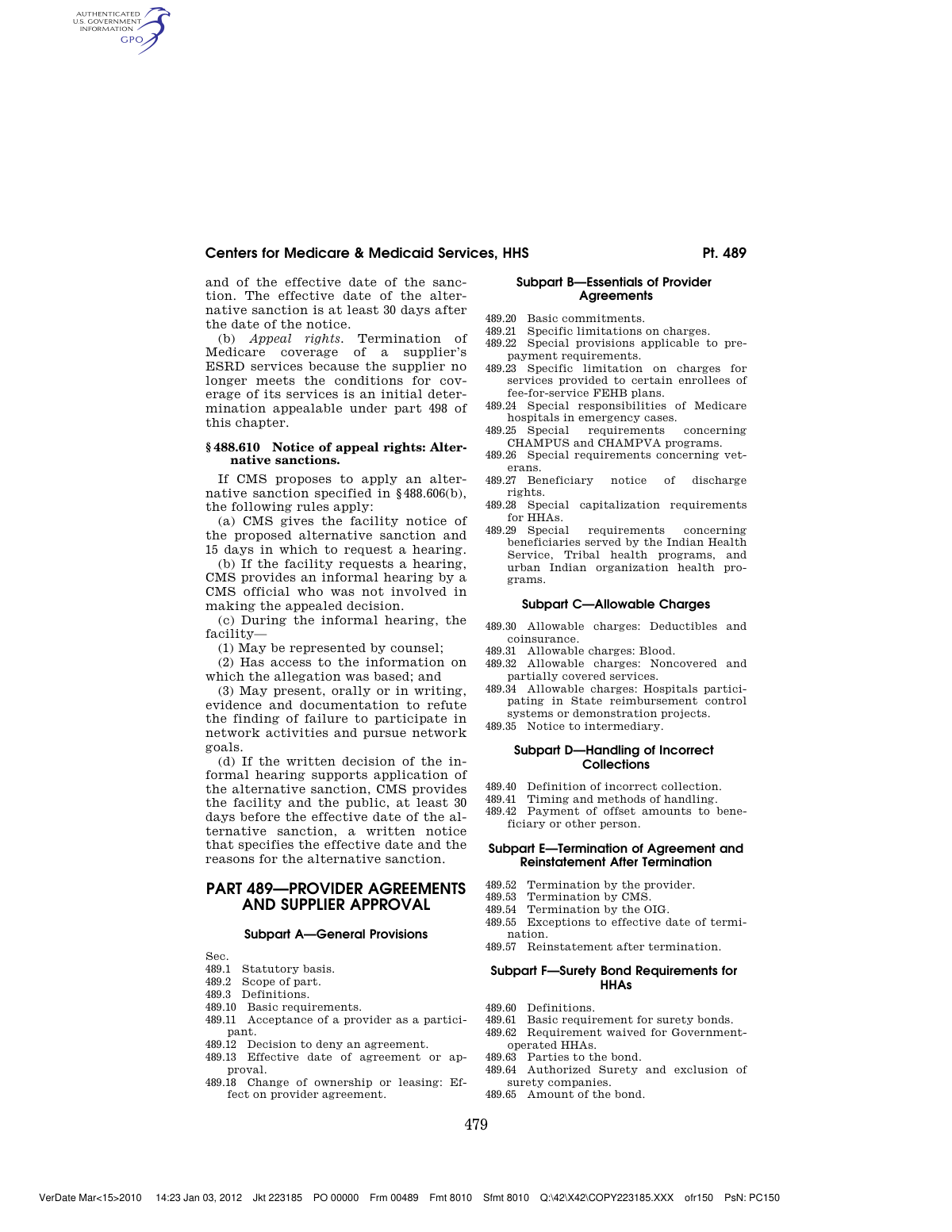
- 42 CFR Part 489 Documentation: While this is a federal regulation, you may need to reference or complete documentation related to these requirements to ensure compliance with Medicare participation standards, including advance directives and surety bond policies.
State Medicaid & Electronic Enrollment
For providers operating at the state level, agreements are specific to the local Department of Health. These forms often combine participation terms with electronic data interchange (EDI) permissions:
- Utah Department of Health Provider Agreement for Medicaid: Choose this if you are a provider in Utah establishing a contract to participate in the Title XIX Medicaid program.
- Medicaid Alaska EDI Enrollment - Provider Information Submission Agreement: Use this form if you are an Alaskan provider needing to set up electronic claims submission and receive electronic remittance advice.
Dental Networks and Private Insurance
If you are a dental professional joining a private PPO network, your requirements differ from government programs:
- Connection Dental Network – Provider Application & Participating Provider Agreement: This is a comprehensive packet for dentists joining the GEHA Connection Dental Network. It covers both the credentialing application and the contractual participation terms.
International and Electronic Claiming
If you are practicing outside the United States or specifically need to authorize electronic transactions with government agencies:
- Form HW027, Online Claiming Provider Agreement: This form is required for healthcare providers in Australia who wish to submit electronic claims to Services Australia and the Department of Veterans’ Affairs.
Tips for provider agreement forms
Ensure your National Provider Identifier (NPI) and Tax Identification Number (TIN) match exactly what is on file with the NPPES and the IRS. Even a single digit error can cause an immediate rejection of the agreement and significantly delay your ability to bill for services.
Many provider agreements require proof of state licensure, DEA certifications, and current malpractice insurance coverage. Having digital copies of these documents ready to reference will prevent the form session from timing out while you search for physical paperwork.
When filling out EDI enrollment forms, ensure the billing agent or clearinghouse information matches your existing software setup. Mismatched Submitter IDs are a common cause of failed electronic claim transmissions after an agreement is officially signed.
Managing multiple provider agreements for different networks or states is a heavy administrative burden. AI-powered tools like Instafill.ai can complete these forms in under 30 seconds with high accuracy, and your professional data stays secure during the entire process.
Provider agreements are legally binding contracts with state or federal agencies. Always ensure the person signing has the legal authority to bind the organization, as forms signed by unauthorized staff members will be voided during the credentialing audit.
For private network applications, any gap in your professional history—typically over 30 days—must be explained. Providing a brief, clear explanation for transitions or sabbaticals upfront prevents the network from returning the form for further clarification.
Frequently Asked Questions
These forms establish a legal contract between a healthcare provider and a payer or regulatory body, such as CMS or a state Medicaid agency. They outline the terms of participation, reimbursement rules, and compliance requirements necessary to receive payment for services rendered to covered patients.
Any healthcare professional or facility—including doctors, dentists, hospitals, and home health agencies—wishing to participate in a specific insurance network or government program must sign these forms. This applies to both individual practitioners and larger healthcare organizations seeking to become authorized suppliers.
The choice depends on the specific program you are joining; Medicare participation requires federal forms like CMS-1561, while Medicaid participation requires forms specific to the state where you practice, such as the Utah or Alaska Medicaid agreements. Always verify with the specific health department or insurance network you are applying to join.
An application is used to gather information for credentialing and evaluation, such as your education, training, and license history. The agreement is the actual legal contract that binds you to the network's rules, payment terms, and regulatory obligations once your application is approved.
Yes, AI tools like Instafill.ai can process these forms in under 30 seconds by accurately extracting data from your source documents and placing it into the correct fields. This significantly reduces manual entry errors and speeds up the enrollment process for busy healthcare offices.
Electronic Data Interchange (EDI) forms, like the Alaska Medicaid EDI Enrollment, allow providers to submit claims and receive payments electronically. These are often required alongside general provider agreements to ensure the administrative side of billing and remittance advice is handled securely.
Manually filling these documents can take 20 to 45 minutes depending on the complexity of your practice history and the number of required attachments. However, using an AI-powered service like Instafill.ai allows you to complete these forms in less than 30 seconds by automating the data entry process.
You will typically need your National Provider Identifier (NPI), state medical or dental licenses, DEA registration, malpractice insurance details, and a comprehensive five-year work history. Having these documents scanned and ready makes it easier for AI tools to extract the necessary information for the forms.
Most provider agreements stay in effect as long as you remain in compliance with program rules, but they may need to be updated if there is a change in ownership, practice location, or tax ID. Some networks also require periodic re-credentialing to maintain your active status.
Submission instructions vary by form; federal Medicare forms are usually sent to a Medicare Administrative Contractor (MAC), while state Medicaid forms go to the respective state Department of Health. Private network forms are typically submitted directly to the network's credentialing department via their portal or mail.
This federal regulation sets the baseline for how providers must treat patients and handle billing under Medicare. Signing an agreement that references these regulations ensures you are legally authorized to receive federal funds and are committed to standards like advance directives and civil rights compliance.
Incomplete applications or agreements can lead to significant delays in credentialing, which prevents you from billing the payer for services. Using automated tools helps ensure that all mandatory fields are addressed and data matches your professional documents, reducing the likelihood of the form being returned for corrections.
Glossary
- Form Complexity Index
- Instafill’s 0–100 measure of how much effort a form takes to complete, calculated deterministically from the form’s own structure rather than estimated. It combines the number of fillable fields (the largest factor), how difficult those fields are to complete based on their type, the number of pages that contain fields, the amount of conditional “fill-only-if” logic, and how many sections the form is divided into, then adds modifiers for tables and repeating lists, bundled instruction pages, and dense page layouts. A higher score means the form is harder to fill out by hand. The forms in this category have a median Form Complexity Index of 43/100 (Basic). See exactly how it is calculated.
- NPI (National Provider Identifier)
- A unique 10-digit identification number issued to healthcare providers in the United States by CMS. It is a mandatory requirement for all standard HIPAA electronic transactions and most provider enrollment forms.
- Credentialing
- The formal process of verifying a healthcare provider's qualifications, including their education, training, licensure, and professional history. This process must be completed before a provider can be approved to participate in an insurance network.
- EDI (Electronic Data Interchange)
- The automated, computer-to-computer exchange of standard business documents, such as medical claims and payment information. Enrolling in EDI allows providers to submit billing and receive payments electronically rather than through paper mail.
- CMS (Centers for Medicare & Medicaid Services)
- The federal agency within the U.S. Department of Health and Human Services that administers the Medicare program and works in partnership with state governments to administer Medicaid. They issue many of the standardized forms required for provider participation.
- Title XVIII and Title XIX
- Refers to the sections of the Social Security Act that established the Medicare and Medicaid programs, respectively. Provider agreements often cite these titles to define the legal framework and funding source for the services being provided.
- Remittance Advice (RA)
- An explanation provided by a health plan to a provider regarding the adjudication of a claim. It details what was paid, what was denied, and any adjustments made according to the provider agreement.
- DEA Number
- A registration number assigned to healthcare providers by the U.S. Drug Enforcement Administration. It is required on provider applications for any professional authorized to prescribe or dispense controlled substances.
- Surety Bond
- A financial guarantee required for certain providers, such as home health agencies or equipment suppliers, to ensure they fulfill their legal and financial obligations to the Medicare program. It serves as a protection against potential fraud or overpayment.