Fill out healthcare release forms
with AI.
Healthcare release forms, often referred to as medical records release forms or HIPAA authorizations, are critical legal documents that bridge the gap between patient privacy and the necessary sharing of information. Because of strict federal and state privacy laws, healthcare providers cannot share your medical history, diagnosis, or treatment plans with third parties without explicit written consent. These forms ensure that your sensitive health data is only accessed by authorized individuals, protecting your privacy while facilitating communication between medical professionals, insurance companies, and legal representatives.
By continuing, you acknowledge Instafill's Privacy Policy and agree to get occasional product update and promotional emails.
About healthcare release forms
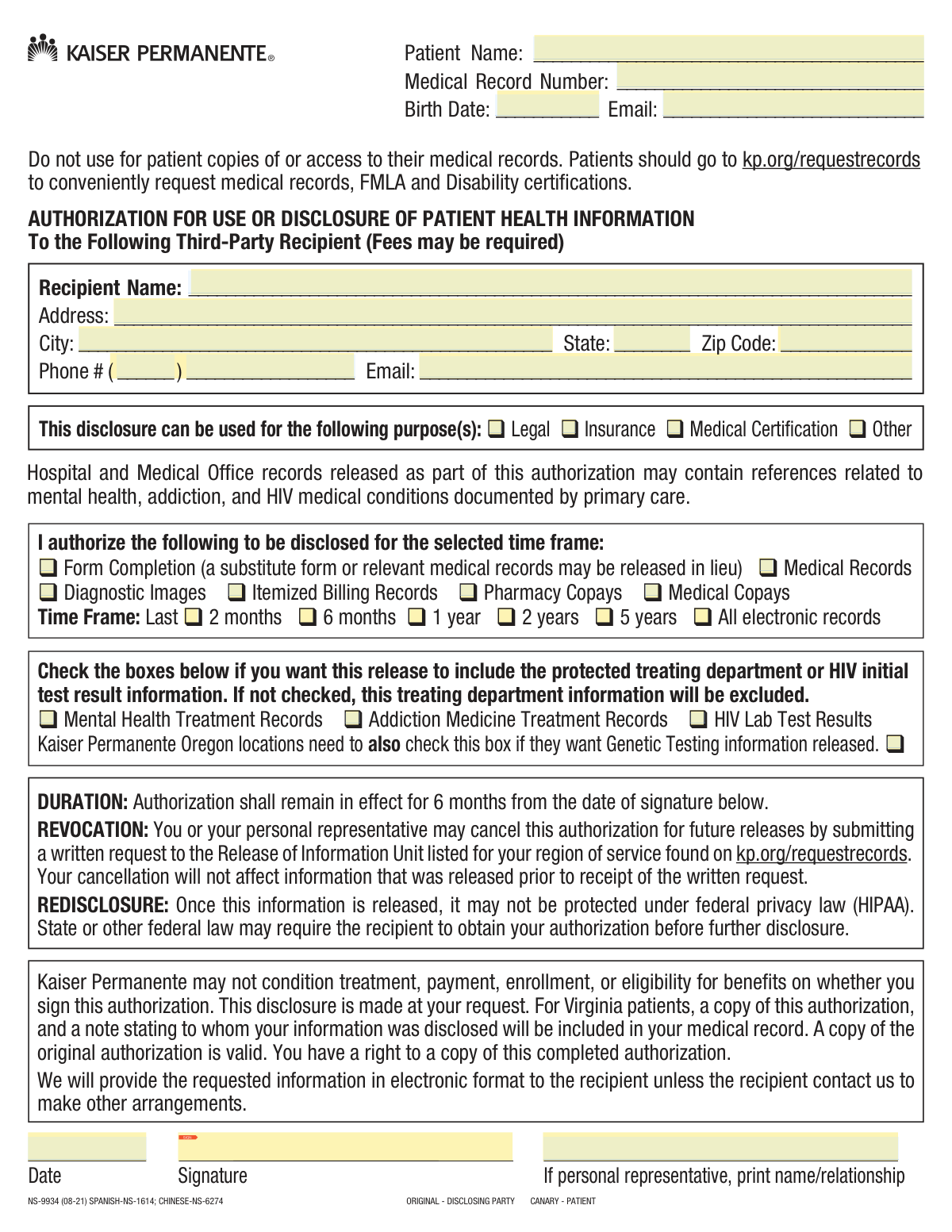
These forms are essential for various common situations, such as when you are switching to a new primary care physician, seeking a second opinion from a specialist, or providing evidence for an insurance claim. Patients frequently need to authorize the disclosure of specific records from major providers—such as the Kaiser Permanente Authorization for Use or Disclosure of Patient Health Information—to ensure their medical history follows them where it is needed most. Whether you are managing your own care or acting as a legal representative for a family member, having the correct authorization in place prevents administrative delays in treatment or reimbursement.
Managing medical paperwork can be a tedious task during an already stressful time. Tools like Instafill.ai use AI to fill these healthcare forms in under 30 seconds, ensuring that your data is handled accurately and securely. This streamlines the process of requesting or sharing medical records, allowing you to focus on your health rather than the complexity of the documentation.
Every form on this page can be completed without typing. Instafill is form filling software that reads a PDF and fills it for you — including flat and scanned documents that carry no fillable fields at all.
Forms in This Category
The forms in this category have a median Form Complexity Index of 41/100 (Basic), measured across 1 forms by field count, input difficulty, length, conditional logic and structure. See how it is calculated.
| Form Name | Pages | FCI | |
|---|---|---|---|
| 1. | Kaiser Permanente Authorization for Use or Disclosure of Patient Health Information | 1 | Basic 41 |
- Enterprise-grade security & data encryption
- 99%+ accuracy powered by AI
- 1,000+ forms from all industries
- Complete forms in under 60 seconds
How to Choose the Right Form
Selecting the correct healthcare release form is essential for ensuring your medical records are shared legally and securely under HIPAA guidelines. When navigating this category, the primary factor in your decision will be the specific healthcare network that manages your records.
Identify Your Healthcare Provider
The most critical step in choosing a form is identifying the organization that currently holds your medical data. Healthcare providers often require their own proprietary documents to process requests efficiently.
- Kaiser Permanente Patients: If you receive healthcare services through the Kaiser network, you must use the Kaiser Permanente Authorization for Use or Disclosure of Patient Health Information (Form NS-9934). This document is specifically formatted to meet Kaiser’s internal privacy protocols and ensure that your sensitive information is released only to authorized parties.
Determine the Use Case for Disclosure
The Kaiser Permanente Authorization for Use or Disclosure of Patient Health Information is the appropriate choice if you find yourself in any of the following scenarios:
- Legal Proceedings: You need to provide medical evidence or treatment history to an attorney for personal injury, workers' compensation, or disability claims.
- Insurance Verification: You are applying for life or long-term care insurance and the provider needs to verify your health history.
- Continuity of Care: You are moving to a new provider outside the Kaiser Permanente network and need to transfer your historical records to your new doctor.
- Personal Records: You simply want a copy of your own medical history for your personal files.
Completing the Form with Instafill.ai
When using the Kaiser Permanente Authorization for Use or Disclosure of Patient Health Information, accuracy is vital. Missing signatures or incorrect dates can lead to the rejection of your request. By using Instafill.ai, you can convert the standard PDF into a fillable format, allowing our AI tools to help you navigate the required fields—such as your Medical Record Number (MRN) and specific disclosure dates—ensuring your request is processed without delay.
Form Comparison
| Form | Purpose | Who Files It | Key Information Required |
|---|---|---|---|
| Kaiser Permanente Authorization for Use or Disclosure of Patient Health Information | Authorizes Kaiser Permanente to share specific medical records with a designated third party. | The patient or their legally authorized representative seeking to disclose health information. | Patient identification details, specific records to be shared, and recipient contact information. |
Tips for healthcare release forms
Instead of requesting a full medical history, specify the exact dates related to your current needs. This reduces processing time and ensures you only share information relevant to your specific insurance claim or legal situation.
Double-check the recipient's fax number, email, or mailing address to prevent sensitive health data from being sent to the wrong party. A small error in these fields can cause significant delays and potential privacy risks during the transfer of records.
Many healthcare release forms require separate authorization for records involving mental health, substance abuse, or genetic testing. Ensure you explicitly check these specific boxes if that data is necessary, as providers are legally barred from releasing them by default.
Authorization forms typically remain valid for a limited time unless you specify otherwise. Clearly state an expiration date or a specific event, such as the conclusion of a legal case, to maintain control over how long your records remain accessible.
AI-powered tools like Instafill.ai can complete these healthcare forms in under 30 seconds with high accuracy. Your data stays secure during the process, providing a practical time-saving solution for patients dealing with multiple providers or complex paperwork.
Ensure the signature on your release form matches the one your healthcare provider currently has on file. If your signature has changed significantly over time, you may need to provide a copy of a government-issued ID to verify your identity and prevent the request from being rejected.
Frequently Asked Questions
A healthcare release form is a legal document that allows healthcare providers to share your private medical records with a third party, such as an insurance company, an attorney, or another doctor. These forms ensure that your sensitive health data is handled in compliance with privacy laws like HIPAA. Without this written consent, providers are generally prohibited by law from disclosing your information.
These forms are used by patients who need their medical history sent to a new specialist, individuals involved in legal proceedings, or policyholders filing insurance claims. Additionally, parents or legal guardians may need to complete these forms to access or share records for their dependents.
The form you need usually depends on which healthcare organization currently holds your records. For example, if you are a member of Kaiser Permanente, you would typically use their specific Authorization for Use or Disclosure of Patient Health Information (Form NS-9934). Always check with the requesting party or your provider's records department to ensure you are using their preferred version.
Yes, modern AI tools like Instafill.ai can streamline the process by automatically extracting relevant data from your source documents and placing it into the correct fields. This technology can even convert static, non-fillable PDF forms into interactive versions, making it much easier to complete complex medical paperwork accurately.
Using traditional manual methods, filling out medical release forms can take several minutes and carries the risk of transcription errors. However, with AI-powered services like Instafill.ai, these forms can often be completed in under 30 seconds by accurately mapping your personal information directly onto the document.
Most forms require the patient's full name, date of birth, and contact information, along with a specific description of the records to be released. You must also identify the recipient of the information and state the purpose of the disclosure, such as personal use, insurance underwriting, or legal evidence.
Yes, healthcare release forms generally allow you to specify exactly what data you want to disclose, such as records from a specific date range or for a particular condition. You are not required to release your entire medical history if only a portion of it is relevant to the request.
The duration of the authorization varies depending on the specific form and the laws of your state, but many forms include an expiration date or a specific event that ends the authorization. If no date is specified, the authorization usually remains valid for a standard period, often one year, unless revoked earlier.
Completed forms should typically be submitted to the Health Information Management or Medical Records department of the facility that currently holds your records. Many providers allow you to submit these forms via secure online portals, mail, or fax, depending on their specific administrative procedures.
You generally have the right to revoke your authorization at any time by providing a written request to the healthcare provider. However, the revocation will not apply to any information that has already been disclosed based on the original authorization before the provider received your request to stop.
Large healthcare systems often use proprietary forms like the NS-9934 to ensure they capture all the internal data points needed for their specific record-keeping systems. Using the provider's specific form helps prevent processing delays and ensures that the disclosure meets both federal HIPAA standards and specific organizational security policies.
Glossary
- Form Complexity Index
- Instafill’s 0–100 measure of how much effort a form takes to complete, calculated deterministically from the form’s own structure rather than estimated. It combines the number of fillable fields (the largest factor), how difficult those fields are to complete based on their type, the number of pages that contain fields, the amount of conditional “fill-only-if” logic, and how many sections the form is divided into, then adds modifiers for tables and repeating lists, bundled instruction pages, and dense page layouts. A higher score means the form is harder to fill out by hand. The forms in this category have a median Form Complexity Index of 41/100 (Basic). See exactly how it is calculated.
- HIPAA
- The Health Insurance Portability and Accountability Act is a federal law that sets national standards for protecting sensitive patient health information from being disclosed without the patient's consent.
- PHI (Protected Health Information)
- Any individually identifiable health data, including medical history, test results, and insurance information, that is protected under federal privacy regulations.
- Authorization for Disclosure
- A legal document signed by a patient that gives healthcare providers permission to share specific medical records with a designated person or organization.
- Sensitive Health Information
- Specific categories of medical data, such as mental health records, substance abuse treatment, or HIV status, that often require explicit additional consent to release beyond a general authorization.
- Personal Representative
- An individual with the legal authority to make healthcare decisions on behalf of a patient, such as a parent of a minor or a person holding a power of attorney.
- Revocation
- The formal process of cancelling a previously signed authorization to prevent any future sharing of medical records with a specific recipient.
- Recipient
- The third-party individual or organization, such as an attorney, insurance company, or family member, authorized to receive and view the patient's medical records.
- Expiration Event
- A specific occurrence or date defined on the form after which the permission to share medical records is no longer valid.