Fill out home buying forms
with AI.
Purchasing a home is one of the most significant financial milestones in a person's life, and the paperwork involved reflects the complexity of the transaction. Home buying forms serve as the essential legal framework for transferring property ownership, ensuring that every detail—from the initial offer to the final closing conditions—is clearly documented. These real estate forms are designed to protect both the buyer and the seller by establishing clear expectations regarding purchase prices, earnest money deposits, and property disclosures. Without these formalized residential contract forms, the process of buying a home would lack the necessary legal protections to safeguard such a substantial investment.
By continuing, you acknowledge Instafill's Privacy Policy and agree to get occasional product update and promotional emails.
About home buying forms
These forms are typically used by individual homebuyers, real estate investors, and sellers managing their own transactions. Whether you are drafting a foundational document like a Residential Purchase and Sale Agreement or specifying contingencies for home inspections and financing, having the correct paperwork is vital. These situations often involve strict deadlines and high stakes, making it crucial to provide accurate information throughout the negotiation and closing phases. Tools like Instafill.ai use AI to fill these forms in under 30 seconds, handling sensitive data accurately and securely so you can move forward with your purchase without the burden of manual data entry. This approach simplifies the administrative side of real estate, allowing you to focus on the transition into your new home.
Every form on this page can be completed without typing. Instafill is form filling software that reads a PDF and fills it for you — including flat and scanned documents that carry no fillable fields at all.
Forms in This Category
The forms in this category have a median Form Complexity Index of 73/100 (Complex), measured across 1 forms by field count, input difficulty, length, conditional logic and structure. See how it is calculated.
| Form Name | Pages | FCI | |
|---|---|---|---|
| 1. | Form 21, Residential Purchase and Sale Agreement | 13 | Complex 73 |
- Enterprise-grade security & data encryption
- 99%+ accuracy powered by AI
- 1,000+ forms from all industries
- Complete forms in under 60 seconds
How to Choose the Right Form
Navigating the complexities of real estate transactions requires clear, legally binding documentation. Whether you are a first-time homebuyer or an experienced real estate investor, selecting the correct paperwork is the first step toward a successful closing. In this category, the focus is on the primary contract used to transfer residential property.
The Foundational Residential Contract
For the vast majority of residential transactions, the primary document you will need is Form 21, Residential Purchase and Sale Agreement. This is the standard Northwest Multiple Listing Service (NWMLS) form used to formalize an offer between a buyer and a seller.
You should choose Form 21 if your goal is to:
- Submit a formal offer: It serves as the official proposal to purchase a home, outlining the purchase price and the desired closing date.
- Establish earnest money terms: The form details how much money the buyer is putting down as a deposit and the conditions under which it is handled.
- Include vital contingencies: Use this form to ensure the sale is dependent on critical factors like a professional home inspection, the appraisal, or the buyer's ability to secure financing.
Why Accuracy Matters
Because Form 21, Residential Purchase and Sale Agreement is the master document for the entire transaction, any errors can lead to legal disputes or delays in closing. It covers everything from title insurance requirements to the specific date the buyer takes possession of the property.
Using AI to Simplify Your Purchase
Real estate forms are notoriously detailed. Instead of manually navigating a static PDF, you can use Instafill.ai to transform Form 21 into a smart, interactive document. Our AI-powered tools help you fill out these complex residential contract forms quickly and accurately, ensuring that all necessary terms and conditions are clearly defined before you send the document for signature.
Form Comparison
| Form | Primary Purpose | Who Signs | Key Components |
|---|---|---|---|
| Form 21, Residential Purchase and Sale Agreement | Establishes the legally binding terms and conditions for a residential property transaction. | The document is initiated by the buyer and signed by both buyer and seller. | Details purchase price, earnest money, inspection contingencies, and closing dates. |
Tips for home buying forms
Ensure that all conditions, such as financing, home inspections, and appraisal gaps, are clearly defined before signing. These clauses protect your earnest money and provide a legal exit strategy if the property or loan does not meet your requirements.
Always use the full legal description found on the property deed rather than relying solely on the street address. Inaccurate property details can cause significant delays during the title search or even jeopardize the validity of the contract.
AI-powered tools like Instafill.ai can complete complex real estate forms in under 30 seconds with high accuracy. This is a practical time-saver for managing multiple home buying forms, and your data remains completely secure throughout the digital filling process.
Create a timeline based on the date of mutual acceptance to track windows for inspections and title reviews. Missing these specific windows can result in a waiver of your rights to request repairs or terminate the agreement based on those contingencies.
When attaching additional forms or disclosures to your purchase agreement, verify that names, dates, and financial figures match the primary contract exactly. Discrepancies between the main agreement and its addenda can lead to confusion and legal disputes during escrow.
Clearly specify when and where the earnest money will be deposited to avoid a technical default on the contract. Confirming these logistics early ensures that the transaction remains in good standing from the moment the offer is accepted.
Frequently Asked Questions
The Residential Purchase and Sale Agreement, such as NWMLS Form 21, serves as the foundational contract between a buyer and a seller. It outlines the specific terms of the transaction, including the purchase price, earnest money, contingencies, and the expected closing date.
In most cases, the buyer or the buyer's agent initiates these forms to present a formal offer to the seller. Once the seller reviews and signs the document, it becomes a legally binding agreement that governs the transfer of the property.
Yes, AI tools like Instafill.ai can fill out complex home buying forms in under 30 seconds. These systems are designed to accurately extract data from your source documents and place it into the correct fields of the PDF, minimizing the need for manual data entry.
While manually typing information into a multi-page real estate contract can be time-consuming, using an automated platform can complete the process almost instantly. AI-powered tools can process and populate these forms in less than half a minute while maintaining high levels of accuracy.
You should have the legal description of the property, the agreed-upon purchase price, and details regarding the down payment and financing. It is also helpful to have the contact information for all parties involved, including the buyer, seller, and their respective representatives.
In most jurisdictions, electronic signatures carry the same legal weight as traditional ink signatures for real estate transactions. Most modern purchase and sale agreements are formatted to be filled out digitally and signed via secure e-signature platforms.
Completed and signed forms are typically submitted to the listing agent or the seller for consideration. Once the offer is accepted, the document is shared with the escrow company, title company, and the buyer's mortgage lender to begin the closing process.
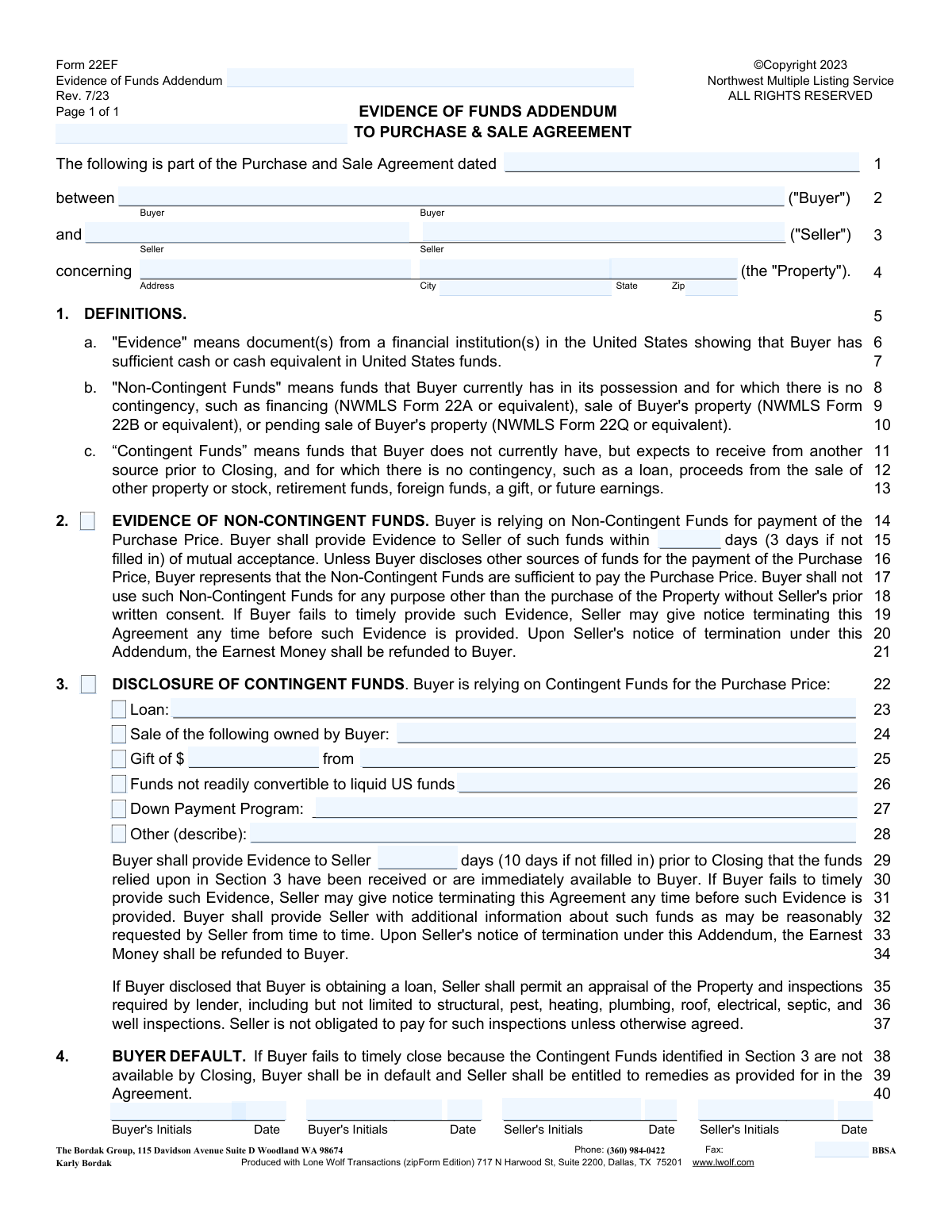
If changes are required after the initial agreement is executed, the parties must typically sign a formal amendment or addendum. This document specifically references the original purchase and sale agreement and outlines the new or modified terms agreed upon by both parties.
No, the purchase and sale agreement is a contract that outlines the terms of the deal, while the deed is the legal document that actually transfers ownership of the property. The agreement is signed at the start of the transaction, whereas the deed is signed and recorded at the final closing.
While a general Residential Purchase and Sale Agreement is common, some transactions may require specific forms for condominiums, multi-family homes, or new construction. It is important to select the form that best matches the specific property type and the regulations of the local real estate board.
Glossary
- Form Complexity Index
- Instafill’s 0–100 measure of how much effort a form takes to complete, calculated deterministically from the form’s own structure rather than estimated. It combines the number of fillable fields (the largest factor), how difficult those fields are to complete based on their type, the number of pages that contain fields, the amount of conditional “fill-only-if” logic, and how many sections the form is divided into, then adds modifiers for tables and repeating lists, bundled instruction pages, and dense page layouts. A higher score means the form is harder to fill out by hand. The forms in this category have a median Form Complexity Index of 73/100 (Complex). See exactly how it is calculated.
- Earnest Money
- A deposit made by the buyer to the seller to demonstrate their serious intent to purchase the property, which is typically held in escrow until closing.
- Contingency
- A clause in the purchase agreement that allows the buyer or seller to cancel the contract without penalty if certain conditions, such as a home inspection or financing approval, are not met.
- Escrow
- A legal arrangement where a neutral third party holds funds and legal documents during the transaction process until all terms of the agreement are satisfied.
- NWMLS
- The Northwest Multiple Listing Service, the organization responsible for providing the standardized real estate forms and property data used throughout Washington State.
- Addendum
- A supplemental document attached to the primary purchase and sale agreement that adds new terms or modifies existing ones without rewriting the entire contract.
- Title Insurance
- An insurance policy that protects the buyer and lender against financial loss resulting from defects in the property's title, such as unknown liens or ownership disputes.
- Closing Costs
- The final fees and expenses paid at the end of the transaction, including loan origination fees, recording fees, and taxes, to officially transfer property ownership.
- Disclosure
- A legally required document where the seller outlines known issues or defects with the property's condition to the buyer before the sale is finalized.