Fill out ICPC forms
with AI.
The Interstate Compact on the Placement of Children (ICPC) forms are essential legal instruments designed to protect children when they are placed in homes across state lines. These documents facilitate communication between "sending" and "receiving" states, ensuring that every placement—whether for foster care, adoption, or relative care—is safe, legal, and in the child’s best interest. Because each state has its own regulations, these standardized forms provide a uniform framework to track a child’s location and legal status throughout the transition process.
By continuing, you acknowledge Instafill's Privacy Policy and agree to get occasional product update and promotional emails.
About ICPC forms
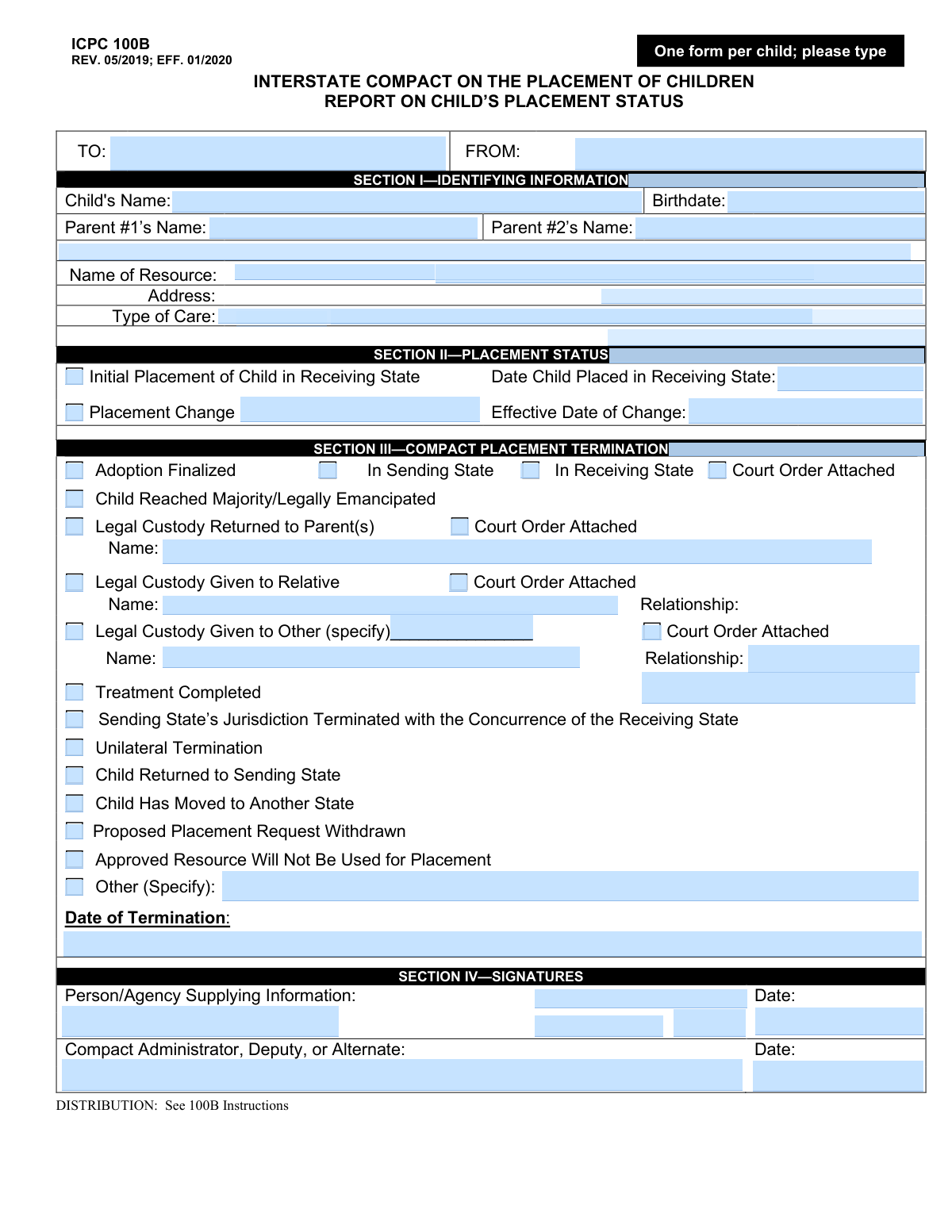
Typically, these forms are handled by social workers, public child welfare agencies, and private adoption professionals. They are required in situations where a child is moving from one state to another for the purpose of a permanent or temporary placement. For instance, forms like the ICPC 100B are used to report on a child's placement status or to notify authorities when a placement has been finalized or terminated. Navigating these requirements is a critical step in the adoption and foster care journey, as any errors in documentation can lead to significant delays in the legal process.
Managing the administrative burden of interstate placements can be overwhelming for busy caseworkers and families. Tools like Instafill.ai use AI to fill these forms in under 30 seconds, ensuring that data is handled accurately and securely while saving valuable time for those focused on the child's well-being. By automating the data entry process, these tools help reduce the risk of clerical errors and allow professionals to focus more on the human elements of child placement.
Every form on this page can be completed without typing. Instafill is form filling software that reads a PDF and fills it for you — including flat and scanned documents that carry no fillable fields at all.
Forms in This Category
The forms in this category have a median Form Complexity Index of 66/100 (Complex), measured across 1 forms by field count, input difficulty, length, conditional logic and structure. See how it is calculated.
| Form Name | Pages | FCI | |
|---|---|---|---|
| 1. | ICPC 100B, Interstate Compact on the Placement of Children Report on Child’s Placement Status | 1 | Complex 66 |
- Enterprise-grade security & data encryption
- 99%+ accuracy powered by AI
- 1,000+ forms from all industries
- Complete forms in under 60 seconds
How to Choose the Right Form
Navigating the Interstate Compact on the Placement of Children (ICPC)
When children are moved across state lines for adoption, foster care, or placement with relatives, the Interstate Compact on the Placement of Children (ICPC) ensures they are protected and that the placement is legal. Choosing the right form is critical for maintaining the legal "chain of custody" between the sending and receiving states. While the process involves several steps, the documentation ensures that the receiving state has officially accepted responsibility for supervising the child's welfare.
When to Use Form ICPC 100B
Currently, the primary document available in this category is the ICPC 100B, Interstate Compact on the Placement of Children Report on Child’s Placement Status. While other forms in the ICPC series (like the 100A) are used to initiate a placement request, the 100B is the essential "action" and "status" document used throughout the life of the case.
You should select and complete the ICPC 100B if you need to:
- Confirm Initial Placement: Use this form to notify both the sending and receiving state compact offices that the child has physically arrived at their new placement and the arrangement is officially active.
- Report a Change in Status: If the child moves to a different foster home within the receiving state or if there is a change in the legal caretaker, this form must be filed to update the interstate records.
- Terminate the Compact: This is the official form used to close the ICPC case. This usually occurs when an adoption is finalized, the child reaches the age of majority, or the child returns to the sending state.
Ensuring Compliance in Interstate Adoptions
For legal professionals, adoption agencies, and caseworkers, accuracy on the ICPC 100B is non-negotiable. Errors in reporting the date of placement or the specific type of care can lead to significant legal delays in adoption finalizations. Using Instafill.ai allows you to quickly convert these complex PDF forms into interactive documents, ensuring that every field—from the sending agency's details to the specific placement status—is filled out clearly and correctly before submission to the state authorities.
Form Comparison
| Form | Primary Purpose | Who Files It | When to Use |
|---|---|---|---|
| ICPC 100B, Interstate Compact on the Placement of Children Report on Child’s Placement Status | Reports child placement status and notifies states of changes or case termination. | Public or private child welfare agencies in sending or receiving states. | At initial placement, during status changes, or when closing the case. |
Tips for ICPC forms
One of the most common delays in interstate placements is a discrepancy in case or identification numbers. Double-check that the child's ID and the ICPC case number are identical on the 100B and any supporting 100A or court documents to prevent administrative rejections.
The 100B form is used to report initial placements, changes, or terminations. Filing this form immediately after a physical move ensures that the receiving state is legally notified and that supervision or subsidies remain uninterrupted for the child.
Before finalizing the form, verify the current placement status with both the sending and receiving state caseworkers. Clear communication prevents conflicting reports about the child's location, which can stall the legal adoption or foster care process.
Managing multiple interstate forms can be overwhelming, but AI-powered tools like Instafill.ai can complete these forms in under 30 seconds with high accuracy. Your sensitive data stays secure during the process, providing a practical way to handle high volumes of adoption and placement paperwork efficiently.
When closing an ICPC case, ensure the reason for termination is clearly marked, such as legal adoption or the child reaching the age of majority. Failing to provide a specific reason can lead to the case remaining open in the sending state's system indefinitely, causing future legal confusion.
Because ICPC processes involve multiple state agencies, documents can occasionally be misplaced during transit between offices. Always keep a timestamped digital copy of every submitted form to prove compliance and provide a clear history of the child's placement status.
ICPC forms often require specific signatures from compact administrators or designated state officials rather than just the foster parents or caseworkers. Ensure the person signing the form has the legal authority for that specific state, as unauthorized signatures are a primary cause for document rejection.
Frequently Asked Questions
ICPC forms are used to facilitate the legal and safe placement of children across state lines for adoption, foster care, or relative placement. They ensure that the receiving state has approved the home environment and that the sending state maintains legal and financial responsibility for the child until the compact is terminated.
The responsibility usually falls on the 'sending agency,' which may be a state child welfare department, a private adoption agency, or a legal guardian. Caseworkers and adoption professionals typically handle the preparation of these documents to ensure compliance with interstate laws.
The ICPC 100B form is used to report changes in a child’s placement status, such as the actual date the child arrived in the receiving state. It is also necessary to file this form when a placement is terminated, an adoption is finalized, or the child's legal status changes.
Yes, AI tools like Instafill.ai can fill out ICPC forms in under 30 seconds by accurately extracting data from your source documents. This technology ensures that information is placed correctly in the required fields, reducing the risk of administrative errors that could delay a child's placement.
While the physical completion of the forms takes only a few minutes using digital tools, the administrative review process between states can take several weeks or months. Ensuring that forms are filled out accurately and submitted promptly is the best way to avoid unnecessary delays.
All 50 U.S. states, the District of Columbia, and the U.S. Virgin Islands are members of the Interstate Compact on the Placement of Children. Any time a child is moved across state lines for the purpose of adoption or foster care, these standardized forms must be used.
Completed forms are usually submitted to the ICPC Coordinator in the sending state's central office. That office then reviews the packet and forwards it to the ICPC Coordinator in the receiving state for final approval.
Errors or missing forms can result in a 'stop placement' order, which prevents the child from moving to the new state or legally staying there. Using automated tools to ensure data consistency across multiple forms can help prevent these types of clerical mistakes.
Yes, a favorable home study from the receiving state is generally required before an ICPC placement can be approved. The ICPC forms act as the official communication and tracking mechanism for the results of that study and the subsequent placement.
Filling out ICPC forms manually can be time-consuming due to the precise legal information required, but using AI-powered services like Instafill.ai can complete the process in under 30 seconds. This allows caseworkers and families to focus on the child rather than repetitive paperwork.
Glossary
- Form Complexity Index
- Instafill’s 0–100 measure of how much effort a form takes to complete, calculated deterministically from the form’s own structure rather than estimated. It combines the number of fillable fields (the largest factor), how difficult those fields are to complete based on their type, the number of pages that contain fields, the amount of conditional “fill-only-if” logic, and how many sections the form is divided into, then adds modifiers for tables and repeating lists, bundled instruction pages, and dense page layouts. A higher score means the form is harder to fill out by hand. The forms in this category have a median Form Complexity Index of 66/100 (Complex). See exactly how it is calculated.
- ICPC (Interstate Compact on the Placement of Children)
- A uniform law enacted by all 50 states and U.S. territories that governs the legal and safe placement of children across state lines for foster care or adoption.
- Sending State
- The state that currently holds legal jurisdiction over a child and is requesting that the child be placed in a home or facility located in another state.
- Receiving State
- The state where a child is intended to be placed, which is responsible for evaluating the proposed home and providing supervision once the child arrives.
- ICPC 100B
- The official 'Report on Child’s Placement Status' form used to notify state authorities of the actual date a child is placed, changes in the child's location, or the closing of a case.
- Compact Administrator
- The designated state official responsible for coordinating all interstate placement requests and ensuring that all legal requirements of the compact are met by both states.
- Termination of Jurisdiction
- The legal point at which the sending state's responsibility for the child ends, usually due to a finalized adoption, the child reaching legal adulthood, or the child returning to the sending state.
- Placement Status
- The current living situation of a child involved in the ICPC process, which must be updated whenever the child moves or their legal case reaches a new milestone.
- ICPC 100A
- The 'Purchase of Service/Request for Placement' form, which is the initial application sent to a receiving state to request permission to move a child across state lines.