Fill out insurance review forms
with AI.
Insurance review forms are critical documents used to evaluate medical necessity, coverage eligibility, and the appropriateness of healthcare services. These forms serve as a vital communication link between healthcare providers and insurance payers or review organizations, ensuring that clinical treatments align with established policy guidelines. Providing clear, detailed information within these documents is essential for securing reimbursement and maintaining a transparent record of patient care.
By continuing, you acknowledge Instafill's Privacy Policy and agree to get occasional product update and promotional emails.
About insurance review forms
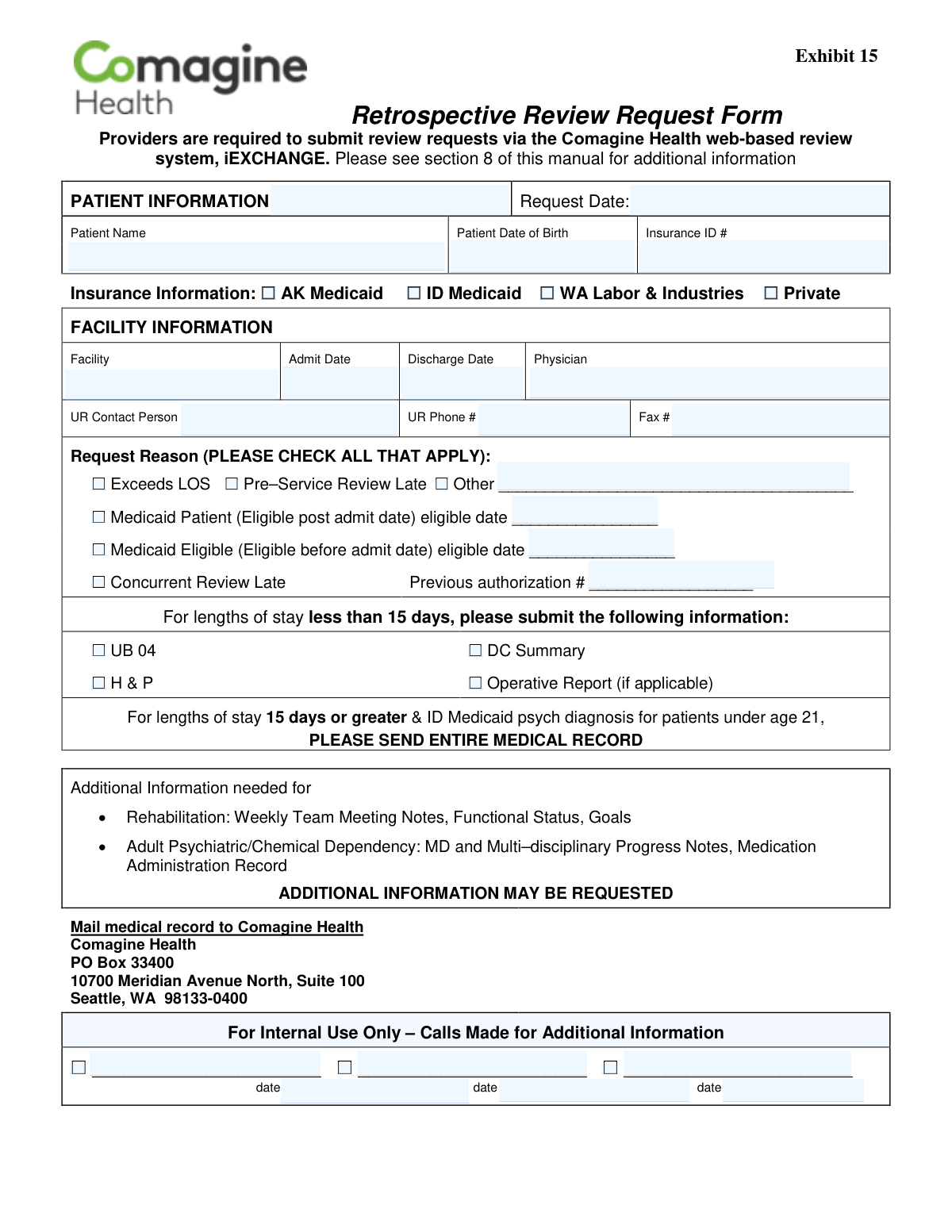
Healthcare administrators, billing specialists, and clinical staff typically utilize these forms in scenarios where services require additional scrutiny or were provided without prior authorization. For example, a Retrospective Review Request Form is often used when a provider needs to justify the medical necessity of care after it has already been delivered. Whether dealing with emergency admissions or administrative oversights, these forms help reconcile the clinical reality of a patient's case with the financial requirements of the insurance provider.
Navigating the complexities of insurance documentation can be a significant administrative burden for busy medical practices. Tools like Instafill.ai use AI to fill these insurance review forms in under 30 seconds, handling sensitive data accurately and securely to streamline the submission process. This approach helps reduce manual entry errors and allows healthcare professionals to dedicate more time to patient outcomes rather than paperwork.
Every form on this page can be completed without typing. Instafill is form filling software that reads a PDF and fills it for you — including flat and scanned documents that carry no fillable fields at all.
Forms in This Category
The forms in this category have a median Form Complexity Index of 44/100 (Basic), measured across 1 forms by field count, input difficulty, length, conditional logic and structure. See how it is calculated.
| Form Name | Pages | FCI | |
|---|---|---|---|
| 1. | Retrospective Review Request Form | 1 | Basic 44 |
- Enterprise-grade security & data encryption
- 99%+ accuracy powered by AI
- 1,000+ forms from all industries
- Complete forms in under 60 seconds
How to Choose the Right Form
Navigating insurance reviews can be complex, especially when seeking reimbursement for services already rendered. In this category, the primary tool available is the Retrospective Review Request Form. Understanding when and why to use this specific document is essential for healthcare providers and administrative staff.
When to Use the Retrospective Review Request Form
This form is specifically designed for healthcare providers who need to submit a case to Comagine Health after medical services have been provided. You should choose this form if you fall into one of the following scenarios:
- Lack of Pre-authorization: You provided care in an emergency or under urgent circumstances where prior authorization was not obtained, and you now need to justify the medical necessity of that care.
- Post-Service Necessity Determination: You need a formal clinical review to secure payment from an insurance carrier or payer for services that have already concluded.
- Administrative Oversight or Denials: A clinical review is required for a claim that was previously processed or denied due to missing clinical documentation at the time of service.
Key Information Needed
Before you begin filling out the Retrospective Review Request Form on Instafill, ensure you have the following information ready to streamline the process:
- Patient and Insurance Details: Full legal name, date of birth, and insurance member ID numbers.
- Clinical Support: Discharge summaries, treatment plans, or physician notes that support the medical necessity of the care provided.
- Provider Identification: NPI numbers and contact information for the facility or physician who rendered the services.
Why Use This Form via Instafill?
The Retrospective Review Request Form can be lengthy and requires precise clinical data to be successful. Using Instafill’s AI-powered tools allows you to convert static PDF versions into interactive, fillable forms. This ensures that every field is addressed accurately, reducing the risk of administrative denials or delays in the review process. If your goal is to secure reimbursement for care already delivered, this is the definitive document required for the Comagine Health review process.
Form Comparison
| Form | Purpose | Who Files It | Review Timing | Key Requirement |
|---|---|---|---|---|
| Retrospective Review Request Form | Determines medical necessity for services already rendered to secure insurance payment. | Healthcare providers or facilities submitting to review organizations like Comagine Health. | After services are provided, typically when pre-authorization was not obtained. | Clinical documentation supporting medical necessity and justification for retrospective review. |
Tips for insurance review forms
Retrospective reviews rely heavily on evidence that services were medically necessary at the time of care. Ensure you have all relevant medical records, discharge summaries, and physician notes ready to reference so your justifications are backed by data.
AI-powered tools like Instafill.ai can complete these complex insurance forms in under 30 seconds with high accuracy. This is a significant time-saver for healthcare providers handling multiple reviews, and your data stays secure throughout the entire process.
Small errors in diagnostic or procedural codes are a leading cause of claim rejection. Always double-check that the codes entered on your review form exactly match the medical records and the billing statements submitted to the payer.
When filling out retrospective requests, clearly explain why authorization wasn't obtained beforehand, such as emergency circumstances or urgent clinical changes. A concise, factual narrative helps reviewers understand the context of the care provided.
Keep a dedicated digital folder for every review request, including the completed form and a timestamp of when it was sent. This organization is vital for following up on the status of a review or responding to additional requests for information.
Check that the patient’s name, insurance ID, and provider details are identical across the form and all attachments. Inconsistent identifiers can trigger manual flags in insurance systems, leading to unnecessary delays or administrative denials.
Frequently Asked Questions
Insurance review forms are used to evaluate whether medical services and treatments meet the necessary clinical criteria for coverage. They help insurance carriers and review organizations determine if the care provided was medically appropriate and eligible for reimbursement.
These forms are usually completed and submitted by healthcare providers, hospital billing departments, or clinical staff. They act on behalf of the patient to provide the clinical documentation required to justify services that have already been performed.
A retrospective review is required when medical services were rendered without prior authorization, such as during an emergency or when patient insurance information was not immediately available. It allows the provider to seek payment after the fact by proving the medical necessity of the treatment.
While pre-authorization is conducted before a service is performed to ensure coverage, a retrospective review occurs after the service has been completed. Both processes evaluate medical necessity, but the retrospective review is often more complex as it relies on the actual clinical outcomes and records from the visit.
Yes, AI tools like Instafill.ai can fill out insurance review forms in under 30 seconds. These tools accurately extract clinical data and provider information from source documents and place it directly into the required fields on the PDF.
Completing these forms manually can be time-consuming due to the detailed medical data required. Using an AI-powered service allows you to complete the entire form in less than a minute, ensuring that technical data is transferred accurately from your records.
Most reviews require supporting clinical evidence such as physician progress notes, diagnostic test results, and discharge summaries. This documentation is essential for the review organization to verify that the level of care provided was consistent with industry standards.
Completed forms are typically submitted to the specific insurance payer or a designated third-party review organization like Comagine Health. Submission is often handled through secure provider portals, encrypted email, or fax to maintain patient confidentiality.
If a review is denied, the insurance provider will typically issue a notice explaining the reason, such as lack of medical necessity or insufficient documentation. Providers usually have the right to appeal the decision by providing additional evidence or clarification.
Yes, most organizations have specific timeframes within which a retrospective review must be requested after the date of service. Missing these deadlines can result in an automatic denial of the claim, regardless of the medical necessity of the care provided.
Glossary
- Form Complexity Index
- Instafill’s 0–100 measure of how much effort a form takes to complete, calculated deterministically from the form’s own structure rather than estimated. It combines the number of fillable fields (the largest factor), how difficult those fields are to complete based on their type, the number of pages that contain fields, the amount of conditional “fill-only-if” logic, and how many sections the form is divided into, then adds modifiers for tables and repeating lists, bundled instruction pages, and dense page layouts. A higher score means the form is harder to fill out by hand. The forms in this category have a median Form Complexity Index of 44/100 (Basic). See exactly how it is calculated.
- Retrospective Review
- A clinical evaluation conducted after medical services have been provided to determine if the care was medically necessary and appropriate for the patient's condition.
- Medical Necessity
- The standard used by insurance companies to decide if a treatment, procedure, or service is essential and appropriate for a patient’s diagnosis or treatment.
- Pre-authorization
- A requirement that healthcare providers obtain approval from an insurance payer before providing specific services; a retrospective review is usually required when this step is missed.
- ICD-10 Code
- A standardized system of alphanumeric codes used by healthcare providers to classify and code all diagnoses and symptoms for insurance billing purposes.
- CPT Code
- Current Procedural Terminology codes are five-digit numeric identifiers used to describe specific medical, surgical, and diagnostic services provided to a patient.
- Clinical Documentation
- The medical records, physician notes, and lab results that serve as evidence to justify the medical necessity of a procedure during a review process.
- National Provider Identifier (NPI)
- A unique 10-digit identification number assigned to healthcare providers in the United States, which is required on all insurance review and billing forms.
- Adjudication
- The process by which an insurance carrier reviews a claim or request to determine their financial responsibility and whether to pay, deny, or adjust the claim.